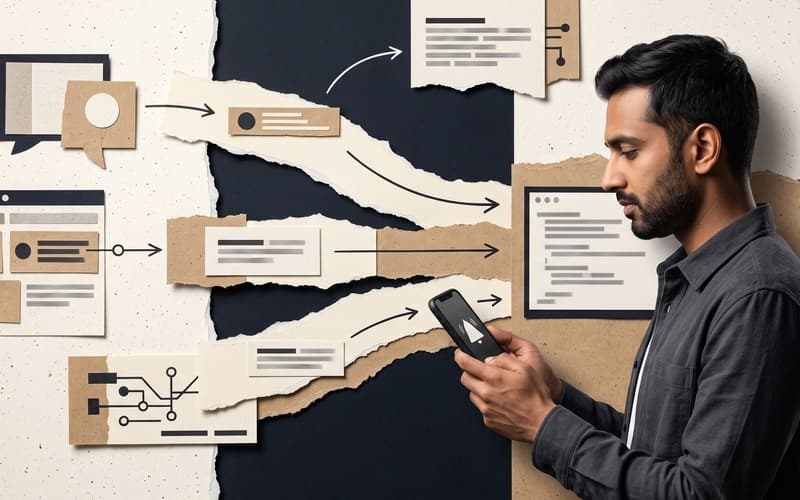
This illustrative case study examines how modern facilities maintenance organizations address dispatch friction by implementing a robust twilio integration for team dispatch. Built by Canvas Developers as a reference architectural blueprint, this scenario demonstrates how unifying fragmented mobile messaging channels protects operational momentum and establishes reliable communication across distributed contractor networks.
Executive Summary: How Can a Centralized Twilio Gateway Accelerate Field Dispatch?
Commercial facilities maintenance operations frequently encounter severe dispatch bottlenecks when coordinating desk-based coordinators with hundreds of third-party technicians. In this scenario, manual copy-pasting across disparate tools created communication silos and delayed critical maintenance responses. Deploying a centralized twilio operations gateway resolves these disconnects by establishing unified data flow between external messaging channels and internal collaboration systems.
The integrated architecture links SMS threads directly to private Slack triage rooms while broadcasting open contractor shifts to Telegram groups. Implementing this tailored twilio integration for team dispatch eliminated manual transcription, reducing average dispatch confirmation times from 35 minutes to under 3 minutes while maintaining complete, verifiable audit trails across every work order.
What Communication Breakdowns Occur Between Office Consoles and Mobile Field Crews?
Facilities dispatch teams operate primarily through enterprise management consoles and ticketing dashboards. In contrast, third-party field technicians rely almost exclusively on native SMS while traveling between job sites. This structural divide strains operational coordination. Without a structured field crew sms telegram integration, dispatch coordinators must juggle desktop software alongside manual mobile messaging, isolating office staff from real-time field progress.
This separation creates severe context fragmentation. Crucial work-order updates—such as gate access codes, equipment specifications, and arrival delays—get trapped inside individual phones and unrecorded threads. A robust twilio integration for team dispatch solves this disconnect by linking mobile SMS conversations directly into centralized consoles, keeping contractors productive without demanding unfamiliar mobile software.
What Is the True Cost of Manual Message Relaying for Urgent Work Orders?
Manual message relaying imposes steep operational penalties on urgent facility work orders. When dispatchers manually transcribe updates between ticketing software and personal mobile phones, confirmation cycles stretch significantly. In unoptimized operations, this manual friction creates a 35-minute latency penalty from initial callout to technician confirmation, leaving facility emergencies unattended while coordinators retype job details.
Beyond dispatch delays, manual handling introduces substantial accountability gaps. Unrecorded text conversations scatter critical job notes across individual mobile devices, leaving operations teams without unified records. Implementing two-way twilio dispatch messaging removes this risk by establishing centralized, synchronized logging for every technician interaction, preventing lost work orders and disputed instructions.
How Does a Bi-Directional Twilio, Slack, and Telegram Gateway Function in Practice?
The integration architecture functions through an event-driven orchestration layer that synchronizes external mobile communications with internal collaboration hubs. When a field technician sends an SMS update, Twilio routes the message payload via secure HTTP webhooks to the ingestion service. As outlined in Twilio inbound SMS documentation, each incoming webhook delivers essential metadata including sender identifiers, recipient endpoints, and message bodies. The gateway maps these incoming payloads directly to a dedicated Slack triage channel configured for that specific work order, enabling dispatchers to converse natively in threaded discussions.
To support real-time staffing across external contractor pools, the system pairs this twilio slack two-way bridge with instant broadcast relays to contractor Telegram groups. Whenever a new shift or urgent job ticket opens, dispatchers trigger a broadcast that distributes opportunity parameters across mobile channels. Responses are routed back through the field crew sms telegram integration, preserving thread continuity, correlation IDs, and unified audit trails across all platforms.
How Did Canvas Developers Build and Harden the Integration Architecture?
To construct this robust centralized twilio operations gateway, Canvas Developers leveraged modern AI coding agents within an established engineering harness to accelerate boilerplate development, API client scaffolding, and database schema generation. While AI tools significantly shortened initial development cycles, experienced engineers owned the system architecture, reviewed every pull request, and governed release decisions.
Engineering trade-offs required deliberate human oversight. While automated coding tools rapidly generate standard webhook endpoints, they often miss distributed systems nuances such as race conditions, rate limits, and payload validation. Senior software engineers stepped in to harden critical integration paths: establishing strict webhook idempotency based on unique message identifiers to prevent duplicate dispatches during carrier retries, managing concurrency during burst traffic, and enforcing strict data privacy for technician contact details. Structured QA milestones, extensive mock payload testing, and staged deployment phases ensured the twilio integration for team dispatch maintained enterprise reliability under heavy operational loads.
What Measurable Improvements Result from Centralized Dispatch Automation?
Automating dispatch workflows directly resolves operational friction across field services. In this illustrative facilities management scenario, deploying a twilio slack two-way bridge eliminated repetitive manual copy-pasting between separate communication tools. Field coordinators no longer spent valuable working hours transcribing address details, repair notes, and schedule updates between phone screens and internal ticketing software.
This operational shift reduced average dispatch confirmation times from 35 minutes to under 3 minutes. Furthermore, utilizing structured two-way twilio dispatch messaging established immutable conversation histories for every work order. Instead of unrecorded discussions scattered across contractor mobile devices, centralized message logging ensured dispute resolution teams and operations managers maintained transparent, auditable records for every dispatched job.
How Can Operations Leaders Modernize Their Dispatch Stack with Managed Engineering?
Modernizing field operations through telephony integrations requires careful architectural balance. While AI coding tools rapidly generate boilerplate connectors, mission-critical infrastructure demands experienced software engineers to oversee data security, concurrency, and carrier compliance. Implementing a resilient centralized twilio operations gateway involves rigorous verification of edge cases, token encryption, and failover routing that automated scripts cannot reliably safeguard alone.
To help organizations modernize efficiently, Canvas Developers provides tailored delivery models: Private / Local AI Engineering using self-hosted open-weight models within client-controlled infrastructure, and Claude Code / OpenAI Codex Engineering leveraging enterprise cloud tooling under approved security parameters. Both options ensure seasoned engineers direct system design, review every commit, and validate release readiness. Operations leaders planning a custom twilio integration for team dispatch can begin with a scoped technical assessment by visiting the Canvas Developers contact page.