This illustrative example is a product design designed by Canvas Developers to show what it can build; it is not delivered client work. Formulated for outpatient clinical networks seeking secure telehealth app development without third-party software friction, the platform unifies encrypted peer-to-peer WebRTC video consultations with live clinical charting, automated pre-appointment triage questionnaires, and digital prescription generation. Under experienced healthtech engineering direction, the system combines AI speed with strict medical compliance.
Project at a Glance: What Are the Scope and Technical Specifications of This Illustrative example?
Clinical Focus: Outpatient Networks, Mental Health Clinics, and Digital Health Startups
This illustrative example serves outpatient clinical networks and digital health practices seeking bespoke telehealth app development, eliminating third-party software friction through seamless direct browser access.
Target Platforms: Responsive Web App and Cross-Platform Mobile Application (iOS and Android)
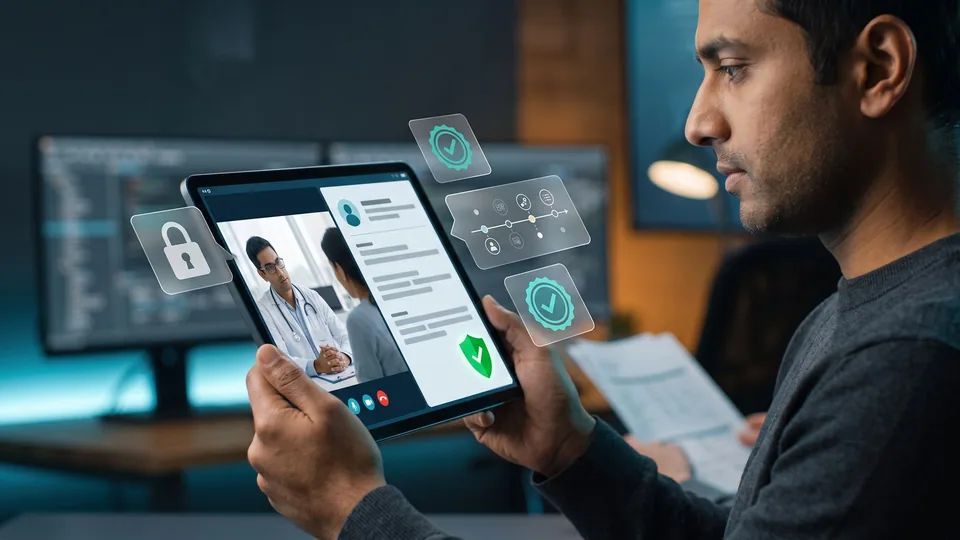
The interface provides a unified responsive web portal and cross-platform mobile apps. Clinicians and patients interact through clean split-screen consultation views, floating video controls, tabbed clinical summaries, and responsive intake flows. This remote patient consultation app architecture ensures hardware acceleration and reliable session handling.
Delivery Framework: Scoped Milestones Directed by Canvas Developers' Dhaka Engineering Office
Deployments follow structured engineering phases—scoping, milestones, security verification, and code handover—directed by Canvas Developers from its Dhaka engineering office.
The Brief: What Clinical Workflow and Regulatory Challenges Does the Platform Address?
Eliminating Third-Party Video Friction for Providers and Patients
Third-party meeting tools force patients into standalone downloads and external logins, increasing no-shows. This concept replaces external meeting links with a unified, browser-accessible environment embedded directly into clinical workflows.
Enforcing PHI Data Residency, Cryptographic Boundaries, and HIPAA Audit Trails
Protecting Protected Health Information across active calls requires strict architectural controls. As hipaa compliant telehealth software, the platform enforces end-to-end cryptographic boundaries, defined data residency, and immutable audit logs tracking access events.
Unifying Real-Time Video Consultations with Dynamic EHR Charting and Script Generation
In this telehealth app development concept, clinical charting and prescription generation sit beside the call canvas, allowing providers to record clinical notes and issue medication orders synchronously.
Approach and Process: How Does Canvas Developers Combine AI Speed with Senior Engineering Rigor?
AI-Accelerated Scaffolding: Generating Consultation Calendar Views and Patient UI Components
AI coding agents accelerate routine frontend development, generating responsive consultation calendar views and standardized patient intake UI components in hours. This speed enables rapid layout iteration while preserving semantic accessibility.
Senior Engineering Control: Human Ownership of Architecture, Security, and Production Releases
While AI generates boilerplate, experienced engineers direct the digital health platform engineering process. Senior engineers own system design, audit data boundaries, perform code reviews, and approve production releases.
Deployment Isolation: Deploying via Private Local AI or Audited Cloud AI Tooling
Canvas Developers offers two delivery models: Private / Local AI Engineering using open-weight models within client-controlled infrastructure, and Claude Code / OpenAI Codex Engineering using audited commercial tools. Both ensure custom telemedicine platform architecture standards without exposing sensitive source repositories.
What Was Built: What Architectural Decisions Drive the Video and e-Prescription Engines?
Encrypted Peer-to-Peer WebRTC Video Signaling and Screen Sharing Infrastructure
The core video engine operates as a resilient webrtc video consultation app, featuring a dual-pane consultation interface with adaptive video tiles, floating audio-video toggles, and an interactive screen-sharing canvas. Built with a React web client, React Native mobile apps, and Node.js signaling services, peer-to-peer media streams connect via authenticated WebSockets with automated TURN relay fallback for firewalled clinical networks, ensuring zero unencrypted media exposure on intermediate servers.
Synchronous In-Call Clinical Charting and Pre-Appointment Triage Questionnaires
Prior to sessions, patients complete automated pre-appointment triage questionnaires with intuitive symptom checklists and medical document upload dropzones. During the call, clinicians utilize a collapsible charting drawer equipped with structured SOAP note templates, allergy alerts, and vital sign badges, synchronizing diagnostic observations without occluding the active consultation canvas.
Digital Prescription Generation with Automated Pharmacy Directory Lookup and Document Uploads
For electronic prescription portal development, the interface integrates a prescription composer with automated pharmacy directory lookup, dosage calculation aids, and direct PDF generation. Clinical charting records and tamper-evident audit logs persist to an encrypted PostgreSQL database with row-level tenant security. Rooted in a custom telemedicine platform architecture, every transaction generates verifiable cryptographic timestamps.
Technical Trade-Offs: Where Did AI Acceleration Excel, and Where Was Human Verification Essential?
Where AI Tooling Succeeded: Rapid Patient Dashboard Prototyping and Boilerplate Forms
AI coding assistants excelled at routine UI generation, rapidly scaffolding responsive patient dashboard layouts, appointment status badges, and clinical form validation routines. This velocity allowed our team to prototype intuitive clinical interfaces and iterate on complex layouts without repetitive manual development.
Where AI Tooling Failed: WebRTC Signaling Edge Cases, Session Concurrency, and Token Security
However, AI models struggled with real-time distributed network complexities. Automated tools frequently generated fragile WebRTC signaling reconnection loops, mishandled multi-user session concurrency, and suggested naive token exchange patterns that risked exposing session endpoints.
Human Engineering Safeguards: Verifying Data Isolation, Encryption Keys, and Scalable Infrastructure
Experienced engineers directed the digital health platform engineering process to resolve these critical vulnerabilities. Senior staff audited cryptographic key lifecycles, verified strict tenant data isolation, and validated TURN relay failovers to deliver dependable, hipaa compliant telehealth software.
Start a Similar Project: How Can Healthcare Providers Commission a Scoped Telemedicine Platform?
Initial Architectural Scoping, Milestones, and Compliance Verification
Commissioning a tailored digital health platform begins with a structured architectural assessment. Canvas Developers works with clinical teams to define compliance boundaries, user workflows, and technical integrations across phased development milestones. This engineering process ensures your custom telemedicine platform architecture remains secure, maintainable, and aligned with strict clinical standards prior to handover.
Submitting an Enquiry via https://www.canvasdevelopers.com/contact
Whether you are planning new telehealth app development or seeking to stabilize an existing digital health application, experienced engineers are ready to scope your project. Healthcare organizations and clinical networks can initiate a technical consultation by submitting an enquiry through the contact form at https://www.canvasdevelopers.com/contact.