This illustrative example presents OmniRoute, an illustrative example designed by Canvas Developers to demonstrate what our engineering team can build for quantitative trading teams. It is not delivered client work. OmniRoute serves as an open-source TradingView integration gateway engineered to authenticate incoming webhook alerts, parse dynamic JSON signals, and route orders directly to brokerage APIs.
What Is OmniRoute? Project Overview and Sector Scope
Boutique quant desks and proprietary trading groups frequently require a resilient self hosted TradingView integration that operates entirely within their private infrastructure. OmniRoute provides an open-source reference implementation tailored for retail and boutique fintech teams needing predictable order execution from automated charting indicators.
Engineered with Node.js, TypeScript, and pre-configured Docker containers, the TradingView integration gateway processes incoming strategy alerts under strict isolation. This containerized foundation packages secret token verification, validation schemas, and real-time operational telemetry into an auditable, lightweight service ready for private cloud deployment.
Why Is a Dedicated Gateway Needed for TradingView Webhooks?
TradingView alerts execute via outbound HTTP POST requests when charting conditions trigger. However, as documented in TradingView webhook technical specifications, the platform enforces strict timeout windows and does not natively supply HMAC request signatures or strict schema validation. Exposing bare broker endpoints directly to alert webhooks exposes trading capital to severe operational hazards, including malformed alert payloads, duplicate executions, and unauthorized network traffic.
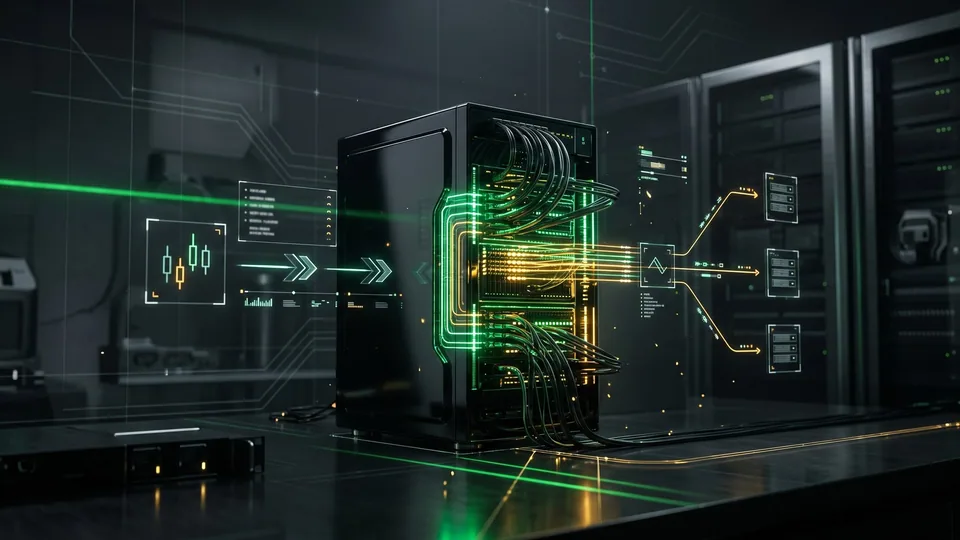
A dedicated open source TradingView webhook server resolves these vulnerabilities by decoupling alert ingestion from broker order routing. OmniRoute acts as an intermediate TradingView integration gateway that instantly ingests the HTTP payload, validates cryptographic bearer tokens, verifies payload structure against pre-compiled schemas, and confirms ingestion within milliseconds, preventing dropped alerts while safeguarding broker connections.
How Was OmniRoute Engineered? Balancing AI Speed with Rigorous Human Review
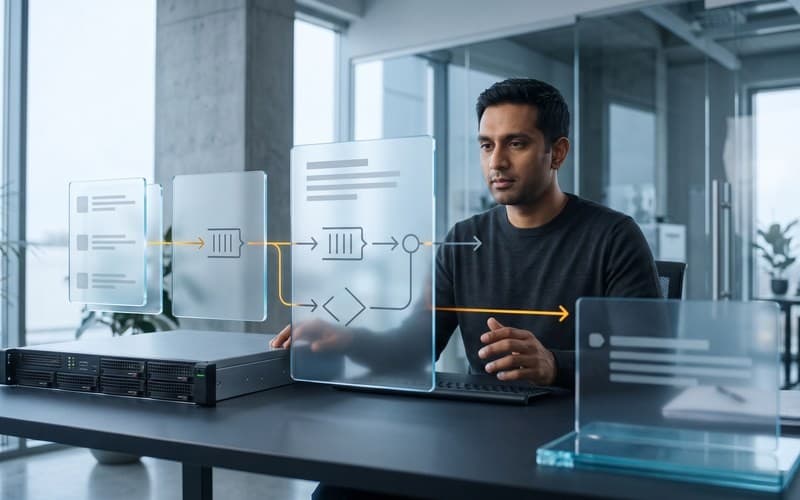
At Canvas Developers, building the OmniRoute automated trading TradingView gateway illustrates our dual-track engineering methodology: AI coding agents accelerate delivery speed, while experienced engineers govern architectural integrity, security, and release decisions.
AI harnesses rapidly scaffolded TypeScript data interfaces, generated repetitive boilerplate for JSON payload parsers, and drafted unit testing fixtures. However, AI coding tools can stumble on mission-critical edge cases: they frequently miss subtle concurrency bottlenecks, overlook constant-time cryptographic verification needed to stop timing attacks, and misjudge broker rate-limiting backoffs under high market volatility.
Our senior engineers reviewed every line of code, audited the cryptographic token validation, and established non-blocking asynchronous dispatch routines. Whether delivering via private local AI infrastructure or commercial toolchains like Claude Code, human engineering oversight remains non-negotiable for production systems managing real financial operations.
What Architectural Components Power the OmniRoute Gateway?
OmniRoute is architected around modular microservice components designed for deterministic processing:
- Ingestion and Validation: The gateway performs constant-time cryptographic token verification to prevent timing attacks. A JSON schema validator confirms order parameters—such as symbol, side, order type, and contract sizing—rejecting malformed payloads before execution reaches broker APIs.
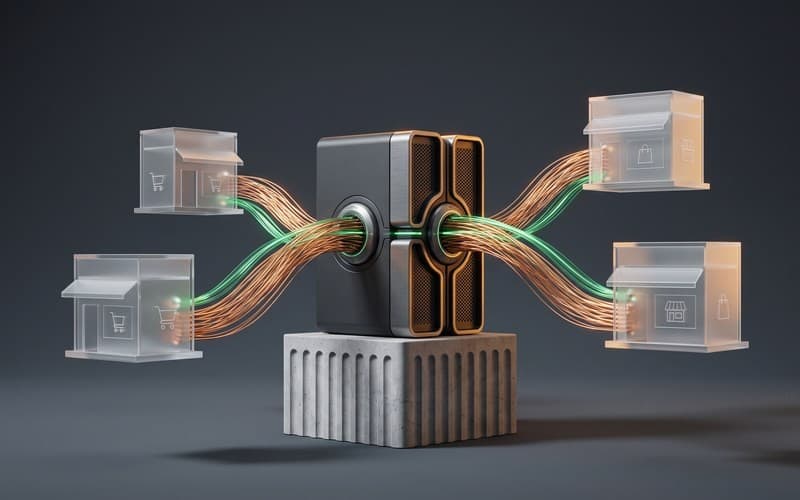
- Multi-Broker Routing: Functioning as a high-throughput TradingView to Alpaca Binance bridge, OmniRoute normalizes alerts into broker protocols. Its equity connector submits market, limit, stop, and bracket orders to the Alpaca orders API. Simultaneously, the crypto connector handles signed HMAC SHA-256 requests across Binance spot and futures endpoints, delivering a unified TradingView integration multi broker framework.
- Rate Limiting and Diagnostic Screens: An in-memory token bucket throttles outbound traffic against exchange rate limits, while Prometheus telemetry exports performance metrics. A visual diagnostic dashboard provides operators with dedicated real-time monitoring screens: an ingestion telemetry screen graphing millisecond latency percentiles, a payload inspector screen displaying raw alert variables alongside schema validation status badges, and an execution monitor tracking live order fill statuses, broker acknowledgment timestamps, and connection states.
How Can Teams Deploy OmniRoute or Scope a Custom Execution Engine?
Deploying OmniRoute requires minimal setup: teams can launch the pre-configured Docker containers directly on their virtual private servers or private cloud clusters. Operating a self hosted TradingView integration ensures that brokerage secrets, webhook tokens, and algorithmic order flow remain completely under private control without third-party exposure.
While OmniRoute offers a dependable open-source foundation, quantitative teams often require custom routing rules, position sizing, or multi-tenant risk filters. Canvas Developers builds and hardens bespoke execution engines, internal dashboards, and trading portals. Engagements follow structured scoping, agreed development milestones, and rigorous testing before handover. Clients receive production-hardened container configurations, full source code ownership, custom broker connectors, automated test suites, and direct architecture guidance from senior engineers.
If your firm is planning a production-grade TradingView integration gateway or a custom execution engine, contact our engineering team to schedule a scoped architecture assessment through the contact form at https://www.canvasdevelopers.com/contact.