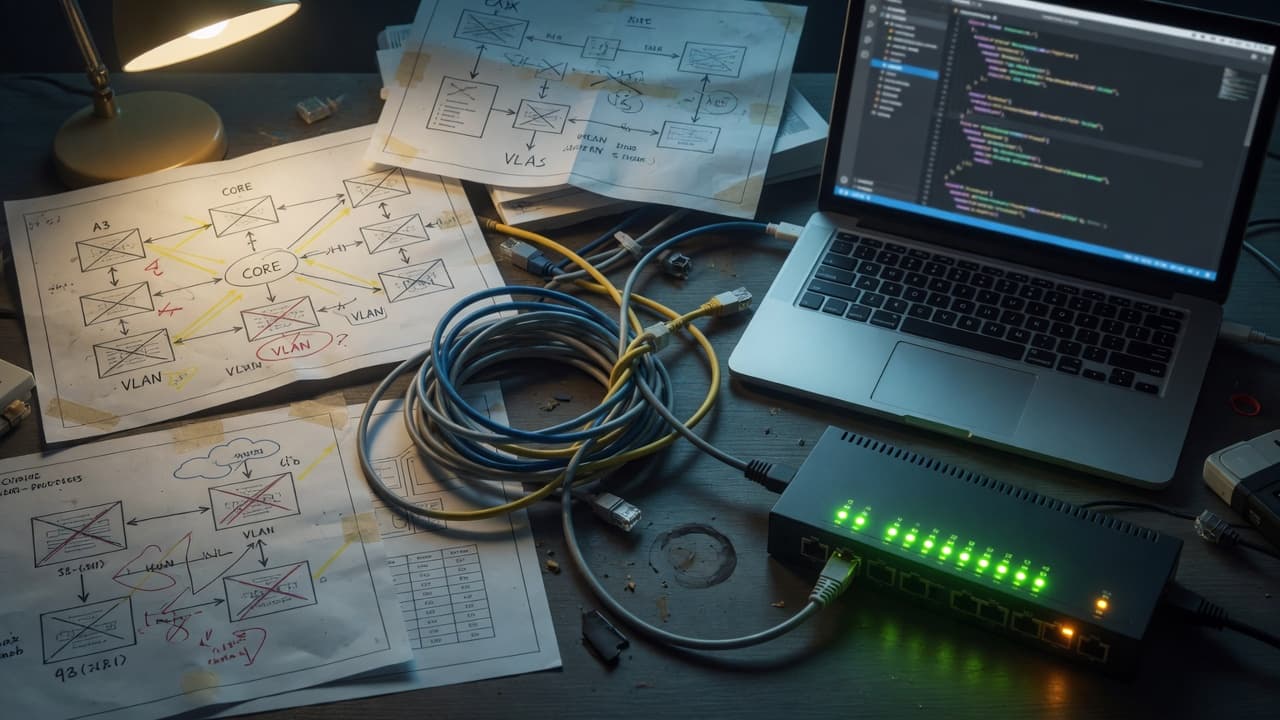
This illustrative example presents OmniCopier, an architecture designed by Canvas Developers to demonstrate how a modern web based metatrader trade copier operates in cloud environments. It is a product design developed to showcase engineering capabilities rather than delivered client work, illustrating how multi-tenant trade execution bridges external webhook signals directly into headless MetaTrader infrastructure.
Asset managers and trading teams frequently encounter execution latency and configuration drift when maintaining distributed client accounts across local virtual private servers. OmniCopier addresses these operational bottlenecks through a centralized management interface that coordinates proportional equity lot calculations, automated slippage caps, and instantaneous execution controls.
Project at a Glance: What Is the OmniCopier Architecture and Scope?
Fintech Target Audience, Sector, and Scope
OmniCopier is designed for proprietary trading firms, multi-strategy fund managers, and commercial signal syndicates requiring institutional trade replication. Built as a robust saas trade copying platform, the system eliminates fragmented desktop environments by unifying distributed investor accounts under centralized administrative governance across modern brokerages.
Core Integrations and Cloud Infrastructure Stack
Operating as a scalable web based metatrader trade copier, the solution bridges TradingView alert webhooks and custom REST endpoints directly into containerized, headless MetaTrader 4 and MetaTrader 5 terminal instances. A cloud-native event bus routes inbound execution payloads to maintain sub-second order dispatching and synchronized account states.
The Brief: What Operational Challenges Does Cloud Trade Replication Solve?
Bridging TradingView Webhooks to Distributed MT4 and MT5 Accounts
Modern quantitative traders generate signals on charting engines like TradingView but face architectural hurdles executing them across retail terminals. A robust metatrader webhook trade copier must ingest incoming JSON alerts, validate HMAC signatures, normalize symbol tickers across disparate broker feeds, and dispatch orders simultaneously. Without automated translation layers, strategy triggers suffer slippage or fail to replicate across varied account specifications.
Eliminating Local VPS Bottlenecks with Centralized Multi-Tenancy
Traditional copier tools rely on individual desktop terminals running inside fragmented virtual private servers, requiring manual EA installations and constant maintenance. Operating as a multi tenant mt4 mt5 copier, OmniCopier shifts execution infrastructure to containerized server environments. This architecture eliminates local memory bottlenecks, mitigates server restart failures, and consolidates multi-account administration into a single orchestration layer.
Approach & Process: How Does Canvas Developers Combine AI Speed with Senior Oversight?
Accelerating MVP Scaffolding with AI Coding Tools
Building a modern saas trade copying platform requires rapid interface development, boilerplate database modeling, and structured API contracts. At Canvas Developers, engineering teams employ AI coding tools to accelerate initial repository scaffolding, component wireframing, and routine database migrations. This integrated workflow reduces baseline implementation hours, allowing technical teams to stand up functional web prototypes quickly without writing redundant boilerplate code manually.
Architectural Governance and Human Code Audits for High-Stakes Financial Logic
However, automated tools lack the contextual judgment required for high-stakes financial infrastructure. Experienced software engineers govern the entire engagement, establishing architectural standards, auditing every pull request, and determining deployment readiness. Senior engineers conduct thorough manual audits of concurrency models, tenant isolation controls, and network failover routines, ensuring order execution logic handles high-throughput trading conditions without data corruption or unauthorized credential access.
What Was Built: How Does the OmniCopier Platform Manage Routing, Sizing, and Risk?
Unified React Web Dashboard and Dynamic Account Grouping
The central web console provides portfolio supervisors with complete visibility over connected broker accounts. Developed as a modern web based metatrader trade copier, the application enables operators to organize disparate investor accounts into dynamic operational tiers based on currency, risk profile, or asset allocation. Through browser managed metatrader automation, managers can adjust group memberships, review active balance thresholds, and assign execution policies across entire clusters without individual terminal configuration.
Proportional Equity Lot Sizing and Slippage Cap Controls
Accurate trade replication requires dynamic risk balancing across accounts with divergent balance sizes. OmniCopier implements proportional equity lot sizing algorithms that recalculate order volume relative to available margin before execution. Furthermore, configurable slippage caps protect follower accounts from market gaps; if the live price deviates beyond defined pip tolerances during cloud metatrader trade replication, the engine rejects or requotes the child order to shield investor capital.
Instant Master Kill-Switch and Headless REST Endpoint Bridging
During severe volatility or connectivity anomalies, risk officers require immediate mitigation tools. The dashboard incorporates a global master kill-switch that halts signal ingestion, closes open market positions, and unlinks child terminals in milliseconds. Custom REST endpoints interface directly with headless MetaTrader terminals running in isolated runtime environments, maintaining continuous execution logs and connection health heartbeats.
Engineering Realities: Where Does AI Development Excel and Where Must Humans Intervene?
What AI Code Generation Solves Well in Web Interfaces and Standard APIs
AI code generation handles repetitive development tasks with high efficiency. Generating typed React components, parsing incoming webhook payloads, structuring relational schemas, and scaffolding standard REST controllers are areas where automated tools accelerate delivery. Producing boilerplate code rapidly allows engineering teams to assemble functional UI layouts and administrative views in hours rather than days.
Critical Human Verification for Data Integrity, Concurrency, and Order Execution Security
However, automated models struggle with complex edge cases like asynchronous race conditions and reconnection state machines. In cloud metatrader trade replication, an unhandled thread failure or connection timeout can desynchronize portfolio balances across follower accounts. Experienced engineers must rigorously audit transaction isolation, validate API authentication boundaries, and verify that concurrent order queues execute reliably under load.
Next Steps: How Can You Scope and Launch a Custom Trading SaaS MVP?
Planning Core Features and Constraints via a Scoped Technical Assessment
Launching an institutional replication platform requires technical scoping around latency targets, broker protocol compatibility, and tenant segregation requirements. Before development begins, technical teams outline architecture diagrams, data flows, and risk boundaries to ensure browser managed metatrader automation operates safely under volatile market conditions.
Starting Your SaaS Build with Canvas Developers
Canvas Developers delivers tailored trading applications, financial dashboards, and custom software through milestone-based engagements. Teams can choose between Private / Local AI Engineering or commercial tooling environments, directed and audited by experienced engineers. To scope your technical assessment, get in touch through the contact form at https://www.canvasdevelopers.com/contact.