Software engineering teams face a widening divide between conversational code generation and dependable software delivery. While natural language prompts can scaffold prototypes in minutes, turning raw model outputs into resilient systems requires rigorous architectural boundaries, deterministic testing, and strict release gates. The prompt to production framework bridges this divide by treating artificial intelligence as a high-velocity implementation engine directed by experienced engineers.
Instead of relying on unverified generation, professional engineering teams use structured workflows to govern how AI models interface with production codebases. Establishing clear technical scoping, sandboxed execution, and manual peer review ensures that speed never compromises architectural integrity, data security, or long-term maintainability.
Why Does Unchecked AI Generation Fail in Production?
The Technical Debt of Unarchitected Vibe Coding
Rapid conversational prompting can assemble functional user interfaces and boilerplates within hours. However, building without an explicit architectural blueprint introduces structural liabilities. Code generation tools prioritize immediate context completion over long-term system design, often generating conflicting domain models, tight coupling, and inconsistent state management. When teams treat conversational generation as a standalone build mechanism, software accumulates technical debt before reaching production.
A sustainable engineering strategy requires replacing speculative prompting with a structured prompt driven development process. Within this approach, engineers define data boundaries, interface contracts, and module separation prior to code synthesis. Generative tools execute specific implementation units against established constraints rather than inventing software architecture on the fly.
Why Scaffolding Velocity Masks Critical Edge-Case Failures
Initial generation velocity creates an illusion of system completeness. Automated code assistants generate standard execution paths reliably because boilerplate patterns appear frequently across public code repositories. Vulnerabilities emerge when applications encounter non-standard traffic, transient network drops, or concurrent database transactions. Raw outputs rarely account for idempotent operations, graceful error degradation, or distributed race conditions.
A professional vibe coding workflow mitigates these blind spots by subjecting AI-generated components to rigorous verification. Rather than trusting synthetic outputs directly, engineering teams validate boundary conditions, transaction boundaries, and failure states through deterministic test suites before deployment.
What Infrastructure Powers a Professional AI Code Harness?
Commercial Cloud AI Tools vs Isolated Local Model Infrastructure
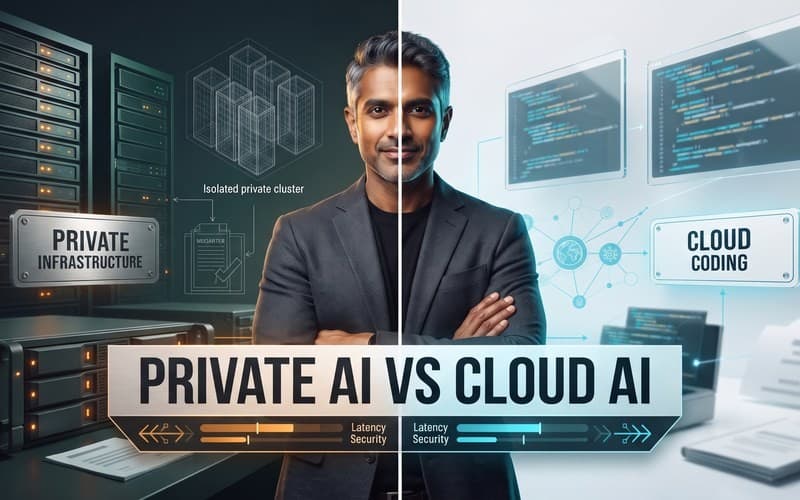
Organizations integrating automated engineering workflows must align tooling architecture with their regulatory and proprietary constraints. Within enterprise environments, engineering leadership chooses between two primary configurations: commercial cloud-based engineering environments and isolated on-premises infrastructure.
Commercial cloud assistants provide advanced reasoning capabilities across broad software stacks, operating with cloud settings and telemetry controls approved by client stakeholders. Conversely, sensitive data environments demand dedicated privacy controls. In these scenarios, teams implement private or local engineering setups using privately hosted open-weight models deployed entirely within client-controlled infrastructure or agreed isolated environments. Selecting the right deployment structure ensures intellectual property remains protected while accelerating the broader AI software development lifecycle.
Configuring Context Windows, Linter Hooks, and Sandboxed Workspaces
Raw generation without environmental constraints produces hallucinated packages, deprecated syntax, and broken dependencies. A mature AI code harness methodology enforces deterministic guardrails around code generation agents before any code reaches a developer's branch:
- Sandboxed execution environments: Automated agents execute within isolated containerized workspaces that restrict network egress and prevent unverified system calls.
- Automated linter and AST hooks: Generated syntax is automatically parsed against strict static analysis rules, formatting standards, and type checkers upon generation.
- Context curation: Restricting prompt inputs to explicit repository interfaces, schema definitions, and dependency trees prevents context window pollution and hallucinated APIs.
By enforcing machine-verifiable constraints at the harness level, engineering teams eliminate syntax drift and isolate synthetic code generation from core production systems.
How Does the Prompt to Production Framework Work?
Phase 1: Human-Led Architecture and Technical Scoping
The foundation of the prompt to production framework begins well before issuing any generative prompts. Senior engineers establish the system blueprint, mapping database schemas, API contracts, boundary conditions, and domain abstractions. Rather than delegating architectural decisions to automated tools, technical leads define clear boundaries between microservices or modular components.
Scoping also identifies third-party integrations, authentication mechanisms, and transactional guarantees. Documenting these requirements as formal interface definitions provides the explicit technical constraints necessary for subsequent implementation. When developers understand precisely what needs to be constructed and how it fits into the broader application landscape, generative tooling becomes a targeted force multiplier rather than an unguided experimental mechanism.
Phase 2: Directed Prompting for Modular Implementation
Understanding how engineers use AI coding tools in high-performing teams reveals a disciplined departure from open-ended conversational generation. Rather than requesting entire features in a single prompt, engineers decompose work into bite-sized, deterministic units. Prompts are constructed with strict context: exact method signatures, relevant domain types, expected input parameters, and required error structures.
This directed approach isolates implementation tasks such that each generated block corresponds to a single responsibility. By feeding precise technical specifications alongside strict interface definitions, teams eliminate ambiguity and ensure that the resulting code aligns seamlessly with existing project standards.
Phase 3: Automated Synthesis and Local Test Execution
Once code is generated, the synthesis phase immediately subjects the output to automated local validation. Within a configured harness, the code is compiled, formatted, and evaluated against local unit tests, integration test suites, and strict type checkers before human review takes place.
If an automated check fails, the harness feeds the exact compiler error and stack trace back to the tool for localized correction within bounded retry limits. This closed-loop automated execution ensures that developers spend their review cycles evaluating business logic and security posture rather than diagnosing preventable syntax or compilation errors.
How Do Senior Engineers Review and Harden AI Output?
Auditing High-Risk Surfaces: Security, Auth, and Payment Flows
Synthetic code generation can produce clean syntax while introducing critical structural vulnerabilities in high-risk application surfaces. Authentication logic, role-based access control, cryptographic key handling, and payment processing demand exhaustive human verification. Automated coding assistants frequently suggest deprecated encryption standards, miss subtle timing attacks, or omit strict input sanitization on webhooks and checkout endpoints.
Senior engineers scrutinize these sensitive domains by auditing data flows from entry point to persistence. For payment integrations, engineers verify that tokenization routines, webhook signature validations, and idempotent transaction keys are implemented correctly according to vendor specifications. While automated generation accelerates boilerplate API scaffolding, human technical leads ensure that authentication boundaries strictly enforce privilege separation, session expiry, and tenant data isolation.
Rigorous Human Code Reviews and Deterministic Test Coverage
Automated test generation often mirrors the assumptions and logical oversights of the generated code itself. Establishing true reliability within an AI software development lifecycle requires deterministic testing written or audited by experienced developers. Unit tests must explicitly validate edge cases, including malformed payloads, rate-limiting triggers, network partition handling, and concurrent race conditions.
During peer code reviews, engineers evaluate architectural elegance, long-term maintainability, and domain model cohesion. This active human in the loop software engineering posture ensures that every commit meets production quality standards before merging into main branches. Engineers review diffs line by line to detect subtle antipatterns, such as unbounded in-memory caching or silent exception swallowing, that automated linters cannot catch.
DevOps Automation and Release Decision Governance
The final boundary before deployment is an automated release pipeline overseen by dedicated release governance. Continuous integration systems execute static application security testing, software composition analysis to identify vulnerable third-party dependencies, and end-to-end integration test suites across containerized staging environments.
Regardless of how rapidly code is synthesized or verified by automated harnesses, final release decisions remain firmly in the hands of senior engineers and DevOps specialists. Human release authorities review deployment artifacts, verify database migration rollback strategies, monitor canary rollouts, and ensure infrastructure resilience. This balance of automated velocity and human release governance provides organizations with predictable, production-ready software.
How Does Vibe Coding Compare to Directed AI Engineering?
Prototype Speed vs Long-Term Maintainability and Scale
Vibe coding—the practice of describing features in conversational interfaces to generate working software—excels at early ideation, interactive mockups, and proof-of-concept validation. Founders and product designers can visualize interfaces and test user flows rapidly without upfront architectural overhead. However, treating prototype velocity as production readiness leads to brittle software that collapses under production traffic or structural changes.
Directed engineering establishes a disciplined alternative. By understanding how engineers use AI coding tools within structured development environments, organizations bridge the gap between rapid prototyping and enterprise stability. Professional teams leverage code generation to accelerate routine syntax creation while establishing explicit modular boundaries, database indexes, and clean separation of concerns that support long-term software maintainability.
Managing Complex Concurrency, State, and API Contracts
The primary divergence between casual generation and engineering rigor lies in state management, data integrity, and distributed concurrency. Conversational prompting tends to create monolithic functions, implicit global state, and loose API contracts that function during single-user testing but fail under concurrent transactions, race conditions, or asynchronous worker queues.
A professional vibe coding workflow introduces strict contract definitions, enforcing explicit schema validation with tools like Zod or Protocol Buffers. Experienced engineers govern data consistency across distributed services, implement database row-level locking or optimistic concurrency controls, and design idempotent API endpoints. This engineering oversight ensures that asynchronous tasks, background workers, and client-server interactions maintain system stability under real-world operational loads.
What Critical Checklist Must Humans Complete Before Release?
Data Isolation, Permission Scopes, and Vulnerability Scanning
Deploying software generated with automated assistants requires strict verification of security controls and data access boundaries. While tools generate functional queries and service layers, human engineers must confirm that multitenancy rules, object-level permissions, and row-level access restrictions are enforced systematically. Unchecked generation can inadvertently expose sensitive data fields or bypass tenant isolation across API endpoints.
A resilient AI code harness methodology incorporates automated static analysis and dynamic vulnerability scanning to flag outdated libraries, insecure deserialization, and cross-site scripting risks. However, automated scanners cannot evaluate business logic permissions. Experienced developers conduct manual penetration tests and access control audits, verifying that authentication tokens strictly map to verified user scopes before any build enters staging environments.
Validating Database Migrations and Third-Party Dependencies
Database schema changes represent another critical failure point for synthetic code. Automated code generators often produce destructive migration scripts, such as dropping columns, altering primary keys without data transformation, or locking critical tables during high-traffic windows. Engineers validate that all migrations execute non-destructively, include reversible rollback strategies, and apply appropriate database indexing to prevent performance degradation.
Furthermore, third-party dependency validation demands active human in the loop software engineering. Generative tools may introduce unverified packages, potentially creating typosquatting risks or introducing abandoned libraries into production builds. Engineering teams verify license compliance, audit package authenticity, and pin deterministic dependency versions to guarantee reproducible, secure deployments.
How Can Teams Move from AI Prototypes to Production Delivery?
Balancing AI Agent Velocity with Human Architectural Oversight
Adopting the prompt to production framework requires organizations to treat generative coding tools as productivity accelerators rather than autonomous decision-makers. AI coding agents dramatically speed up routine development, testing, and infrastructure configuration, but experienced engineers must continue to own the core architecture, review every line of code, and determine release readiness. By maintaining clear architectural boundaries, development teams achieve rapid deployment cycles without sacrificing software stability or security.
Starting with Scoped Milestones and Release Assurance
Whether modernizing existing platforms, engineering custom business applications, or stabilising AI-built prototypes, successful software delivery relies on structured engagements. Projects advance smoothly when teams begin with clear technical scoping, followed by agreed development milestones, comprehensive quality assurance, and formal handovers. Organizations looking to transition from unverified prototypes to resilient production systems can evaluate their architecture through a scoped technical assessment or connect with the engineering team through the contact form at Canvas Developers.