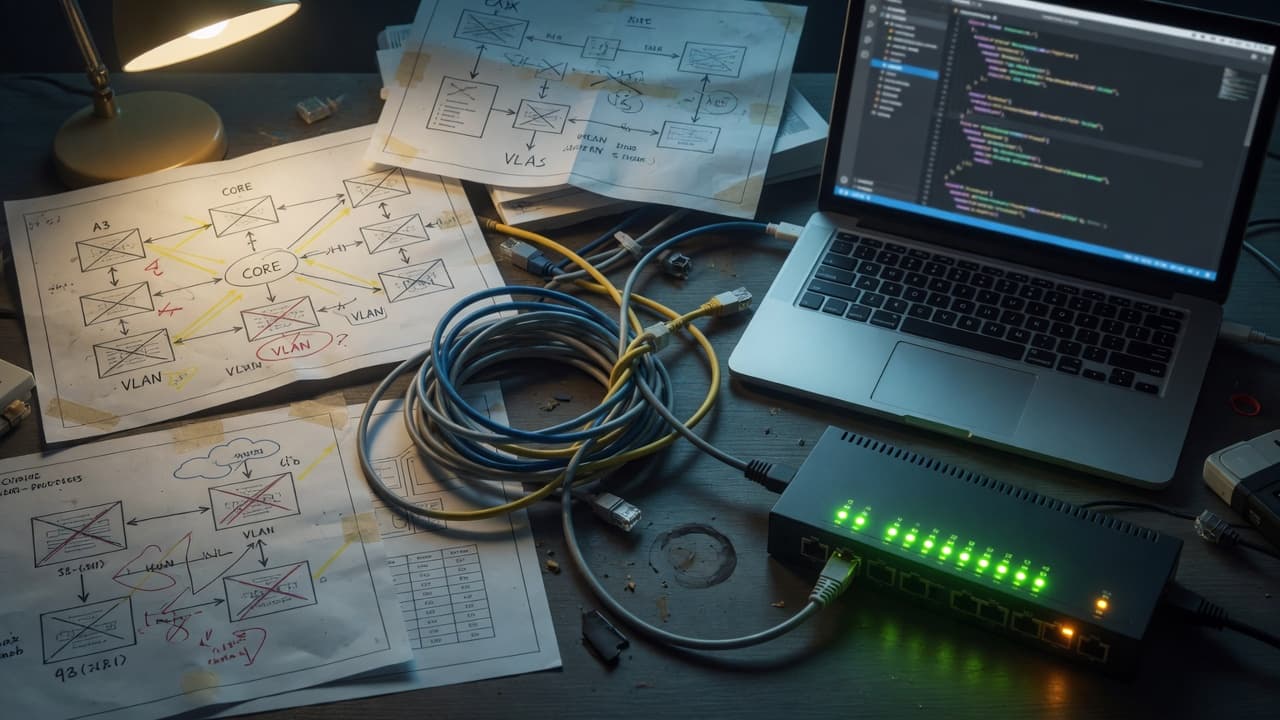
This illustrative case study examines how boutique asset managers and trading desks modernize multi-terminal execution architectures. In high-frequency and multi-broker trading environments, relying on fragmented desktop terminals often introduces unacceptable latency and execution desynchronization. To address these operational bottlenecks, engineering teams deploy custom metatrader bridge automation that decouples signal generation from terminal order dispatch.
Through a realistic scenario, this review explores how Canvas Developers designs resilient trade routing daemons, balances low-level C++ bindings with asynchronous event buses, and applies disciplined engineering oversight to eliminate latency across distributed brokerage accounts.
Executive Summary: What Are the Key Outcomes of an Event-Driven Execution Bridge?
The 850ms to 15ms Latency Reduction Across 120 Accounts
In multi-broker trading setups, sequential order dispatch creates severe execution delay. Deploying a distributed metatrader execution engine enabled concurrent trade fan-out, reducing order distribution latency from 850ms to under 15ms across 120 managed accounts without dropping message packets.
Eliminating 60-Pip Volatility Slippage Across Four Brokers
Trading across four distinct MT4 and MT5 brokers previously suffered from desynchronization during high-volatility sessions, driving slippage exceeding 60 pips. Replacing terminal-level scrapers with direct memory-level event interception eliminated execution desync entirely across all client allocations.
Human-Led Architecture Accelerated by AI Development Harnesses
Canvas Developers accelerated protocol scaffolding and test harness generation using AI coding agents. Experienced software engineers directed the architecture, reviewed concurrency boundaries, and validated thread safety, ensuring custom metatrader bridge automation achieved institutional-grade stability.
The Quant Dilemma: Why Do Heterogeneous MT4 and MT5 Broker Environments Desynchronize?
Disparate Liquidity Providers and Execution Latency Profiles Across Four Brokers
When managing capital across four distinct MT4 and MT5 brokers, trading desks encounter heterogeneous execution venues. Each brokerage routes order flow through different liquidity providers, matching engines, and bridge gateways, creating stark variations in round-trip network latency. In volatile market conditions, these structural timing differences cause quotes to diverge across venues. Without unified multi broker mt5 trade synchronization, identical algorithmic signals fill at widely divergent prices across trading books, leading to severe execution desynchronization between accounts.
Concurrency Limits and Network Blocking in Standard Copy Trading Setups
Traditional retail copy trading tools typically rely on sequential loop processing within single-threaded terminal scripts. Under this model, an Expert Advisor evaluates an order and dispatches it account by account, blocking execution until each network socket acknowledges receipt. When scaling allocations across dozens of client terminals, this blocking architecture causes cumulative queuing delays. Deploying a resilient, broker agnostic trade copier requires moving past sequential terminal scripting toward decoupled, asynchronous message dispatching that executes orders concurrently.
The Cost of Execution Lag: How Does Sub-Second Slippage Erode Trading Alpha?
Financial Impact of 60-Pip Slippage Spikes During High-Volatility News Events
During macroeconomic announcements, liquidity thins rapidly across foreign exchange markets. For trading desks relying on standard terminal dispatchers, execution delays cause child orders to fill far behind market movements, routinely generating slippage exceeding 60 pips. When prices move tens of pips within milliseconds, delayed execution converts profitable trading strategies into unexpected losses. Over repeated trading sessions, persistent execution friction steadily degrades quantitative edges across all connected broker environments.
Asymmetric Risk Exposure and Failed Fills Across Managed Allocations
Execution latency does not merely worsen fill prices; it destabilizes risk management across managed client portfolios. In institutional metatrader copy trading, sequential order execution leaves trailing accounts unhedged or unfulfilled when liquidity pools exhaust their available volume. In extreme volatility, terminal timeouts trigger rejected orders and orphaned positions across downstream accounts. Deploying custom metatrader bridge automation ensures synchronized order routing, preventing asymmetric portfolio drift and safeguarding capital parity across all active trading accounts.
Technical Blueprint: How Does an Asynchronous Daemon Route Trades Concurrently?
C++ DLL Direct Bindings for Native Terminal Event Interception
Standard Expert Advisors poll market orders through MQL interpreters, introducing CPU cycle overhead and thread contention. To bypass terminal scripting bottlenecks, custom C++ dynamic-link libraries hook directly into the terminal memory space. This native high frequency mt4 bridge captures order events immediately upon execution on the master terminal, translating raw tick and transaction data into lightweight memory structures without waiting for graphical interface refreshes or standard MQL timer events.
Broker-Agnostic Message Bus for Parallel Order Dispatch
Once captured, orders pass immediately into a high-throughput, asynchronous message bus decoupled from client terminals. Serving as a distributed metatrader execution engine, the routing daemon transforms master orders into normalized trade instructions agnostic of broker-specific symbol suffixes or execution protocols. Instead of sequentially awaiting socket confirmations, the bus broadcasts trade payloads simultaneously across parallel worker pools, ensuring immediate order delivery to downstream execution endpoints.
Thread-Safe State Synchronization Across 120 Managed Accounts
Coordinating order execution across 120 managed accounts requires strict concurrency guarantees. The routing engine utilizes lock-free ring buffers and atomic state registries to track open positions, lot allocations, and pending fills in real time. Worker threads update order statuses concurrently without mutex lock contention. If an individual broker connection experiences network jitter, the core routing daemon isolates the affected channel while maintaining continuous, uninterrupted order synchronization across all remaining accounts.
Engineering & Implementation: Where Did AI Acceleration End and Human Verification Begin?
Using AI Coding Tools to Expedite Message Protocol and Boilerplate Scaffolding
During the initial development phase, engineering teams leveraged advanced AI coding agents to rapidly scaffold protocol serialization layers, generate binary schema parsers, and produce extensive unit test suites. This AI-accelerated workflow dramatically compressed turnaround on repetitive boilerplate code, allowing the team to establish the core interfaces of the custom metatrader bridge automation in days rather than weeks.
Human Engineering Audits for Memory Safety, Low-Level Concurrency, and Failover
While AI coding tools excel at generating structured patterns, mission-critical systems demand rigorous human oversight. Experienced senior engineers audited every low-level C++ DLL binding, verifying pointer safety, preventing memory leaks, and eliminating race conditions within the message dispatcher. Human specialists designed the failover logic, managed network reconnection routines, and validated thread boundaries to ensure complete operational resilience under market volatility.
Milestone Scoping and Multi-Broker Stress Testing Under Simulated Market Shocks
Following structured milestone scoping, Canvas Developers executed rigorous automated load tests across synthetic broker environments. The team injected simulated network latency, packet loss, and violent price spikes to stress-test the multi broker mt5 trade synchronization engine. This methodical verification confirmed that order routing remained deterministic and error-free before production deployment.
Measured Results: What Quantifiable Gains Were Recorded Post-Deployment?
Slashing Execution Distribution Latency from 850ms to Under 15ms
Deploying the custom routing architecture fundamentally altered order distribution across all connected endpoints. Replacing sequential script iterations with a high-performance broker agnostic trade copier slashed order distribution latency from 850ms to under 15ms. Parallel socket broadcasting ensured that child tickets arrived at downstream matching engines without queue degradation, preserving execution parity across volatile market sessions.
Complete Elimination of Execution Desync Incidents Across All 120 Accounts
The modernized execution pipeline achieved complete elimination of execution desync incidents across all 120 managed accounts. Disparate liquidity conditions across the four brokers no longer caused orphaned orders or mismatched risk exposures. Delivering the deterministic precision demanded by institutional metatrader copy trading, the bridge ensured synchronized position tracking and stable execution performance across all active trading books without manual intervention.
Operational Lessons: How Can Trading Desks Prepare Their Stack for Modernization?
Decoupling Core Routing Logic from Frontend Broker Terminals
Modern trading infrastructure requires clear separation of concerns. Decoupling trade execution from frontend charting terminals insulates core routing logic from UI freezes and terminal-specific scripting overhead, ensuring deterministic throughput across multiple broker environments.
Balancing Rapid AI Prototyping with Strict Human-Led Systems Hardening
AI coding tools expedite protocol scaffolding and test generation, but mission-critical financial systems demand human engineering rigor. Senior engineers must govern architectural decisions, audit memory boundaries, and manage failover logic to ensure custom metatrader bridge automation operates reliably under extreme volatility.
Next Steps: Scheduling a Scoped Architecture Assessment with Canvas Developers
Whether trading desks require low-latency routing daemons or enterprise software modernization, Canvas Developers delivers robust engineering solutions. Engagements begin with structured scoping to evaluate technical bottlenecks and define clear delivery milestones. Desks can schedule a scoped assessment through the contact form at https://www.canvasdevelopers.com/contact.