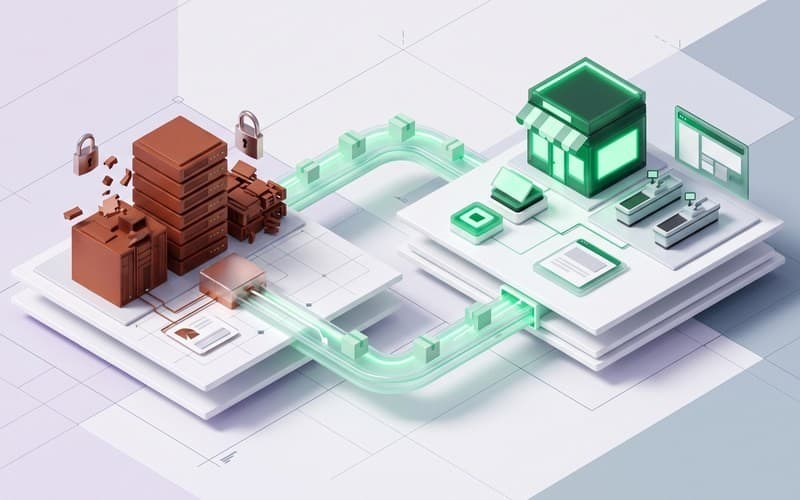
This illustrative case study explores how systematic digital asset trading desks optimize their execution pipelines for high-frequency market regimes. In multi-pair algorithmic trading, establishing an institutional-grade TradingView integration for crypto is critical when transitioning automated momentum alerts from charting environments directly into liquid derivatives exchanges. Below, Canvas Developers outlines how dedicated middleware architecture addresses relay latency and execution bottlenecks across volatile market sessions.
Executive Summary: How Can Systematic Funds Achieve Sub-40ms TradingView Execution?
For systematic digital asset funds executing multi-pair momentum strategies, standard execution pipelines struggle under sudden order surges. In this illustrative scenario, algorithmic Pine Script strategies on TradingView faced major friction: third-party webhook relays suffered 500ms latency and dropped alerts during volatility spikes on Binance.
To overcome these bottlenecks, an institutional TradingView integration for crypto requires dedicated architecture. By pairing a custom Go webhook receiver with Redis queuing and persistent Binance Futures WebSockets, this high frequency TradingView alert gateway compresses dispatch times to sub-40ms with zero dropped executions across volatile sessions.
The Setup and Challenge: Why Do Generic Webhook Relays Fail High-Volatility Momentum Strategies?
In systematic crypto trading, momentum models coded in Pine Script continuously evaluate indicators across dozens of perpetual swap pairs simultaneously. When market structure shifts rapidly, multiple alerts trigger within milliseconds. Many desks initially rely on generic automation platforms or off-the-shelf relay bots to forward these alerts into exchange accounts. However, relying on shared SaaS tools for a crypto trading TradingView integration introduces structural points of failure under production conditions.
Generic relays routinely suffer an execution lag of 500ms or more because they process payloads through multi-tenant HTTP pipelines. As highlighted in TradingView webhook technical guidelines, the platform enforces a strict 3-second timeout and does not retry failed deliveries. When major volatility hits Binance, unoptimized middleware experiences thread blocking, rate limits, and dropped socket connections. Without an engineered Pine Script to Binance execution bridge, vital signals disappear precisely when market liquidity moves fastest.
What Was at Stake: How Does Order Dispatch Latency Impact Quantitative Fund Performance?
In directional momentum trading, timing dictates profitability. When a breakout triggers, available liquidity at the top of the order book clears in fractions of a second. A half-second delay transforms a profitable breakout entry into an unfavorable fill as market orders sweep through deeper bid-ask spreads. Over high trading volumes, compounding slippage quietly erodes edge and undermines backtested model expectations.
Furthermore, execution asymmetry creates severe portfolio risk. A robust multi-pair crypto TradingView integration must synchronize entries across correlated assets. If latency spikes unevenly, correlated positions execute out of sequence, leaving hedged or market-neutral books temporarily exposed to directional drift. Deploying an enterprise-grade TradingView integration for crypto is therefore not merely a technical convenience, but a core risk control mechanism that preserves trade execution fidelity across turbulent market regimes.
The Technical Solution: How Is an Institutional TradingView-to-Binance Bridge Architected?
To resolve execution bottlenecks, Canvas Developers designed a three-tier architecture specifically optimized for high throughput. At the edge, a dedicated Go ingestion microservice operates as a high frequency TradingView alert gateway. The receiver verifies inbound HTTP POST requests using cryptographic HMAC signature validation and IP allowlisting to block unauthorized payloads. Instead of executing trades synchronously, it returns an immediate HTTP 200 acknowledgment in under 5ms, offloading payload processing to in-memory queues.
| Architecture Layer | Technology Stack | Operational Function |
|---|---|---|
| Edge Ingestion | Go Microservice | HMAC-SHA256 validation and sub-5ms HTTP acknowledgments |
| Message Buffering | Redis Stream Queue | Decouples webhook ingestion from downstream order dispatch |
| Execution Bridge | Binance Futures WebSockets | Persistent authenticated connections for sub-40ms order execution |
Worker routines consume buffered payloads from Redis and dispatch order instructions over persistent WebSocket channels directly to the Binance Futures API, bypassing repeated TLS handshakes. This event-driven pipeline provides a reliable foundation for institutional Binance TradingView webhook automation under sudden market surges.
Implementation and Delivery: How Did AI Acceleration Combine with Senior Engineering Oversight?
The engineering workflow balanced rapid implementation with rigorous safety controls. Canvas Developers utilized AI coding agents directed by experienced engineers to accelerate scaffolding of data models, Go struct serialization, and Redis boilerplate. For a custom Pine Script to Binance execution bridge, typical client delivery timelines range from three to six weeks, covering scoping, architectural review, staging simulation, and final handover.
However, AI tools alone cannot guarantee financial-grade reliability. While automated tools excel at repetitive boilerplate, they cannot independently resolve race conditions, memory leaks in long-running Goroutines, or exchange weight limits. Senior engineers owned the system architecture, conducted thorough code reviews, and performed memory profiling.
Crucially, human engineers implemented the risk core for this Binance TradingView webhook automation. Deliverables included token-bucket rate limiters matching Binance quotas and dynamic position sizing calculated from live margin balance via WebSocket streams, preventing margin rejections during market swings.
Before vs. After: What Execution Metrics Changed Under Volatility Testing?
Under rigorous stress testing simulating high-volatility sessions, the engineered infrastructure fundamentally altered system performance compared to standard SaaS setups. In this illustrative model, benchmarking the upgraded crypto trading TradingView integration produced measurable operational gains:
- Dispatch Latency: Order dispatch latency decreased from 500ms on generic webhook relays down to sub-40ms dispatch times via compiled Go and dedicated WebSockets.
- Signal Reliability: The system successfully processed over 15,000 daily trade signals with zero dropped executions during high-volume spikes.
- Capital Efficiency: Replaced static position values with dynamic position sizing calculated directly against live margin balance.
These architectural enhancements demonstrate how a dedicated multi-pair crypto TradingView integration protects execution quality when processing high-frequency signal flow.
Practical Lessons: How Can Trading Desks Modernize Their Execution Architecture?
Scaling algorithmic strategies reveals a clear boundary: off-the-shelf relay bots function adequately for retail experimentation, but institutional volume demands custom, event-driven architecture. When signal frequency expands across multiple assets, building a purpose-engineered TradingView integration for crypto prevents execution slippage and dropped trades across multi-pair portfolios.
Post-Deployment Maintenance: Mission-critical trading bridges require active post-deployment monitoring, including Goroutine memory telemetry, automated WebSocket reconnection watchers, and rapid adaptation to Binance API deprecation schedules.
While AI coding agents accelerate scaffolding pipelines and test suites, experienced senior engineers must verify core financial logic, validate cryptographic signatures, and enforce defensive exchange rate limits. Canvas Developers builds custom trading infrastructure within a realistic three to six week delivery timeframe, starting with technical scoping. Desks seeking to modernize their execution stack can request an assessment through the contact form at https://www.canvasdevelopers.com/contact.