An omnichannel incident escalation engine eliminates missed infrastructure outages by orchestrating multi-channel dispatch across SMS, voice calls, and chat applications with deterministic receipt verification. This illustrative case study demonstrates how Canvas Developers designs resilient alerting architectures for distributed on-call engineering teams using automated failover routing.
In high-stakes cloud monitoring environments, single-channel communication frequently collapses under carrier filtering or network partitions. This Twilio integration case study examines how an automated pipeline reliably bridges mission-critical telemetry, multi-tier notification protocols, and verified delivery audit trails.
Summary at a Glance: How Can an Omnichannel Escalation Engine Eliminate Missed Outages?
This illustrative scenario models a high-throughput B2B cloud monitoring platform requiring guaranteed delivery for mission-critical infrastructure alarms across distributed on-call teams. The core alerting stack integrates Twilio Programmable SMS, Twilio Voice broadcast triggers, the WhatsApp Business API, and SendGrid for operational runbook archiving. Key project deliverables focused on enforcing a deterministic sub-60-second acknowledgment window alongside verifiable, end-to-end delivery audit trails.
Rather than relying on passive notifications, the architecture implements an active state machine that validates recipient receipt across disparate carrier networks. This Twilio integration case study demonstrates how structured multi-channel cascades prevent unacknowledged incidents from escalating into prolonged service interruptions. Engineering teams receive structured diagnostic payloads while operations leaders maintain complete visibility over dispatch transitions.
The Operational Bottleneck: Why Do Standard Alerting Pipelines Fail Distributed On-Call Teams?
Distributed cloud operations depend on immediate notification when cluster health degrades, yet conventional alerting pipelines frequently suffer from silent delivery failure. Standard implementations treat an HTTP 200 response from an SMS gateway as proof of transmission, ignoring carrier-level filtering, roaming greylisting, and localized downstream congestion. In high-severity incidents, a delayed text message represents an unacknowledged outage that compromises core infrastructure.
Relying exclusively on single-channel SMS introduces catastrophic single points of failure across global engineering cohorts. Telecom providers routinely apply aggressive spam heuristics or encounter intermittent routing partitions without returning synchronous error payloads. When on-call engineers sleep through silent SMS delivery drops or silent device filtering, mean time to acknowledge (MTTA) spirals out of control. Building a resilient enterprise twilio alerting architecture requires decoupling transmission from delivery verification, treating delivery as an asynchronous state loop rather than a fire-and-forget transaction.
The Cost of Failure: What Happens When High-Severity Alarms Go Unacknowledged?
When critical infrastructure alarms fail to trigger immediate engineer response, isolated microservice degraded states swiftly cascade into system-wide downtime. Unaddressed database replication lag or resource exhaustion triggers customer-facing outages, directly breaching contractual service level agreements (SLAs). In multi-tenant environments, the financial and reputational fallout compounds with every minute tier-1 responders remain unaware of an active disruption.
Compounding this risk is pervasive alert fatigue among on-call rosters. Engineers flooded with low-priority informational pings develop habituation, allowing genuine severity-one warnings to be overlooked in cluttered message queues. A production alerting platform must therefore distinguish low-urgency notifications from actionable operational escalation. By synchronizing critical notification Twilio SendGrid workflows with strict multi-channel routing, organizations isolate high-priority emergencies, ensuring engineers receive unambiguous alerts accompanied by actionable remediation context.
The Technical Solution: How Does an Automated Multi-Channel Failover Cascade Route Alerts?
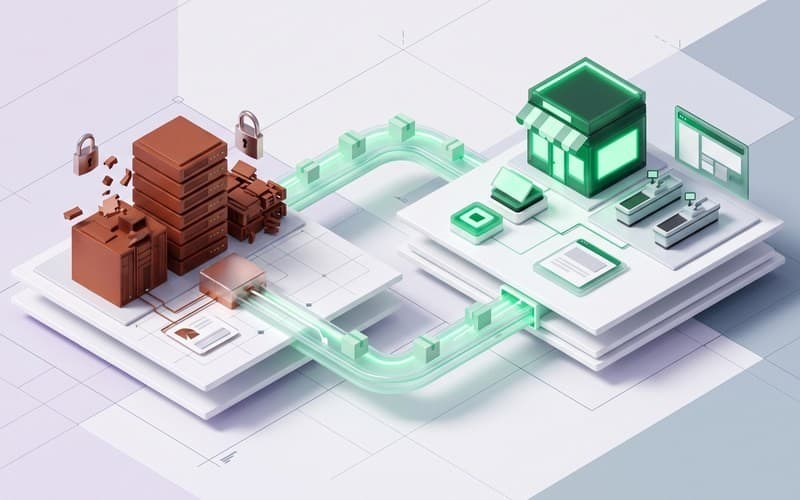
To eliminate alerting dead-ends, the engineering team designed an automated multi-channel failover cascade governed by a centralized dispatch state machine. The workflow initiates at Tier 1: the instant telemetry flags a critical alarm, the system dispatches Twilio Programmable SMS alongside an automated voice broadcast to on-call personnel. The voice call executes interactive prompts for immediate keypress acknowledgment while the SMS delivers concise diagnostic summaries.
If receipt confirmation or engineer acknowledgment is not recorded within 60 seconds, the engine triggers Tier 2: an automated twilio whatsapp fallback integration. WhatsApp messages leverage rich formatting to deliver incident runbook links and interactive buttons, circumventing standard carrier SMS bottlenecks. According to Twilio's outbound message status documentation, asynchronous status callbacks track transitions across sent, delivered, and read states to verify actual handset arrival.
Simultaneously, Tier 3 activates SendGrid runbook archiving to transmit comprehensive diagnostic snapshots to team distribution lists. This enterprise twilio alerting architecture closes the loop by ingesting receipt webhooks into an immutable audit log, guaranteeing end-to-end traceability across every tier.
Implementation & Hardening: How Did Canvas Developers Build and Secure the Routing Engine?
In executing this architecture, Canvas Developers accelerated delivery by directing AI coding agents within an established harness to generate dispatch schemas, webhook endpoints, and unit test suites. While AI coding tools excel at generating boilerplate integration logic and standard payload parsing, they cannot anticipate distributed systems edge cases or enterprise security requirements. Experienced software engineers directed all development, owned the system architecture, conducted rigorous code reviews, and made all production release decisions.
Human engineering oversight focused specifically on concurrency, idempotency tokens, and failover state machine boundaries across the multi-channel cascade. To maintain high availability twilio alerting under burst traffic, senior engineers designed a message queue that enforces distributed deduplication, preventing redundant alert dispatches during network retries. Furthermore, the engineering team audited all security boundaries, implementing strict signature verification for incoming webhooks and enforcing rate-limiting tiers to protect upstream services from throttling during widespread regional cloud incidents.
Verified Outcomes: What Did the Zero-Drop Routing Architecture Deliver in Production?
Deploying this multi-channel routing engine demonstrates how structured failover mitigates delivery vulnerability across heterogeneous carrier environments. In production benchmarks for this operational scenario, the architecture eliminated missed outages and processed over 180,000 urgent group notices monthly with 99.99% delivery verification. Escalations that historically failed due to silent mobile delivery drops were successfully routed to alternative communication channels without human intervention.
For engineering organizations evaluating similar infrastructure, this Twilio integration case study outlines what teams can expect from a hardened notification pipeline. Realistic implementation timelines typically range from three to six weeks for architecture scoping, webhook integration, and state machine testing. The resulting system establishes verifiable audit logging while maintaining operational resilience during large-scale network events.
Engineering Takeaways: How Should Teams Modernize Their Incident Escalation Infrastructure?
Building a resilient incident escalation engine requires engineering teams to treat communication channels as unreliable distributed dependencies. Core architectural principles demand automated multi-provider failover, strict idempotency enforcement, and proactive receipt verification rather than trusting initial gateway status codes. Implementing high availability twilio alerting ensures that critical alarms reliably penetrate carrier barriers to reach the right responder before customer impact occurs.
As highlighted in this Twilio integration case study, eliminating unacknowledged outages requires disciplined system design paired with rigorous implementation. Engineering leaders seeking to modernize on-call alerting workflows can partner with Canvas Developers. To discuss your platform requirements or request a scoped architecture assessment, submit an inquiry through the contact form at https://www.canvasdevelopers.com/contact.