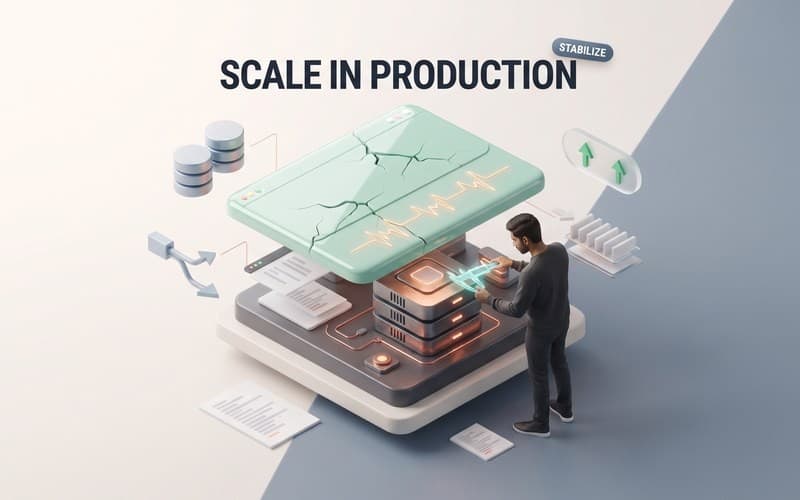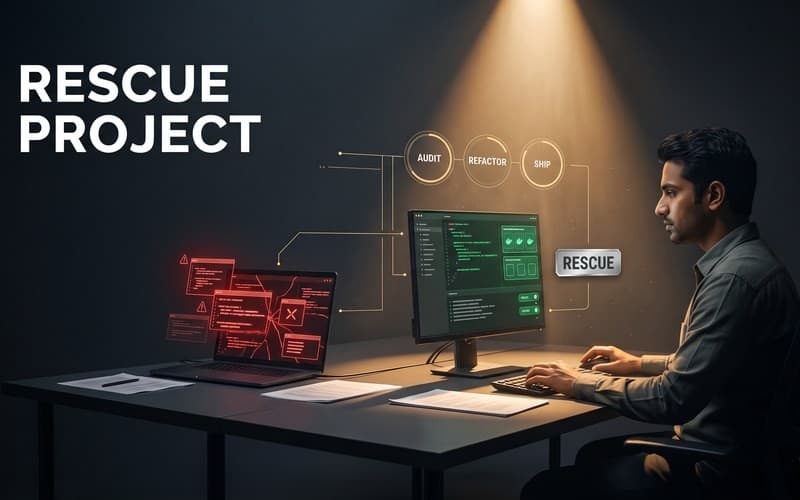
This illustrative case study examines how travel platforms resolve backend inventory bottlenecks during high-volume booking events. When rapid reservation surges overwhelm GDS connection limits, technical teams require rigorous amadeus gds integration troubleshooting to diagnose session dropouts, prevent cascading quote failures, and stabilize the transaction engine before user trust erodes.
Executive Summary: What Caused the Amadeus GDS Bottleneck and How Was Reliability Restored?
In this illustrative scenario, a venture-backed corporate retreat marketplace faced critical checkout dropouts during scheduled flash booking windows. Under sudden bursts of concurrent demand, unmanaged session lifecycles caused severe Amadeus API connection exhaustion and synchronous quote failures. High concurrency created systemic backpressure, stalling flight and accommodation inventory queries precisely when corporate coordinators attempted simultaneous multi-seat reservations.
By initiating targeted amadeus gds integration troubleshooting, engineering addressed the root architectural flaws rather than applying superficial rate throttle patches. The technical intervention centered on auditing the integration layer, architecting a distributed Redis session pool for connection reuse, and establishing an asynchronous worker queue for group inventory locks. These changes proved decisive in stabilizing travel booking engine gds pipelines, successfully lifting booking completion reliability to 99.98% during peak offsite release events.
The Challenge: Why Do Corporate Travel Booking Engines Drop Sessions Under Peak Traffic?
Corporate retreat bookings differ fundamentally from individual leisure travel because a single reservation coordinator often books dozens of seats across coordinated flight legs and hotel blocks. In this architecture, when a scheduled corporate offsite package dropped, thousands of enterprise buyers flooded the platform simultaneously. The underlying booking service treated each user interaction as an isolated session, initializing new upstream handshakes without connection reuse. As documented in travel API engineering guides like PHPTRAVELS, managing authentication and session lifecycles across GDS endpoints requires strict state discipline under burst traffic.
Because the application lacked connection pooling, backend threads rapidly saturated downstream connection caps. The booking engine held active connections open while waiting for synchronous responses across multiple inventory queries. When concurrent users requested simultaneous group seat validations, quote requests timed out, leaving dangling sessions that locked available seats without confirming checkouts. Addressing these cascading failures required comprehensive amadeus gds integration troubleshooting focused specifically on fixing amadeus session timeouts at the transport layer.
What Was at Stake: Why Do GDS Failures Threaten Startup Viability and Investor Trust?
For a venture-backed marketplace specializing in curated corporate retreats, booking windows operate like high-stakes flash sales. Enterprise operations teams schedule coordinated reservations weeks in advance, assembling entire departmental itineraries during narrow release windows. When Amadeus API session exhaustion triggered checkout crashes mid-transaction, corporate travel coordinators were left with stalled payment screens and unconfirmed itineraries. These systemic failures caused severe checkout abandonment precisely when transaction velocity should have peaked.
Beyond immediate revenue loss, repeated dropouts severely undermined enterprise buyer confidence. Corporate travel managers require predictable booking execution; when transactions hang, enterprises return to legacy agency desks. For the venture-backed platform, persistent integration instability during critical booking events raised serious concerns among board members and investors regarding the platform's architectural scalability. The intervention required comprehensively rescuing broken travel saas platform infrastructure to safeguard commercial viability and investor trust.
The Solution Architecture: How Do Distributed Session Pools and Async Queues Stabilize Amadeus APIs?
To eliminate upstream bottlenecks, the engineering team decoupled the checkout pipeline from direct, synchronous GDS socket calls. Central to this redesign was a robust travel api session pool architecture implemented with distributed Redis clusters. Instead of provisioning an isolated connection per user request, the platform pre-warms a calibrated pool of authenticated Amadeus sessions. A centralized token coordinator leases active connections for short-lived queries, enforces proactive token renewals before downstream expiry, and returns healthy sockets to the pool, achieving predictable amadeus api rate limit optimization across concurrent requests.
Simultaneously, the team separated front-facing group checkout requests from downstream inventory locks using asynchronous Celery worker queues. When corporate coordinators confirm an offsite booking, the platform issues an immediate reservation receipt, places seat locking jobs onto the queue, and executes batch PNR ticketing in ordered sequences without exhausting GDS connection thresholds.
Canvas Developers utilized AI coding agents to rapidly scaffold Redis data structures and boilerplate queue consumers. However, while AI tools accelerated baseline code generation, experienced software engineers maintained strict ownership over concurrency controls, stateful session lifecycle boundaries, and edge failure recovery. Human architectural oversight ensured distributed locks handled network partitions safely, preventing race conditions that automated code generation cannot resolve alone.
Implementation Roadmap: How Did Engineering Direct AI Acceleration to Harden the Travel Integration?
The stabilization initiative progressed through three disciplined phases led by senior backend engineers directing AI-assisted development workflows. Phase 1 initiated an exhaustive audit of network sockets, profiling connection leaks and downstream quota boundaries during simulated traffic spikes. Systematic amadeus gds integration troubleshooting pinpointed unclosed transport sessions and unhandled response codes that previously triggered uncoordinated retry storms across application instances.
In Phase 2, the team developed and deployed the distributed Redis session coordinator alongside worker queues. AI coding agents accelerated implementation by generating boilerplate serialization routines, unit tests, and integration mock harnesses. However, senior software engineers actively steered the implementation, personally reviewing distributed lock primitives, lease time-to-live expiration logic, and thread synchronization boundaries to prevent race conditions during concurrent group checkouts.
Phase 3 focused on robust gds integration error handling, standardizing recovery patterns for upstream timeouts, stale PNR responses, and sudden session revocations. Engineers implemented exponential backoff mechanisms with jitter, circuit breakers, and automatic socket recycling. This hybrid approach—combining rapid AI scaffolding with rigorous human code review and architectural ownership—ensured the payment and ticketing pathways met enterprise-grade reliability standards before production deployment.
Measurable Results: What Changed Before and After Optimizing Amadeus Session Exhaustion?
Re-architecting the GDS communication layer directly resolved the acute session drops and connection pool exhaustion that previously disrupted flash booking windows. By transitioning from unpooled, blocking API calls to managed distributed session leasing, the platform eliminated socket starvation, resolving concurrent quote timeouts and fixing amadeus session timeouts across peak corporate checkout surges.
During subsequent high-concurrency offsite release events, the platform achieved 99.98% booking completion reliability. Group reservation requests flowed cleanly through asynchronous queue workers without triggering upstream connection throttling or dropping active corporate transactions mid-payment. In this illustrative scenario, systematically stabilizing travel booking engine gds pipelines proved that high-throughput travel platforms can maintain seamless transactional integrity when connection pools and resilient worker architectures decouple checkout demand from legacy provider limits.
Engineering Lessons and Next Steps: How Can You Audit Your GDS Integration Before Peak Traffic?
Decoupling user-facing checkouts from upstream GDS communication is essential when rescuing broken travel saas platform architectures facing unpredictable demand spikes. Relying on synchronous, unmanaged connections introduces severe single points of failure. Implementing distributed session pooling alongside asynchronous worker queues ensures predictable amadeus api rate limit optimization without compromising transaction velocity or customer checkout flows.
Engineering teams must also approach AI-accelerated development with clear discipline. While AI coding tools rapidly generate boilerplate consumers, data structures, and test suites, they lack contextual awareness of distributed systems edge cases, network partitioning, and stateful concurrency deadlocks. Experienced senior engineers must maintain strict ownership over architecture, security protocols, payment processing, and final release decisions.
For travel platforms preparing for high-concurrency booking releases or encountering third-party API bottlenecks, Canvas Developers offers scoped integration assessments. Whether modernizing legacy travel engines or hardening modern SaaS architectures, our engineering team directs AI tools to deliver robust, scalable software. Begin your technical evaluation through the contact form at https://www.canvasdevelopers.com/contact.