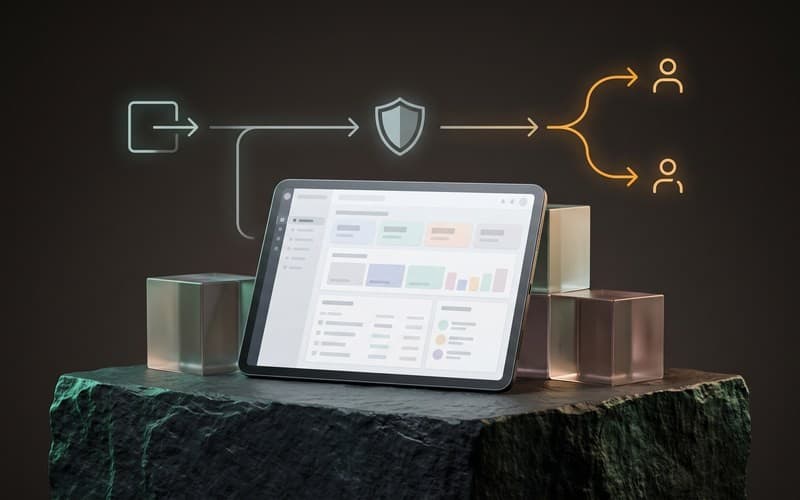
This illustrative example outlines an engineering blueprint for custom nonprofit crm development designed by Canvas Developers to demonstrate how mission-driven organizations can scale their operations. Tailored for growing charitable foundations and international non-governmental organizations, this concept replaces rigid commercial software with an internal platform that unifies donor relationship management and automated donation pipelines.
By migrating away from off-the-shelf platforms that charge percentage fees on incoming gifts, foundations gain full control over recurring pledge workflows, automated tax-deductible receipt distribution, and constituent data privacy.
Project at a Glance: What Does This Custom Nonprofit CRM Concept Entail?
Philanthropic foundations and expanding charitable entities frequently reach operational bottlenecks when relying on generic fundraising platforms. This illustrative concept for custom nonprofit crm development establishes an integrated internal management portal designed specifically for multi-tiered donor contributions, recurring pledge schedules, and constituent relationship tracking.
The overall system scope encompasses an intuitive administrative dashboard paired with embeddable donation checkouts, unifying campaign progress monitors, pledge histories, and reconciled financial records into a single workspace. Guided by a robust donor management software architecture, Canvas Developers directs full-stack engineering and dedicated quality assurance protocols to deliver dependable, production-grade tools aligned with complex non-profit operational and governance workflows.
The Brief: Why Do Growing Foundations Outgrow Commercial Donation Platforms?
Commercial fundraising platforms frequently introduce prohibitive overhead as charitable contribution volumes expand. Typical software-as-a-service models impose steep subscription tiers while capturing percentage cuts from each processed gift, systematically diminishing the net capital directed toward core mission programs. For established philanthropic organizations, these ongoing deductions reduce resources that should directly support field operations.
Beyond transactional costs, off-the-shelf platforms introduce severe workflow friction. Donor interaction logs, recurring schedules, and communication histories remain fragmented across disparate email tools, event checkouts, and disconnected spreadsheets. Investing in custom fundraising crm engineering to deploy tailored charity donor database software eliminates data silos, reconciles giving histories, and establishes internal ownership over organizational records without arbitrary vendor constraints.
Approach & Process: How Does AI Velocity Combine With Senior Engineering Oversight?
Modern software development balances rapid delivery with uncompromising architectural rigor. At Canvas Developers, AI coding agents and an advanced agent harness accelerate frontend and interface scaffolding, quickly generating constituent profile views, responsive campaign cards, and administrative data tables. This rapid execution allows product teams to evaluate navigation patterns and user feedback early in the cycle.
However, autonomous code generation fails when handling sensitive financial workflows, authentication boundaries, and data integrity. Automated agents often overlook subtle payment gateway race conditions, tokenized subscription webhooks, and complex schema constraints. Experienced engineers direct the donor management software architecture, authoring PCI-compliant webhook listeners, idempotent transaction handlers, and granular role-based access controls to protect sensitive donor records.
Our custom fundraising crm engineering process follows a structured engineering lifecycle. Engagements begin with detailed technical scoping, progress through clear development milestones, and undergo rigorous peer review and automated testing. Dedicated engineers, QA analysts, and DevOps specialists verify every release before deployment, ensuring reliable execution in production.
What Was Built: Which Core Features Power the Donor Management Architecture?
The core architecture centers on an intuitive donor timeline that aggregates cross-channel touchpoints into a unified constituent record. Every gift, email interaction, volunteer engagement, and annual pledge appears in chronological order, equipping relationship managers with comprehensive context. This integrated donor relationship management system consolidates historical contributions, recurring commitments, and communication logs without requiring cross-system synchronisation or manual data imports.
To facilitate public giving without third-party platform markups, the application deploys secure checkout embeds alongside a dedicated nonprofit recurring donation portal. Modern payment gateways tokenize donor credit card and automated clearing house (ACH) credentials, offloading sensitive storage from the host infrastructure. Server-side webhook listeners capture recurring subscription renewals, handle payment failures gracefully with automated retry schedules, and ensure end-to-end PCI compliance across all payment transactions.
Immediately following a successful transaction, an asynchronous background queue triggers the automated receipt engine. The service renders customized, tax-deductible PDF receipts carrying organizational branding, official charity registration numbers, and unique transaction hashes, transmitting copies to donors while archiving audit-ready duplicates.
For executive leadership, the internal portal pairs this transactional engine with a real-time campaign analytics platform nonprofit teams use to monitor multi-channel fundraising targets. Dynamic visualizers track recurring gift retention, average gift velocity, and pledge fulfillment. Furthermore, staff can generate targeted donor segmentation lists filtered by lifetime contribution value, geographical region, or engagement recency for tailored outreach.
Architectural Impact: How Does Custom Software Protect Margins and Donor Data?
Eliminating third-party platform percentage surcharges preserves critical capital for direct charitable initiatives. Rather than forfeiting platform commissions on every major gift and recurring gift, custom nonprofit crm development enables foundations to retain full campaign contributions, routing funds directly through their chosen payment gateway accounts under standard merchant processing rates.
In addition to cost predictability, self-hosted deployment safeguards sensitive constituent records. Operating an internal donor relationship management system ensures complete infrastructure ownership, allowing charitable boards to maintain rigorous data governance, enforce automated database backups, and comply with strict donor privacy standards without exposing philanthropic records to multi-tenant SaaS environments.
Next Steps: How Can Your Organization Scope a Custom Fundraising Platform?
Organizations preparing to transition from restrictive commercial tools can evaluate their platform requirements through structured planning. Our custom fundraising crm engineering engagements begin with an initial scoping discovery phase to audit existing donor databases, map recurring payment gateway configurations, and identify essential reporting integrations.
Following architectural alignment, Canvas Developers establishes agreed delivery milestones, automated testing environments, and verified deployment schedules. Whether selecting private local AI engineering or commercial AI-assisted development workflows, your team maintains direct visibility across each phase. To review your technical specifications or request a scoped assessment, submit your project details through the Canvas Developers contact form.