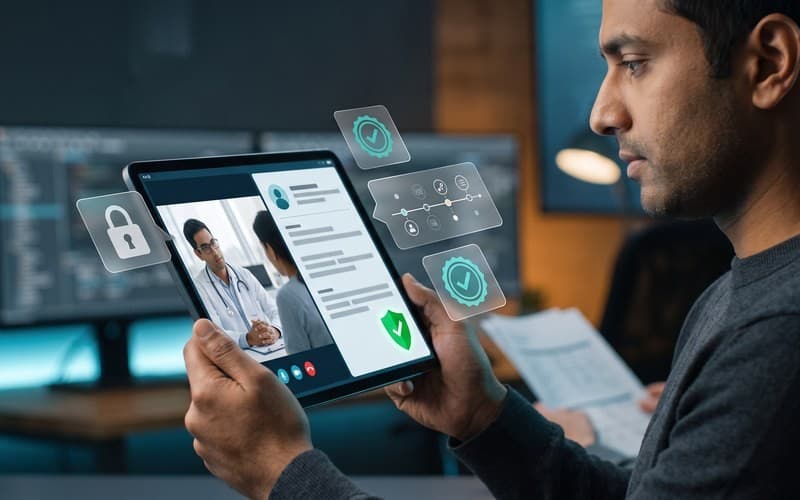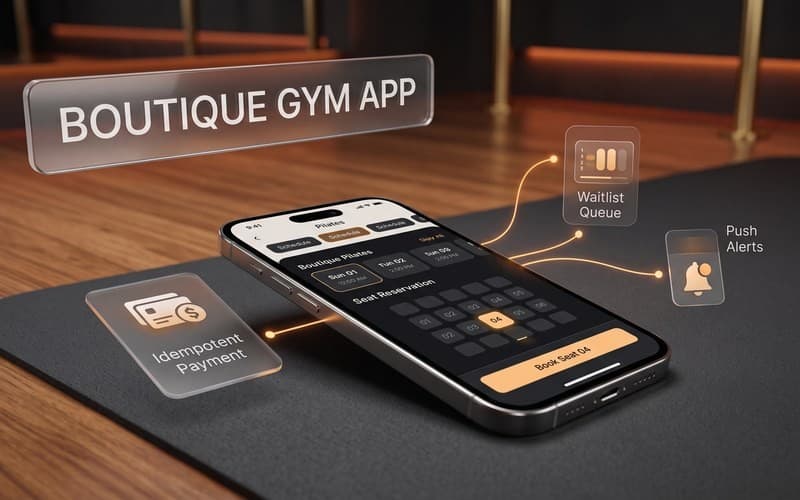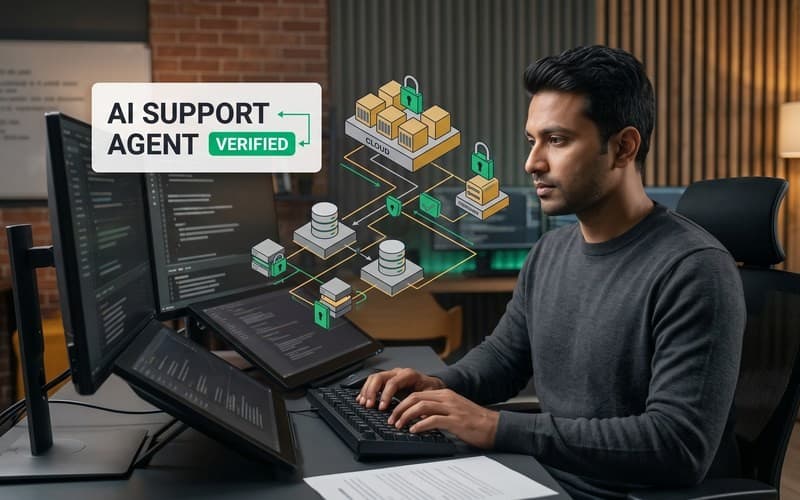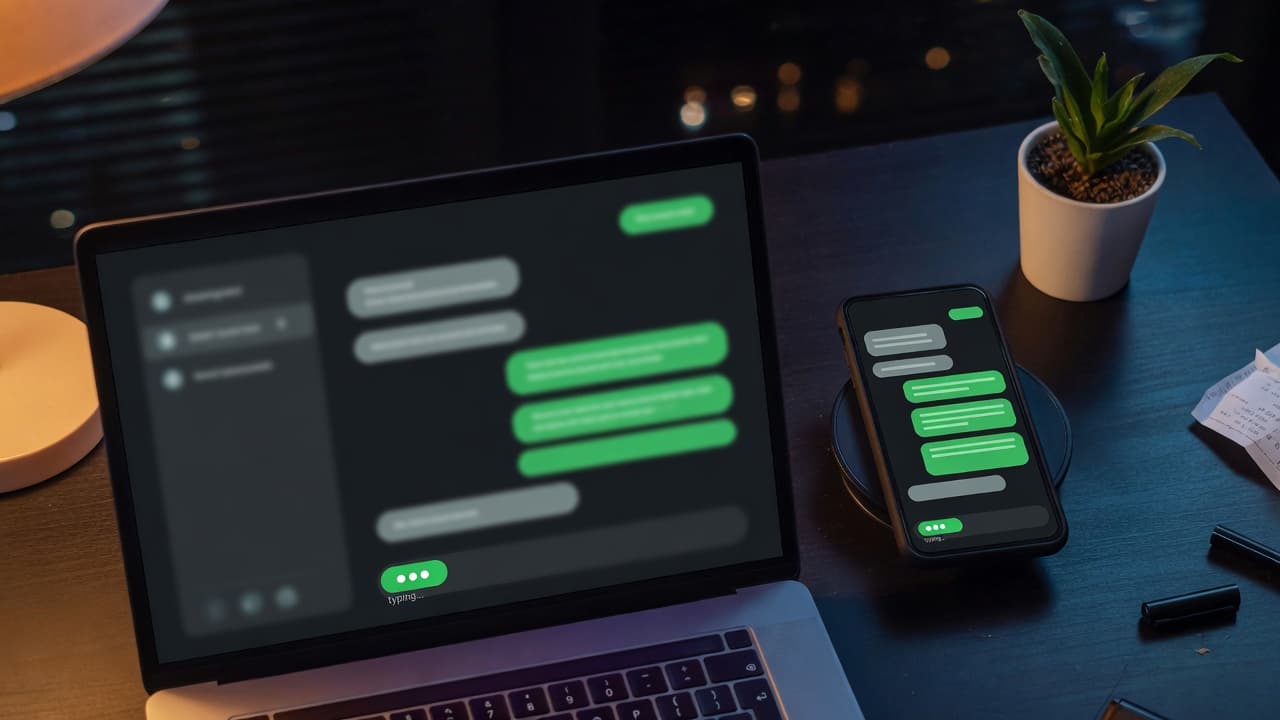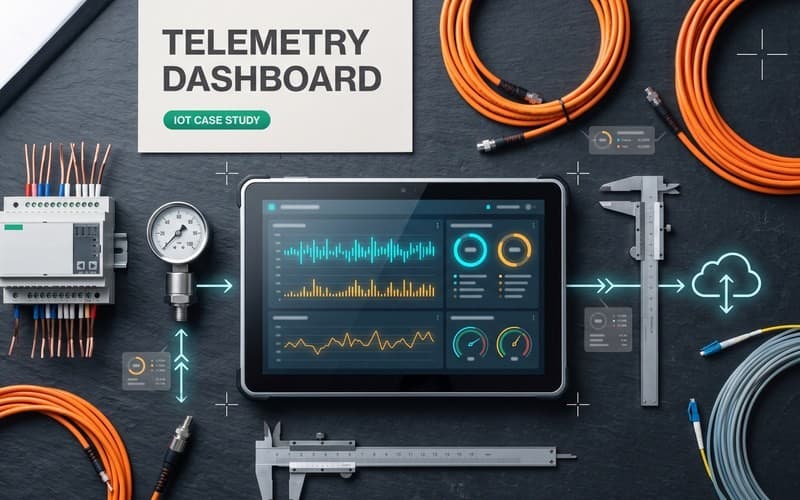
This illustrative example is a concept design created by Canvas Developers to demonstrate what modern SaaS engineering teams can achieve through custom ai support agent development. Formulated for growing B2B software platforms dealing with queue congestion and repetitive onboarding questions, this build architecture outlines how to deploy an intelligent triage and support service without compromising tenant security or operational control.
What Does the Multitenant AI Support Concept Cover at a Glance?
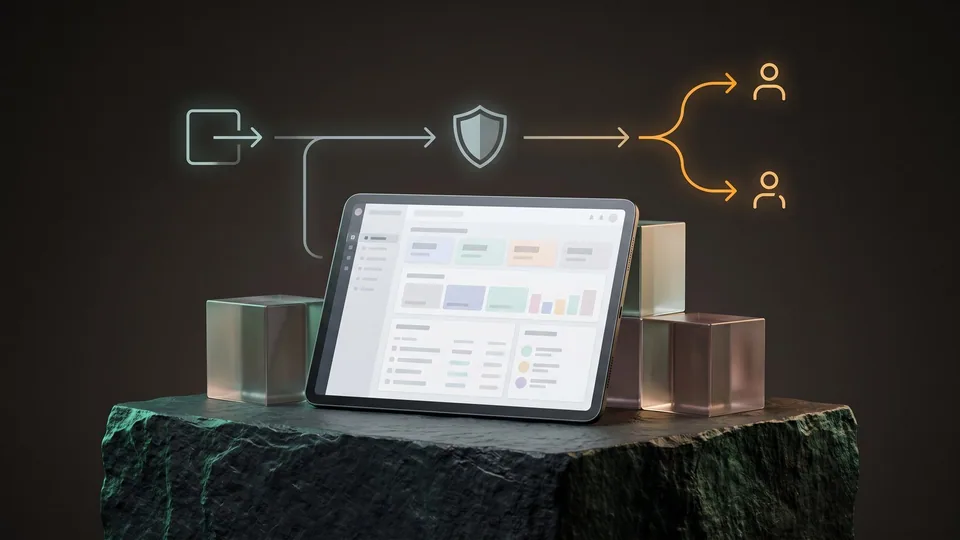
This concept design targets B2B SaaS platforms managing multiple customer organisations within unified cloud infrastructure. The build encompasses two core UI surfaces: an embeddable in-app drawer for end-user self-service, and a centralized queue management console for support engineers. By implementing multitenant ai customer support as an API-first service, platforms connect intelligent routing directly into React-based web app dashboards and ticketing tools.
To support diverse compliance mandates, the architectural model accommodates two distinct deployment packages: Private / Local AI Engineering using isolated open-weight models, and Claude Code / OpenAI Codex Engineering using client-approved cloud pipelines. Both approaches ensure that custom ai support agent development aligns with strict infrastructure governance.
What Problems and Security Constraints Define the Support Automation Brief?
Scaling B2B SaaS companies frequently encounter severe Tier-1 queue congestion as user adoption expands. Support inboxes become saturated with repetitive inquiries regarding configuration options, API rate limits, and workspace provisioning. When front-line agents spend hours answering identical procedural queries, high-severity operational tickets experience extended resolution times, straining customer trust.
However, resolving this bottleneck requires uncompromising attention to ai customer service bot security. In a shared enterprise ecosystem, models must never leak proprietary documentation or account identifiers across tenant boundaries. Adhering to standards highlighted in the OWASP Top 10 for LLM Applications guidance, robust saas ai support agent integration requires strict storage-level partition boundaries rather than superficial application filters, combined with defensive prompt delimiters that isolate untrusted ticket content to neutralize prompt injection threats.
How Does Hybrid Engineering Combine AI Coding Acceleration with Senior Code Review?
Building enterprise-grade support workflows benefits immensely from modern development workflows. In custom ai support agent development, Canvas Developers pairs AI coding agents with an advanced AI harness to accelerate repetitive implementation tasks. These tools rapidly scaffold document ingestion pipelines, transform legacy helpdesk schemas, and generate responsive front-end chat components within client dashboard environments, compressing routine scaffolding time.
However, automated code generation cannot replace rigorous human systems engineering. In autonomous helpdesk agent engineering, experienced software engineers direct every stage of development, define system architecture, review every line of code, and make all production release decisions. Senior engineers specifically validate that vector database queries strictly enforce storage-level tenant separation, audit API authentication headers against data leaks, and ensure streaming response buffers handle network timeouts gracefully. This hybrid model captures the velocity of AI acceleration while preserving the defensive engineering required for enterprise production environments.
What Technical Architecture and Core Features Power the Autonomous Triage Agent?
The technical architecture operates as a decoupled microservice powered by Python FastAPI, PostgreSQL with pgvector, and Redis event queues. In rag customer support agent development, the vector database enforces strict tenant isolation through dedicated namespace partitions and cryptographic organisation keys. On the user-facing screen, customers interact with a responsive slide-out chat drawer embedded in the web dashboard, receiving verified answers alongside clickable documentation source anchors.
Simultaneously, incoming messages undergo intent classification and sentiment scoring. In this ai ticket triage system architecture, support staff monitor a split-pane triage dashboard featuring color-coded urgency badges, customer sentiment indicators, and pre-filled response drafts. Human representatives review and refine these contextual suggestions directly within the console before dispatching them to users.
To govern service entitlements, asynchronous workers query billing APIs for subscription verification, confirming active user licenses and account tiers. When inquiries trigger negative sentiment thresholds or billing disputes, deterministic failover logic bypasses automated generation, escalating the ticket and conversation telemetry directly to tier-2 human engineers.
What Are the Realistic Impacts and Architectural Trade-offs of AI Ticket Triage?
An automated triage agent delivers tangible operational advantages when deployed with clear boundaries. Within an ai ticket triage system architecture, autonomous agents excel at resolving high-frequency procedural inquiries, categorizing user intent, and routing tickets by urgency. These capabilities reduce overall helpdesk backlogs and accelerate initial response times for standard administrative questions.
However, production reliability demands an honest assessment of critical failure points. AI models struggle with nuanced context, non-deterministic edge cases, and unexpected system outages. Without strict constraints, autonomous models risk hallucinating policy guidance or executing unintended tool operations. This makes human engineering oversight vital for ai customer service bot security. Experienced software engineers must construct hardened storage boundaries around multitenant databases, isolate payment verification logic completely outside model context, and deploy automated circuit breakers to protect upstream infrastructure during peak traffic spikes.
How Can SaaS Teams Build and Deploy a Secure AI Support Agent?
Engineering teams planning saas ai support agent integration can tailor their deployment architecture to their regulatory and infrastructure requirements. Organisations handling sensitive customer data or strict data residency mandates can select Private / Local AI Engineering to deploy isolated open-weight models within client-controlled infrastructure. Teams seeking rapid development velocity can adopt Claude Code / OpenAI Codex Engineering using client-approved cloud environments.
As a software engineering company with an office in Dhaka, Canvas Developers builds custom SaaS platforms, business systems, and AI features through structured engagements comprising scoping, agreed milestones, comprehensive testing, and handover. To evaluate custom ai support agent development for your application stack, schedule a scoped technical assessment through the contact form at Canvas Developers.