This illustrative example demonstrates an architectural concept developed by Canvas Developers to illustrate advanced settlement automation. Named EscrowAgent AI, the concept models a robust Qualia title closing integration automated resolution hub designed to process complex closing conditions autonomously. As an illustrative product design rather than delivered client work, this blueprint highlights how modern software engineering teams bridge core closing platforms with autonomous LLM agents to accelerate title curative operations.
What Is the EscrowAgent AI Concept at a Glance?
In enterprise settlement operations and title underwriting, closing delays frequently stem from fragmented manual curative tasks. EscrowAgent AI models an end-to-end integration architecture that connects directly to closing pipelines. Rather than treating settlement software as an isolated database, this design implements Qualia title order agent orchestration to manage requirements programmatically.
The technical scope focuses on connecting order endpoints, extracting pending commitments, and coordinating external municipal searches. By decoupling exception handling from manual escrow officer triage, the system demonstrates how enterprise title underwriters can structure automated curative workflows without compromising data integrity across active closing files.
Why Do Settlement Pipelines Need Automated Exception Clearing in Qualia?
Settlement pipelines face severe operational bottlenecks during the title commitment phase. Title officers spend countless hours manually chasing unreleased municipal liens, delinquent tax certificates, and HOA payoff demands. Because these routine curative items follow predictable verification rules, handling them through manual email threads delays closing timelines and drives up administrative overhead across high-volume settlement agencies.
Implementing an autonomous closing exception resolver within this environment requires strict integration discipline. Settlement platforms enforce rigorous audit trails, ALTA compliance standards, and deterministic accounting ledgers. When deploying an automated escrow condition validator, software systems must guarantee verifiable evidence logging before modifying any order status. Every document parsed, query dispatched, and requirement cleared must produce an immutable audit record to satisfy underwriter standards under tight closing deadlines.
How Was the Multi-Agent Qualia Title Curative Architecture Engineered?
To build a resilient Qualia title closing integration automated resolution hub, engineering teams must balance rapid development with strict technical governance. At Canvas Developers, AI coding agents and harness tooling accelerate development velocity across service scaffolding, schema generation, and test creation. However, experienced engineers own the underlying architecture, review every pull request line by line, and decide all production releases to safeguard critical financial pipelines.
Architecture planning must also account for regulatory boundaries and data governance when configuring multi-agent title curative workflows. Depending on enterprise compliance postures, teams can deploy solutions through 'Private / Local AI Engineering'—running open-weight models within dedicated, client-controlled infrastructure—or 'Claude Code / OpenAI Codex Engineering' utilizing client-approved cloud parameters. Rigorous QA and release assurance protocols enforce deterministic unit testing, mocking the Qualia API capability gates and GraphQL schema to guarantee that automated services never execute unverified writes against live settlement ledgers.
Which Autonomous Capabilities Power the Qualia Title Closing Integration Hub?
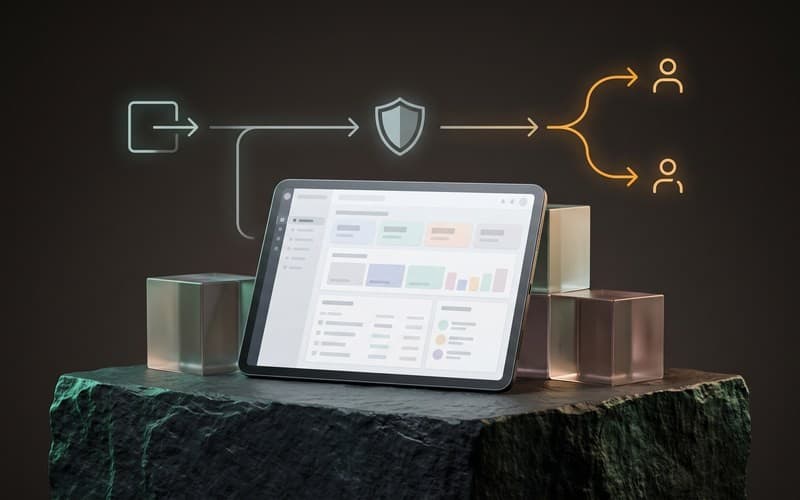
The operational core of EscrowAgent AI relies on event-driven ingestion designed around Qualia’s integration patterns. Whenever an order status updates or documents are attached, an asynchronous title API webhook agent captures the payload. As documented in production settlement architectures, such as the Snapdocs Qualia integration guide, webhooks listening for activity events allow third-party services to synchronize order states, fetch attached commitments, and trigger downstream processing without polling overhead.
Once an order commitment is ingested, the specialized AI title curative engine Qualia inspects unstructured PDF schedules and municipal filings. Autonomous parsing agents extract open requirements, such as delinquent municipal utility liens, pending ad valorem tax certificates, and outstanding HOA dues letters. The system parses account numbers, recording references, and payoff contact details into structured validation schemas.
Following data extraction, the system automatically drafts standard resolution correspondence, generating municipal lien inquiry forms or HOA demand requests for review. When verified payoff documentation or zero-balance certificates arrive, the curative agent reconciles the reference data and updates the Qualia order file, clearing specific title requirements without requiring repetitive manual entry from settlement coordinators.
What Are the Realistic Capabilities, Failure Modes, and Trade-Offs of Title AI Agents?
Deploying title automation requires an honest evaluation of artificial intelligence capabilities and technical boundaries. Autonomous software agents excel at extracting unstructured data from complex county records, summarizing property commitments, and drafting standardized clearance inquiries. When deployed as an autonomous closing exception resolver, AI eliminates repetitive administrative coordination for routine municipal lien inquiries, tax clearance verifications, and HOA payoff requests.
However, pure AI systems struggle with complex boundary disputes, unprobated estates, ambiguous mechanics' liens, and precise escrow ledger adjustments. An automated system must never unilaterally authorize disbursement entries or waive underwriting exceptions without verified human oversight. For this reason, an automated escrow condition validator must function as an operational assist layer rather than an unmonitored decision-maker. Experienced software engineers and certified title underwriters must maintain mandatory review guardrails, verifying clear title criteria and validating system actions before any file achieves final settlement sign-off.
How Can Proptech Teams Scope and Build a Similar Qualia Integration?
Moving from concept to production requires methodical engineering governance. Building a secure Qualia title closing integration automated resolution platform begins with structured scoping to map capability gates, data schemas, and webhooks. Canvas Developers structures engagements through defined milestones: architecture design, prototype validation, security hardening, and complete handover with full source code ownership.
Whether deploying private infrastructure or cloud-assisted tooling, teams maintain deterministic oversight over Qualia title order agent orchestration. Proptech teams seeking to modernize closing workflows can initiate a technical consultation by requesting a scoped architecture assessment through the contact form at Canvas Developers.