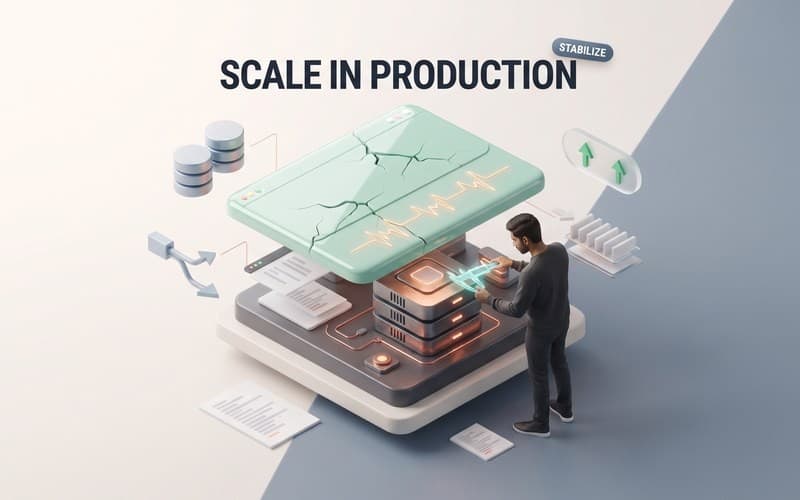
This illustrative case study examines how technical architecture rescues brittle travel checkout flows when split transactions fail under concurrency. In vacation villa booking platforms operating in Israel, coordinating multi-payer billing requires seamless Israeli gateway integrations. When session timeouts and dropped webhooks cause checkout failure, executing a structured Pelecard group payment checkout rescue becomes necessary to protect transaction settlement. Canvas Developers presents this engineering scenario to show how decoupling tokenization, implementing an idempotent transaction queue, and hardening Supabase webhook workers resolves payment abandonment.
Executive Summary: What Caused the Vacation Rental Checkout Drop-Off and How Was It Resolved?
Core Bottlenecks: Unhandled Pelecard Session Timeouts and Dropped Grow Webhooks
In this illustrative scenario, a group villa booking platform in Israel suffered an unsustainable 34% drop-off rate during concurrent room splits. Synchronous front-end dependencies caused Pelecard session tokens to expire prematurely, while unhandled Grow webhooks desynchronized backend reservation ledgers. Performing structured Grow payment gateway debugging became vital to isolate these silent network failures and missing callback confirmations.
The Architectural Overhaul: Idempotency, Supabase Workers, and Resilient Tokenization
To stabilize checkout, Canvas Developers executed a targeted Pelecard group payment checkout rescue. The engineering overhaul introduced transparent iframe tokenization to decouple card capture, an asynchronous queue enforcing strict idempotency across split shares, and resilient Supabase webhook retry workers. This architecture eliminated ghost reservations and restored consistent transaction settlement across all split transactions.
The Context and Challenge: Why Do Concurrent Room Splits Break Israeli Payment Gateways?
Multi-Payer Concurrency in Group Villa Bookings
Group vacation rentals present unique orchestration hurdles during checkout. When multiple guests split payments for a shared luxury villa, billing systems must synchronize partial authorizations against a single property reservation. In this scenario, the platform utilized a shared travel expense API integration to divide invoice balances across guests. However, coordination broke down when individual room occupants attempted to finalize payments simultaneously across differing network conditions.
Where Pelecard Tokenization Latency Collides with Synchronous Checkout Demands
Israeli payment infrastructure requires strict compliance and secure card capture. The application relied on client-side iframes to capture payment details, but elevated Pelecard tokenization checkout latency frequently exceeded front-end session thresholds. Because the legacy platform treated payment authorization as a blocking, synchronous loop, delayed token exchanges caused frontend interfaces to hang. When guest sessions timed out before receiving gateway confirmations, users abandoned their carts, leaving split room allotments unresolved.
What Was at Stake: How Did a 34% Drop-Off Rate and Ghost Reservations Impact Operations?
The Direct Impact of a 34% Abandonment Rate on Group Travel Bookings
A 34% drop-off rate during checkout severely undermined platform revenue and organizer trust. In group bookings, if one traveler encounters a failed payment attempt, the entire reservation stalls. Prospective guests faced ambiguous error screens or timed-out sessions, prompting groups to seek alternative villa booking platforms. When coordinators must manually track down friends whose transactions failed, support queues become overwhelmed. To fix failing Israeli payment gateway integration weaknesses, the business needed an architectural audit rather than cosmetic interface adjustments.
How Asynchronous Webhook Failures Created Inventory Lockups and Ghost Reservations
The operational crisis deepened when unhandled gateway notifications produced ghost reservations. As individual split payments executed, dropped callbacks prevented the central ledger from confirming full payment status. Consequently, calendar dates remained locked indefinitely, blocking other prospective renters. Implementing a decisive Pelecard group payment checkout rescue became essential to reconcile payment states with property availability, eliminating locked villa inventory and administrative overhead.
The Architectural Strategy: How Do You Design a Fault-Tolerant Payment Split Engine?
Decoupling Client-Side Iframe Tokenization from Upstream Transaction Authorization
To isolate user interactions from gateway delays, the redesigned workflow separates token creation from downstream charging. The client application renders Pelecard payment fields inside a transparent, PCI-compliant iframe that issues single-use tokens upon submission. Instead of waiting for full debit clearance in the browser, the frontend immediately posts the token to a secure API endpoint and frees the guest UI.
Structuring an Idempotent Group Split Queue to Prevent Double Charges
To eliminate duplicate charges during concurrent attempts, the backend implements an idempotent payment split architecture. Every split payment generates a unique idempotency key tied to the guest's reservation ledger. If a user clicks repeatedly or network reconnects cause retries, the transaction manager checks current ledger state before dispatching authorization commands, ensuring exact double-entry ledger balance.
Implementing Resilient Webhook Retry Workers in Supabase for Grow Integration
Webhook durability was achieved by establishing a dedicated Supabase payment webhook retry queue. When Grow dispatches asynchronous payment notifications, Supabase edge workers ingest payloads into an append-only log with exponential backoff retries. This decoupling resolved legacy Grow payment gateway debugging challenges by guaranteeing that temporary network outages never discard critical settlement receipts.
Engineering Execution: How Do AI Velocity and Senior Oversight Deliver Secure Payment Rescues?
Where AI Coding Acceleration Succeeds: Rapid Scaffolding and Worker Logic
Modern engineering workflows leverage AI coding tools to accelerate development velocity. Within this rescue effort, AI coding agents assisted in generating boilerplate queue scaffolding, constructing initial database migration scripts, and creating repetitive unit test suites for edge worker logic. Automating these structural tasks compressed development cycles, allowing the team to scaffold retry handlers and webhook payload parsers rapidly.
Why Human Engineering Must Own Payment Architecture, Concurrency, and Data Integrity
While AI automation accelerates routine coding, automated agents cannot design secure financial architectures or reason through complex multi-tenant concurrency. Experienced engineers must direct the work, own the architecture, review every change, and decide releases. Human oversight is essential to audit double-entry ledger rules, verify race condition guards during room splits, and fix failing Israeli payment gateway integration vulnerabilities that automated tools overlook.
Overcoming Gateway Sandbox Limitations and Edge Case Transaction Reconciliation
Simulating third-party payment behavior revealed significant discrepancies between staging environments and live processing. Senior engineers analyzed live network logs to diagnose Pelecard tokenization checkout latency spikes under high socket load. By creating synthetic network latency harnesses and simulating dropped Grow callbacks, the engineering team hardened transaction reconciliation routines against edge cases before deploying to production.
Before vs. After: What Technical Improvements Restored Consistent Transaction Settlement?
Eliminating the 34% Checkout Drop-Off via Low-Latency Tokenization Flows
Deploying decoupled iframe tokenization resolved the bottlenecks that previously caused a 34% drop-off rate during villa checkouts. Guest payment interactions no longer stall waiting for synchronous gateway authorization, as asynchronous token processing removes client-side latency. This systematic Pelecard group payment checkout rescue ensures that individual room split contributors experience responsive, reliable payment confirmations regardless of concurrent user volume.
Zero Ghost Reservations: Achieving Consistent Double-Entry Settlement Across Split Payers
Stabilizing the shared travel expense API integration with transactional idempotency and resilient Supabase workers eliminated ghost reservations entirely. Every transaction is matched against an immutable double-entry ledger before room dates are locked or released. If an individual payer encounters an issue, the system holds the reservation state cleanly without blocking inventory or misallocating funds, ensuring dependable transaction settlement.
Lessons for Engineering Leaders: How Can You Audit and Harden Legacy Payment Integrations?
Three Non-Negotiable Checks for Multi-Party Payment Workflows
Engineering teams managing multi-payer checkouts must enforce three core architectural principles. First, decouple client-side credential entry from synchronous transaction completion. Second, assign strict idempotency keys across partial shares so retry loops cannot trigger duplicate debits. Third, implement durable, persistent queues with exponential retry intervals for webhook ingest. As demonstrated in Grow payment gateway debugging, asynchronous callbacks require dedicated ingestion workers to maintain ledger integrity under network stress.
Next Steps: Requesting a Scoped Payment Architecture Assessment with Canvas Developers
Organizations seeking to fix failing Israeli payment gateway integration issues can partner with Canvas Developers. Headquartered with an office in Dhaka, Canvas Developers builds custom software, SaaS platforms, and enterprise integrations. By pairing AI coding acceleration with seasoned software engineers who oversee system architecture and code verification, our teams stabilize brittle transaction flows. To discuss your checkout infrastructure, request a scoped payment architecture assessment through the contact form at https://www.canvasdevelopers.com/contact.