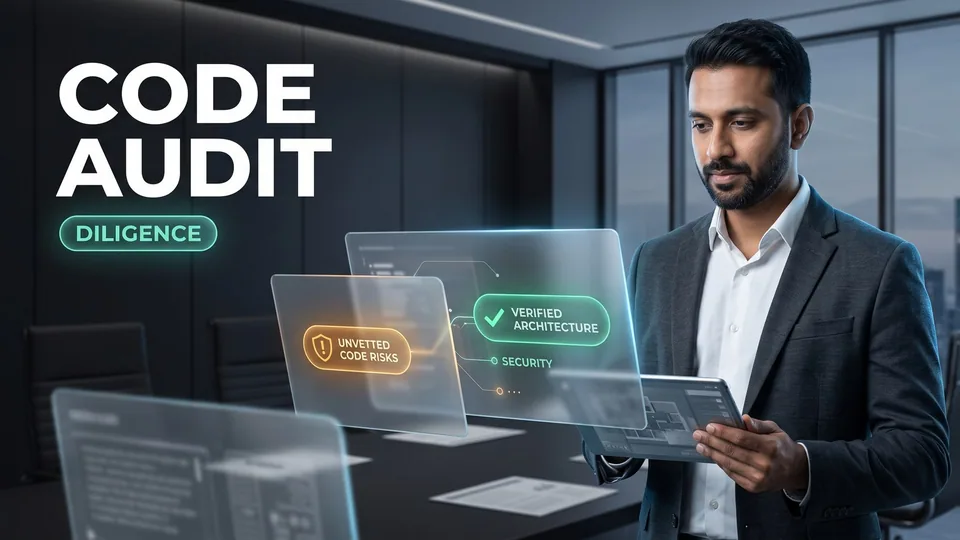
A sleek, interactive software demonstration can easily deceive investment committees during early-stage fundraising rounds. When venture capital and private equity investors evaluate software startups built rapidly with generative AI prompts, evaluating the visual user interface alone obscures severe underlying structural risks. Executing rigorous technical due diligence AI code audits before issuing term sheets is now an operational necessity to uncover architectural vulnerabilities, unmanaged dependencies, and fragile database schemas.
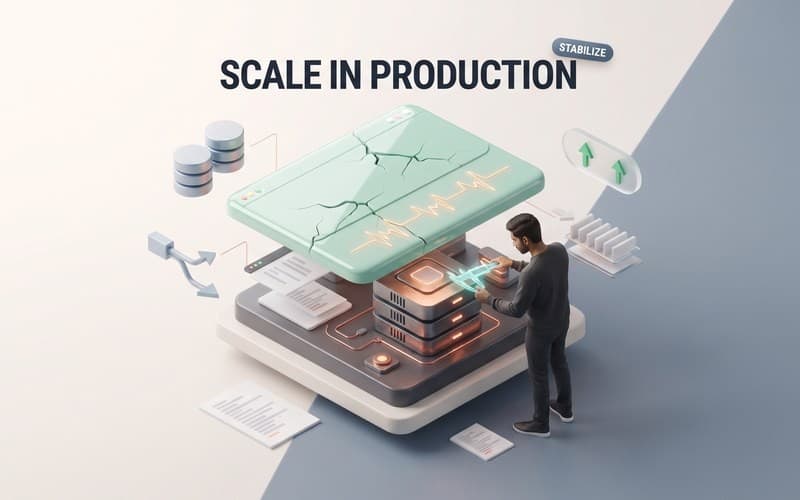
Without structured code inspection by experienced software engineers, investment funds risk backing systems that collapse under production workloads or require a costly, total rewrite immediately post-acquisition.
Why Does a Working AI Demo Mask Critical Codebase Liabilities?
The Illusion of Speed: When Prompted Frontends Conceal Non-Viable Backends
Modern generative software tools allow founders to assemble polished user interfaces and interactive prototypes rapidly. However, evaluating AI built codebase foundations often reveals that visual speed conceals severe backend deficits. Prompt-generated applications frequently operate on mocked data responses, unvalidated client state, or fragile API bindings that collapse under sustained enterprise workloads.
Why AI Coding Tools Accelerate Assembly While Omitting Architecture and Verification
AI coding assistants excel at boilerplate assembly, yet they lack holistic system judgment. Automated generation tools produce isolated code fragments without reasoning through distributed failure modes, long-term schema migrations, or defensive boundary enforcement. Without experienced engineers structuring the foundation, automated generation omits connection pooling, defensive validation, and operational verification. Conducting a structured technical due diligence AI code inspection ensures that investment committees determine whether a target startup owns viable proprietary software or merely an unstable prototype requiring immediate capital expenditure to rebuild.
What Hidden Risks Does Vibe Coding Introduce to Startup Foundations?
Single-File Architecture and Severe Maintainability Debt
When engineering teams conduct due diligence vibe coded startup codebases, they routinely uncover extreme architectural centralization. Prompt-driven workflows naturally append backend route handlers, domain business rules, direct database queries, and presentation logic into monolithic entry files or sprawling script components. This structural collapse prevents multiple developers from collaborating across git branches, cripples automated unit testability, and turns minor feature updates into high-risk engineering bottlenecks that trigger cascading regression errors across core services. Refactoring these tangled files typically requires substantial architectural rework before enterprise clients can be safely onboarded.
Absent Database Migrations, Schema Drift, and Data Loss Exposures
A deeper audit AI generated software assessment frequently exposes the total absence of version-controlled database migrations. Fast-moving prototypes often depend on automatic ORM schema synchronization features or manual table alterations applied ad hoc inside cloud consoles. Without structured, reversible migration scripts tracking database changes, continuous deployment pipelines cannot safely promote code to production. Over time, schema drift corrupts relational data structures, leading to orphaned records and unacceptable risks of data corruption during user scaling.
Uncontrolled Ephemeral State and Fragile Infrastructure Bindings
Early prototypes assembled with rapid prompt generation frequently store business transaction states, user sessions, and cache objects within local in-memory runtime variables. When target platforms attempt to scale horizontally across serverless workers or distributed container clusters, instances cannot synchronize state, resulting in severed sessions and intermittent transaction failures. In addition, infrastructure bindings often depend on unvetted third-party serverless services and hardcoded network endpoints rather than reproducible Infrastructure as Code templates, creating brittle foundations that demand immediate remediation.
How Do Technical Auditors Inspect Architecture and Database Viability?
Auditing Relational Integrity, Foreign Keys, and Indexing Strategies
Relational schema stability is a fundamental indicator of durable software engineering. During an investor technical audit AI evaluation, experienced engineers scrutinize database definitions for strict relational constraints. Rapidly generated codebases frequently omit foreign key relationships, cascade constraints, and column uniqueness validations, relying instead on fragile application-level checks that fail during concurrent write operations. Furthermore, missing indexes on query-heavy columns cause exponential latency spikes as database tables grow. Technical auditors inspect query execution plans to verify that composite indexes avoid sequential table scans, foreign keys maintain integrity, and connection pools are configured defensively to prevent database exhaustion under high-traffic spikes.
Inspecting API Route Modularity and Asynchronous Job Handling
A comprehensive software code quality inspection evaluates how backend communication layers handle compute-heavy operations. In unvetted AI-built architectures, long-running processes—such as PDF generation, third-party webhook synchronization, data aggregation, and outbound email dispatches—are frequently executed synchronously inside web request handlers. This anti-pattern blocks web worker threads, exhausts server resources, and triggers gateway timeouts for end users. Technical due diligence reviews verify that controllers delegate intensive tasks to background worker queues backed by durable message brokers like Redis or RabbitMQ. Auditors verify that background workers feature dead-letter queues, exponential backoff retries, idempotent job handlers, and structured telemetry to trace distributed failures.
Stress-Testing Concurrency, Payment Processing Hooks, and Scaling Bottlenecks
Financial workflows and subscription billing integrations demand strict transactional guarantees that automated code tools frequently neglect. When reviewing payment logic, auditors inspect webhook handlers for idempotent processing, double-entry ledger bookkeeping, and pessimistic or optimistic locking mechanisms during checkout workflows. Concurrency stress tests simulate simultaneous duplicate charges, quota updates, and inventory decrements to identify race conditions before production deployment. Without explicit distributed locks, atomic database transactions, and proper idempotency keys, high-volume billing logic experiences balance discrepancies and orphaned charges. Auditors also verify that database read replicas, caching layers, and external rate limiters protect the core transaction engine from cascading traffic overloads.
Where Do Security, Auth, and Dependency Liabilities Hide in AI Code?
Bypassed Access Controls, Broken Object Level Authorization, and Hardcoded Secrets
When auditors conduct a thorough audit AI generated software review, identity and authorization boundaries represent the most prevalent vulnerability surface. Generative code generators regularly create endpoint handlers that authenticate that a user possesses a valid session token, yet omit authorization checks verifying whether that user owns the specific requested record. This Broken Object Level Authorization (BOLA) allows any authenticated user to modify or export tenant records simply by altering an ID parameter in API requests. Furthermore, automated scripts frequently embed third-party API keys, webhook signing secrets, and database credentials directly within repository source code or unencrypted configuration dictionaries rather than pulling from dedicated secrets management systems.
Hallucinated Packages, Outdated Dependencies, and License Infringements
Dependency manifests in AI-assembled projects introduce unique supply chain and legal risks. Automated generation tools regularly hallucinate package names that do not exist in public package registries, exposing codebases to package squatting attacks where malicious actors register the hallucinated name to execute arbitrary remote code upon package installation. Additionally, coding assistants frequently recommend deprecated package versions with known Common Vulnerabilities and Exposures (CVEs) or pull in restrictive copyleft licenses that threaten proprietary copyright ownership. A comprehensive technical due diligence AI code inspection audits every direct and transitive dependency using automated vulnerability scanning tools and license compliance checks to protect investor equity.
Prompt Injection Vulnerabilities in Client-Facing AI Features and Agent Harnesses
As applications integrate automated agents and generative features directly into workflows, application security boundaries expand beyond traditional network perimeters. Without defensive sanitation layers, unvalidated user inputs passed directly into execution prompts expose systems to direct and indirect prompt injection attacks. Attackers can bypass safety instructions, trigger unauthorized external tool calls, or extract proprietary system prompts and confidential business context. Technical auditors evaluate whether agent harnesses enforce strict role-based tool execution boundaries, validate outputs before executing database mutations, and isolate untrusted input streams from autonomous system operations.
How Does AI-Generated Software Compare to Hardened Production Systems?
Honest Engineering Trade-offs: Where AI Coding Excels vs. Where It Fails
Modern software engineering acknowledges clear trade-offs when evaluating AI built codebase assets. Generative coding assistants accelerate initial development by drafting repetitive boilerplate, creating standard CRUD endpoints, scaffolding frontend view components, and generating baseline unit test suites. However, automated tools struggle with nuanced system trade-offs, defensive distributed patterns, race condition handling, and complex domain invariants. While generative tools accelerate raw code assembly, they fail to safeguard database consistency, security boundary isolation, or third-party payment integrity without direct human design.
The Non-Negotiable Human Layer: Why Senior Engineers Must Own Architecture and Releases
Durable, enterprise-grade software requires disciplined human engineering oversight. At Canvas Developers, AI coding agents and engineering harnesses accelerate development, QA, and DevOps, but experienced engineers direct the work, own overall system architecture, review every pull request, and make critical release decisions. When calculating a startup codebase valuation, technical auditors examine whether human engineering governance was maintained throughout development or whether the software represents unvetted machine output without architectural reviews, rigorous unit testing, or regression benchmarks.
Private Local AI Engineering vs. Cloud Tooling: Evaluating Source Code Privacy
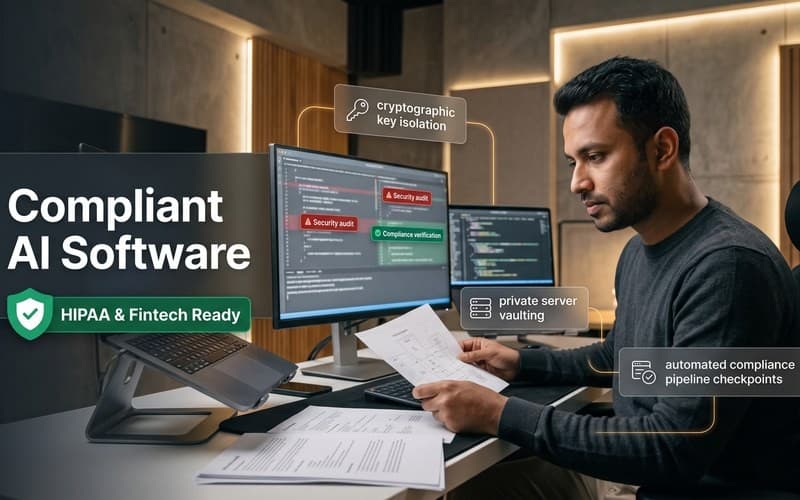
Technical due diligence also scrutinizes how source code privacy and intellectual property are managed during development. Development approaches generally follow two distinct operational models: Private / Local AI Engineering, utilizing privately hosted open-weight models deployed inside client-controlled infrastructure or agreed isolated environments, and Claude Code or OpenAI Codex Engineering, leveraging commercial cloud coding tools with client-approved cloud settings. Investors must verify that target companies enforced strict data boundary policies to prevent proprietary trade secrets, customer records, and core business algorithms from being transmitted across unmonitored external network channels.
What Code Quality Inspection Checklist Should Investors Run Before Term Sheets?
The Pre-Term Sheet Code Audit Checklist for Seed and Series A Due Diligence
Before issuing binding investment terms, institutional funds must execute a structured software code quality inspection across core technical domains. The audit begins by reviewing version control histories to assess commit granularity, branching strategies, and author distribution. Auditors inspect static analysis reports, automated test coverage metrics across core business logic, dependency vulnerability logs, and database migration histories. A disciplined inspection confirms whether code was built with continuous integration standards or pushed ad hoc without baseline quality gates.
Critical Architectural Red Flags That Warrant Valuation Adjustments or Escrows
Certain technical defects represent existential liabilities that justify revising investment terms, holding back capital tranches, or creating dedicated technical escrows. Critical red flags identified during an investor technical audit AI review include unaddressed Broken Object Level Authorization vulnerabilities, zero automated regression test coverage across billing workflows, unencrypted database credentials in repository history, and undocumented multi-tenant data structures. When an acquisition or investment candidate exposes these severe defects, funds must account for significant technical debt and remediation overhead when finalizing enterprise valuations.
Defining Remediated Milestones: Separating Quick Fixes from Complete Re-Architecture
An effective diligence report categorizes technical findings into pragmatic severity tiers. Quick remediations encompass updating vulnerable dependencies, rotating exposed secret credentials, and adding missing database foreign keys or table indexes. Conversely, deep structural issues—such as decomposing tangled single-file monoliths, rewriting synchronous transaction loops into distributed event queues, or replacing unvalidated agent prompts with isolated execution harnesses—demand phased engineering roadmaps. Classifying technical debt before signing ensures that term sheets tie disbursements to verifiable technical remediation milestones.
How Can Investors Harden AI Codebases via Scoped Technical Audits?
Commissioning an Independent Codebase Audit and Risk Assessment
Commissioning an objective codebase assessment prior to investment prevents costly surprises post-acquisition. An exhaustive technical due diligence AI code audit evaluates database integrity, concurrency controls, background job queues, and dependency manifests. Senior engineers inspect the system to determine whether early prototypes can scale sustainably or require fundamental refactoring.
Engaging Senior Engineering and QA Teams via https://www.canvasdevelopers.com/contact
When assessing due diligence vibe coded startup targets, disciplined engineering oversight is essential. Canvas Developers is a software engineering company with an office in Dhaka that deploys AI coding agents directed by experienced engineers who own architecture, review every change, and decide releases. Engagements begin with scoping, followed by agreed milestones, testing, and handover. To commission a scoped codebase audit or harden an application, connect with our engineering team at https://www.canvasdevelopers.com/contact.