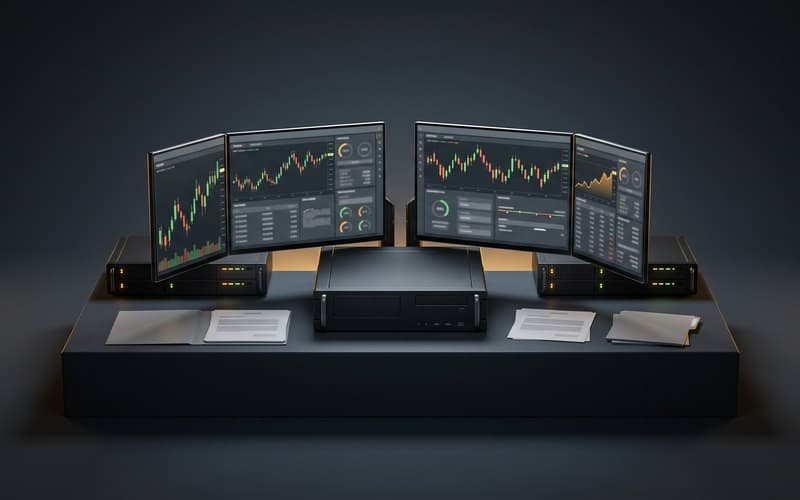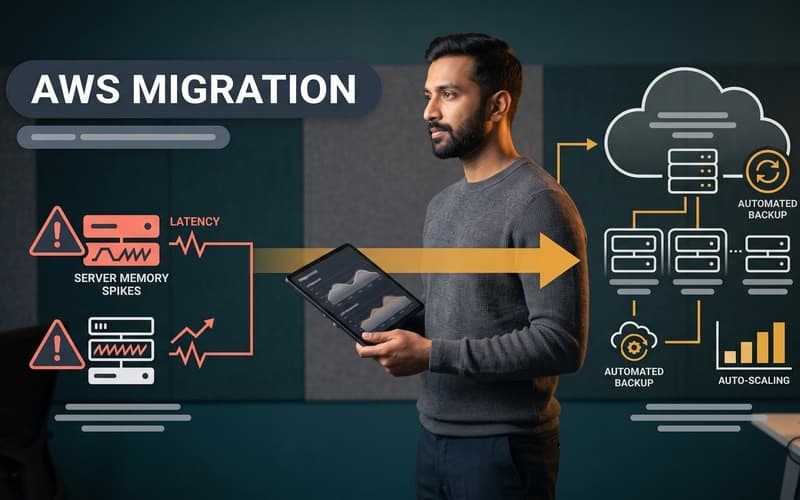
This illustrative example explores ExecutionRadar, a specialized post-trade analytics platform conceptualized by Canvas Developers to demonstrate our financial engineering capabilities. Designed as an independent OANDA & FXCM execution auditing tool, the architecture captures millisecond-level telemetry directly from multi-broker feeds to evaluate slippage distribution, fill rejections, and execution quality across institutional subaccounts.
Project at a Glance: What Is the ExecutionRadar Architecture Concept?
ExecutionRadar is an engineering architecture concept designed to serve institutional compliance teams and quantitative FX fund managers who allocate capital across segregated liquidity pools. Conceived by Canvas Developers as an OANDA & FXCM execution auditing tool and multi broker trade execution benchmark tool, the platform models high-throughput telemetry ingestion alongside interactive analytical interfaces.
The technical stack pairs a modular React frontend with a columnar ClickHouse database and asynchronous Python ingest daemons. Built to illustrate robust post-trade verification, the delivery scope models how engineers can capture real-time order streams, run automated performance testing under simulated volatility, and generate scoped compliance reporting without compromising operational throughput.
The Brief: Why Do Multi-Broker FX Desks Require Independent Trade Auditing?
When foreign exchange trading desks allocate capital across multiple brokerage partners, evaluating execution fairness requires independent transaction cost analysis (TCA). During volatile market events, sudden spread widening and asymmetric slippage often degrade net performance across segregated client subaccounts. Without an objective monitoring harness, fund operations lack the empirical records required to distinguish broader market conditions from venue-specific execution anomalies.
Institutional compliance mandates increasingly demand granular, millisecond-level telemetry that correlates quoted top-of-book prices with actual fill confirmations. Engineering effective forex execution quality analytics OANDA integrations alongside dedicated FXCM slippage tracking software presents distinct technical constraints. Ingestion architectures must parse high-frequency streaming events—such as the OANDA v20 REST API transaction stream and FXCM streaming sockets—handling rapid message spikes without packet loss or audit trail gaps.
Engineering Approach: How Do AI Speed and Senior Human Oversight Interact?
At Canvas Developers, development workflows pair autonomous AI coding agents with rigorous oversight from experienced software engineers. During the design of ExecutionRadar, AI agents accelerated initial service scaffolding, ClickHouse schema generation, and mock unit tests for the forex fill quality monitoring API. This automated assistance significantly shortens delivery timelines for routine boilerplate, data contracts, and synthetic data generators.
However, AI code generation has notable failure modes in financial systems. Autonomous models frequently struggle with subtle numerical precision discrepancies, concurrent memory constraints, and secure credential handling under distributed network stress. Consequently, experienced engineers actively direct the work, own the core architecture, review every code change, and retain final release authority over data integrity and security.
To ensure complete enterprise governance, Canvas Developers structures work through two flexible delivery models: Private / Local AI Engineering, deploying open-weight models in client-controlled infrastructure, and Claude Code / OpenAI Codex Engineering using commercial tools configured to strict client cloud policies.
What Was Built: Key Features and Technical Implementation Details
The core data pipeline relies on asynchronous Python ingestion workers that maintain persistent, keep-alive connections to broker streaming endpoints. Order events, trade confirmations, and tick quotes from OANDA and FXCM are normalized into unified data structures and ingested into a ClickHouse analytical database. Leveraging ClickHouse columnar compression and vectorized execution, the architecture readily absorbs high-frequency execution records while supporting sub-second analytical queries across millions of rows without degrading ingestion throughput.
Partitioned by trading date and broker endpoint, the telemetry tables ensure that historical slippage audits remain instantly queryable even under sustained high-frequency streaming volume. The user interface functions as a dedicated broker latency comparison dashboard engineered with React and TypeScript. Compliance analysts can visualize parametric slippage distributions, examine fill rejection ratios, and monitor real-time spread widening during major market volatility events. Interactive filtering and comparative charts enable users to segment execution metrics by trading currency pair, order volume tiers, and individual client subaccounts across competing venues.
Completing the architecture is a scheduled compliance engine designed for automated trade reconciliation OANDA FXCM workflows. The service systematically cross-references recorded execution prices with timestamped arrival metrics, flags latency outliers between brokers that exceed defined tolerance thresholds, and generates automated daily compliance reports formatted for internal auditing and regulatory archiving.
Intended Impact: How Does the Architecture Strengthen Post-Trade Verification?
By consolidating trade telemetry into an independent data layer, the ExecutionRadar architecture concept eliminates operational blind spots across competing broker environments. Trading desks deploying such a multi broker trade execution benchmark tool can objectively quantify fill quality, identifying whether specific accounts experience unexpected slippage patterns or execution delays during sudden liquidity shifts.
Additionally, the architecture standardizes transaction cost analysis into structured, audit-ready compliance records. Incorporating dedicated forex execution quality analytics OANDA and FXCM evaluation models enables firms to convert raw streaming fills into clear statistical benchmarks. Institutional managers gain dependable documentation to evaluate broker execution performance, justify order routing decisions, and uphold rigorous fiduciary standards for fund stakeholders.
Start a Similar Project: How Can You Build Custom Financial Software with Canvas Developers?
Building high-concurrency financial systems requires disciplined architectural planning. Canvas Developers, an engineering company with an office in Dhaka, Bangladesh, partners with asset managers and trading desks to engineer bespoke analytics platforms, broker bridges, and post-trade verification systems.
Client engagements follow a structured delivery methodology: initial technical scoping and architecture, followed by agreed milestones, rigorous quality assurance, and complete code handover. Whether developing an OANDA & FXCM execution auditing tool or custom data dashboards, our engineering team combines AI-accelerated delivery with experienced human oversight. Discuss your technical requirements and arrange a scoped assessment through the Canvas Developers contact page.