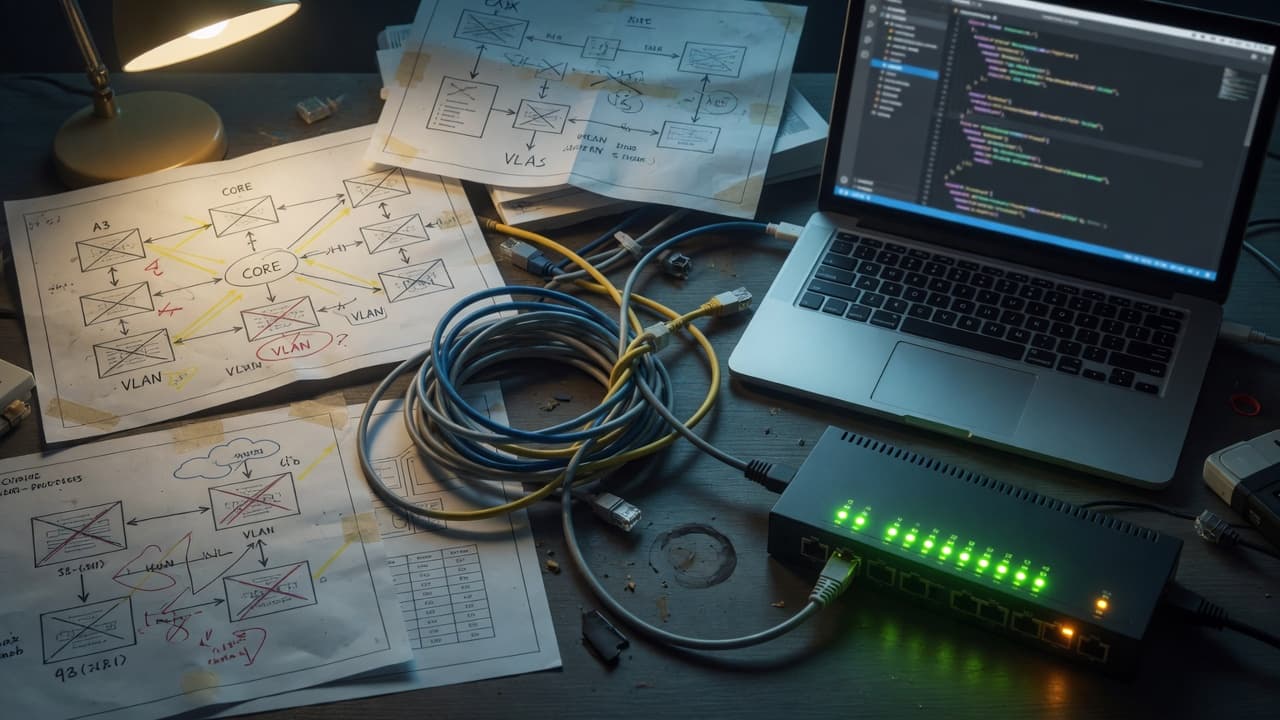
This illustrative example presents CrossSync, an institutional-grade architecture designed by Canvas Developers to bridge MetaTrader 5 (MT5) terminals directly with Interactive Brokers (IBKR) Trader Workstation (TWS) and Gateway. Engineered to address structural fragmentation across retail and institutional trading environments, CrossSync delivers reliable metatrader to interactive brokers automation by translating real-time retail spot forex signals into exchange-traded CME Micro FX futures contracts.
By combining low-latency socket telemetry with strict financial risk controls, the platform eliminates manual intervention, normalizes fractional lot sizes, and maintains deterministic state reconciliation across disparate liquidity venues.
Project at a Glance: What Is the Scope of the CrossSync Gateway?
Target Sector: Systematic Trading and Multi-Asset Wealth Management
Systematic trading funds and asset managers frequently run algorithmic models in MetaTrader while requiring institutional custody, unified risk monitoring, and centralized exchange clearance.
Integration Scope: MetaTrader 5 Terminal to Interactive Brokers TWS/Gateway
CrossSync operates as a metatrader cross platform trading bridge, establishing low-latency socket communication between local MetaTrader 5 Expert Advisors and Interactive Brokers TWS or headless IB Gateway.
Core Capabilities: API Development, Order Translation, and Telemetry Reconciliation
The microservice delivers automated API translation, dynamic contract mapping, and execution telemetry to synchronize fills, volume allocations, and order states with zero manual intervention.
The Brief: Why Bridge MetaTrader Spot Signals to CME Futures on Interactive Brokers?
The Core Challenge: Transforming Decentralized Spot FX Signals into Exchange-Traded Futures
Retail spot currency trading operates across fragmented, over-the-counter liquidity pools with dealer markups. Routing these signals into centralized custody requires a dedicated forex to futures trade mirror that converts off-exchange spot orders into exchange-cleared CME futures contracts without altering underlying trading strategies.
Contract Multipliers: Normalizing Fractional MT5 Lots to CME Micro FX Specifications
MetaTrader positions use standard lots of 100,000 units with 0.01 micro-lot increments, whereas CME Micro FX contracts feature standardized 12,500-unit notionals. The translation engine calculates integer contract equivalents while queuing fractional exposures to maintain capital efficiency.
Execution Constraints: Rollover Management, Trading Session Windows, and Margin Rules
Futures markets introduce quarterly expirations, session clearing halts, and distinct margin rules. Implementing metatrader to interactive brokers automation provides automated rollover management, halts dispatching during exchange breaks, and validates pre-trade margin thresholds prior to order routing.
Engineering Approach: How Do AI Velocity and Senior Systems Oversight Combine?
Where AI Tools Accelerate Build Time: Protocol Boilerplate, Telemetry Schemas, and MQL5 Event Handlers
At Canvas Developers, commercial and private AI coding agents accelerate implementation by generating protocol boilerplate, structured data schemas, and baseline event handlers. Generating repetitive code with AI shortens development timelines for an automated mql5 to tws router while ensuring strict API schema adherence.
Where AI Coding Fails: High-Stakes Concurrency, Message Order Guarantees, and Edge-Case Failsafes
AI tools struggle with high-concurrency race conditions, socket disconnects, and transaction atomicity. Purely automated code synthesis cannot reliably predict how dropped network frames or out-of-order execution confirmations impact margin during intense market volatility.
Human Architecture Ownership: Code Review, Financial Risk Guardrails, and Release Verification
Senior systems engineers at Canvas Developers direct system architecture, conduct line-by-line code reviews, and build deterministic financial guardrails. Experienced engineers verify thread synchronization, failover routines, and release integrity before deployment.
Technical Architecture: How Does the Order Translation Engine Execute?
Ingestion Pipeline: Real-Time Trade Event Extraction via MT5 Expert Advisors
Trade ingestion originates inside the MetaTrader 5 terminal through a dedicated MQL5 Expert Advisor. Utilizing native OnTradeTransaction event handlers, the script captures order placement, modification, and closure events with microsecond timestamps. Transaction payloads are serialized into structured JSON messages and streamed across low-latency ZeroMQ or WebSocket pipes, completely decoupling terminal chart execution from downstream order routing processes.
Translation Microservice: Dynamic Contract Mapping and Fractional Lot Conversion
The translation microservice functions as an intelligent mt5 to ibkr order bridge. It maintains persistent instrument mapping tables that correlate over-the-counter currency pairs with active CME contract specifications, converting spot EURUSD signals into CME Micro Euro (M6E) futures. The engine calculates precise contract multipliers, normalizes fractional volume thresholds, and preserves cumulative order balance across active trading accounts.
Order Routing: IBKR TWS API / Gateway Ingestion and Execution Telemetry Loop
Operating as a hybrid brokerage trade copier, the routing daemon interfaces directly with IBKR TWS or headless IB Gateway via official API sockets. The engine submits native exchange orders, tracks fill confirmations with unique exchange execution identifiers, and relays bidirectional telemetry back to a centralized audit database to verify complete state reconciliation and monitor real-time latency.
System Reliability: What Trade-offs and Failure Modes Must Be Managed?
Asynchronous Latency vs. Execution Slippage Across Separate Liquidity Venues
Cross-venue execution introduces network latency between retail dealer servers and centralized CME matching engines. While cme micro fx order routing provides transparent liquidity, market volatility can cause pricing divergence between spot triggers and futures fills.
Failover Architecture: Heartbeat Detection, Gateway Reconnection, and Orphaned Order Prevention
The gateway uses bidirectional heartbeat monitoring with IB Gateway. If connections drop, automated circuit breakers halt outbound orders and cancel unconfirmed requests to prevent orphaned positions.
Auditability and State Reconciliation: Preventing Double-Execution During Volatility Spikes
To ensure resilient metatrader to interactive brokers automation, idempotent order keys prevent duplicate executions during rapid message retries, backed by an append-only audit log reconciling fills against terminal trade tickets.
Next Steps: How Can You Scope a Custom Broker Integration with Canvas Developers?
Defining Execution Rules, Latency Budgets, and Asset Mappings in a Scoped Assessment
Deploying a reliable metatrader cross platform trading bridge begins with an initial technical scoping assessment. Our team defines order execution rules, network latency budgets, and asset mappings tailored to your trading setup.
Milestone Delivery from Architecture Review to Production Hardening via the Contact Form
Canvas Developers delivers integrations through phased milestones, from architecture review to production hardening. To scope a custom bridge integration, reach out through the contact form.