Evaluating DIY vibe coding vs hiring developers has become a fundamental strategic decision for founders building modern software. Generative coding tools allow anyone to prompt functional user interfaces and simple scripts within hours, creating an early impression that technical teams are no longer necessary.
However, turning an interactive prototype into a resilient, production-ready product exposes significant architectural gaps. Understanding the operational boundaries of prompting alone—compared to deploying an experienced engineering team using AI coding agents—ensures technical decisions protect your budget, data integrity, and long-term scalability.
Can You Really Build a Production Application with AI Alone?
The Rise of Vibe Coding and the Prototype Illusion
Founders entering the software market frequently ask: can I build an app myself with AI without hiring a technical team? Generative coding tools assemble functional frontends or basic CRUD applications within hours. This conversational approach—often termed vibe coding—creates immediate momentum. User interfaces render cleanly and interactive buttons fire smoothly, creating an early impression that full-stack software development is essentially solved.
However, functional mockups routinely mask structural voids. An interactive interface demonstrates visual layout without validating database concurrency, token storage, or background worker reliability. This prototype illusion convinces founders that a working screen equals a finished product, obscuring the disciplined engineering required beneath the surface.
Why Non-Technical Founders Get Stuck at the 80% Mark
The sharpest limits of DIY AI coding surface when isolated scripts must operate as a unified, stateful system. AI generators excel at self-contained functions but lack persistent architectural context across distributed workflows. As features accumulate, subtle state conflicts, unhandled edge cases, and circular dependencies inevitably emerge.
At this stage, non-technical creators face diminishing returns. Prompts intended to patch authentication disrupt user sessions, and quick fixes for database queries degrade responsiveness. While AI tools accelerate early prototyping, translating an 80% prototype into a secure, release-ready application requires experienced architectural oversight, deliberate refactoring, and systematic regression testing.
What Does DIY AI Coding Actually Excel at Today?
Rapid Frontend Layouts and Visual Mockups
Modern generative coding tools excel at translating descriptive prompts into responsive user interfaces. When building landing pages, administrative dashboard wireframes, or presentational components with frameworks such as Tailwind CSS and React, automated prompts generate clean, styled layouts with remarkable speed. For non-technical founders exploring early product concepts, this rapid generation eliminates the initial friction of static wireframing and produces interactive mockups within hours.
Single-Feature Scripts and Self-Contained Logic
Beyond user interface components, prompt-driven programming works reliably for isolated, deterministic tasks. Writing a standalone utility script to parse CSV files, reformatting JSON payloads, or querying an external public API endpoint requires little broader architectural context. In these self-contained logic blocks, automated code generation allows solo creators to automate routine workflows and assemble functional proof-of-concept features without deep programming backgrounds.
Where AI Prompts Start Hallucinating Architecture
The fundamental friction in DIY vibe coding vs hiring developers appears when individual scripts must operate as a unified, stateful application. Because generative algorithms predict probable syntax rather than reason through distributed runtime constraints, prompting complex cross-module interactions frequently introduces subtle architectural hallucinations.
A generator may invent non-existent library methods, recommend conflicting dependency versions, or construct circular state updates across components. Without a qualified engineer to govern data contracts, error boundaries, and schema integrity, these compounding blind spots expose the structural limits of DIY AI coding before an application ever reaches deployment.
What Happens When an AI-Built App Meets Real Production Users?
Authentication, Payment Gateways, and Data Privacy Vulnerabilities
A prototype functioning on a local machine faces an entirely different threat landscape once exposed to the public internet. Generative coding assistants frequently overlook security boundaries in favor of getting code to run immediately. Common vulnerabilities in prompt-built prototypes include hardcoded API secrets, insecure token storage, missing Cross-Site Request Forgery (CSRF) defenses, and overly permissive Cross-Origin Resource Sharing (CORS) configurations.
Financial integrations present even greater operational risk. Implementing payment gateways requires webhook signature verification, strict idempotency to prevent duplicate charges, and hardened reconciliation logic. When untested code handles transactions, edge cases such as network dropouts or asynchronous webhook delays can cause payment failures, unfulfilled orders, and severe data privacy violations.
Database Schemas, Indexing, and Query Bottlenecks Under Load
Prototypes rarely demonstrate how an architecture performs when hundreds of users query data simultaneously. AI-generated backends often rely on naive object-relational mapping (ORM) queries that generate severe N+1 query problems. In initial testing with small sample datasets, response times appear instantaneous, hiding unindexed foreign keys and unoptimized joins.
Once traffic scales, missing indexes trigger sequential table scans, exhausting database connection pools and driving server resource utilization to capacity. Establishing resilient data structures demands deliberate relational schema design, connection pooling, and query profiling—structural tasks where the clear limits of DIY AI coding become undeniable.
DevOps, Environment Isolation, and CI/CD Pipelines AI Cannot Configure Alone
A software product is more than source code; it requires a resilient hosting and deployment environment. Production operations require separated staging and production environments, automated database migration strategies, containerized workloads, and continuous integration and continuous deployment (CI/CD) pipelines.
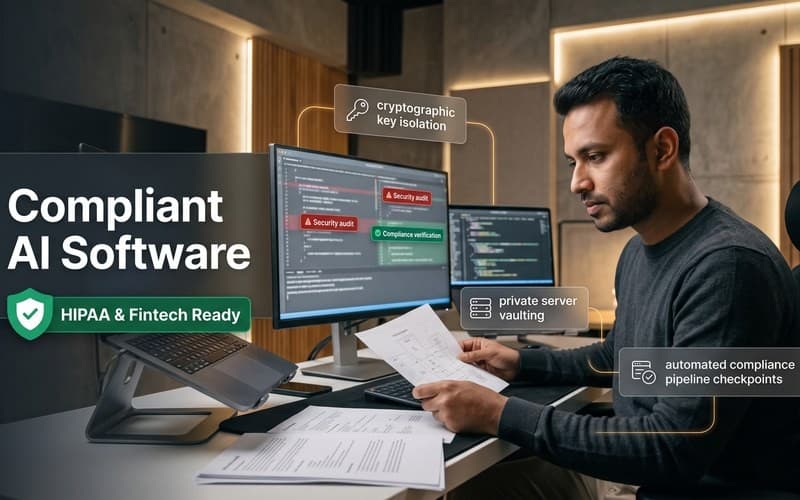
Generative tools cannot verify whether environment secrets are safely managed in a secrets vault, configure network firewalls, or orchestrate blue-green zero-downtime deployments. Recognizing this operational divide defines when to hire software engineers AI era: professional engineers ensure that infrastructure is reproducible, monitored, and capable of automated rollbacks when upstream dependencies fail.
Is Vibe Coding Actually Cheaper Than Hiring an Engineering Team?
The True Opportunity Cost of Founder Debugging Hours
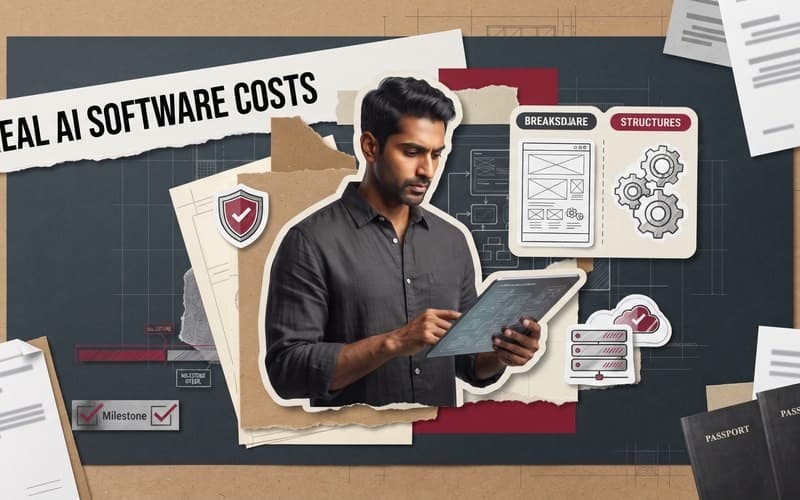
At first glance, generating an application through self-directed prompts appears virtually free outside of software subscriptions. However, analyzing the true cost of building app yourself vs hiring requires calculating the value of executive time. Non-technical founders frequently spend dozens of hours navigating cryptic runtime stack traces, wrestling with package version mismatches, and re-prompting conversational assistants.
Every hour spent troubleshooting environment variables or parsing build logs is an hour redirected away from customer discovery, go-to-market strategy, enterprise sales, and investor relations. When leadership labor is converted into an operational expense, unguided experimentation rapidly becomes an expensive distraction rather than a lean development shortcut.
Compounding Technical Debt and the Inevitable Rewrite Tax
Prompting code without a unified architectural blueprint introduces rapid technical debt. Generative assistants solve immediate prompts in isolation, often duplicating utility functions, applying inconsistent state patterns, or introducing conflicting third-party packages across different components. While the surface interface may function initially, the underlying repository becomes brittle and difficult to maintain.
When founders eventually bring on technical collaborators or prepare for investor due diligence, engineers often discover that tangled dependencies and undocumented logic cannot be safely refactored. The resulting necessity is an inevitable rewrite tax: discarding months of prompt-generated code to rebuild the product on a maintainable, structured foundation.
Milestone-Driven Scoping vs. Open-Ended Trial and Error
The strategic comparison between vibe coding vs hiring agency or dedicated engineering teams centers on predictable delivery. Trial-and-error development offers no guarantees on when an application will achieve stability, compliance, or release readiness. Features often remain perpetually unfinished as each new prompt introduces unforeseen regressions.
In contrast, professional engineering engagements begin with disciplined scoping, establishing clear data schemas, architectural boundaries, and verifiable milestones before writing production code. Structured milestones provide transparency, predictable delivery schedules, and thorough testing, replacing open-ended prompt iteration with accountable software delivery.
How Does a Professional AI-Assisted Engineering Team Work?
Accelerating Boilerplate with AI Agents While Senior Engineers Direct Architecture
Modern software engineering does not reject AI coding tools; it integrates them within rigorous development standards. When hiring AI assisted developers, organizations benefit from coding agents that rapidly draft boilerplate code, scaffold data access layers, and generate test suites. However, the critical differentiator remains technical leadership. Experienced engineers direct the overall system architecture, define domain models, establish strict API contracts, and ensure that generated code adheres to proven design patterns.
Mandatory Human Code Reviews, Rigorous QA, and Controlled Release Management
The primary hazard of unguided AI coding is deploying unverified logic directly to production. In a professional engineering organization, AI output never bypasses review. Senior engineers conduct mandatory peer code reviews, verifying memory efficiency, cryptographic standards, and edge-case handling before merging pull requests.
Dedicated QA specialists design automated integration test suites and stress-test application workflows under concurrent loads. DevOps specialists oversee controlled release management, verifying database migrations and rollback mechanisms so that software upgrades occur seamlessly without service interruption.
Private AI Infrastructure vs. Cloud-Based Coding Tooling
Enterprises and privacy-conscious founders must also consider intellectual property and code security when choosing between vibe coding vs hiring agency partners. Professional engineering teams structure workflows around tailored governance packages. Organizations can deploy private, local AI engineering using open-weight models hosted entirely within isolated client infrastructure to prevent proprietary codebase leakage. Alternatively, teams can leverage commercial tools such as Claude Code or OpenAI Codex with explicit cloud privacy and security settings approved by the client.
When Should You Build It Yourself vs. Hire Experienced Developers?
When DIY Vibe Coding Is the Right Choice: Disposable MVPs and Quick Validations
Self-directed AI development serves a clear strategic purpose during early customer discovery. When founders need a disposable prototype to demonstrate an idea to prospective users, pitch an early concept to design partners, or validate internal interest, prompting functional screens independently is practical and cost-effective. At this exploratory phase, architectural perfection is secondary to rapid visual feedback, making DIY prototyping an efficient tool for quick validation.
When You Must Hire Engineers: Live Customer Billing, Data Storage, and Scalable SaaS
The calculation shifts fundamentally when software transitions from an internal concept to a public commercial asset. Deciding when to hire software engineers AI era comes down to operational risk and liability. As soon as an application handles live customer billing, processes confidential user data, complies with data privacy regulations, or executes mission-critical business workflows, relying on unverified AI scripts introduces unacceptable failure points.
Resolving the debate between DIY vibe coding vs hiring developers depends on system accountability. Building a resilient software platform, SaaS application, or enterprise portal requires disciplined schema migrations, secure session infrastructure, and automated regression testing. When business reputation, customer trust, and uptime are on the line, partnering with experienced software engineers ensures the underlying architecture survives real-world scale.
How Do You Move from an AI Prototype to a Hardened Product?
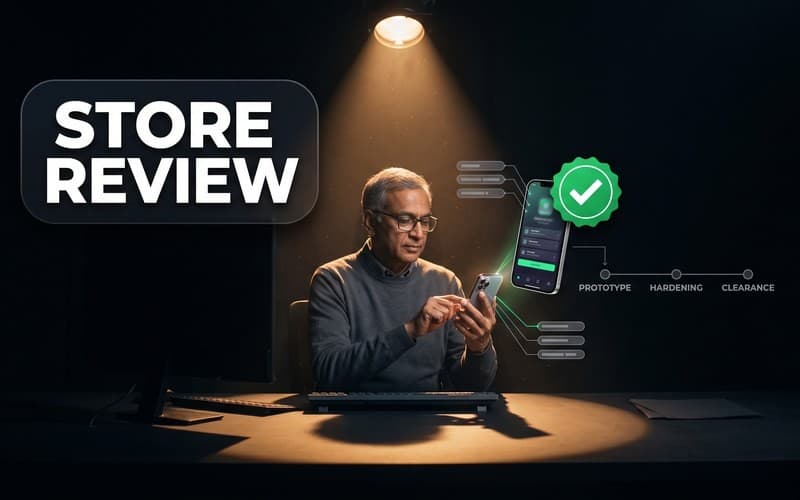
Auditing and Stabilising Existing Vibe-Coded Applications
Founders who have already assembled an interactive prototype do not necessarily need to start from scratch. Transitioning an early build into production begins with a comprehensive technical audit. Experienced engineers inspect the existing codebase, identifying security vulnerabilities, resolving dependency conflicts, and isolating database bottlenecks.
Through systematic refactoring, technical teams harden authentication pathways, establish clean relational schemas, and decouple frontend components from fragile backend logic. This stabilization preserves initial progress while replacing brittle scripts with resilient, maintainable architecture.
Next Step: Requesting a Scoped Engineering Assessment via Canvas Developers
For founders evaluating when to hire software engineers AI era, partnering with an established engineering team bridges the gap between a visual prototype and a commercial product. Canvas Developers directs AI coding agents under experienced engineers, QA specialists, and DevOps architects to deliver scalable SaaS platforms, mobile applications, and enterprise systems.
Every engagement starts with structured scoping, agreed milestones, and comprehensive release testing. Rather than losing executive hours to unguided troubleshooting, explore hiring AI assisted developers by connecting through the Canvas Developers contact form to schedule a scoped engineering assessment.