This illustrative example details an illustrative example by Canvas Developers for a targeted construction project tracking app tailored for commercial general contractors. Created to eliminate the friction of bloated legacy platforms, this field-ready mobile web solution illustrates how site superintendents can track trade milestones, document daily logs, and coordinate punch lists from an uncluttered interface.
Project at a Glance: What Is the Scope of This Construction Tracking Concept?
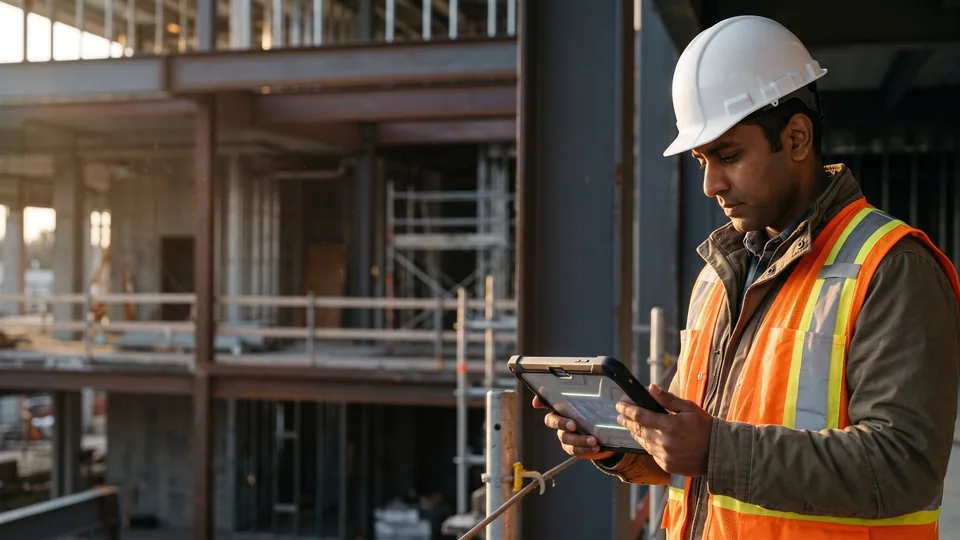
Commercial general contracting teams manage demanding jobsites where dozens of specialty trade contractors coordinate concurrently. On active project sites, site superintendents require a straightforward construction project tracking app rather than cumbersome enterprise software to verify daily subcontractor commitments and enforce safety sign-offs without operational delays.
This illustrative example models a focused field construction management tool engineered to resolve these operational bottlenecks. Designed as a responsive mobile web application with native iOS and Android wrappers, the architecture provides immediate field access on mobile devices while maintaining unified web administration for project managers in the site trailer.
The Brief: Why Do Site Superintendents Need a Focused Milestone Tracker?
Traditional construction enterprise platforms frequently burden field personnel with convoluted navigation, multi-layered approval chains, and desktop-centric interfaces. When site superintendents spend thirty minutes recording basic manpower counts and safety observations, compliance suffers. Commissioning custom construction management software enables general contractors to bypass enterprise bloat and focus exclusively on the high-frequency workflows field supervisors execute every morning and afternoon.
Field conditions also introduce severe connectivity hurdles, such as steel-reinforced basements and remote project perimeters with intermittent cellular reception. Robust jobsite daily log app development must prioritize offline-first data capture, ensuring superintendents can record subcontractor crew counts, verify safety orientations, and document delayed milestone handoffs without network interruption. Once connectivity resumes, background synchronization reconciles field updates directly with the central project database.
Engineering Approach: How Does AI Speed Up Development While Human Engineers Protect Architecture?
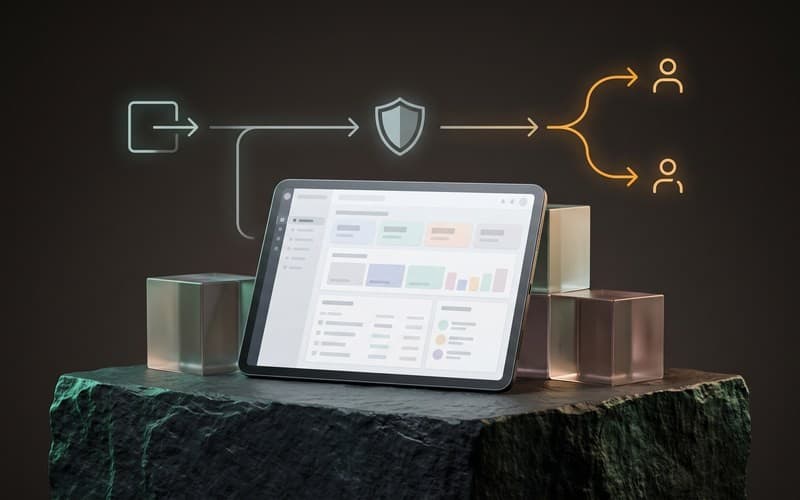
In modern software development, AI coding tools accelerate implementation by rapidly scaffolding user interface layouts, boilerplate CRUD endpoints, punch-list form validation schemas, and canvas drawing viewer controls. However, relying solely on autonomous code generation introduces critical security and architectural risks. In building resilient custom construction management software, experienced software engineers must direct the process, establish data boundaries, perform comprehensive peer reviews, and validate production releases.
Human engineering oversight is especially critical across core components of the subcontractor tracking app architecture. Establishing reliable offline caching via the Service Worker API requires careful cache invalidation and client-side storage management so field superintendents never lose uncommitted logs. Human engineers also design client-side image compression pipelines to prevent low-bandwidth cellular choke points when uploading high-resolution jobsite defect photos, and enforce strict role-based access control to isolate subcontractor inspection records.
To meet diverse corporate security policies, Canvas Developers structures AI-assisted builds under two transparent delivery models: 'Private / Local AI Engineering', using privately hosted open-weight models within client-controlled infrastructure, and 'Claude Code / OpenAI Codex Engineering', leveraging vetted commercial tools under client-approved cloud parameters.
What Was Built: Which Core Modules Power Daily Field Operations?
The concept prototype is engineered around four core functional modules designed specifically for active jobsites:
- Milestone Gantt Schedules and Trade Tracking: The construction milestone tracking platform provides an interactive Gantt timeline displaying critical-path milestones across mechanical, electrical, plumbing, and structural trades. Field superintendents adjust schedule handoffs with touch-friendly gestures, updating percentage-of-completion records in real time without navigating nested submenus or desktop spreadsheets.
- Mobile Daily Logs and Automated Environmental Capture: Purpose-built jobsite daily log app development incorporates automated weather capture via localized meteorological feeds, logging ambient temperatures and weather delays directly into shift summaries. Superintendents document trade headcount, equipment usage, and safety briefings, attaching timestamped jobsite photographs tagged by physical location.
- Digital Punch-List Coordination and Location Mapping: Serving as dedicated construction punch list software, this module lets superintendents pin corrective defects directly onto 2D architectural plan overlays. Deficiencies are instantly assigned to responsible subcontractors with specific trade verification requirements, strict completion deadlines, and photo confirmation requirements before final sign-off.
- Subcontractor Compliance and Owner Progress Reporting: A centralized compliance engine monitors subcontractor insurance certificates, trade licenses, and lien waivers, flagging impending document expirations automatically. Project managers can generate clean, exportable PDF and CSV progress reports formatted specifically for project owners and financing partners, consolidating verified milestone completions, trade manpower records, and site safety logs into audit-ready summaries.
Intended Impact: How Does a Lean Field Architecture Streamline Project Delivery?
By replacing disjointed communication channels with a streamlined construction project tracking app, commercial general contractors can eliminate ambiguous trade handoffs. When trade foremen, project engineers, and superintendents share a single operational view of daily milestones, trade conflicts are resolved on the deck rather than after expensive schedule slips occur.
Furthermore, deploying an intuitive field construction management tool establishes continuous, tamper-evident record keeping. Consolidating daily subcontractor logs, photo-verified punch lists, and automated weather stamps into uniform digital archives ensures project owners receive transparent progress updates and protects general contractors with comprehensive documentation during formal project closeouts.
Next Steps: How Can You Scope and Build Custom Field Software with Canvas Developers?
Developing tailored field software requires aligning technical architecture with practical jobsite constraints. When partnering with Canvas Developers to engineer custom construction management software, engagements begin with systematic scoping and milestone definition. Experienced software engineers direct every build phase, pairing AI-accelerated development with rigorous code reviews, automated QA, and cloud deployment governance.
Whether you require a dedicated construction project tracking app or a broader operational platform, request a scoped project assessment through the contact form at Canvas Developers to evaluate your field requirements.