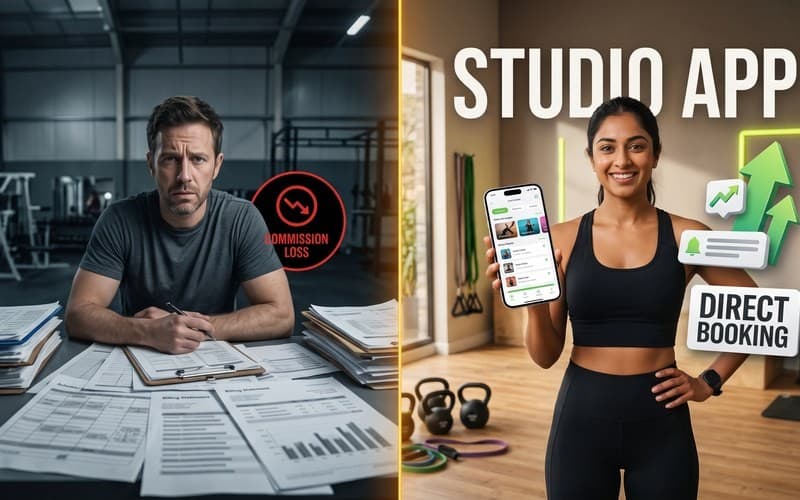
This illustrative example represents an independent mobile and web platform engineered by Canvas Developers to demonstrate how multi-studio fitness brands can operate direct digital reservations. Designed for boutique studios and fitness franchises seeking to eliminate third-party marketplace commissions, the project illustrates modern gym class booking app development across iOS, Android, and administrative web environments.
By combining interactive studio floor plans, automated waitlist management, and resilient billing pipelines, this architecture blueprint outlines a scalable system engineered to preserve member retention and operational control.
Project at a Glance: What Does This Boutique Studio App Concept Cover?
Target Sector: Boutique Fitness Studios, Gym Chains, and Wellness Franchises
This illustrative example targets independent studios and fitness franchises requiring dedicated boutique gym booking software to safeguard member retention and bypass third-party aggregator commissions.
Technical Scope: Cross-Platform iOS/Android App and Web Management Portal
The architecture delivers a responsive custom fitness studio mobile app across iOS and Android, paired with an administrative web portal for multi-studio schedule and capacity management.
Delivery Framework: Senior-Led Engineering Accelerated by AI Coding Agents
Canvas Developers leverages AI coding agents to accelerate interface scaffolding, while senior software engineers direct system architecture, security reviews, and production releases.
The Brief: Why Build an Independent Fitness App Instead of Using Aggregators?
Bypassing Third-Party Aggregator Commissions and Protecting Member Retention
Aggregator platforms charge recurring commissions on every class reservation, eroding studio margins and separating businesses from direct customer relationships. Investing in dedicated boutique gym booking software allows operators to preserve brand equity, retain primary member data, and deploy tailored retention incentives without third-party marketplace fee overhead.
Overcoming High-Concurrency Booking Drops and Studio Schedule Bottlenecks
Popular studios face intense booking surges when weekly schedule windows open. Dedicated gym class booking app development resolves concurrency bottlenecks through atomic seat locks and resilient background queue workers. These controls prevent simultaneous double-booking, preserve database integrity under sudden transaction spikes, and maintain seamless reservation flows for members.
Engineering Approach: How Do Human Engineers and AI Tools Balance Speed and Resilience?
Where AI Coding Accelerates Delivery: Screen Layouts, Transitions, and Boilerplate
In cross platform fitness app engineering, AI coding agents accelerate mobile client construction. They scaffold responsive UI components, interactive calendar views, and studio floor map transitions across iOS and Android. Automated workflows also generate routine boilerplate, including API client bindings, state management, and validation schemas.
Where AI Coding Fails: Race Conditions, Webhook Idempotency, and Queue Reliability
However, AI coding tools falter when handling distributed state and concurrency. In gym class booking app development, auto-generated code overlooks distributed lock patterns, causing race conditions where users reserve the same spot. AI tools also miss Stripe webhook idempotency controls, risking duplicate charges, and fail to structure resilient waitlist queues.
Human Engineering Safeguards: Architecture Ownership, Security Reviews, and Controlled Releases
Senior engineers at Canvas Developers maintain strict ownership over architecture, security, and releases. Experienced leads design transactional database boundaries, review payment integrations, and audit concurrency edge cases. While AI tools speed scaffolding, human engineers verify every critical system before production deployment.
System Architecture: How Are Spot Booking, Waitlists, and Billing Engineered?
Interactive Studio Spot and Bike Seat Selection with Real-Time Lock Mechanisms
In modern class reservation app architecture, visual studio layouts require precise state synchronization. Members select specific spots or cycling bike seats directly on an interactive room layout canvas. When a user taps a bike, mat, or reformer, the backend acquires an atomic, short-lived distributed lock. This temporary reservation holds the physical spot during checkout, preventing overlapping seat allocations under heavy concurrent booking spikes.
Automated Waitlist Promotion Queues and Bidirectional Calendar Synchronization
When high-demand sessions reach full capacity, background worker queues handle member cancellations systematically. When a spot opens, asynchronous workers process the waitlist queue in strict FIFO order, alerting the next eligible member within a designated confirmation window. Confirmed bookings immediately synchronize across Apple Calendar and Google Calendar to keep member personal schedules continuously aligned.
Recurring Stripe Subscription Infrastructure with Idempotent Payment Handling
To power a reliable recurring billing gym app, the system integrates Stripe Billing for recurring memberships, multi-class packages, and guest passes. Senior engineers implement strict webhook idempotency using unique transactional deduplication tables in the database. This guarantees network retries or duplicated webhook events never generate double charges or corrupted membership account entitlements.
Operational Impact: What Strategic Value Does Direct Studio Booking Deliver?
Preserving Full Brand Equity and Direct Member Communications
Deploying a custom fitness studio mobile app secures complete ownership over the member journey. Rather than competing for attention inside crowded aggregator directories, studio operators cultivate long-term brand loyalty through branded push notifications, tailored reward milestones, and direct announcements. Owning this private communication channel strengthens client retention while protecting studio margins from third-party commission drag.
Centralizing Multi-Location Schedules and Real-Time Studio Capacity Management
Scalable gym membership app development unifies multi-location operations under a single administrative umbrella. Studio managers can coordinate cross-location instructor schedules, balance real-time room capacity, and oversee attendance trends across all physical spaces. Centralized oversight eliminates reliance on disconnected scheduling software, ensuring consistent operational controls as a boutique fitness franchise expands.
Next Steps: How Can You Scope and Build a Custom Fitness App?
Defining Initial Feature Milestones and Infrastructure Parameters
Launching a dedicated fitness platform begins with structured scoping. Canvas Developers helps studio operators define milestone roadmaps, prioritize interactive floor plans and billing pipelines, and establish clear technical standards. Early planning confirms whether the project leverages private AI infrastructure or commercial AI workflows alongside experienced engineering oversight.
Requesting a Scoped Technical Assessment via the Canvas Developers Contact Form
Whether you require gym class booking app development or end-to-end gym membership app development, senior engineers can evaluate your technical architecture. Submit your project requirements through the contact form at https://www.canvasdevelopers.com/contact to schedule an initial scoping assessment for your studio concept.