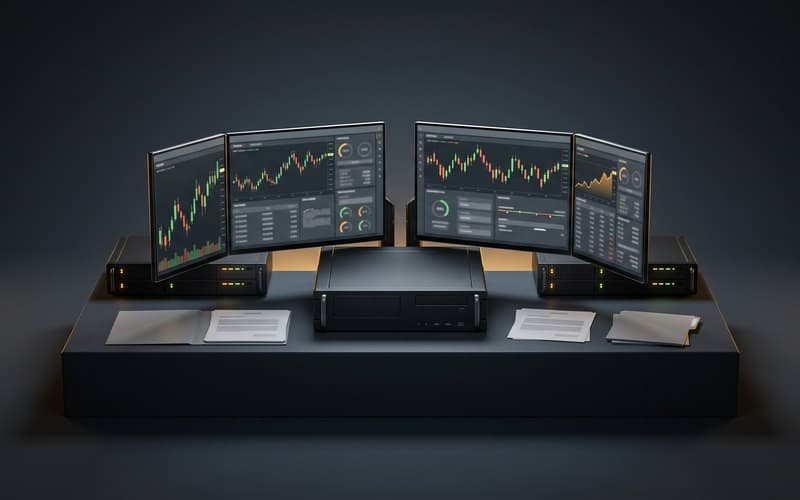
This illustrative example presents CrossEdge FX, a high-performance signal routing bridge designed by Canvas Developers to demonstrate execution capabilities for multi-broker algorithmic trading. By enabling a resilient TradingView to OANDA and FXCM integration, the architecture captures incoming webhook alerts, enforces cryptographic validation, and fans out fractional positions concurrently in under 40ms.
Project at a Glance: High-Speed Signal Router Concept
CrossEdge FX is engineered as a compiled execution engine for proprietary trading groups, quantitative funds, and multi-broker strategy managers requiring deterministic speed. At its core, the solution delivers a production-grade TradingView to OANDA and FXCM integration capable of dispatching concurrent orders across distributed broker endpoints in under 40ms.
Packaged for containerized deployment across Docker and Kubernetes clusters near primary financial data exchanges, the system processes every incoming TradingView webhook to OANDA FXCM route with pip-based risk distribution, automated duplicate suppression, and immediate operational observability.
The Brief: High-Frequency Webhook Routing and Execution Constraints
Quantitative traders who seek to automate TradingView alerts to OANDA encounter severe operational hurdles when managing multiple brokerage endpoints simultaneously. Standard webhook relay scripts often struggle with connection overhead, unbuffered HTTP queues, and inconsistent broker response times, leading to order slippage during volatile market sessions.
Executing an instant webhook trade execution forex workflow requires rigorous state isolation across disparate accounts. Ingested payloads must verify that each target account holds sufficient free margin, correct leverage settings, and authorized API permissions before dispatch. Without strict state validation, an unverified alert payload risks partial fills or conflicting trade directions across paired broker tiers. CrossEdge FX eliminates these vulnerabilities by decoupling alert receipt from order dispatch, maintaining isolated account state pipelines that prevent cascade failures across OANDA and FXCM connections.
Engineering Approach: AI-Accelerated Delivery with Senior Oversight
At Canvas Developers, system delivery pairs modern AI coding harnesses with hands-on senior engineering governance. AI tools accelerate initial project stages by generating repetitive boilerplate, serialization structs, and test fixtures for standard broker endpoints. This acceleration reduces preliminary setup cycles and allows engineering teams to focus immediately on architectural resilience.
However, automated generation tools cannot replace human judgment in production trading environments. AI tools often overlook subtle race conditions, network partition handling, and credential security. Experienced software engineers direct the entire order routing design, perform thorough line-by-line code reviews, and retain final release authority. When developing a mission-critical TradingView to OANDA and FXCM integration, human specialists verify HMAC validation routines, memory safety, and concurrent thread isolation before any build reaches staging environments.
Technical Architecture: Concurrent Signal Parsing and Broker Fan-Out
CrossEdge FX is developed in Rust as a compiled, zero-cost abstraction binary packaged for Docker and Kubernetes deployment in hosting facilities located adjacent to major financial data exchanges. The compiled pipeline eliminates garbage collection pauses, enabling sub-40ms execution times from initial webhook ingestion to simultaneous broker order dispatch.
Incoming alerts are parsed through an asynchronous HTTP server that enforces SHA-256 HMAC signature verification against pre-shared secret keys. This cryptographic validation guarantees that only authentic alerts trigger execution, rejecting tampered or unauthorized payloads at the boundary before they consume downstream resources.
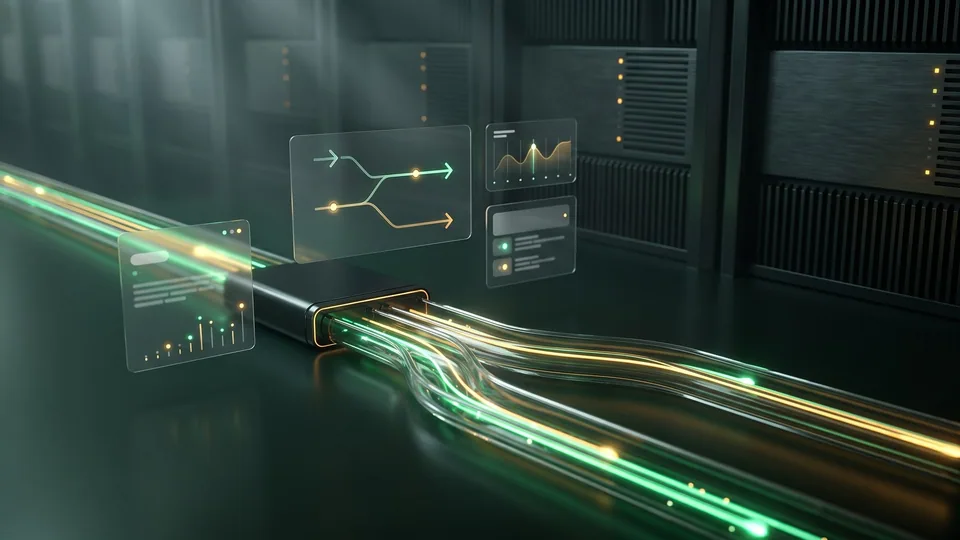
Once verified, the engine calculates pip-based risk allocations across heterogeneous account tiers. Because portfolio sizes differ across retail and institutional accounts, CrossEdge FX maps base currency values, account balances, and user-defined risk percentages into precise position units for each broker. The trade is then fanned out simultaneously across connection pools configured for both OANDA and FXCM endpoints.
For accounts operating on the OANDA v20 REST API, the bridge leverages persistent HTTP Keep-Alive connections and structured JSON order requests to minimize handshake latency. Concurrently, the engine manages FXCM TradingView webhook execution through non-blocking asynchronous workers. This concurrent dispatch model delivers true multi account TradingView forex automation, ensuring that both broker legs receive synchronized order entries without sequential queuing delays.
Operational Reliability: Deduplication, Retry Logic, and Alerts
Network jitter and TradingView alert re-triggers frequently cause duplicate webhook transmissions. To safeguard capital, CrossEdge FX incorporates in-memory idempotency caching that inspects unique alert hashes, timestamps, and bar intervals. Any duplicate order transmission arriving within a configured window is suppressed immediately, ensuring that an automated TradingView group trade copier does not double-execute trades on volatile market spikes.
When transient transport errors or rate limits occur, the bridge initiates exponential backoff retry cycles with bounded jitter. Failed requests are isolated to avoid stalling unaffected broker connections, maintaining instant webhook trade execution forex across all active accounts.
Simultaneously, the platform connects to operational ChatOps webhooks across Discord and Slack. Engineering and risk teams receive real-time telemetry notifications detailing order execution latencies, broker order ticket confirmations, margin warnings, and anomalous network retries. This continuous observability allows administrators to monitor trading health without exposing sensitive API credentials to third-party monitoring platforms.
Plan a Custom Broker Integration with Canvas Developers
Canvas Developers helps proprietary trading desks, fintech founders, and fund managers architect robust execution bridges and financial software. Whether you require a specialized TradingView to OANDA and FXCM integration or a multi-broker order routing system, our engineering team in Dhaka directs end-to-end development through rigorous technical scoping, agreed milestones, comprehensive automated testing, and secure infrastructure handover.
Clients can engage our team through private, locally hosted AI engineering workflows or commercial AI toolchains configured to strict organizational security standards. To evaluate your TradingView webhook to OANDA FXCM requirements, request a scoped assessment through the contact form at Canvas Developers Contact.