Architecting an alpaca trading api integration requires moving beyond basic HTTP request scripts to engineer an event-driven system capable of sub-second execution, resilient socket streaming, and automated state reconciliation. Production algorithmic trading systems cannot afford duplicate order dispatch or unhandled broker disconnections during high-volatility market sessions.
This technical guide details the architecture required for high-throughput order routing on the Alpaca platform. We examine the structural separation of REST and WebSocket transport layers, client-side idempotency safeguards, rate-limit backoff patterns, and the engineering controls necessary to harden algorithmic trading workflows before deploying live capital.
Why Standard API Implementations Fail in Live Algorithmic Trading
Naive implementations of an alpaca trading api integration typically rely on synchronous blocking HTTP calls wrapped in rudimentary polling loops. While this script-based approach functions during basic paper backtesting, it rapidly breaks down under active market volatility. The primary failure point stems from latency variance and unmanaged execution slippage. When market orders hit routing infrastructure during high-volume market opens, network transport round-trips of several hundred milliseconds leave trading strategies exposed to adverse price shifts between quotation capture and fill confirmation.
A more severe architectural failure occurs when client applications suffer from state desynchronization against the broker order book. When an outbound REST request times out at the network layer, an unhardened client assumes the submission failed and triggers a duplicate order. If the original order was in fact accepted by Alpaca's matching engine, the strategy inadvertently doubles its target exposure. Understanding how to integrate alpaca trading api protocols in a production environment requires replacing naive polling with deterministic event loops, explicit distributed order tracking, and bidirectional state synchronization that isolates order generation from transport-level errors.
REST vs. WebSockets: Structuring Your Alpaca Connectivity Layer
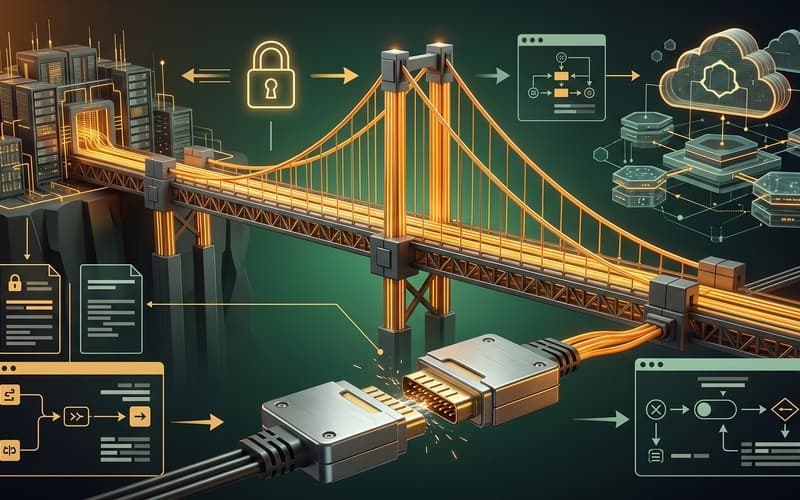
A robust brokerage integration cleanly divides outbound transactional dispatch from inbound telemetry. Attempting to track order life cycles by continually querying REST endpoints creates operational bottlenecks, degrades execution speed, and exhausts rate allowances. Instead, high-throughput architectures maintain two distinct transport channels operating in parallel.
Separating transactional order execution endpoints from streaming market feeds
In a resilient alpaca rest api order routing architecture, the REST interface is strictly dedicated to discrete transactional commands: order creation, order modification, and cancellations via POST /v2/orders and DELETE /v2/orders/{order_id}. Transactional REST calls provide immediate synchronous transport receipts confirming that the broker gateway received the payload. However, market state ingestion must never compete on these same request pipes. Market data—such as real-time quotes, trades, and aggregated minute bars—must flow through isolated data socket streams, ensuring outbound order placement never queues behind high-volume market tick consumption.
Establishing persistent WebSocket listeners for real-time account and trade updates
To capture state mutations with minimal latency, teams implement a dedicated alpaca websocket streaming setup. According to the official Alpaca WebSocket streaming reference, systems connect to wss://api.alpaca.markets/stream (or the paper equivalent) and subscribe to the trade_updates channel. This persistent full-duplex socket delivers push notifications for events including new, fill, partial_fill, canceled, and rejected.
Production socket workers must implement automatic reconnection protocols, exponential reconnect backoff, and heartbeat monitoring to handle transient network interruptions without losing broker state. When disconnections occur, the listener worker triggers a targeted reconciliation pass against the REST order history to backfill any events emitted during the reconnect window.
Step-by-Step Implementation: Building a Sub-Second Order Routing Engine
Translating an architectural design into high-performance execution requires deterministic request construction and event distribution. In this alpaca trading api integration guide, we outline the concrete software patterns needed to execute orders with low latency while maintaining strict transactional integrity across distributed services.
Configuring authenticated REST clients with client-side idempotency keys
Outbound order execution begins by initializing an asynchronous HTTP client configured with persistent connection pooling, TLS session reuse, and header authentication via APCA-API-KEY-ID and APCA-API-SECRET-KEY. In high-frequency trading scenarios, establishing fresh TCP handshakes for each request introduces unacceptable latency penalties. Keeping connections warm reduces execution round-trips to baseline network propagation times.
To safeguard against duplicate executions during transient socket resets or HTTP timeouts, every order submission must supply a unique client_order_id string (such as an internally generated UUID or deterministic sequence key). In this alpaca rest api order routing architecture, the broker gateway uses client_order_id as an idempotency boundary. If an outbound POST request encounters a network-layer disconnect before receiving a response, the routing engine can safely retry the request using identical payload credentials. Alpaca rejects any subsequent submission sharing an active client order identifier, completely eliminating the risk of unintended duplicate order fills.
Implementing asynchronous trade listeners and event dispatchers
Once an order passes gateway validation, execution telemetry transitions entirely to non-blocking event loops. An asynchronous background consumer maintains the streaming WebSocket connection, deserializing incoming binary frames from the trade_updates channel and pushing discrete execution payloads into an internal event dispatcher without blocking the socket read loop.
The dispatcher routes execution notifications to dedicated domain handlers based on payload attributes. When a fill or partial_fill event arrives, the handler updates local order state tables, adjusts portfolio positions, and verifies execution prices against expected limit parameters. To guard against dropped packets or network partitions, local reconciliation routines continuously verify unconfirmed order records against broker fill payloads retrieved through scheduled audit queries. If socket reconnect events occur, the dispatcher triggers an automated reconciliation routine that queries the REST GET /v2/orders endpoint for terminal states, ensuring local order books perfectly reflect broker balances even after brief connectivity drops.
Handling Execution Edge Cases: Fractional Shares, Halts, and Rate Limits
Live trading infrastructure must gracefully absorb edge cases that do not manifest in idealized backtesting. Execution engines frequently encounter fractional lot sizing rules, sudden market halts, and gateway throttling thresholds during volatile trading sessions.
Routing fractional orders: notional dollar allocation vs. fractional share quantities
When implementing fractional share execution alpaca api workflows, developers must choose between notional dollar values and fractional share quantities. According to official Alpaca fractional trading documentation, orders submitted to POST /v2/orders accept either a notional dollar parameter or a fractional qty parameter (both supporting up to 9 decimal places), but passing both simultaneously results in an immediate HTTP 400 rejection.
Notional allocation allows portfolios to deploy fixed capital sums across target weights without calculating dynamic lot sizes. However, notional orders are traditionally restricted to market orders with a Day time-in-force. Strategies that require explicit limit prices must submit precise fractional quantities instead. Routing engines should validate these payload constraints locally before dispatching requests to avoid unnecessary gateway rejections.
Building automated circuit breakers for regulatory halts and market closures
Unanticipated regulatory trading halts (such as Limit Up-Limit Down pauses) or unscheduled exchange closures can trap open orders in indeterminate states. Order routing engines must incorporate automated circuit breakers that detect suspended trading status from streaming data feeds or broker status payloads. Upon detecting a halt, the routing engine immediately freezes new order submissions for that symbol and holds pending modifications until normal market trading resumes.
Alongside halt detection, effective alpaca trading api rate limits handling protects services from throttling under burst traffic. Official Alpaca rate limit conventions highlight that headers such as X-RateLimit-Limit, X-RateLimit-Remaining, and X-RateLimit-Reset accompany API responses. Implementing a token-bucket algorithm with exponential backoff and randomized jitter prevents HTTP 429 errors, dynamically pausing dispatchers when remaining allowances approach zero.
Architecture Breakdown: Direct Synchronous Calls vs. Message-Queued Workers
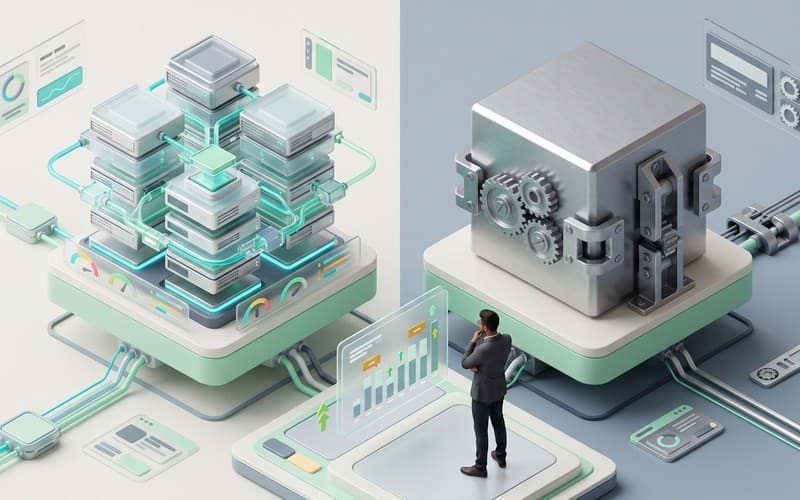
Deciding between direct synchronous dispatch and decoupled message queues is a critical architectural pivot when planning how to integrate alpaca trading api systems into enterprise backends. Direct HTTP calling structures appear simple initially, but they tightly couple strategy decision pipelines to external network availability, multiplying systemic risk during market volatility.
Comparing failure recovery in Redis/Kafka-backed queues versus direct HTTP callers
In a direct synchronous model, the trade generation thread executes the HTTP request directly against Alpaca. If network latency spikes or a socket times out, the strategy thread blocks, delaying downstream market evaluation and increasing execution slippage. Furthermore, recovering from process crashes during in-flight network requests requires complex local state recovery.
By contrast, an asynchronous alpaca rest api order routing architecture introduces durable message brokers like Redis Streams, RabbitMQ, or Apache Kafka between strategy evaluation and execution workers. Strategies publish discrete order intent messages to the queue. Specialized execution workers pull these intents, assign idempotency keys, and handle REST dispatch. If an execution worker crashes or encounters temporary network partitions, unacknowledged messages safely persist in the queue for dead-letter processing or redelivery, preventing dropped orders.
Database schema considerations for audit trails and double-entry trade ledgering
Financial software requires immutable records of every transition between intent, submission, fill, and settlement. The persistent data layer should model order records using double-entry ledger principles rather than mutable state columns. Each state transition—from submission to partial fill and terminal settlement—creates an append-only ledger transaction linked by client_order_id and Alpaca's order ID.
Maintaining an immutable audit log enables continuous reconciliation between local balances and broker holdings. Should discrepancies arise from corporate actions or manual overrides, the double-entry journal provides an audit trail for compliance verification and operational reporting.
Production Hardening Checklist: Security, Resilience, and AI Tooling Trade-offs
Modern engineering workflows leverage generative models to rapidly bootstrap boilerplate, data structures, and client SDK bindings. However, deploying a mission-critical alpaca trading api integration guide into production requires recognizing the boundary between AI-assisted scaffolding and deterministic financial engineering.
Where AI coding tools accelerate fintech builds and where automated generation fails
AI coding agents and harnesses excel at generating repetitive integration scaffolding: typing WebSocket event payloads, setting up schema models for order requests, and writing mock server suites for paper trading. This scaffolding drastically shortens early feedback loops and routine implementation effort. However, raw AI code generation frequently fails when handling nuanced edge cases in asynchronous state machines. Autonomous models routinely overlook subtle race conditions during out-of-order WebSocket frame arrivals, generate naive retry loops that worsen network congestion, or mismanage complex decimal math required for precision fractional orders.
Mandatory human engineering controls: financial reconciliation, secret management, and scale
To safely bridge the gap between AI generation and production reliability, experienced engineers must enforce rigorous human controls over system architecture, security, and release validation. Human specialists must oversee API secret management, vault storage, and principle-of-least-privilege key scoping. Engineers must also design rigorous alpaca trading api rate limits handling, embedding token-bucket throttlers and distributed lock guards into the request lifecycle.
Furthermore, engineering teams must mandate extensive paper-trading validation runs and simulated chaos testing before capital deployment. Acceptance testing must deliberately inject simulated network drops, socket timeouts, and exchange halts to verify that double-entry ledgering and automated reconciliation routines consistently restore exact state across broker boundaries.
Deploying Your Production Brokerage Architecture with Canvas Developers
Deploying a production-grade alpaca trading api integration requires balancing rapid development velocity with uncompromising financial precision. At Canvas Developers, an engineering company with an office in Dhaka, Bangladesh, we build custom trading infrastructure, financial portals, and algorithmic execution engines through our specialized API development and SaaS MVP development services. Our teams leverage AI coding agents and modern development harnesses to speed up interface scaffolding, data contracts, and unit testing, while senior software engineers own core architecture, code review, and final release decisions.
Whether your team is launching a new algorithmic product or hardening an existing AI-built prototype, we structure implementations around deterministic safety. We offer two clear delivery models: Private / Local AI Engineering for teams requiring isolated open-weight models within private infrastructure, and commercial AI tool workflows using approved cloud configurations. We mitigate architectural and execution risks by enforcing human verification across double-entry ledger schemas, token-bucket rate limiters, and automated WebSocket reconnection state machines.
Every engagement begins with thorough technical scoping, progressing through defined milestones, chaos testing in sandbox environments, and structured handover. If you are evaluating how to integrate alpaca trading api services into your product, contact our engineering team to book a scoped technical assessment via https://www.canvasdevelopers.com/contact with your current architecture, trading workflows, and execution requirements.