Scaling property management operations across hundreds or thousands of units exposes the fundamental limits of disconnected software. When property managers, leasing teams, and accounting staff rely on separate platforms, data drift creates costly discrepancies in tenant records, rent rolls, and work orders. Building a custom property management appfolio sync provides the bidirectional pipeline required to unify operational systems with internal databases, proprietary CRMs, and tenant portals.
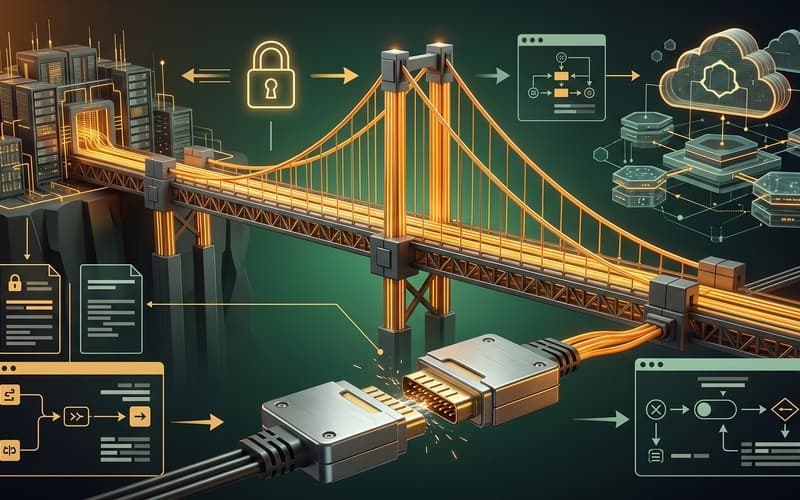
Rather than relying on brittle point-to-point webhooks or error-prone manual exports, a production-grade integration demands decoupled queuing, cryptographic webhook verification, and robust state reconciliation. This technical guide outlines the architectural blueprint, data transformations, and engineering safeguards needed to keep property management data perfectly synchronized under high transactional load.
Why Native Workflows Break: The Case for a Custom AppFolio Sync
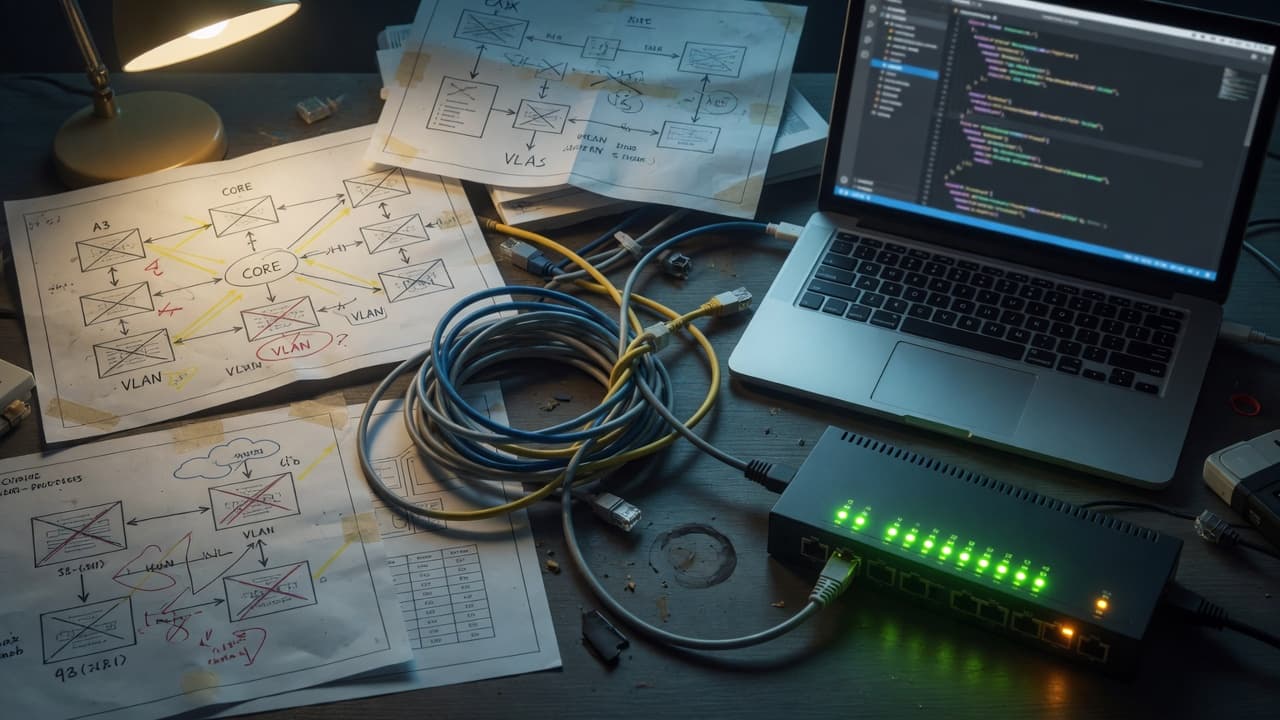
As residential and commercial property portfolios expand across multiple buildings and markets, operating purely within a single platform becomes untenable. Modern property management firms increasingly adopt specialized solutions: custom leasing engines, automated resident communications, third-party maintenance portals, and proprietary accounting data warehouses. However, without a dedicated, real-time bridge, property management data quickly fragments. Front-office leasing staff operate in one interface while property accounting resides isolated in AppFolio, creating blind spots that delay unit turnovers and disrupt rent collection.
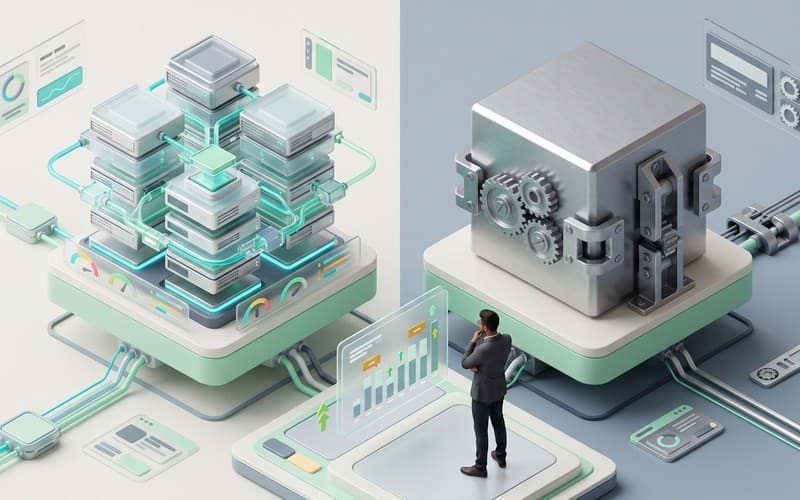
While generic integration connectors or low-code automations promise quick setup, they consistently fail under enterprise production volume. Off-the-shelf tools treat property data as simple flat records, struggling with deeply relational objects like leases tied to variable tenant ledgers and fluctuating utility charges. When syncing appfolio with third party crm platforms during peak periods—such as the first of the month rent runs or seasonal turnover surges—generic connectors hit rate limits, drop webhook events, and lack retry idempotency. Engineering a purpose-built custom property management appfolio sync eliminates these architectural bottlenecks by decoupling message ingestion, enforcing strict schema transformations, and maintaining persistent synchronization state.
Core Architecture for Bidirectional AppFolio Database Synchronization
Achieving reliable bidirectional data flow between AppFolio and proprietary systems requires moving away from synchronous point-to-point API calls. A scalable property data pipeline relies on an event-driven architecture that buffers incoming mutations, isolates external API latencies, and maintains data consistency across distributed datastores.
Decoupled Ingestion via Event-Driven Message Queues
Under a resilient integration pattern, incoming webhooks from AppFolio and outbound mutation requests from internal services hit lightweight ingress gateways. The gateway's primary responsibility is accepting the payload, verifying transport authenticity, and immediately publishing a standardized event onto a durable message broker such as RabbitMQ, Amazon SQS, or Redis Streams. Processing payloads synchronously inside the HTTP request loop risks cascading failures whenever downstream services experience momentary latency spikes.
In a production appfolio maintenance sync architecture, for instance, a sudden weather event or emergency plumbing failure can trigger hundreds of concurrent tenant maintenance submissions. Decoupling ingestion guarantees that the webhook receiver responds with an immediate 200 OK within milliseconds, preventing AppFolio from timing out and re-sending payloads. Worker pools then consume queued events at a regulated rate matching downstream API capacities and database throughput.
State Reconciliation, Conflict Resolution, and Idempotency
Because distributed network deliveries operate on an at-least-once model, implementing strict idempotency is mandatory for a reliable bidirectional appfolio database sync. Every inbound event generates a deterministic idempotency key—derived from the entity identifier, event timestamp, and payload hash—checked against a fast distributed cache like Redis before execution. If a worker receives an event already processed within a sliding time window, it safely acknowledges and discards the duplicate, preventing duplicate charge postings or redundant work-order creation.
Schema normalization bridges the gap between AppFolio's nested data models and internal relational structures. Units, leases, and ledger entries require an intermediate object-mapping layer that standardizes dates, addresses, and currency fields into double-entry accounting models. When concurrent updates collide—such as a tenant phone number edited simultaneously in an internal CRM and AppFolio—conflict resolution policies enforce field-level ownership. AppFolio remains the authoritative source of truth for financial ledgers, lease agreements, and security deposits, while internal operational platforms take precedence for marketing statuses, lead tracking, and vendor dispatch logs.
Implementing Resilient Webhooks and Polling Fallbacks
Building a robust synchronization pipeline requires designing for intermittent network failures, sudden traffic surges, and unexpected downstream outages. Integrating webhooks and fallback polling mechanisms establishes a resilient architecture capable of preserving data fidelity under real-world operational stress.
Webhook Listener Design and Signature Verification
Security and integrity begin at the ingestion layer. When configuring appfolio developer integration webhooks, developers must account for AppFolio's cryptographic verification standard. As detailed in the official AppFolio Stack webhook repository, AppFolio uses JSON Web Signature (JWS) with the PS256 (RSASSA-PSS using SHA-256) algorithm rather than standard shared-secret HMAC hashes.
Incoming HTTP requests supply a detached signature inside the X-JWS-Signature header in the format BASE64URL(Protected_Header)..BASE64URL(Signature). To verify authenticity, the webhook listener retrieves the public JSON Web Key Set (JWKS) from https://api.appfolio.com/.well-known/jwks.json, caches keys locally to minimize latency, reconstructs the complete JWS token using the raw unparsed request body bytes, and validates the signature. Any payload that fails cryptographic verification or contains an invalid timestamp is rejected immediately with an HTTP 401 Unauthorized status, preventing replay attacks and spoofed notifications.
Managing Rate Limits with Dynamic Exponential Backoff
A comprehensive appfolio api integration guide must address API concurrency limits. As highlighted on the AppFolio Engineering Blog, API quotas are configured across per-second, per-minute, and per-hour windows on a customer-partner pair basis to maintain platform stability under heavy loads.
To operate smoothly within these boundaries, the outbound sync pipeline should employ local token-bucket or leaky-bucket rate limiters that pace requests before they leave your servers. When an outbound call receives an HTTP 429 Too Many Requests response, the worker must parse the Retry-After header and execute exponential backoff combined with randomized jitter. Introducing jitter disperses retry attempts over time, preventing synchronized request bursts from repeatedly saturating rate-limit windows.
Dead-Letter Queues and Automated Replay Strategies
Even with robust retry logic, transient database deadlocks, network partitions, or schema mismatches can prevent an event from completing successfully. Instead of failing silently or blocking the queue, failed events transition to a secondary retry topic with graduated delays.
If an event fails after a predetermined threshold—such as five sequential attempts—it routes directly to a Dead-Letter Queue (DLQ). The DLQ preserves the original payload, complete error stack trace, attempt counts, and timestamp metadata. Transient network timeouts can be flagged for automated periodic reprocessing once connectivity checks clear. In contrast, data formatting conflicts or unmapped tenant references trigger engineer alerts for manual review, allowing developers to repair mappings and trigger targeted re-ingestion without data loss.
Polling vs. Webhook-First Pipelines: Architecture Trade-Offs
Architecting an enterprise property management integration involves choosing the right mechanism for state propagation. While engineering teams often default to either pure polling or exclusive webhook reliance, high-volume production systems require evaluating the architectural trade-offs between both approaches.
Latency, Throughput, and Server Resource Consumption
Scheduled polling queries endpoints at fixed intervals to discover modified records. While straightforward to deploy, polling creates significant trade-offs: frequent polling rapidly exhausts partner API quotas and expends database compute on empty responses, whereas infrequent polling introduces multi-hour data latency. Conversely, a webhook-first architecture provides near-instantaneous notification of changes with zero idle API consumption.
To balance these constraints, an enterprise data pipeline employs a hybrid model. Webhooks serve as the primary trigger for real-time updates, while an automated, low-frequency reconciliation job executes during off-peak hours. This background sweeper queries records updated in the preceding 24 hours to identify and heal any silent dropped events without placing unnecessary load on the server.
Handling High-Concurrency Maintenance and Work-Order Bursts
Operational volatility is especially pronounced within an appfolio maintenance sync architecture. Severe weather, plumbing emergencies, or seasonal HVAC transitions generate sudden bursts of tenant service requests and vendor updates. Under pure polling, these bursts can overwhelm query buffers or delay critical dispatches.
By routing webhook event streams into partitioned message queues keyed by property identifier, the synchronization engine guarantees chronological message processing. Even during peak dispatch hours, events are processed without race conditions, ensuring that technician notes, vendor assignments, and tenant approvals reflect accurately across both platforms during an active bidirectional appfolio database sync.
Integration Pitfalls, AI Scaffolding, and Engineering Safeguards
Modern software engineering workflows increasingly leverage AI coding assistants to compress integration timelines and eliminate boilerplate. However, in mission-critical property management systems handling financial ledgers, lease contracts, and sensitive tenant records, automated code generation must be balanced with strict engineering oversight and architectural rigor.
Where AI Coding Accelerates Scaffolding and Where It Breaks Down
In an advanced appfolio api integration guide, AI coding agents—such as those directed by engineers at Canvas Developers—dramatically reduce boilerplate effort. AI tools excel at scaffolding: generating strongly-typed data transfer objects (DTOs), mapping OpenAPI schemas to internal models, writing repetitive CRUD endpoints, and synthesizing realistic mock JSON payloads for automated test suites. These shorter feedback loops enable teams to stand up the baseline integration framework in a fraction of traditional development cycles.
However, AI code generation breaks down when confronting nuanced edge cases. Generative models frequently hallucinate undocumented endpoints, overlook race conditions during high-volume webhook bursts, or produce naive retry loops that accidentally trigger denial-of-service throttling. More critically, AI tools struggle with detached cryptographic payload verification and fail to reason through the cascading impacts of distributed transactions across rent ledgers and tenant deposits.
Human-Led Reviews for Security, Financial Ledger Accuracy, and Concurrency
To deliver a resilient custom property management appfolio sync, experienced software engineers must own system architecture, conduct line-by-line code reviews, and decide release readiness. At Canvas Developers, AI-assisted development is paired with senior engineering governance across three vital domains:
- Financial Ledger Integrity: Validating that tenant balance adjustments, payment processing, and security deposit returns strictly adhere to double-entry accounting rules without rounding discrepancies or orphaned records.
- Cryptographic & Token Security: Enforcing strict JWS signature verification, secure secret management in cloud key vaults, and role-based access controls to protect personally identifiable information (PII).
- Concurrency & Safe Staging: Executing contract testing and synthetic load simulations in isolated staging environments—aligning with the testing methodologies outlined in the AppFolio Engineering Blog—before releasing pipelines into production.
Before any production rollout, engineers execute end-to-end integration tests using contract-testing suites and sanitized sandbox tenant data. Simulating real-world webhook replays and burst maintenance dispatches in an isolated staging environment ensures that database locks, idempotency caches, and error fallbacks perform predictably before processing live property transactions.
Next Steps: Hardening Your Property Management Integration Pipeline
Transitioning from conceptual design to a production-hardened integration requires systematic verification across security, data integrity, and operational monitoring.
Audit Checklist for Production Data Pipelines
Before deploying your property management integration into a live operating environment, evaluate your system against this critical acceptance checklist:
- Cryptographic Ingestion: Verify that your listener validates appfolio developer integration webhooks using detached JWS PS256 signatures against the official JWKS endpoint.
- Idempotency Enforcement: Ensure duplicate webhook deliveries are deduplicated via unique hash-derived cache keys before database writes occur.
- Rate Limit Guardrails: Implement token-bucket throttlers and automated exponential backoff with jitter on all outgoing API calls.
- Replay & DLQ Recovery: Maintain dead-letter queues with full payload context and automated re-ingestion pathways for transient network failures.
- Accounting Validation: Confirm all lease balances and financial transactions reconcile against double-entry standards.
Scoping Architecture and Implementation with Canvas Developers
For small portfolios with static workflows, basic spreadsheet exports or native point-to-point connectors may suffice. However, when managing scaling residential or commercial portfolios requiring a high-throughput custom property management appfolio sync, custom engineering prevents operational breakdown.
Canvas Developers builds, stabilises, and hardens complex integration pipelines. By combining AI-assisted scaffolding tools with seasoned software engineering leadership, we accelerate delivery while maintaining strict human code review over security, accounting accuracy, and cloud infrastructure. We offer flexible delivery models, including Private/Local AI Engineering in your dedicated environment and commercial AI coding setups.
To discuss your current software stack, API constraints, and synchronization requirements, request a scoped technical assessment through the Canvas Developers contact form.