Connecting Microsoft Dynamics 365 to core ERP platforms, legacy databases, and distributed cloud applications requires deep architectural discipline across Microsoft Dataverse and enterprise messaging buses. When organizations prepare to hire a Dynamics 365 integration expert, they frequently encounter a significant capability gap between general CRM configurators and seasoned integration engineers capable of handling high-throughput telemetry, service protection limits, and complex state synchronization.
This vetting framework and cost guide provides enterprise technology leaders with concrete architectural screening benchmarks, data integrity evaluation criteria, and delivery models to select the right engineering partner for mission-critical deployments.
Why Do Enterprise Dynamics 365 Integrations Fail Without Dedicated Expertise?
Connecting Microsoft Dynamics 365 to ERP platforms, on-premise databases, and external cloud services involves architectural challenges that standard configuration workflows cannot resolve. When enterprises hire a Dynamics 365 integration expert, the primary objective is preventing operational failures caused by unhandled backpressure, distributed state mismatch, and uncoordinated schema definitions across disparate business units.
A frequent point of breakdown is underestimating platform-level rate throttling. According to Microsoft Dataverse service protection API limits documentation, the platform enforces strict limits within a sliding five-minute window across total request volume, cumulative execution duration, and concurrent requests. Inexperienced implementations that poll endpoints directly or execute unbuffered bulk writes encounter HTTP 429 errors, blocking critical synchronization pipelines and triggering cascading service bus bottlenecks.
Beyond throttling, superficial schema mapping introduces silent data corruption across enterprise systems. When transactional entities such as multi-currency purchase orders, inventory ledgers, or tiered customer hierarchies are synchronized without strict referential integrity and bi-directional validation, downstream reporting and accounting systems rapidly diverge. Resolving these discrepancies after deployment requires complex manual reconciliation and custom corrective scripts, emphasizing why deep architectural vetting must occur before selecting an engineering resource.
Should You Hire an In-House Dynamics Specialist or an Enterprise Development Partner?
In-House Recruitment Realities: Sourcing Bottlenecks, Long Ramp-Up, and Overhead
Recruiting a full-time Dynamics 365 engineer presents notable operational friction for enterprise IT departments. Senior developers who understand the nuances of the Dataverse API, Power Apps component frameworks, and Microsoft Graph are scarce, commanding premium compensation packages and lengthy notice periods. Even when internal talent acquisition succeeds, onboarding an engineer into custom company schemas, ERP dependencies, and legacy endpoints often requires months before meaningful throughput occurs.
Furthermore, integrations rarely demand identical resource capacity year-round. Retaining permanent in-house specialists after the core architecture stabilizes creates ongoing payroll overhead for maintenance tasks that do not justify dedicated senior salaries. Organizations that decide to hire a Dynamics 365 integration expert on a permanent basis often find that a single individual lacks the multi-disciplinary skills needed across cloud infrastructure, security audits, and continuous testing.
Agency Engineering Teams: Full-Stack Breadth Across Cloud Infrastructure and QA
Partnering with a specialized enterprise dynamics 365 development partner offers immediate cross-functional leverage. Complex integration initiatives require more than CRM workflow configuration; they demand proficiency in Azure Service Bus, identity management, queue buffering, and regression testing across isolated sandbox environments.
Modern engineering teams, such as Canvas Developers, combine deep architectural direction with automated engineering pipelines. In this delivery model, AI coding agents and advanced development harnesses assist with repetitive tasks such as boilerplate connector generation, schema transformation scaffolding, and integration test generation. However, senior human engineers maintain strict governance—directing system architecture, conducting rigorous peer code reviews, verifying security boundaries, and making final release decisions. This collaborative structure eliminates the single-point-of-failure risk of solo hires while delivering full-stack capabilities across cloud infrastructure, QA, and enterprise integration patterns.
What Technical Architecture Questions Screen True Dataverse and Integration Competence?
Evaluating candidates beyond generic CRM customization requires targeted technical inquiries into distributed systems architecture. When preparing questions to ask dynamics 365 engineers, engineering leaders should probe how an applicant designs for consistency, network partition tolerance, and credential boundaries.
Dual-Write vs Azure Service Bus: Determining Synchronous vs Asynchronous Sync Strategies
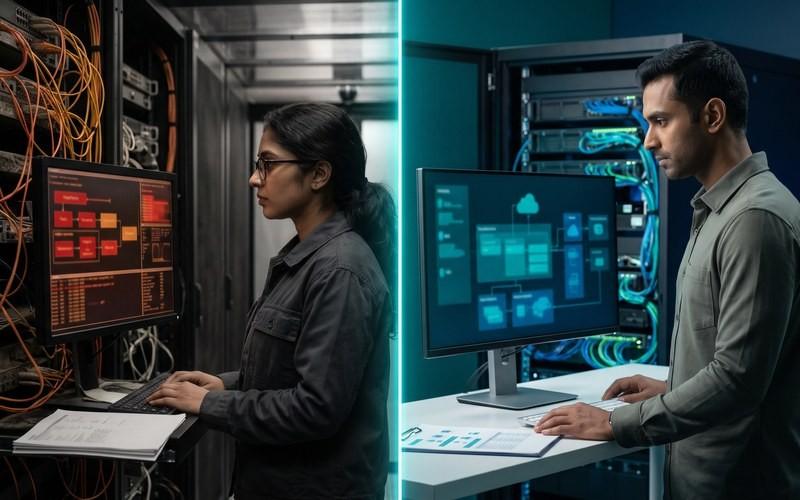
A fundamental assessment area when vetting dynamics 365 dataverse developers is knowing when to enforce transactional coupling versus decoupled eventing. Microsoft's out-of-the-box dual-write infrastructure provides tightly coupled, near-real-time bidirectional data flow between customer engagement apps and finance and operations apps. However, dual-write binds both environments synchronously: if validation logic, record locking, or network latency stalls in one system, the entire transaction can block or roll back across both platforms.
Senior integration engineers recognize when to decouple high-volume transactional flows using Azure Service Bus queues and topics. Implementing an asynchronous broker introduces persistent storage, dead-letter queues, and automatic retry policies, insulating Dataverse from transient upstream outages. Strong candidates should articulate exact criteria for choosing between synchronous data consistency and asynchronous fault-tolerant decoupling, particularly when handling burst telemetry, high-frequency order placement, or batch catalog updates.
Custom Connectors, Webhooks, and Azure Functions: Bypassing Out-of-the-Box Limitations
Standard Power Platform connectors frequently fall short when dealing with non-standard payload formats, complex token exchanges, or strict latency requirements. Competent engineers rely on custom Dataverse webhooks and Azure Functions to handle custom transformation logic, pre-validation filters, and high-performance routing that bypass out-of-the-box constraints.
Beyond execution pipelines, technical screening must distinctly evaluate how candidates architect authorization and security boundaries. Candidates should demonstrate a structured approach to identity management: implementing OAuth 2.0 client credentials grant flows, securing secrets within Azure Key Vault, and enforcing granular role-based access control (RBAC) across distinct development, staging, and production environments. Furthermore, senior engineers must verify outbound webhook integrity using HMAC signatures and isolate service principal permissions so that compromised tokens cannot perform unrestricted writes across Dataverse tables.
Where Does AI-Assisted Development Accelerate Integrations, and Where Must Human Engineers Step In?
The emergence of AI coding agents and automated harnesses has transformed how modern engineering teams scaffold and iterate on enterprise integration pipelines. When vetting dynamics 365 dataverse developers, technical buyers must understand the precise boundary between automated acceleration and the indispensable governance of senior software engineers.
What AI Tools Do Well: Accelerating Boilerplate Connectors, Unit Tests, and Script Scaffolding
AI tools excel at rapid syntax generation and repetitive engineering tasks. In a Dynamics 365 integration workflow, AI coding agents and specialized harnesses—such as Antigravity—rapidly scaffold boilerplate OData client calls, generate strongly typed Dataverse entity wrappers, construct JSON schema mappings, and draft automated integration test harnesses. Teams at Canvas Developers utilize these tools to shorten development feedback loops, enabling developers to prototype endpoints and iterate on data transformations in hours rather than days.
Through code reuse and automation, shorter feedback loops aim to reduce overall engineering effort, project delivery timelines, and development costs. Enterprise clients can select delivery packages tailored to their data governance requirements: 'Private / Local AI Engineering' with privately hosted open-weight models deployed inside client-controlled infrastructure, or commercial AI engineering using Claude Code or OpenAI Codex under client-approved security configurations.
Where AI Coding Fails: Architectural Cohesion, Edge-Case Logic, and Complex State Handling
Despite their velocity during vibe coding and initial scaffolding, AI models lack holistic architectural comprehension and cannot evaluate distributed system trade-offs. AI generators routinely fail when handling complex state synchronization, managing Dataverse service protection rate throttling, resolving optimistic concurrency exceptions, or orchestrating multi-entity transactional rollbacks across disconnected databases.
These mechanisms and aims accelerate initial delivery, but substantial engineering work remains. Experienced human engineers must direct system architecture, conduct line-by-line peer code reviews, and retain final release authority. Core domains—including financial ledger synchronization, role-based access control, token delegation boundaries, and operational scalability—require veteran human oversight to guarantee production stability and enterprise security.
What Benchmarks Dictate Dynamics 365 Developer Costs and Engagement Models?
Budgeting for enterprise systems integration requires understanding the technical factors that influence the overall microsoft dynamics crm developer cost. Rather than focusing solely on surface-level compensation, technology leaders must evaluate how architecture, domain depth, and engagement structures impact total cost of ownership.
Understanding Market Rates: What Drives Hourly Rate Discrepancies Across Senior Tiers
When analyzing a dynamics 365 integration consultant hourly rate, wide rate discrepancies across the market reflect distinct tiers of technical specialization. Entry-level practitioners typically focus on declarative Power Apps workflows and basic out-of-the-box form customizations. Because these roles do not write custom Dataverse plugins or configure distributed enterprise messaging, their market rates reside at the lower end of the spectrum.
Conversely, senior integration specialists command higher rates due to their cross-platform capabilities in distributed systems. Key cost drivers include expertise in asynchronous messaging architectures, multi-tenant Azure AD security, high-volume batch optimization under service protection throttling, and dual-write schema orchestration. Engaging experienced engineers prevents the expensive downstream refactoring that inevitably follows architectural shortcuts.
Comparing Freelance Hourly Engagements with Managed Milestone Deliveries
Enterprise buyers generally weigh two primary engagement models: open-ended hourly freelance contracts versus managed, milestone-based agency deliveries. While an hourly contractor appears flexible initially, time-and-materials billing shifts scope-creep risk entirely onto the client, frequently leading to budget overruns when unexpected edge cases emerge.
A milestone-based engagement eliminates hidden surcharge risks by establishing explicit architectural deliverables, phased roadmaps, and documented acceptance criteria. Under this structure, teams such as Canvas Developers begin with structured scoping, progressing through agreed milestones, rigorous integration testing, and formal handover. This approach aligns delivery incentives, verifies data integrity at each checkpoint, and gives stakeholders predictable oversight over project progress without unmonitored hourly accumulation.
What Costly Pitfalls Must IT Leaders Avoid During the Technical Due Diligence Phase?
Conducting structured technical due diligence before contracting an integration specialist shields enterprise architectures from expensive operational disruptions. When vetting dynamics 365 dataverse developers, IT leaders must guard against recurring pitfalls that compromise data integrity and system availability.
Mistake 1: Accepting Superficial Out-of-the-Box Integrations for High-Volume Workflows
A frequent error is assuming standard low-code connectors can sustain high-volume enterprise transactions. Out-of-the-box Power Automate sync flows frequently collapse under heavy concurrent loads, lacking telemetry, dead-letter buffering, and exponential backoff handling. While a simpler option—such as standard native connectors—fits low-volume, single-entity synchronization with infrequent updates, high-throughput workflows require custom Dataverse APIs, decoupled queues, and resilient message brokers engineered by an experienced enterprise dynamics 365 development partner.
Mistake 2: Overlooking Comprehensive Sandbox Testing and Release Assurance QA
Another costly misstep is neglecting automated testing across isolated staging environments. Integrations touching core ERP and CRM databases require rigorous regression testing, payload validation, and chaos testing to observe how services recover from network partitions. Furthermore, deploying unhardened scripts or raw AI-generated scaffolding without peer review introduces critical security vulnerabilities.
Enterprise engineering teams avoid these failures by enforcing a subject-specific acceptance checklist:
- Throttling verification: Validating exponential backoff and
Retry-Afterheaders under Dataverse service protection limits. - Security boundaries: Verifying OAuth 2.0 client credentials, secret rotation in Azure Key Vault, and HMAC webhook signatures.
- Transaction integrity: Confirming two-phase rollbacks and idempotency across high-volume entity updates.
- Architectural sign-off: Enforcing mandatory peer reviews and release decisions by senior human engineers before production deployment.
How Do You Initiate a Scoped Technical Assessment for Your Dynamics 365 Project?
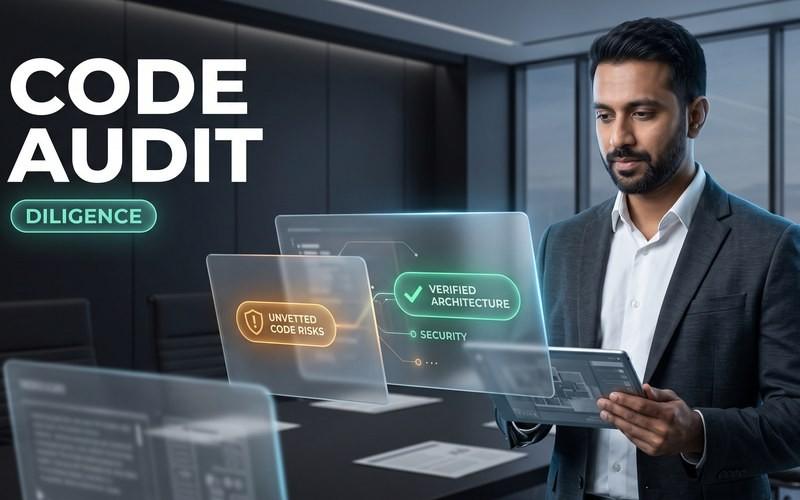
Before committing enterprise resources to a full implementation, engineering leaders should structure an initial technical discovery audit. A structured due diligence assessment reviews your current system topology, API rate limits, entity mapping schemas, and security boundaries to uncover architectural risks before writing production code.
If your organization is planning to hire a Dynamics 365 integration expert to build, harden, or modernize enterprise workflows, partner with an engineering team that pairs automated development acceleration with veteran architectural governance. Explore our dedicated Dynamics 365 development capabilities or submit your stack, integration constraints, and target outcomes through our contact form to schedule a scoped architectural review.