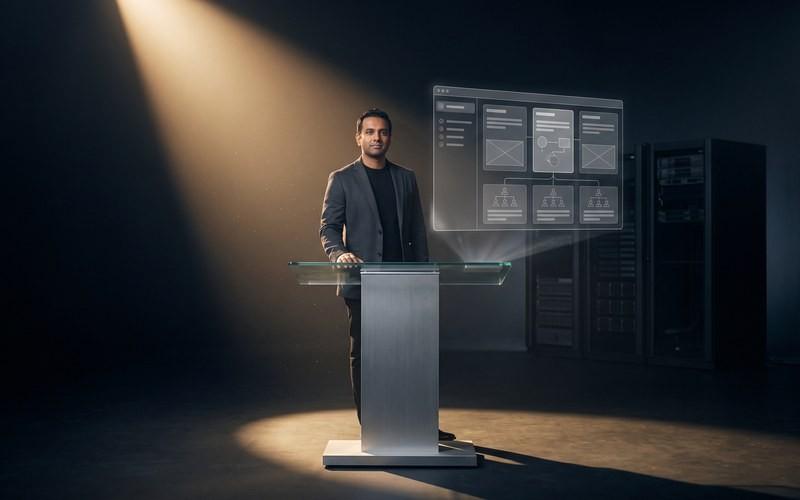
An effective Code Audit & Architecture Review incident recovery console equips engineering teams to isolate distributed failures, safeguard transactional integrity, and restore stalled deployment pipelines. When downstream infrastructure degrades, software systems must halt cascading faults before retry storms overwhelm upstream services. At Canvas Developers, our engineering teams design operational consoles that give operators full visibility into pipeline health and granular control over release recoveries.
What Is an Incident Recovery Console and Who Manages the Release Task?
A deployment failure in a distributed environment requires immediate containment to prevent downstream service collapse. An incident recovery console provides a centralized operational plane where engineering teams supervise active deployments, monitor execution state across environments, and halt problematic changes before systemic damage occurs. Within this architecture, the core operational record is the release task—an atomic, state-managed tracking entity that logs deployment progression across database migrations, container updates, and configuration synchronizations.
Through our rigorous Code Audit & Architecture Review methodology, Canvas Developers structures the console around distinct role boundaries to maintain governance during critical incidents:
- Developers: Initiate deployment workflows, inspect detailed execution traces, and submit targeted rollback or hotfix configurations without holding raw production credentials.
- Reviewers: Validate schema migration scripts, evaluate configuration drift against security benchmarks, and approve high-impact remediation plans prior to execution.
- Operations Engineers: Supervise real-time pipeline health, trigger circuit-breaking emergency levers, and execute release task recovery procedures across isolated runtime clusters.
Grounding a Code Audit & Architecture Review incident recovery console on this role-based workflow ensures that every intervention remains fully auditable, strictly scoped by least-privilege policies, and resilient against uncoordinated operator overrides.
How Do the Console Screens Handle System Failures and Controlled Retries?
In distributed systems engineering, incident recovery console development demands intuitive, tactile diagnostic workflows that eliminate operator confusion during high-pressure production outages. Our architectural approach pairs a modular Next.js and TypeScript frontend with a resilient Go and PostgreSQL backend, utilizing Redis distributed locks and WebSocket event streams to render live cluster state without polling overhead.
Inspecting Health Views and Failed-Job Details for Release Tasks
The console organizes operational workflows into a responsive two-pane split layout. The health view monitors active release task queues, worker thread utilization, and downstream API latency, utilizing prominent visual badges—amber chips for degraded upstream dependencies and red flags for tripped circuit breakers. Selecting an affected release task slides open the failed-job detail pane. This interface functions as an interactive diagnostic workbench: step-by-step execution waterfall timelines, expandable JSON request payload diff viewers, exact database error codes, and deep links into OpenTelemetry distributed trace spans. Operators can immediately distinguish between transient network packet loss and irreversible schema validation mismatches, ensuring precise diagnostic clarity.
Executing Controlled Retry Actions Across Degraded States
To prevent catastrophic retry storms during service degradation, the console provides a controlled retry action modal protected by multi-stage safeguards. Through our Code Audit & Architecture Review integration, the console enforces parameterized execution policies, requiring engineers to verify idempotency keys and inspect remaining error budgets before dispatching workloads. In accordance with the AWS Well-Architected Framework guidance on limiting retries, the system calculates full jitter and exponential backoff intervals to prevent synchronized traffic spikes against recovering targets. If automated rollback checks detect state divergence, the console locks the retry button and prompts a verified rollback sequence.
How Does Data Flow Safely During Third-Party Dependency Outages?
Third-party service interruptions present severe failure modes for distributed platforms. When an external API or managed dependency degrades, unbounded client retries create cascading resource exhaustion across worker pools. Establishing robust data flow controls prevents upstream failure propagation and preserves transactional consistency throughout the recovery lifecycle.
Balancing Outage Timeouts, Retry Budgets, and State Preservation
During a downstream dependency outage, the system initiates a structured lifecycle spanning client timeout, retry budget tracking, and controlled recovery. As documented in the AWS Well-Architected Framework reliability guidance, unconstrained retries consume critical system threads and risk creating metastable retry storms. Our pipeline assigns an explicit retry budget and timeout threshold to each outbound dependency call. When a failure threshold is breached, the circuit breaker trips, transitioning the task into a visible degraded state without corrupting completed work. Completed transactional stages remain immutable in persistent storage, ensuring that downstream failures never trigger partial state updates or duplicate executions.
Enforcing Least-Privilege Credentials and Environment Isolation
Every operational intervention must operate within strict governance boundaries. In our resilient architecture review framework, we mandate strict environment boundaries between staging, pre-production, and production infrastructure. During Code Audit & Architecture Review development, our engineers isolate service execution scopes so worker nodes interact exclusively via short-lived, least-privilege credentials managed through identity federation. The console enforces automated rollback checks prior to applying configuration changes, ensuring that credential rotation or deployment rollbacks cannot compromise cluster stability.
How Does Our Approach Pair AI Scaffolding with Human Engineering Review?
Accelerating console development requires balancing rapid UI prototyping with rigorous systems engineering. In our approach to Code Audit & Architecture Review vibe coding, Canvas Developers leverages AI-assisted scaffolding and AI coding agents to generate initial frontend state machines, dashboard mockups, and boilerplate API client bindings. This AI scaffolding shortens feedback loops and helps engineers quickly visualize complex event streams.
However, AI coding tools cannot independently guarantee operational safety in high-stakes recovery environments. While automated generation handles layout scaffolding and standard schemas, experienced human engineers must own the core architecture, concurrency boundaries, and data integrity safeguards. Our team conducts line-by-line engineering reviews and acceptance testing to verify state transition locks, credential isolation, and circuit breaker logic. By combining AI-assisted development velocity with veteran engineering oversight, teams reduce iteration overhead while ensuring production stability.
How Can You Scope an Architecture Review and Recovery Console Project?
Determining whether your infrastructure requires custom tooling begins with an honest assessment of operational complexity. If your deployment pipeline involves straightforward monolithic deployments, standard CI/CD alerting and built-in rollback scripts may offer adequate protection. However, when distributed architectures face cascading timeouts across multi-service deployments, investing in specialized Code Audit & Architecture Review development becomes critical to safeguard system stability.
A structured scoping engagement clarifies your current technical stack, deployment bottlenecks, failure domains, and recovery time objectives. Whether you need to stabilize AI-scaffolded pipelines or harden existing release workflows against third-party outages, Canvas Developers structures clear delivery milestones directed by veteran engineers. Share your architecture constraints and target outcomes through our contact form to start a scoped assessment.
Outcome
The workflow transitions dependency outages into a visible degraded state while preserving completed transactional work in persistent storage without corruption. Pairing AI-assisted scaffolding with human engineering reviews shortens feedback loops and reduces iteration overhead while maintaining production stability.