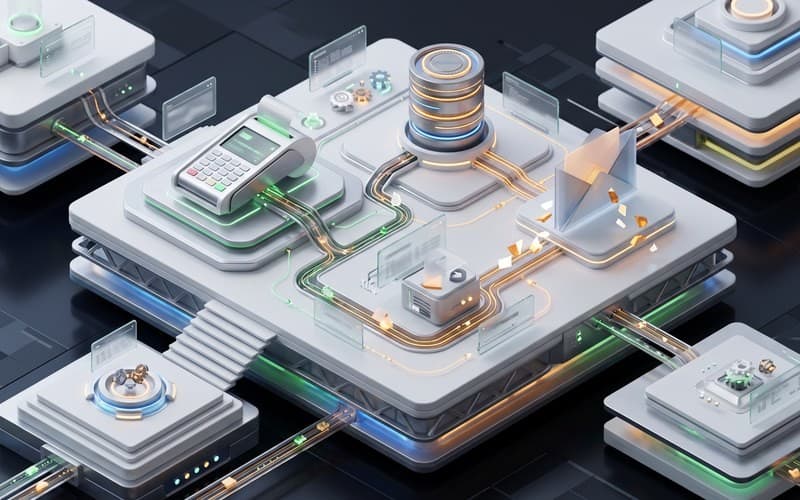
Deploying a recurring revenue model in Bangladesh requires a payment experience that eliminates manual friction at billing renewals. For software-as-a-service platforms and digital subscription providers, relying on traditional redirect gateways forces subscribers through multi-step PIN and one-time password (OTP) prompts each month, inflating involuntary churn. Integrating bkash tokenized checkout solves this by establishing a pre-authorized payment mandate between the merchant and the subscriber's digital wallet. Once the mandate is approved, your platform can initiate programmatic billing cycles directly, securing steady cash flow and delivering a frictionless subscriber experience.
Why Are Standard Redirects Breaking Your Bangladesh Subscription Flow?
In Bangladesh's digital economy, mobile financial services dominate consumer transactions, yet standard payment gateway integrations remain fundamentally misaligned with recurring software subscriptions. Conventional payment setups rely on interactive, customer-present redirects. Each billing cycle, the subscriber must visit an external checkout page, enter their mobile wallet number, wait for an SMS one-time password (OTP), submit their security PIN, and await redirection back to the merchant portal. While this multi-step validation provides verification for one-off retail purchases, applying it to monthly renewals creates severe operational friction.
The churn cost of multi-step OTP redirects is substantial for subscription businesses. Involuntary churn spikes when SMS delivery suffers carrier latency, network timeouts interrupt gateway handshakes, or busy users simply postpone manual payment authorization until account access lapses. Every manual barrier between the subscriber and billing execution introduces an exit opportunity, depressing customer retention and inflating customer support tickets for interrupted service.
Adopting a modern bangladesh subscription payment gateway workflow transforms this recurring experience. Through bkash tokenized checkout, the subscriber authorizes a standing billing mandate during initial onboarding. Subsequent renewals bypass browser redirects entirely. Your backend billing workers trigger automated, server-to-server debit calls against the stored token, unlocking automated monthly renewals and seamless 1-click plan upgrades without manual user intervention.
What Is bKash Tokenized Checkout and How Does the Architecture Work?
Architecting subscription infrastructure around mobile financial services requires understanding the structural difference between single-transaction authorizations and durable billing mandates. A resilient bkash recurring billing architecture separates initial subscriber consent from ongoing server-driven debits, allowing platforms to programmatically manage renewals.
Agreement Execution vs. Direct Payment Authorization
Standard checkout integrations treat every transaction as an isolated event. The user must authenticate interactively, yielding an ephemeral payment identifier that expires immediately after settlement. By contrast, an agreement execution establishes a persistent mandate between the merchant and the subscriber's bKash account. During agreement creation, the subscriber authorizes the merchant to initiate recurring debits. Once executed, the gateway issues a unique agreementId. This identifier functions as a stored payment token, allowing backend workers to initiate billing requests without requiring customer-present OTP inputs or PIN prompts for each subsequent billing cycle.
Tokenized Lifecycle: Grant Token, Agreement Creation, and Execution
The complete tokenized lifecycle operates across three distinct phases: credential exchange, mandate initialization, and headless recurring settlement. As implemented in SDK patterns like the bKash Tokenized Checkout Service, the backend first requests an id_token through the Grant Token API. Next, the application initializes an agreement request, receiving an agreement URL where the user verifies their wallet. When bKash redirects to the merchant callback with a payment identifier, the server executes the agreement and records the active agreementId in the database.
To scale a robust bkash tokenized checkout implementation, backend systems must decouple subscription scheduling from payment execution workers. Rather than executing synchronous HTTP calls during cron triggers, a distributed scheduler evaluates subscription states and enqueues billing tasks into asynchronous worker queues. For modern platforms designing enterprise SaaS billing and multitenancy architecture, this worker separation isolates payment gateway network latency, prevents thread exhaustion, and enables fine-grained retry throttling.
How Do You Implement the bKash Tokenized Agreement and Payment Flow Step-by-Step?
Executing recurring billing through bKash requires strict adherence to API sequencing across token acquisition, mandate registration, and automated payment settlement. The following breakdown outlines the production implementation steps.
Step 1: Authenticating with the bKash Grant Token and Refresh Token API
The foundation of the integration relies on bKash's credential exchange. In this bkash grant token api tutorial phase, your backend initiates an authenticated POST request to /tokenized/checkout/token/grant passing your merchant credentials, including app_key, app_secret, username, and password. bKash responds with an id_token, a refresh_token, and an expires_in value of 3600 seconds. Rather than requesting a new grant token on every transaction—which triggers rate limits—store the token in Redis with a TTL of approximately 3,300 seconds, as modeled in client libraries like laravel-bkash. When the token nears expiry, pass the stored refresh_token to /tokenized/checkout/token/refresh to maintain continuous API connectivity without re-exposing root credentials.
Step 2: Initializing and Executing Agreement Create for Customer Mandates
Once authenticated, the application establishes the customer mandate using the bkash tokenized agreement create workflow. The backend calls the agreement creation endpoint, passing a unique payerReference (such as the customer's tenant UUID) and a registered merchant callbackURL. bKash returns a hosted agreementUrl, to which your frontend routes the subscriber. The customer validates their identity on bKash's secure page by entering their wallet number, confirming an SMS OTP, and inputting their PIN. Upon successful authorization, bKash redirects the subscriber back to your callback URL with a transient paymentID. Your server intercepts this parameter and immediately invokes executeAgreement. bKash confirms the mandate by returning an active agreementId and the customer's masked MSISDN, which your database stores alongside the customer's billing profile.
Step 3: Triggering Subsequent Recurring Debits via Payment Create and Execute
With an active mandate stored, your backend initiates headless bkash api recurring payments whenever a renewal invoice matures. When the billing scheduler triggers, the payment worker posts to /tokenized/checkout/create with the customer's agreementId, billing amount, currency set to BDT, and a unique merchantInvoiceNumber. Upon receiving a generated paymentID, the worker immediately posts to /tokenized/checkout/execute. Because a valid agreement exists, bKash processes the debit without requiring subscriber interaction, returning a confirmed trxID and a completed status.
In addition to payment debits, production systems must manage the complete agreement lifecycle. Backend services should periodically query agreement status via queryAgreement before triggering debits to ensure the user has not unlinked the mandate through their bKash mobile application. Furthermore, when a subscriber cancels their plan or deletes their account, your backend must invoke cancelAgreement to immediately terminate the mandate on bKash's servers, maintaining compliance and preventing errant recurring charges. Teams developing custom API development and integrations must treat these lifecycle hooks as mandatory safeguards.
Tokenized vs. Standard Checkout: Which Architecture Fits Your SaaS Model?
Selecting the appropriate payment integration architecture requires balancing implementation complexity against customer lifetime value and churn mitigation. For digital platforms and software companies operating in Bangladesh, moving from traditional redirect checkouts to a dedicated tokenized billing pipeline eliminates friction across recurring payment lifecycles.
Technical Comparison: Webhook Reliability, User Friction, and API Overhead
The operational distinctions between standard URL-based redirects and tokenized billing center on transaction ownership and network resilience:
| Operational Dimension | Standard URL-Based Checkout | bKash Tokenized Checkout |
|---|---|---|
| Customer Interaction | Requires interactive phone number, OTP, and PIN entry on every billing cycle. | Zero customer interaction required after the initial agreement creation. |
| Execution Model | Synchronous, client-side browser session tied to user navigation. | Headless, asynchronous server-to-server HTTP API calls via background queues. |
| Network Resilience | Vulnerable to dropped browser callbacks, network drops, and abandoned tabs. | Reliable server-driven requests backed by automated status query reconciliation. |
By shifting transaction execution to background worker infrastructure, bkash tokenized checkout eliminates dependence on subscriber browser sessions, significantly reducing involuntary renewal failure rates.
Handling Insufficient Balance, Failed Debits, and Dunning Logic
Unlike credit card payments where banks manage credit lines, bKash accounts rely strictly on pre-funded mobile wallet balances. When running automated bkash api recurring payments, platforms will inevitably encounter transaction failures caused by temporary insufficient wallet balances. Rather than cancelling subscriptions immediately or dropping stored agreements upon a single failed response, backend architectures must incorporate robust dunning management.
An effective dunning flow places the customer account into an active grace period, dispatches multi-channel payment reminders (via SMS and email) prompting the user to cash in to their bKash wallet, and schedules intelligent retry attempts using exponential backoff with jitter over a 3-to-7-day window. Because the agreement mandate remains active on bKash's gateway, the next scheduled background retry succeeds automatically as soon as the subscriber tops up their wallet.
What Critical Security and Ledger Mistakes Must Backend Teams Avoid?
Managing automated recurring debits introduces stringent financial responsibilities that do not exist in standard one-time checkout flows. An unhandled network glitch or duplicate event in background billing workers can trigger catastrophic double-billing across active subscriber accounts, leading to severe ledger corruption and costly customer disputes.
Idempotency Keys and Preventing Duplicate Debits in Distributed Queues
The most dangerous vulnerability in queue-driven recurring billing is duplicate execution. In distributed queue systems like RabbitMQ or SQS, transient network timeouts often trigger message re-delivery. If an HTTP request to bKash debits a wallet but the connection drops before receiving the response, an unverified retry will charge the customer twice.
Securing your bkash recurring billing architecture against duplicate debits requires deterministic idempotency. Generate a unique merchantInvoiceNumber by hashing the customer identifier, subscription plan ID, and billing period timestamp. Before dispatching payment requests, acquire a distributed Redis lock on that invoice key. If a worker encounters an unacknowledged timeout, it must immediately query bKash's queryPayment endpoint to confirm transaction status before retrying, preserving double-entry ledger integrity.
Securing App Secret Credentials and Refresh Tokens at Rest
Protecting merchant credentials and stored customer mandates requires strict isolation across application data layers. Root merchant credentials—including the app_secret, API password, and persistent refresh_token strings—must never reside in plain text configurations or version control. Store secrets in dedicated vaults like AWS Secrets Manager or HashiCorp Vault and inject them into isolated worker runtimes. Customer agreementId records should be encrypted at rest using AES-256-GCM.
This division of engineering responsibility highlights where AI tools assist and where human engineers must govern. During a bkash tokenized checkout implementation, AI coding tools accelerate boilerplate generation, DTO mapping, and test mocks. However, AI generators often overlook distributed race conditions, token refresh windows, and transaction rollbacks. Experienced software engineers must design the ledger architecture, audit security policies, and verify distributed locking before automated debit pipelines go live.
How Should You Ship and Maintain Production-Ready bKash Recurring Billing?
Deploying recurring billing to production demands rigorous validation across bKash's sandbox environment. A comprehensive pre-launch checklist must verify: proactive token refreshes before the 3,600-second expiry window, webhook and agreement revocation handling when subscribers unlink wallets in their mobile app, graceful dunning triggers under simulated zero-balance errors, and idempotency lock integrity during worker restarts. While standard payment redirect links remain suitable for simple digital products with infrequent transactions, scaling automated SaaS renewals requires an enterprise-grade bangladesh subscription payment gateway architecture.
Engineering resilient FinTech integrations requires balancing rapid execution with uncompromising financial precision. Canvas Developers assists software companies, SaaS founders, and agencies in designing, building, and hardening recurring billing pipelines from our office in Dhaka. Our team leverages AI coding tools to accelerate API scaffolding, data schemas, and unit test coverage, while senior engineers own system architecture, audit double-entry ledgers, and verify release decisions. This structured delivery approach shortens feedback loops while ensuring complete ledger consistency and credential security. To plan your bkash tokenized checkout implementation, submit your current stack, workflow constraints, and target billing model through our contact form for a scoped architectural assessment.
Step by step
Grant Token Authentication
Authenticate using merchant credentials against the bKash Grant Token API and cache the id_token in Redis with a 3300-second TTL.
Agreement Creation and Execution
Initialize an agreement request, redirect the customer to authorize the mandate, and execute the returned paymentID to store the agreementId.
Recurring Payment Execution
Trigger headless recurring debits via server-to-server payment create and execute calls using the stored agreementId.
Agreement Lifecycle Management
Query agreement status before scheduled debits and invoke agreement cancellation when subscriptions terminate.