Common TradingView integration mistakes turn profitable algorithmic chart strategies into unprofitable broker accounts through silent execution drops, severe slippage, and unhandled race conditions. While Pine Script generates accurate technical signals on Supercharts, routing those alerts into automated execution systems requires a resilient, fault-tolerant middleware layer rather than an ad-hoc webhook listener.
Building an institutional-grade trading pipeline demands bridging the architectural gap between alert emission and order fill. Without strict transport validation, deterministic idempotency, and asynchronous worker queues, even minor network latency spikes or broker throttling will compound into costly portfolio drawdowns.
Why Do Production TradingView Webhook Integrations Fail Under Load?
Automated algorithmic trading setups frequently break down when developers treat charting alerts as an institutional execution protocol. Charting platforms are built to render indicators and emit notifications, not to manage distributed financial transactions. In production environments, unhandled TradingView integration mistakes appear when market volatility triggers rapid clusters of alerts that overwhelm naive HTTP receivers.
The primary architectural breakdown stems from transport assumptions. TradingView delivers webhook notifications over standard HTTP POST requests with a rigid 3-second timeout limit, as documented in the TradingView webhook documentation. If a receiving server attempts to parse incoming JSON, calculate position sizing, check account margin, and execute a broker API call synchronously within that same thread, the round-trip latency often exceeds three seconds. When this threshold is breached, TradingView aborts the request, leading to TradingView webhook alert missed orders that leave existing market positions unhedged.
Because TradingView does not provide native message replay mechanisms for failed HTTP requests, dropped packets result in silent account drift. A strategy logic engine might assume a trailing stop or position reversal executed cleanly, while the broker account remains completely unchanged. Over time, these unlogged execution gaps create severe drawdowns that backtested models cannot predict.
How Do Delivery Gaps and Network Latency Spikes Cause Slippage?
Tracing Packet Latency from Alert Trigger to Exchange Gateway
Order execution latency is cumulative across four distinct hops: bar calculation on TradingView infrastructure, alert dispatch over the public internet, middleware ingestion, and final broker API execution. TradingView's webhook infrastructure operates primarily out of AWS us-west-2 (Oregon). When a bar closes or an alert condition triggers, outbound HTTP requests must traverse cross-region networks to reach self-hosted listeners or cloud virtual machines.
During volatile macroeconomic releases, public network routing fluctuates, and exchange order books thin out rapidly. If transit and processing delays exceed 200 to 500 milliseconds, market orders fill several ticks away from the trigger price. Unmonitored network transit delays represent one of the subtlest TradingView integration mistakes, converting theoretical strategy backtests into real-world negative slippage.
Asynchronous Infrastructure Patterns to Prevent Slippage in TradingView Integrations
To prevent slippage across TradingView integrations, pipelines must strictly isolate payload ingestion from trade execution. Ingestion servers deployed near AWS us-west-2 can capture incoming webhooks with minimal network overhead, immediately returning an HTTP 200 status to prevent timeout drops. The payload is pushed directly into an ultra-low-latency in-memory message broker, such as Redis or RabbitMQ.
Downstream execution workers located physically near exchange matching engines (such as AWS eu-central-1 for European crypto venues or Chicago data centers for futures) pull alerts from the queue asynchronously. These workers implement defensive execution tactics, replacing naive market orders with dynamic limit orders, maximum spread tolerances, and immediate-or-cancel (IOC) fill constraints to guarantee price boundaries.
What Security Flaws Turn TradingView Webhooks into Attack Vectors?
The Risk of Unsigned Payloads and Publicly Exposed Endpoints
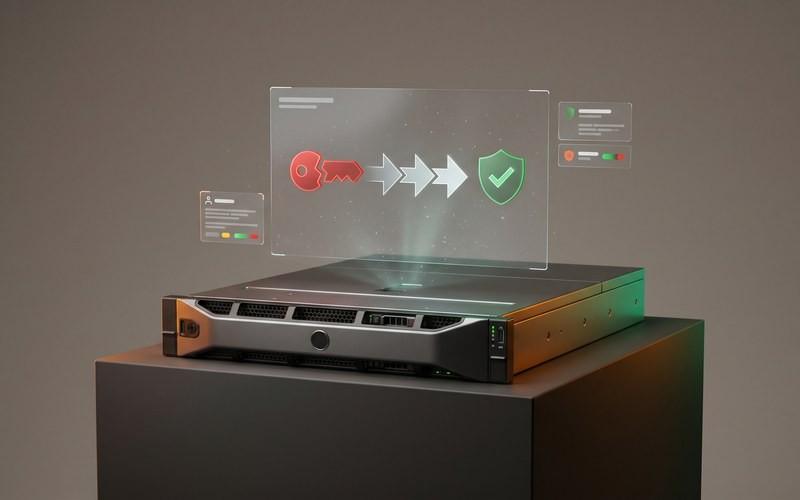
Exposing an unauthenticated webhook endpoint to the open internet is an invitation for catastrophic capital loss. When developers deploy simple HTTP listeners without cryptographic verification, anyone who identifies the webhook URL can broadcast arbitrary JSON payloads to initiate unauthorized trades. In worst-case scenarios, malicious actors replay captured orders, execute malicious market-making wash trades, or drain broker account margins through rapid-fire liquidations.
A frequent anti-pattern involves placing raw broker API secrets, private keys, or account credentials directly within the Pine Script alert message box. Because TradingView alert configurations can be viewed by collaborators or stored across shared workspaces, embedding static secrets introduces severe credential leakage risks. Even TradingView's documentation explicitly warns against transmitting passwords or sensitive credentials in the webhook body. Relying on path obscurity or basic HTTP authentication headers alone ranks among the most critical TradingView integration mistakes in algorithmic trading architecture.
Implementing TradingView Alert Signature Authentication and IP Filtering
Harden webhook ingestion by establishing a layered perimeter defense that combines network-level firewall rules with application-layer payload verification. At the network tier, incoming traffic must be restricted to TradingView's four documented static IPv4 dispatch addresses: 52.89.214.238, 34.212.75.30, 54.218.53.128, and 52.32.178.7. Configuring an edge proxy, AWS Security Group, or Cloudflare WAF rule to immediately drop any HTTP request originating outside these four /32 CIDR blocks filters out automated scanners, DDoS traffic, and arbitrary third-party requests before they reach application middleware.
Because TradingView does not natively generate cryptographic HMAC signature headers such as X-Signature-SHA256, engineering teams must implement synthetic verification patterns. Effective TradingView alert signature authentication incorporates a shared dynamic secret and a microsecond-precision timestamp inside the JSON body:
expected_sig = hmac.new(SECRET_KEY, f"{timestamp}:{payload_str}".encode(), hashlib.sha256).hexdigest()
When the webhook handler receives the payload, it verifies the signature using hmac.compare_digest(transmitted_sig, expected_sig) to prevent timing attacks. Payloads with timestamps drifting more than three seconds from server time are rejected immediately, neutralizing replay attacks. Engineering teams auditing these boundaries frequently consult specialized API security services to establish zero-trust execution bridges.
How Do You Stop Duplicate Order Execution and Concurrency Race Conditions?
Generating Deterministic Idempotency Keys from Alert Timestamps and Bar Data
In volatile market conditions, network interruptions and alert retransmissions frequently produce duplicate HTTP requests. If an execution pipeline treats every inbound POST request as a discrete market command, a single strategy signal can trigger multiple order submissions. When an unhandled race condition triggers duplicate order execution from a TradingView webhook, position sizes double or triple unintentionally, violating risk parameters and over-leveraging account capital.
To eliminate duplicate fills, execution systems must enforce strict idempotency by assigning deterministic keys to every incoming signal. Relying on client-generated random UUIDs is a critical error because a retransmitted alert receives a new UUID, bypassing duplicate detection entirely. Instead, alerts should construct a deterministic hash in Pine Script or middleware using immutable candle data:
idempotency_key = hashlib.sha256(f"{ticker}:{timeframe}:{bar_time}:{action}".encode()).hexdigest()
When the middleware parses this payload, it matches the deterministic client order identifier against active orders. If TradingView or network retries dispatch the identical signal twice within the same candle period, the hash matches, enabling the receiver to recognize the duplicate instantly and return a cached acknowledgement without dispatching a secondary broker transaction.
Database-Level Locking to Prevent Duplicate Order Execution Across Worker Threads
Constructing an idempotency key is insufficient if worker threads process incoming events concurrently without distributed state synchronization. In containerized microservice architectures with horizontal auto-scaling, two separate worker instances may receive identical webhook payloads within milliseconds of each other. Without concurrency controls, both workers query the database simultaneously, find no prior record, and dispatch duplicate market orders to the broker gateway.
Preventing these race conditions requires atomic synchronization primitives. Systems should implement distributed locks using Redis keys with short time-to-live expiration or execute atomic database inserts:
INSERT INTO processed_orders (idempotency_key, status) VALUES (:key, 'pending') ON CONFLICT (idempotency_key) DO NOTHING;
When a worker receives a payload, it must atomically acquire the lock or verify row insertion before invoking exchange endpoints. Unhandled race conditions during concurrent worker scaling rank among the most expensive TradingView integration mistakes, converting reliable algorithmic indicators into uncontrolled position exposure.
How Do Naive Webhook Scripts Compare to Queue-Backed Architectures?
Synchronous Micro-Servers vs Message Queues and Worker Pools
Many algorithmic trading systems begin as lightweight scripts—often a minimal Flask, FastAPI, or Express.js server hosted on a single container. In low-volatility conditions with infrequent signals, synchronous execution appears functional. However, when multiple indicators or strategies trigger alerts on the same bar close across several asset pairs, a synchronous micro-server quickly exhausts its connection pool.
Because incoming HTTP connections remain blocked while the server negotiates TLS handshakes, verifies balances, and awaits broker API responses, subsequent requests get queued or dropped. If response times exceed three seconds, TradingView cancels the request, directly resulting in TradingView webhook alert missed orders. In contrast, modern event-driven architectures decouple ingestion from fulfillment. Lightweight edge ingestion nodes immediately push validated signals onto an asynchronous message broker such as RabbitMQ, Redis Streams, or Apache Kafka, returning an instant 202 Accepted status.
Buffering Bursts and TradingView Rate Limit Handling Under Volatile Volume
A resilient queue acts as an elastic buffer during sudden market breakouts when dozens of indicator alerts fire within milliseconds. Independent worker pools consume signals from the queue at a controlled pace, applying token-bucket or leaky-bucket rate-limiting algorithms to comply with downstream exchange constraints. Sophisticated broker gateways enforce strict request thresholds—such as 1,200 requests per minute on Binance spot or restrictive rate tiers on Interactive Brokers and Tradovate.
Without proactive TradingView rate limit handling, unthrottled bursts trigger HTTP 429 Too Many Requests errors from the broker API, causing immediate order rejections or temporary IP bans during high-opportunity volatility windows. A buffer-backed architecture smooths these volumetric spikes, retrying transient network errors with exponential backoff and jitter while preserving sequential order precedence. Teams transitioning from synchronous scripts to scalable messaging backbones often explore dedicated TradingView developer platform architectures to decouple ingestion and execution reliably.
What Is the Defensive Pre-Flight Checklist for Algorithmic Execution?
End-to-End Automated Testing with Mock Broker APIs and Simulated Feeds
Deploying an algorithmic execution pipeline without rigorous integration testing invites catastrophic system failures during high-volatility market sessions. Verifying TradingView webhooks cannot rely solely on waiting for sporadic live market candles. Resilient trading systems utilize mock broker gateways and synthetic webhook harnesses to simulate realistic edge conditions, including delayed packet arrivals, malformed payload schemas, duplicate transmissions, and sudden exchange API downtime. Incorporating structured automated testing services into CI/CD pipelines ensures that ingestion microservices, JSON parsing routines, and message queues behave deterministically under simulated network stress before live capital is committed.
Synthetic test suites should inject artificial network latency and packet jitter between the webhook receiver and the simulated exchange matching engine. By systematically testing how middleware handles out-of-order execution, socket disconnects, and partial fills, engineering teams identify brittle failure points early in development cycles.
Position Drift Reconciliation, Circuit Breakers, and Dead-Letter Queue Alerts
Even robust systems encounter unexpected exchange disconnections, margin rejections, or symbol trading halts. Production pipelines require continuous state synchronization and defensive tripwires. A background reconciliation daemon should poll exchange account positions at scheduled intervals, comparing actual open contracts against internal database records. When position drift is detected, an automated circuit breaker immediately suspends outgoing orders, cancels unfulfilled limit orders, and pages operational engineers.
Additionally, malformed or failed payloads must automatically route to a dead-letter queue (DLQ) for forensic inspection rather than being discarded silently. Enforcing these safeguards helps prevent slippage in TradingView integration architectures during market anomalies, systematically eliminating the costliest TradingView integration mistakes before accounts suffer unrecoverable drawdowns.
How Should Engineering Teams Harden Automated Trading Pipelines?
Engineering teams frequently use AI coding tools to rapidly scaffold webhook handlers, database models, and broker connectors. While AI speeds up routine boilerplate, automated execution systems demand experienced human engineering oversight. Senior developers must own the architecture, review every commit, and verify pipeline observability—such as OpenTelemetry distributed tracing, Prometheus alert-to-fill latency metrics, and real-time error budgets—to eliminate fatal TradingView integration mistakes.
Canvas Developers directs AI coding harnesses under the supervision of senior engineers, QA specialists, and cloud architects to build resilient financial systems. To audit your execution pipeline, resolve race conditions, or build a robust low-latency bridge, initiate a scoped technical assessment via our contact form.