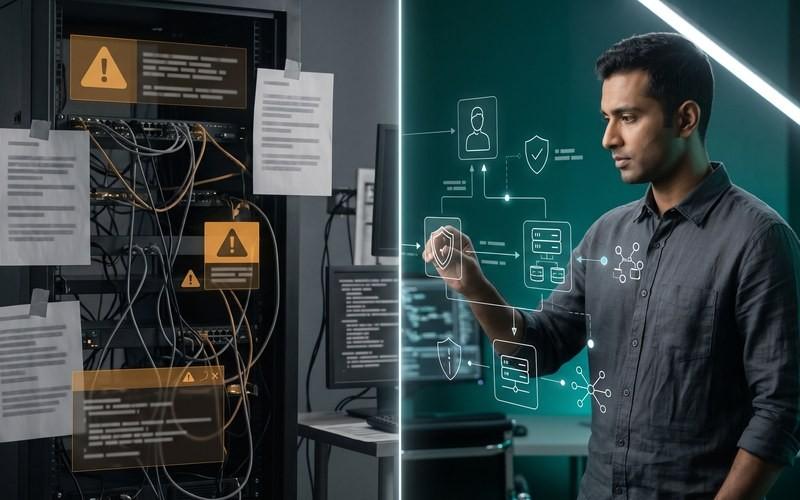
Enterprise cloud applications require resilient session management and strict tenant boundaries when upstream identity providers degrade. During unexpected third-party service downtime, implementing rigorous API Security Testing authentication outage recovery workflows ensures that modern application architectures fail closed rather than defaulting to permissive routing or exposing unverified user sessions. At Canvas Developers, our engineering teams construct and review resilient authentication systems where identity provider downtime immediately triggers deterministic error states, automated session revocations, and verified administrative recovery controls across every client interface.
What Core Problem Does the Authentication Outage Recovery Console Solve?
When third-party identity providers encounter service outages, partial network partitions, or degraded response latencies, cloud applications face critical security risks. Without deterministic safeguards, systems risk falling back into ambiguous states or failing open, which could allow unauthorized resource access or generate corrupted session records. Modern enterprise architectures require structured API Security Testing authentication outage recovery workflows to maintain absolute data integrity across all tenant boundaries.
The authentication outage recovery console addresses this vulnerability by unifying identity and session event monitoring across three core roles: end users, tenant administrators, and security reviewers. During comprehensive API Security Testing development, engineers establish explicit fail-closed boundaries so that unverified responses from upstream OAuth or SAML providers never result in authenticated application states. As established across practical application security engineering frameworks, validating whether authorization mechanisms fail closed under broken authentication conditions is vital for eliminating authorization bypasses and protecting multi-tenant workloads. By tracking identity and session events in real time, the console prevents broken session persistence and equips teams with deterministic outage mitigation.
Which Interfaces Manage Provider Outages, Sign-In States, and Recovery Checks?
Provider-Health Views and Unavailable-Sign-In Error States for End Users
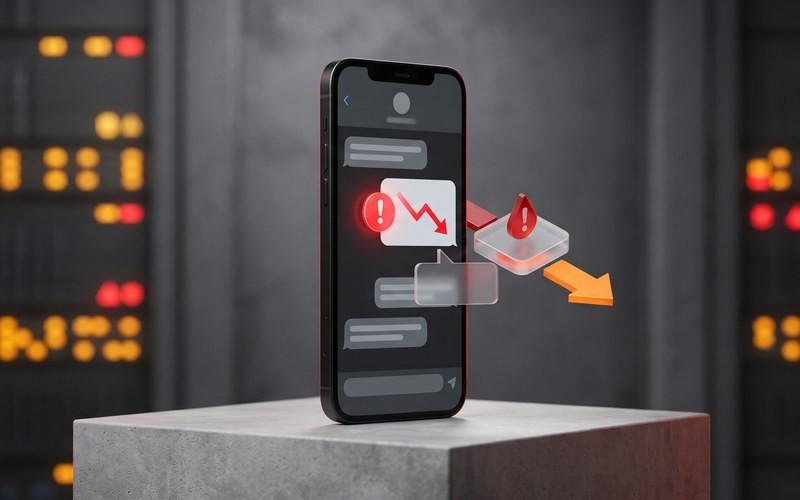
End users encountering upstream identity disruption require transparent guidance rather than generic gateway timeouts or repeated login failures. When upstream health checks fail or handshakes return unverified payloads, client sign-in forms automatically switch to an unavailable-sign-in state. The view renders a clear contextual alert explaining that authentication services are temporarily unreachable, disables single sign-on buttons, and suppresses credential retry loops to protect backend gateways from connection storms.
Behind the user interface, the provider-health view monitors live endpoint response times, handshake success ratios, and protocol errors. In our authentication outage recovery development process, this telemetry feed dynamically drives status banners across client applications. Crucially, the interface never falls back to unverified local sessions, keeping security boundaries intact.
Controlled Administrative Recovery Checks and Tenant Session Controls
For tenant administrators and security reviewers, the administrative console organizes recovery controls into a clear component hierarchy. A top status header displays provider connectivity badges and active tenant isolation indicators. Below, the main dashboard splits into a telemetry grid—logging identity and session event records with tenant IDs, HTTP status codes, and handshake latencies—and an active token distribution chart.
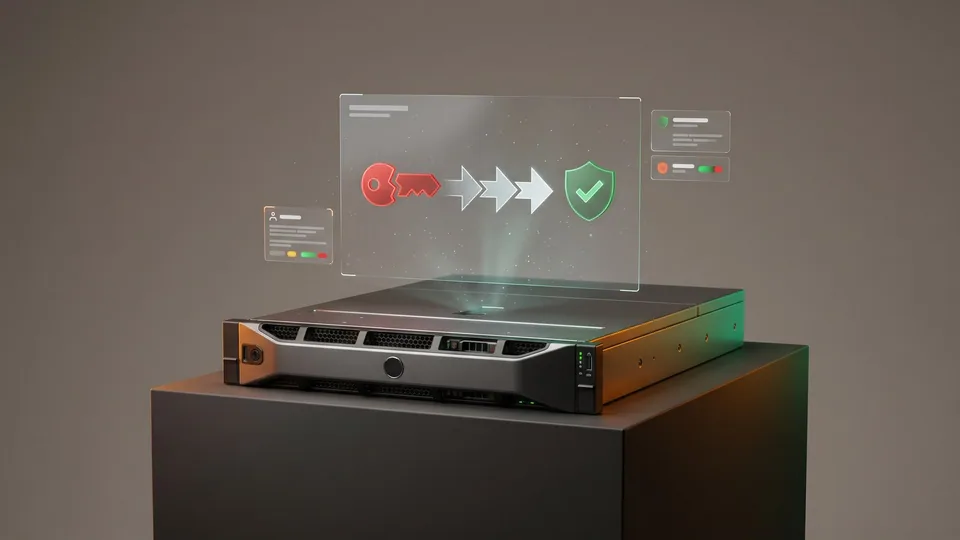
Through systematic API Security Testing integration, administrators execute controlled recovery checks via dedicated action toolbars before restoring access. Synthetic probe runners test token validation endpoints and cryptographic key rotations. If validation fails, an administrative session control panel allows immediate, tenant-wide session revocation, preventing compromised or stale sessions from persisting across downstream services.
How Does Data Flow Fail Closed to Protect Sessions and Tenant Boundaries?
Tracing Identity Provider Failures Through Fail-Closed Session Revocation
When an upstream identity provider encounters downtime or returns unverified payloads, the gateway initiates deterministic fail-closed authentication recovery routines. Rather than falling back to unauthenticated bypass modes or maintaining stale authorizations across microservices, the system immediately rejects incoming requests with explicit 503 or 401 response codes. Downstream services invalidate cached session tokens, ensuring that no session is created or extended on an unverified handshake.
Data flow tracing tracks every state transition inside the core identity and session event record. The authentication gateway informs client applications to present the unavailable-sign-in state, blocking repeated credential submission loops while preserving tenant boundaries. By incorporating robust API Security Testing integration, the architecture continuously verifies that session invalidation propagates across microservice clusters within milliseconds, eliminating token caching vulnerabilities during provider downtime.
Enforcing Least Privilege and Sanitizing Credential Telemetry in Audit Logs
Tenant isolation requires strict enforcement of least privilege across all inter-service API requests. As demonstrated in automated security test matrices from Safeguard, operations must be continuously evaluated across missing, valid, and wrong-role credentials to ensure that cross-tenant access is impossible even during system degradation.
High-volume outage events often trigger extensive debugging routines that risk leaking credentials into operational logs. Our approach establishes automated sanitization filters that scrub bearer tokens, cookies, and private secrets before recording identity and session event payloads. Security reviewers retain full diagnostic visibility into outage timelines, HTTP status distributions, and tenant boundaries without compromising sensitive authentication secrets.
How Are Acceptance Tests Executed Using AI Scaffolding and Engineering Audits?
Rigorous acceptance testing ensures that an identity provider outage cannot bypass authentication or create an active session from an unverified response. In our approach, engineering teams combine modern AI-assisted generation with strict human oversight to validate fail-closed resilience across microservices.
During implementation, teams utilize API Security Testing vibe coding workflows—leveraging development harnesses such as Antigravity—to scaffold synthetic identity mocks, mock failure responses, and automated test runners. This rapid iteration shortens feedback loops when constructing simulated network partitions and invalid OAuth callback fixtures. However, while AI coding tools excel at generating repetitive test fixtures and mock endpoints, they cannot evaluate nuanced security guarantees or complex multi-tenant isolation policies on their own.
Experienced software engineers must audit every pull request, direct architecture decisions, and verify that identity provider outage security testing executes against concrete acceptance criteria:
- Unverified Response Rejection: Synthetic gateway timeouts and malformed SAML/OAuth payloads must never spawn active session tokens.
- Tenant Boundary Integrity: Outage states must prevent cross-tenant credential or data leakage under load.
- Telemetry Sanitization: Audit logs must capture error codes while scrubbing raw authorization headers.
How Should You Scope an Authentication Recovery Architecture Review?
Transitioning from ad-hoc error handling to deterministic authentication resilience requires a structured architecture evaluation. During targeted API Security Testing development reviews, engineering teams examine existing identity gateway configurations, session invalidation propagation latencies, and multi-tenant isolation policies under simulated third-party downtime.
While AI-assisted tooling rapidly constructs mock environments and test runners, experienced engineers must inspect cryptographic handshakes, verify fail-closed boundary enforcement, and eliminate credential leakage across logging pipelines. For smaller single-tenant applications, basic upstream retry mechanisms may suffice; however, complex multi-tenant platforms require comprehensive test matrices and verified recovery workflows. Organizations evaluating their authentication resilience can initiate a scoped architecture assessment by detailing their current technology stack, identity provider integrations, tenant boundaries, and target security outcomes through our contact form at Canvas Developers.
Outcome
By tracking identity and session events in real time, the console prevents broken session persistence and equips teams with deterministic outage mitigation. The architecture continuously verifies that session invalidation propagates across microservices within milliseconds, eliminating token caching vulnerabilities during provider downtime.