The problem
When engineering teams migrate active customer billing from legacy payment processors to Adyen, preserving payment continuity without exposing systems to double charges or orphaned records is the principal engineering challenge. In an enterprise Adyen integration, transient network timeouts and automated background retries present immediate financial risks if idempotency controls are absent. Additionally, automated AI code generation frequently struggles with subtle cryptographic nuances, double-entry financial ledger invariants, webhook race conditions, and strict PCI DSS scoping boundaries.
Approach
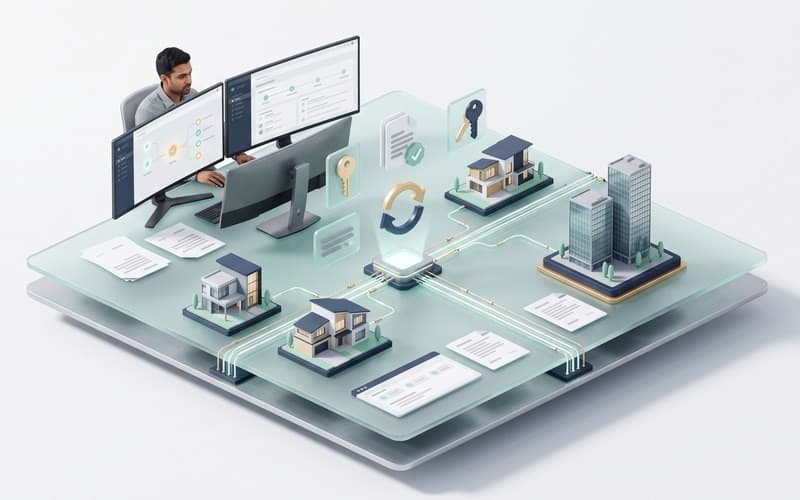
Canvas Developers approaches subscription data migration by building an intermediary migration workspace structured across a Mapping Editor, Validation Report, and Cutover Checklist. The architecture isolates payment processing from an internal double-entry ledger and enforces Adyen API idempotency guidelines using deterministic UUID keys. Billing state updates execute only after verifying cryptographically signed HMAC SHA-256 webhook payloads, while automated test gates immediately block cutover and preserve recoverable source records upon any failure.
Outcome
Combining AI-assisted development workflows with senior engineering oversight shortens feedback loops and reduces repetitive implementation effort during early development cycles. This structure ensures that data security, idempotency boundaries, and accounting accuracy remain uncompromised.
Executing an Adyen subscription data migration requires decoupling raw card data transfers from recurring payment state machines. When engineering teams migrate active customer billing from legacy payment processors to Adyen, preserving payment continuity without exposing systems to double charges or orphaned records is the principal engineering challenge.
This case study details our architectural approach to building an intermediary migration workspace. By coordinating role-based workflows across operators, administrators, and customers, this architecture establishes verifiable data flows and idempotent payment event controls designed to safeguard cutover integrity and maintain continuous billing operations.
How Does Adyen Handle Subscription Data Migration Across Payment Events?
Mapping Legacy Recurring Tokens to Adyen Stored Payment Details
An Adyen subscription data migration relies on secure provider-to-provider token exchange to maintain PCI DSS compliance boundaries. Rather than routing raw primary account numbers through application servers, the process uses Adyen recurring payment import specifications. The legacy processor exports card records into an encrypted CSV formatted to Adyen's schema, encrypts the payload using Adyen's public PGP key, and uploads it via secure SFTP under an active Data Processing Agreement.
Adyen processes the ingestion batch and returns a structured result file containing the newly generated recurringDetailReference, shopperReference, token alias, and card summary metadata. In our subscription data migration development workflow, our ingestion pipeline parses this result file to establish relational bindings between legacy customer records and Adyen stored payment details, ensuring zero exposure to unencrypted cardholder data.
Managing Role-Based Workflows Across Operators, Admins, and Customers
Coordinating subscription cutover requires clear separation of privileges across three primary stakeholder roles:
- Account Administrators: Configure cryptographic keys, provision API credentials, establish webhook endpoints, and hold final authority over staging gates and production cutover execution.
- Finance Operators: Inspect source-to-target schema alignments, verify currency codes and billing cycles, audit validation reports, and sign off on payment event reconciliation logs.
- Customers: Retain uninterrupted service access and billing cadence without manual intervention. If token validation flags an expired card, self-service portal workflows invite the subscriber to update their payment instrument before the subsequent billing event occurs.
What Failure Paths and Idempotency Constraints Govern Subscription Migration?
Preventing Duplicate Charges via Webhook Verification and Idempotency Keys
In an enterprise Adyen integration, transient network timeouts and automated background retries present immediate financial risks if idempotency controls are absent. To prevent charging a subscriber twice for the same billing cycle, our architecture adheres strictly to Adyen API idempotency guidelines. Every recurring payment dispatch transmits a unique Idempotency-Key header containing a deterministic UUID generated from the subscription identifier, billing cycle timestamp, and sequence index. If an identical request reaches Adyen within its retention window, the API returns the cached response rather than executing a duplicate charge.
Furthermore, payment confirmation never relies on synchronous HTTP status codes. Core billing state updates execute only after receiving asynchronous webhook events signed with HMAC SHA-256 signatures configured in the Adyen Customer Area. The ingestion service cryptographically validates each payload before committing a payment event reconciliation record to the billing database, preventing race conditions between gateway webhooks and client polling loops.
Preserving Source Records and Rollback State When Validation Runs Fail
A dependable migration pipeline treats legacy subscription inputs as immutable records. Before production cutover, the system executes an automated validation run that checks token formatting, billing frequencies, currency ISO standards, and customer email references.
If an anomaly or missing contract appears, the validation engine immediately blocks cutover and preserves the recoverable source record in an isolated staging store. Because no partial writes reach the live billing engine, the migration state machine maintains complete rollback fidelity. Finance operators can review failure logs, re-execute transformation rules, or cleanly abort the migration without leaving orphaned subscription records or interrupting legacy billing continuity.
What Architecture Powers the Migration Workspace Screens and Data Flow?
Tracing Data Flow Across Mapping Editor, Validation Report, and Cutover Checklist
Our workspace architecture structures the end-to-end data lifecycle across three specialized interfaces designed to govern migration integrity:
- Mapping Editor: Ingests legacy export files and provides visual schema translation tools. Operators map legacy customer identifiers to Adyen's
shopperReference, define contract types (such asRECURRING), and standardize billing frequencies. Field-level transformers validate syntax before any records enter the execution pipeline. - Validation Report: Executes automated dry-run verifications against the staging dataset. The system checks token formats, detects duplicate subscriptions, audits currency codes, and flags expired payment methods, producing an actionable dashboard of passing and failed records.
- Cutover Checklist: Functions as the operational release gate. Administrators review validation scores, confirm SFTP ingestion status, verify webhook listener health, and initiate the cutover toggle. If anomalies emerge, the checklist provides an audited rollback command to re-point billing jobs instantly to legacy providers.
Isolating Core Adyen API Capabilities from Custom Ledger and Orchestration Components
Modern Adyen development requires establishing strict architectural boundaries between third-party gateway services and proprietary business logic. While Adyen excels at secure token storage, payment authorization, and fraud screening, it does not manage custom billing schedules, prorated subscription upgrades, or double-entry financial ledgers.
In our subscription data migration development architecture, an orchestration boundary decouples payment processing from internal accounting. Dedicated adapter microservices consume Adyen payment events and translate them into balanced debit and credit entries within an internal double-entry ledger. Our teams implement specialized gateway abstractions through dedicated Adyen platform engineering patterns. This isolation ensures that payment gateway upgrades, webhook schema updates, or potential provider rollbacks never compromise the auditability and integrity of the core financial ledger.
Which Acceptance Tests and Engineering Tradeoffs Decide Cutover Readiness?
Automated Test Gates: Blocking Cutover on Discrepant Subscription States
Cutover readiness in an Adyen subscription data migration is governed by deterministic test gates rather than subjective milestone estimates. Our delivery framework enforces strict synthetic validation benchmarks before production activation:
- Schema and Contract Verification: The ingestion suite enforces 100% field mapping parity across staging datasets. Every record must resolve to a verified
shopperReferenceand valid Adyen payment method variant with zero schema divergence. - Financial Invariant Thresholds: Automated reconciliation requires a 0.00 currency variance tolerance between legacy contract amounts and staging parameters, auditing next-billing timestamps and ISO codes.
- Webhook and Idempotency Validation: Test harnesses simulate recurring payment events, verifying that 100% of HMAC SHA-256 signatures validate cleanly and simulated duplicate retries return identical idempotent cached payloads.
If automated test runners detect a single unhandled edge case or threshold discrepancy, the release gate immediately blocks cutover and preserves original source records.
Evaluating Direct API Token Ingestion Against Phased Dual-Run Reconciliation
Engineering teams executing an Adyen integration must evaluate architectural trade-offs between two primary migration strategies:
A direct batch cutover executes migration in a single coordinated window. This approach eliminates the engineering overhead of synchronizing two active gateways simultaneously. However, it concentrates operational risk, as unpredicted token failures immediately affect active renewals. Direct cutover fits organizations with uniform billing tiers and moderate transaction volumes where a maintenance window is acceptable.
Conversely, phased dual-run reconciliation introduces a cohort-based rollout. Subscriptions migrate incrementally based on renewal dates or account tiers. During dual-run operation, our orchestration layer maintains parallel state machines, reconciling payment outcomes across both providers. While this pattern introduces temporary architectural complexity and dual-ledger monitoring, it minimizes blast radius and enables continuous verification under live transaction loads.
How Does Canvas Developers Accelerate Migration Delivery with AI-Assisted Engineering?
At Canvas Developers, an engineering company with an office in Dhaka, Bangladesh, we accelerate complex integrations by combining AI-assisted development workflows with rigorous senior engineering oversight. When building specialized payment infrastructure such as an Adyen vibe coding migration workspace, AI coding agents and harness tools rapidly scaffold administrative dashboards, generate schema transformation boilerplate, and produce comprehensive synthetic test fixtures. This automation shortens feedback loops and reduces repetitive implementation effort during early development cycles.
However, AI code generation has explicit limitations. Automated tools frequently struggle with subtle cryptographic nuances, double-entry financial ledger invariants, webhook race conditions, and strict PCI DSS scoping boundaries. In our Adyen development practice, experienced software engineers direct every agentic workflow, own system architecture, conduct manual peer reviews on all pull requests, and make final production release decisions. Human expertise ensures that data security, idempotency boundaries, and accounting accuracy remain uncompromised.
We provide two flexible delivery models tailored to enterprise security requirements: 'Private / Local AI Engineering' for organizations requiring privately hosted open-weight models within client-controlled infrastructure, and 'Claude Code / OpenAI Codex Engineering' utilizing commercial AI tools under client-approved security configurations. Engagements follow structured scoping, agreed milestone deliveries, exhaustive testing, and formal handover. To discuss your subscription architecture, existing tech stack, and migration requirements, request a scoped technical assessment via our contact form.