Connecting your point of sale, digital storefront, and backend accounting to Square requires much more than dropping an off-the-shelf plugin into your tech stack. When you hire a Square integration developer, your primary objective is finding an engineer who understands financial data integrity—someone who can manage idempotent payment requests, asynchronous webhook delivery, and secure multi-location catalog sync without introducing balance drift or duplicate transactions.
Whether you are building a custom omnichannel retail system, embedding in-person checkout via the Square Terminal, or launching a multi-merchant marketplace, successful payment engineering depends on rigorous API vetting and strict architectural boundaries. This guide outlines the core competencies, security vetting criteria, scope specifications, and delivery models necessary to hire the right technical partner for your Square architecture.
Why Do Custom Square Integrations Break Without Specialized Payment Engineers?
The Limitations of Pre-Built Plugins for Omnichannel and Multi-Location Workflows
Pre-packaged e-commerce extensions and off-the-shelf connectors frequently satisfy basic point-of-sale requirements, but they deteriorate rapidly under multi-channel operational demands. Standard plugins assume simple, linear checkout paths: a single merchant account, static inventory counts, and homogenous pricing across storefronts. Once a retail operation expands across multiple physical retail locations or pairs proprietary web portals with warehouse management systems, rigid off-the-shelf software produces systemic data sync issues.
Complex business models require dynamic location routing, multi-tender transactions, and granular catalog variations. When a business relies on default connectors, inventory counts fail to reflect in-store purchases in real time, resulting in out-of-stock orders and manual reconciliation headaches. Organizations encounter these operational bottlenecks when scaling, making it imperative to hire a Square integration developer who can engineer direct, custom pipelines against Square's platform rather than relying on brittle plugin abstractions.
Critical Failure Modes: Broken Webhooks, Data Drift, and Transaction Reconciliation Gaps
Payment architectures that lack dedicated engineering fail predominantly at state synchronization boundaries. Square dispatches asynchronous webhook notifications for payment completions, refunds, order state transitions, and inventory level adjustments. Naive integrations often treat webhook delivery as synchronous and guaranteed in sequential order, ignoring network timeouts, retries, and duplicate event payloads.
When an endpoint fails to acknowledge an incoming webhook or drops an out-of-order event, backend customer balances drift from the physical payment ledger. Transactions marked as completed on a physical terminal can remain uncaptured in your central database, triggering duplicate processing or inventory discrepancies. Retaining a qualified square pos integration consultant ensures your infrastructure incorporates message queuing, signature verification, and automated nightly reconciliation scripts that flag discrepancies before accounting close.
What Core Technical Competencies Must a Square Payments Developer Have?
Web Payments SDK and Digital Wallets: Modern Client-Side Tokenization
Modern digital storefronts require friction-free checkout flows without expanding security compliance boundaries or introducing PCI audit scope creep. A qualified developer executes a compliant square web payments sdk integration by initializing client-side forms with verified application and location identifiers. The SDK intercepts sensitive payment inputs directly in the customer browser, executing card.tokenize(verificationDetails) to produce single-use payment nonces for credit cards, Apple Pay, Google Pay, and ACH bank transfers. Passing customer billing contacts and payment intent within the tokenization request ensures compliance with Strong Customer Authentication (SCA) and 3D Secure verification protocols while keeping your system strictly within PCI-DSS SAQ-A eligibility.
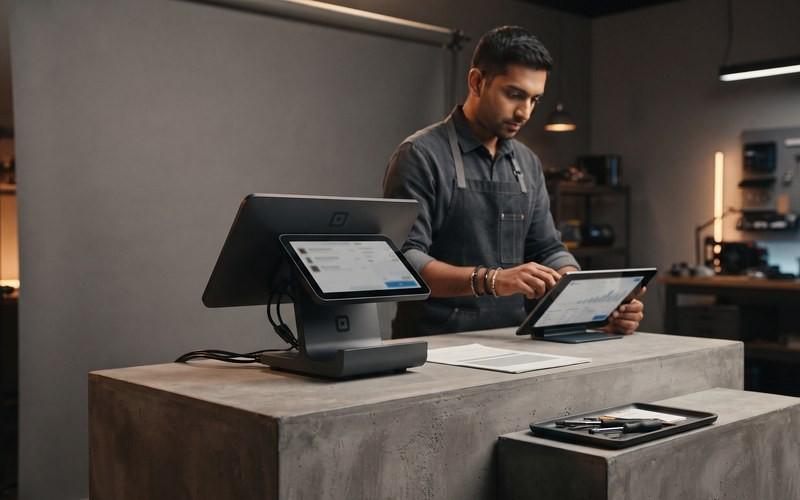
Omnichannel enterprises operating physical retail locations also require in-person hardware synchronization. When businesses hire a square terminal api specialist, they ensure their engineering team can pair cloud POS software with physical devices through the Square Terminal API or Mobile Payments SDK. These specialists configure device pairing codes, orchestrate terminal checkout endpoints, handle network disconnect states, and implement cancellation callbacks. They also design offline payment caching strategies for mobile readers, allowing storefront staff to record transactions smoothly during temporary connectivity interruptions without customer bottlenecks.
OAuth 2.0 Implementation for Multi-Merchant Platforms and Partner Integrations
For SaaS platforms, multi-vendor marketplaces, and franchise networks, payment processing must be partitioned across distinct merchant accounts. A dedicated custom square payments integration engineer designs robust authorization flows following the Square OAuth documentation. They implement the standard authorization code grant for confidential backend services and PKCE for mobile or single-page clients, securing multi-tenant merchant access without exposing merchant credentials. The engineer enforces cryptographic state parameter validation during the OAuth redirect handshake to prevent cross-site request forgery attacks before exchanging authorization codes for tokens via the ObtainToken endpoint.
Because Square access tokens expire after 30 days, your system architecture must handle automated token refreshing, encrypted key storage, and granular permission scopes such as restricting access to PAYMENTS_WRITE or ORDERS_READ. In addition, multi-tenant systems require resilient webhook receivers. Qualified engineers build asynchronous worker queues with cryptographic HMAC signature verification (x-square-hmacsha256-signature), dead-letter queues, and persistent retry mechanisms, ensuring order events, settlements, and dispute updates process reliably without cross-tenant interference or dropped state updates.
How Do You Technically Vet a Square API Engineer Before Signing?
Live Architecture Questions: Preventing Duplicate Charges with Idempotency Keys
When conducting freelance square api developer vetting, ask candidates how they handle network dropouts occurring during a CreatePayment API call. In distributed payment systems, gateway timeouts and mobile connection drops can leave the client unaware of whether a charge succeeded. A skilled engineer explains that Square requires an idempotency_key for mutation requests, allowing client retries within a 45-day window without triggering duplicate card authorizations or double-charging customers.
Probe deeper into how the candidate generates and persists these keys. Robust architectures generate UUID v4 keys tied to unique checkout sessions or cart states, persisting them in a transactional database prior to dispatching network requests. If a network call times out, the application safely replays the exact payload and key. Candidates should also demonstrate familiarity with Square's rate limits and exponential backoff algorithms, ensuring automated retries handle HTTP 429 responses gracefully without hammering payment endpoints.
Auditing Security Practices: Maintaining PCI-DSS SAQ-A Scope and Token Handling
Security auditing separates seasoned payment specialists from general web developers. A capable custom square payments integration engineer understands that raw Primary Account Numbers (PANs) and card verification codes must never touch your backend servers, application memory, or logging infrastructure. Require candidates to walk through their implementation of the Web Payments SDK, validating that card inputs remain isolated in hosted fields so your organization remains eligible for the lightweight PCI-DSS Self-Assessment Questionnaire A (SAQ-A).
Inquire about their sandbox testing methodology and edge-case test suites. Candidates must articulate how they mock declined cards, simulate expired nonces, handle 3D Secure verification challenges, and verify webhook signatures in staging environments. A reliable engineer automates end-to-end integration tests in the Square Sandbox, asserting that network anomalies, partial refunds, and dispute webhooks trigger appropriate state rollbacks and error alerts before code moves to production.
What Are Current Square POS API Developer Rates and Engagement Models?
Freelance Marketplaces vs. Dedicated Engineering Teams: Key Trade-Offs
Hiring options for payment engineering typically fall into two categories: hiring individual contractors through freelance marketplaces or partnering with a dedicated engineering company. Individual freelance developers can offer direct communication for contained tasks, such as generating a basic checkout form or mapping a single webhook. However, payment integrations rarely remain simple. A single freelancer may lack deep expertise across the entire stack—spanning frontend tokenization, PCI compliance, asynchronous background job architectures, and financial reconciliation—leaving operational vulnerabilities when production anomalies occur.
In contrast, a dedicated engineering team provides end-to-end delivery spanning systems architecture, full-stack development, QA automation, and DevOps. Furthermore, modern engineering firms utilize AI-assisted workflows to accelerate repetitive coding tasks—such as boilerplate scaffolding, API schema generation, and initial test setup—while senior engineers direct the architectural decisions and scrutinize payment logic. This dual approach gives organizations comprehensive coverage across security, testing, and continuous deployment.
Project Factors Influencing Developer Rates: Scope, Multi-Tenant Architecture, and Hardware
Understanding commercial models and square pos api developer rates requires evaluating several technical cost drivers rather than comparing raw hourly figures. Simple standalone implementations differ substantially from multi-tenant SaaS platforms or complex physical point-of-sale environments. The primary factors that influence engineering expenditure include architectural breadth, tenant isolation models, and hardware testing requirements.
When you hire a Square integration developer to build an enterprise multi-tenant system, the engineer must architect secure OAuth token lifecycle handling, granular permission scopes, and tenant-separated webhooks. Similarly, integrations utilizing the Square Terminal API or Reader SDK require physical hardware provisioning, sandbox device pairing, and edge-case testing for dropped Wi-Fi connections. Additionally, ongoing maintenance must be factored into engagement structures: Square frequently version-tags its REST APIs, meaning long-term reliability requires backward-compatibility audits, SDK upgrades, and proactive monitoring of deprecated endpoints. Fixed-milestone scopes with clear acceptance criteria—covering data validation, sandbox edge-case passes, and automated reconciliation tests—provide clearer operational alignment than open-ended hourly billing without verified deliverables.
What Should Be in Your Square Integration Technical Scope Checklist?
Payment Processing Specs: Authorizations, Delayed Capture, and Split Tenders
A comprehensive technical specification begins with payment lifecycle mechanics. When scoping payment workflows with an experienced square pos integration consultant, define whether transactions require immediate capture or two-step authorization. Workflows in hospitality, custom manufacturing, and fulfillment-dependent e-commerce frequently require delayed capture, where payments are authorized with autocomplete: false in the Payments API and settled via CompletePayment once items ship. Scopes must detail authorization validity windows to prevent expired authorizations and unexpected settlement failures.
Your specification must also detail split-tender transactions and complex payment methods. Retail operations routinely process transactions combining Square gift cards, loyalty credits, digital wallets, or cash tenders. When engineering multi-tender checkouts, teams that hire a Square Terminal API specialist ensure developers accurately map discrete tender records against a single unified Order object in Square's Orders API. Scopes must document edge cases around partial authorizations, tipping updates, card surcharges, and prorated refund distributions across original payment methods.
Data Synchronization: Catalog, Orders, Customers, and Real-Time Inventory APIs
Data synchronization is often the most demanding facet of custom payment development. Your scope document must establish whether synchronization flows uni-directionally or bi-directionally between Square and your enterprise ERP, CRM, or custom database. Constructing robust sync pipelines around the Catalog API requires batch upsert endpoints and optimistic concurrency locking via version counters. Without version enforcement, concurrent catalog edits between in-store staff and automated backend sync jobs overwrite item variations, modifier sets, and tax categories.
Similarly, inventory tracking demands low-latency event handling. The Inventory API requires explicit inventory state definitions—including IN_STOCK, RESERVED_FOR_SALE, and SOLD—partitioned by location identifier. For complete production readiness, your technical checklist must mandate automated ledger reconciliation systems, structured error logging with trace IDs, and automated alerting on webhook failures. A resilient architecture includes a nightly batch reconciliation job comparing internal records against Square's settlement ledger to catch accounting gaps before financial close.
How Should You Scope and Execute Your Custom Square Integration?
Balancing Speed and Security: Where AI Coding Excels and Why Human Engineers Must Audit Payments
Modern engineering combines AI coding tools with human oversight to compress development timelines. AI coding agents excel at scaffolding boilerplate API client endpoints, generating TypeScript interfaces from Square specifications, and drafting unit test stubs. However, financial software demands strict architectural boundaries that generative tools cannot evaluate independently. Automated models frequently miss distributed race conditions, silent token expiry issues, and duplicate charge vulnerabilities.
At Canvas Developers, experienced engineers direct the architecture, conduct multi-point code reviews, and decide all production releases. Teams leverage two AI delivery packages: Private / Local AI Engineering (hosted inside client-controlled infrastructure) or Claude Code / OpenAI Codex Engineering (commercial tooling under approved cloud settings). This structure accelerates delivery while senior engineers ensure PCI-DSS SAQ-A boundaries, HMAC webhook validation, and ledger reconciliation remain airtight.
Planning Your Architecture: Book a Scoped Assessment via Canvas Developers (https://www.canvasdevelopers.com/contact)
Evaluate whether custom engineering is necessary before launching development. A single-store business with standard catalog items can often use native Square tools. However, when workflows demand omnichannel inventory sync, multi-tenant payouts, or Terminal API hardware pairings, engaging a qualified square pos integration consultant protects revenue operations.
Canvas Developers delivers structured engagements starting with technical scoping, followed by agreed milestones, edge-case testing, and documentation handover. When you are ready to hire a Square integration developer, submit your current stack, checkout flows, and target outcomes via the Canvas Developers contact form to schedule an architectural assessment.