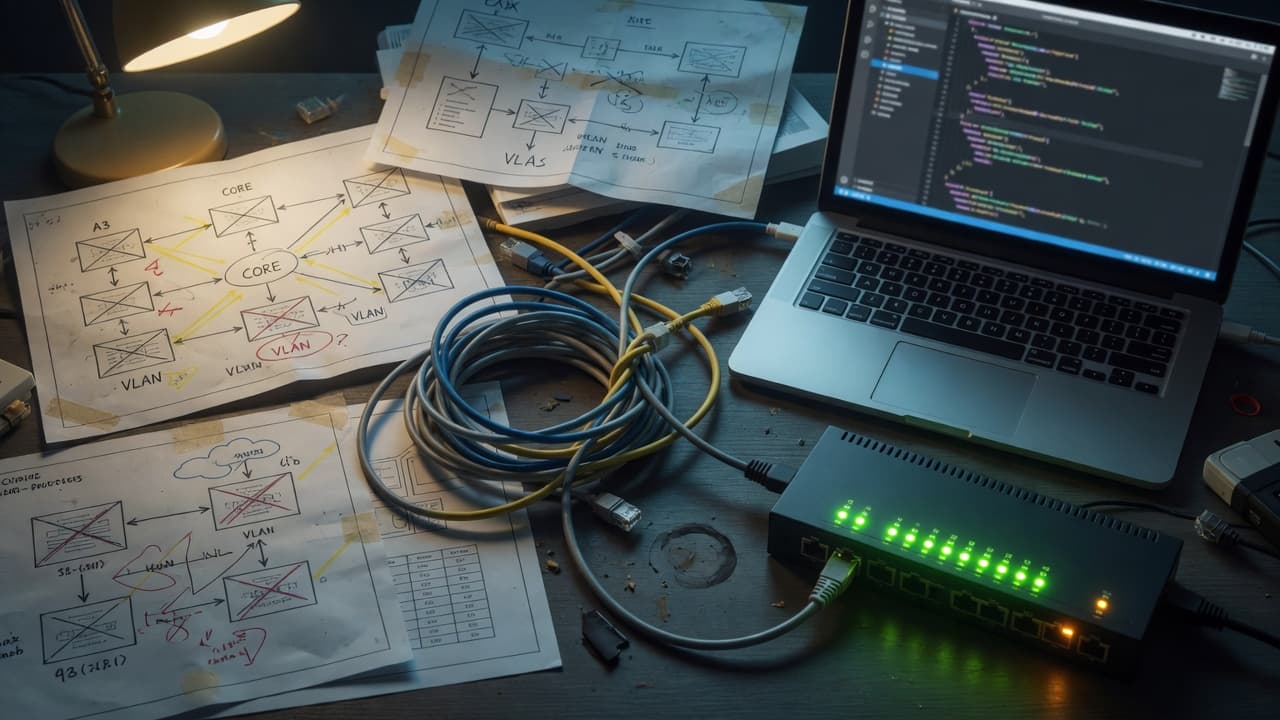
Proprietary trading desks, asset managers, and syndicate leaders managing distributed portfolios face severe execution drag when relying on traditional retail copy solutions. Achieving true sub-50ms replication across multiple terminals demands robust metatrader trade copier automation that replaces high-overhead webhooks and centralized cloud servers with zero-copy local inter-process communication (IPC) or high-throughput message buses. This architectural guide breaks down how to engineer a high-throughput replication bridge between MetaTrader 4 and MetaTrader 5 terminals, eliminate serialization bottlenecks, and ensure deterministic execution across dozens of follower accounts.
Why Commercial MetaTrader Copiers Fail for Large Trading Groups
Commercial trade copiers designed for retail consumers generally depend on centralized cloud brokers, polling HTTP endpoints, or unoptimized file I/O using common file directories. In institutional syndicate environments and high-volume proprietary firms, this introduces compounding execution lag. When a master account initiates a market order during volatile trading sessions, slippage scales non-linearly with latency. A delay of 300 to 800 milliseconds often shifts execution across multiple spreads, eroding alpha and generating severe fill discrepancies across follower accounts.
The primary architectural flaw in generic cloud relays stems from redundant serialization cycles and centralized queuing. When an order event fires, commercial copiers typically serialize the ticket into JSON, transmit it across the public internet via HTTPS webhooks to a central multi-tenant server, authenticate the payload, and fan it out to follower VPS instances. This architecture introduces multiple TCP handshakes, TLS renegotiations, and head-of-line blocking under burst conditions. Furthermore, commercial tools frequently execute trades synchronously on follower terminals, causing the thread to block while waiting for broker confirmations.
Deploying dedicated group trading automation metatrader systems requires stripping away multi-tenant intermediaries. By shifting to direct terminal-to-terminal messaging and local IPC daemon architectures, engineering teams can implement deterministic metatrader trade copier automation that delivers sub-50ms latency profiles under heavy order volume.
Latency Dynamics: Where Milliseconds Disappear in Trade Replication
Network Round-Trips vs. Terminal IPC: Identifying True Latency Drivers
Achieving deterministic execution requires breaking down replication delay into discrete phases: master order detection, serialization, transport delivery, ticket transformation, and follower broker submission. In traditional setups, inter-terminal routing accounts for most latency due to external networking stacks and public internet hops. When terminals share a single host, standard socket overhead can be avoided entirely. Utilizing memory-mapped files or lightweight local IPC reduces transport time to sub-millisecond durations, leaving terminal event dispatch and broker gateway routing as the primary variables.
For distributed environments where followers occupy distinct cloud data centers, network proximity to broker liquidity hubs dictates baseline round-trip time. Implementing low latency mt4 automation involves colocating terminals within low-jitter cross-connects and optimizing transport layers through zero-copy buffers, preventing CPU context switches from delaying order propagation.
Cross-Broker Routing: Managing Divergent Symbol Suffixes and Contract Specs
When orchestrating a multi-broker syndicate, a high-performance mt4 mt5 multi account copier must resolve complex instrument mapping without adding algorithmic delay. Different brokers maintain divergent naming conventions (such as EURUSD.pro, EURUSD_i, or EURUSDm), distinct lot step increments, and contrasting contract sizes.
Hardcoding static string lookups inside MQL Expert Advisors creates execution bottlenecks during fast market movement. Instead, modern replication architectures offload instrument normalization to a shared in-memory lookup table. Pre-caching contract specifications, tick sizes, minimum lot thresholds, and margin requirements at startup enables constant-time translation when routing orders, preserving microsecond execution budgets across heterogeneous broker environments.
Core Transport Architecture: Shared Memory vs. ZeroMQ Messaging
Memory-Mapped Files for Sub-10ms Local Terminal Replication
For high-density trading setups where multiple MetaTrader instances run on a single multi-core bare-metal server or dedicated virtual machine, Windows memory-mapped files (MMF) represent the fastest inter-process communication mechanism available. By leveraging the Win32 API functions CreateFileMappingW and MapViewOfFile via an MQL DLL import or C++ wrapper, the master terminal writes execution payloads directly into shared RAM addresses accessible by follower terminals.
To eliminate read-write contention across dozens of concurrent follower processes, a circular ring buffer with atomic sequence counters should be implemented. The master EA acts as a single producer writing fixed-size binary structs containing order tickets, symbol identifiers, volume, price targets, and action flags. Follower EAs read from the ring buffer using atomic compare-and-swap operations or memory barriers without kernel-level thread locking. This shared memory pattern completely eliminates disk I/O and network stack overhead, enabling local replication latencies consistently below 5 to 10 milliseconds while maintaining state synchronization across all connected terminals.
ZeroMQ PUB/SUB Topologies for Distributed Master-Follower VPS Clusters
When follower terminals are distributed across geographically separated VPS nodes to minimize individual broker latency, shared memory is no longer feasible. In this scenario, an enterprise metatrader copy trading architecture relies on asynchronous message-oriented middleware. The ZeroMQ (libzmq) protocol provides an ideal transport layer, operating without a heavyweight central broker daemon.
Under a Publisher/Subscriber (PUB/SUB) topology, the master trade router publishes order events over a high-performance TCP transport. Follower nodes subscribe using non-blocking subscriber sockets, filtering events by account group or risk profile at the transport level. Decoupling message reception from order execution allows worker threads to maintain non-blocking event loops, preventing message bursts from delaying subsequent execution tickets.
Integrating a custom mt5 trade copier api with ZeroMQ allows engineering teams to implement high-water-mark (ZMQ_HWM) queue limits and heartbeat pings, ensuring that slow-consuming follower nodes never introduce backpressure onto the master execution pipeline. Dedicated publisher sockets broadcast state updates, while push-pull control channels handle discrete commands such as emergency position liquidations.
Step-by-Step Implementation of a Custom MQL to Go/C++ Bridge
Developing the Master EA Event Emitter in MQL4 and MQL5
The foundation of the replication bridge is a lightweight MQL event emitter installed on the master terminal. Rather than performing heavy polling inside the continuous OnTick() handler, the master EA hooks into native transaction lifecycle events. In MetaTrader 5, the EA intercepts order placements, deal executions, and position modifications through the OnTradeTransaction() handler, capturing raw MqlTradeTransaction and MqlTradeRequest structures.
In MetaTrader 4, where native transaction events are absent, the EA monitors account state by tracking ticket differences in the order pool during tick triggers. Once an event is detected, the EA packages the trade parameters into a compact binary struct or flatbuffer payload and emits it across a local C-ABI dynamic link library (DLL) or named pipe, avoiding string concatenation overhead inside MQL.
Building the Standalone Order Router Daemon for Risk and Lot Sizing
Decoupling trade routing logic from terminal execution threads is essential for stability. A dedicated standalone router daemon written in Go or C++ consumes events from the emitter and manages complex account logic independently. This daemon serves as the core engine of the metatrader trade copier automation infrastructure.
When an order packet arrives, the router applies account-specific scaling rules in memory:
- Equity and Balance Ratios: Automatically scales follower volume according to equity proportions or fixed multiplier ratios.
- Dynamic Risk Limits: Rejects or caps order volume if follower margin utilization exceeds pre-set risk parameters.
- Symbol Translation: Normalizes symbol tickers using pre-cached contract specifications.
By delegating risk calculations, database logging, and monitoring to an external daemon via a high-performance custom mt5 trade copier api, the terminal processes remain completely unburdened by CPU-intensive mathematical calculations.
Executing Follower Orders and Handling Asynchronous Execution Tickets
On follower terminals, minimizing order placement latency requires bypassing blocking synchronous calls. Standard OrderSend() implementations stall the MQL execution thread until the broker server returns a confirmation round-trip, which can take hundreds of milliseconds during volatile sessions.
As documented in the official MQL5 manual on OrderSend and OrderSendAsync, calling OrderSendAsync() hands control back to the application immediately after the terminal verifies request formatting and queues the packet. The follower EA maintains an internal state machine mapped by request_id, processing subsequent order fills, slippage validations, and ticket mappings asynchronously through incoming OnTradeTransaction() events. This asynchronous model allows dozens of simultaneous follower orders to execute in parallel without thread starvation.
Replication Transport Benchmarks: IPC, Named Pipes, and WebSockets
Empirical Latency Trade-Offs Across High-Volume Order Spikes
Selecting the optimal transport protocol requires evaluating throughput and latency characteristics under peak load conditions. In high-frequency copying environments, the time required to transfer an order from the master to twenty follower terminals varies substantially across architectural patterns:
| Transport Mechanism | Typical Local Latency | Serialization Overhead | Scalability Scope |
|---|---|---|---|
| Shared Memory (MMF) | < 0.5 ms | Zero-copy binary struct | Single bare-metal host |
| Named Pipes (Win32) | 1.0 – 2.5 ms | Low (binary stream) | Local OS / Intranet |
| ZeroMQ (TCP / IPC) | 1.5 – 3.5 ms | Low (Protobuf / Flatbuffers) | Local and distributed clusters |
| WebSockets / HTTP REST | 25.0 – 80.0 ms | High (JSON / TLS frames) | Public cloud relays |
While WebSockets offer ease of cross-network integration, their protocol framing, TLS encryption overhead, and JSON parsing introduce unacceptable latency for institutional low latency mt4 automation. For local server topologies, shared memory and named pipes deliver deterministic execution speeds that protect trade entries from adverse price movements.
Queue Saturation and Order Fill Degradation During News Events
During high-impact macroeconomic releases, order flow surges exponentially. Transport layers that lack flow control experience buffer bloat, where queued order messages stack up and execute at stale market prices. In a resilient metatrader copy trading architecture, the message transport must implement ring-buffer overwrite semantics or bounded queue discard policies. If market slippage exceeds a defined threshold before a queued order reaches the execution gateway, the order is dropped immediately, safeguarding follower accounts from destructive fills.
Production Hardening: Infrastructure, Failsafes, and AI Code Limits
Headless Windows VPS Provisioning and Cross-Terminal Resource Isolation
Deploying a production-grade mt4 mt5 multi account copier requires strict operating system optimization and resource isolation. MetaTrader terminals are GUI-heavy by default, consuming significant graphics memory and CPU cycles when multiple charts and indicators run simultaneously. Production environments should utilize headless Windows Server configurations, stripping unused chart templates, disabling sound events, restricting history bar limits to 5,000 bars, and binding individual terminal processes to dedicated CPU affinity cores via PowerShell or containerized instances to prevent thread starvation during volatility spikes.
Automated Desync Audits, Margin Caps, and Disconnection Failsafes
Network interruptions and broker gateway rejections are inevitable in production trading. A resilient group trading automation metatrader pipeline must incorporate automated, out-of-band state reconciliation. Independent watchdog routines audit open tickets across master and follower terminals every few seconds, catching orphaned positions or dropped partial closes. In addition, global circuit breakers enforce equity caps, maximum margin utilization, and broker disconnect tripwires that immediately halt new order replication or initiate emergency position flattening.
While AI coding agents can rapidly scaffold initial MQL boilerplate and daemon routing scripts, automated code generators frequently overlook critical edge cases in MQL concurrency and memory safety. AI-generated routines often omit Win32 memory unmapping, mismanage raw C-ABI pointers, fail to handle unaligned memory access in ring buffers, and mishandle race conditions during asynchronous order callbacks. Experienced systems engineers must review concurrency models, verify thread safety, and implement deterministic state machines before deploying financial automation to live capital.
Engineering Custom Financial Integrations with Canvas Developers
Developing low-latency trading systems requires architectural discipline and rigorous verification. At Canvas Developers, based in Dhaka, Bangladesh, we build custom fintech platforms and trading automation. Our delivery model pairs AI coding tools for rapid scaffolding with senior engineers who direct system architecture, verify memory safety, and manage release assurance.
Whether you need distributed metatrader trade copier automation or a custom mt5 trade copier api bridge, we deliver via Private / Local AI or commercial cloud engineering. Contact us via our contact form with your terminal stack and latency targets to scope an assessment.
Step by step
Design the MQL Event Emitter
Hook the master EA into OnTradeTransaction or tick monitoring to capture order events and emit raw binary structs.
Implement the Standalone Routing Daemon
Build a Go or C++ daemon to handle symbol normalization, lot sizing, and risk rules out-of-band.
Deploy Asynchronous Follower Execution
Use OrderSendAsync in follower terminals to submit trades in parallel without thread blocking.