DevOps & Cloud Infrastructure
Cloud Infrastructure
Infrastructure sized for what your product needs now, with room to grow. We design it, define it as code and plan security, backups and running costs from the start.
Right-sized cloud, defined as code
Cloud setups often grow by hand: resources nobody can explain, broad permissions, untested backups and a bill that keeps rising. We design infrastructure on AWS, Google Cloud, Azure, Vercel or DigitalOcean that fits your workload, define it as code and document how it runs. For one product that means a managed platform; for another, private networking and several services. AI helps us inventory resources and draft configuration. Engineers own the architecture, the security model and every live change.
AI-assisted, expert-led cloud engineering
How AI assists
- Inventorying existing resources, dependencies and spend from read-only access or exports you provide.
- Drafting Terraform or Pulumi modules and environment configuration for engineer review.
- Checking configuration for risky settings, such as public storage, open ports or over-broad roles.
- Comparing architecture options and drafting cost estimates from your expected usage.
What our experts own
- Architecture choices: provider, regions, managed services and where a simpler setup is enough.
- The security model: network boundaries, identity and access, encryption and secrets.
- Backup and recovery targets, agreed with you and proven with restore tests.
- Approval of every change to live environments. Agents don't get unrestricted access.
A typical environment, layer by layer
Illustrative layout for one web product; services and provider depend on your workload, team and budget.
Network & access
- Separate accounts or projects for production, staging and shared tooling
- Private subnets for data and services; only the load balancer is internet-facing
- Single sign-on and least-privilege roles, with no shared admin logins
- Secrets in a managed vault, kept out of code and images
Compute & data
- A managed platform or container service; Kubernetes only when justified
- Managed database with encryption at rest and point-in-time recovery
- Private object storage for files, with lifecycle and retention rules
- CDN and caching in front of public pages and static assets
Observability & recovery
- Central logs and metrics, with alerts going to named owners
- An audit trail of console and API changes in every account
- Scheduled restore tests into an isolated environment
- Budgets and spend alerts per environment and service
What you receive
Infrastructure you can understand and rebuild
Architecture and environments
Documented decisions for compute, data, networking and environments on AWS, Google Cloud, Azure or a managed platform, with the trade-offs written down.
Infrastructure as code
Terraform or Pulumi in version control, so staging matches production and every change is reviewed, planned and traceable.
Security and access baseline
Private networking, least-privilege roles, encryption in transit and at rest, and managed secrets, set up from the start rather than added later.
Scaling and performance
Autoscaling, load balancing, caching and CDN setup based on expected and measured load, with serverless options where they fit.
Backup and disaster recovery
Automated backups, documented recovery steps and restore tests, with recovery targets agreed with you rather than assumed.
Cost visibility
Resource tagging, budgets and spend alerts, plus regular reviews that right-size resources and remove what you no longer use.
Who brings us cloud work
The product has outgrown its first setup: one shared account, production and test resources mixed together, and nobody sure the environment could be rebuilt if it had to be.
- Teams whose app has outgrown a single server or a basic hosting plan
- SaaS teams answering customer security questionnaires about networks, access and backups
- CTOs who inherited cloud accounts set up by hand by a former team
Typical cloud requests
Typical scenarios we scope, not client case studies.
Customer data that must stay in-region
A new customer contract requires their data to stay in a specific region. We would map every service that stores or copies that data, including logs and backups, and stand up a regional environment from the same infrastructure code.
Backups reachable with production credentials
Backups live in the same account as production, so a leaked admin key could delete both. We would copy them to a separate, locked-down account with deletion protection and test a restore from that copy.
A launch that arrives all at once
A scheduled announcement will send a sudden wave of traffic. We would review autoscaling settings, provider quotas and database connection limits, raise any that would run out, and agree a fallback such as a waiting page.
How a cloud engagement runs
- 01
Assess
We map current resources, traffic, data, compliance requirements and costs, and agree what the infrastructure must support now and later.
- 02
Design the architecture
Diagrams, service choices, security model, recovery targets and cost estimates, reviewed with you before anything is built.
- 03
Build and migrate
Infrastructure as code is applied to staging first, load- and restore-tested, then moved to production in planned stages with a rollback route.
- 04
Operate and optimize
Handover with documentation and training, or ongoing monitoring, patching and cost reviews under a managed operations plan.
Two ways to work with AI tools
AI assists with infrastructure code and diagnostics. Choose where it may process your configuration and logs.
- Private / Local AI Engineering
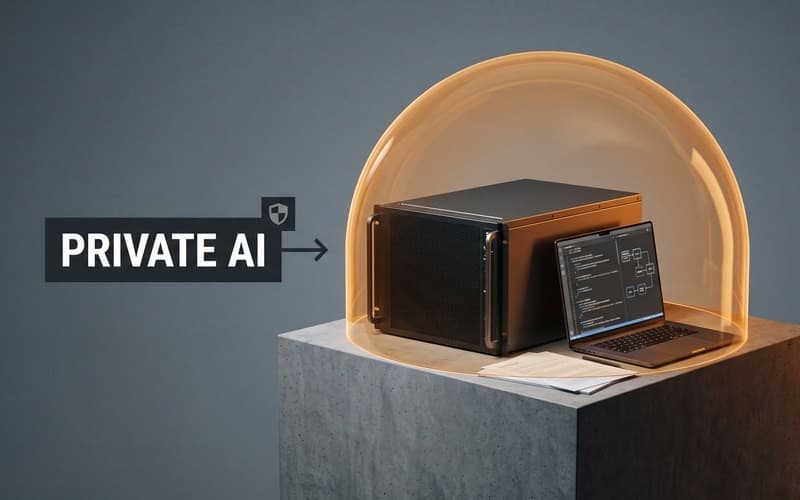
Privately hosted models inside infrastructure you control or an agreed isolated environment.
Discuss with this package - Claude Code / OpenAI Codex Engineering
Claude Code and/or OpenAI Codex with cloud settings your organization approves.
Discuss with this package
Not sure? We'll recommend one during scoping. Compare AI delivery options
What cloud work doesn't cover
- Build, test and release pipelines are scoped as DevOps & CI/CD; this service designs and builds the environments those pipelines deploy into.
- Hosting language models for your product's AI features, including any GPU capacity, is Private AI Infrastructure, sized from load tests rather than assumed.
- Load testing at realistic scale is Performance Testing; we configure capacity and scaling, and that service measures how they hold up.
- We set up and document the controls your compliance requirements call for; the formal audit is carried out by an independent auditor you appoint.
How engineering, QA and operations connect
Built with your developers
Environments, preview deploys and configuration match how your application is built and released, so infrastructure doesn't slow the team down.
Tested before launch
QA runs load and recovery tests against a staging environment built from the same code as production, so capacity and failover are checked early.
Changes through the pipeline
Infrastructure changes follow the same path as code: reviewed, tested in staging and applied with a recorded plan, instead of edited by hand in production.
Managed after launch
We can keep monitoring, patching, testing restores and reviewing costs under a managed operations plan, with support hours and response commitments agreed with you.
FAQ
Frequently asked questions
Which cloud provider should we choose?
It depends on your product, team and existing contracts. AWS, Google Cloud and Azure suit complex workloads that use many managed services. Vercel or Netlify suit frontend-heavy web apps. DigitalOcean and similar providers keep simpler products easy to run. We compare options against your requirements and recommend one, with the trade-offs written down.
How much will our cloud infrastructure cost?
It depends on traffic, data volume, redundancy and the services you choose. We estimate running costs during architecture design, set budgets and alerts, and review spend regularly, so you can see where the money goes and what is worth changing.
Can you migrate us from another provider or our own servers?
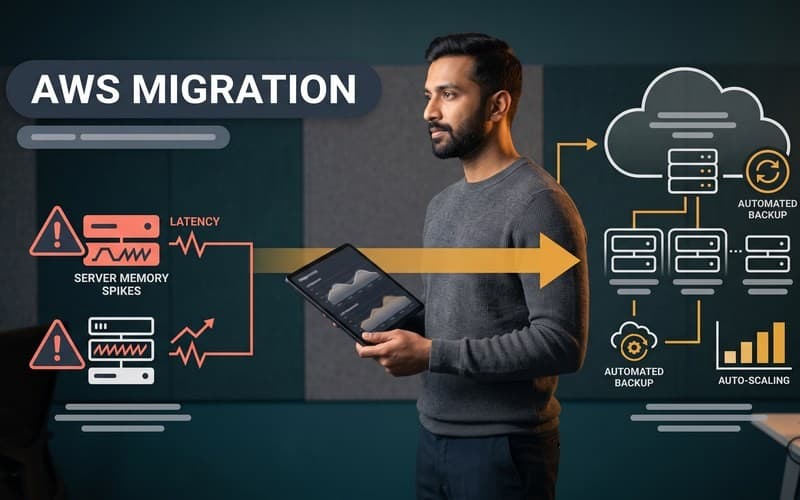
Yes. We inventory what runs today, rebuild it as code in the target environment, move data with verification checks and switch traffic in stages. The old environment stays available as a rollback route until the new one is proven in production.
Will AI tools have access to our cloud account?
Not unrestricted access. AI tools work from read-only exports or scoped access you approve, and engineers apply live changes through reviewed code. If configuration and context must stay inside your boundary, Private / Local AI Engineering uses models on infrastructure you control. Claude Code / OpenAI Codex Engineering uses commercial agents under agreed account and data-retention settings.
Related case studies



Related projects


Related articles





Related Services

Vibe Coding Consulting & Governance
Architectural guardrails, automated testing enforcement, and code audits for AI-generated codebases....
Learn more
DevOps & CI/CD
Build, test and deployment pipelines that check every change before it reaches production. We set th...
Learn more
Managed DevOps & Operations
An accountable team for your software after launch, not just a handover. We run releases, monitoring...
Learn more
Private AI Infrastructure
Host your product's AI models and agents where you control the data. We deploy them in your infrastr...
Learn more
Build cloud infrastructure that fits
Tell us what you run and where it hurts. We work as a standalone project, within a development engagement or as ongoing managed operations.