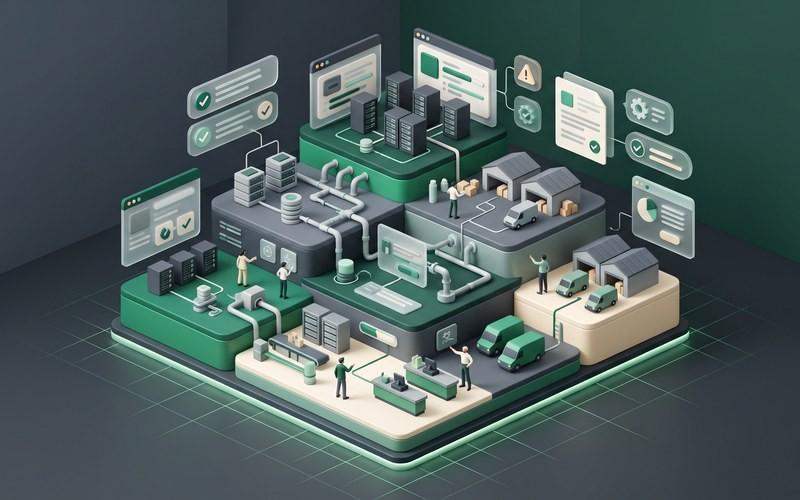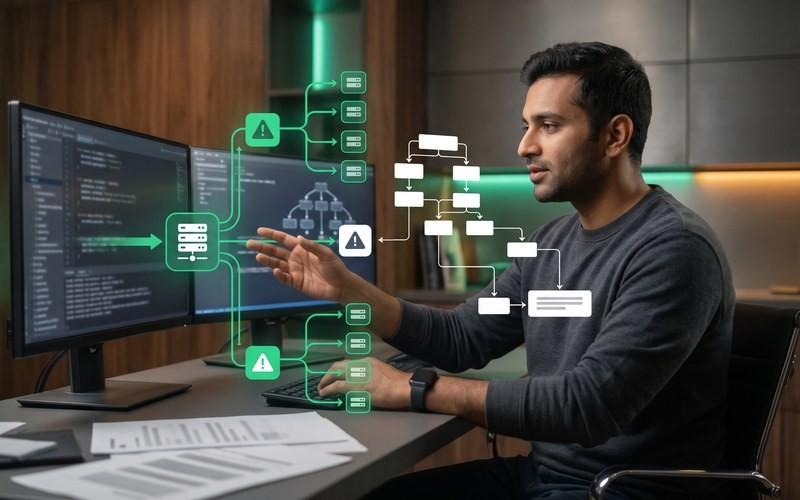
Designing resilient paypal marketplace split payments requires software architects to balance real-time fund routing, platform commission deductions, and regulatory escrow boundaries across multi-vendor checkouts. When building digital marketplaces or multi-tenant platforms, collecting payment from a single buyer and routing payouts across independent sellers introduces non-trivial ledger, webhook, and authorization challenges.
This technical guide details how to architect split disbursements using PayPal Complete Payments for Platforms. We examine partner referrals, purchase unit payloads with platform fee deductions, delayed disbursement escrow holds via the Orders v2 API, and double-entry ledger reconciliation to prevent financial discrepancies.
Why Is Handling Multi-Party Split Payments on Marketplaces So Complex?
Operating a multi-vendor marketplace introduces financial responsibilities that diverge sharply from single-merchant e-commerce systems. When a customer purchases products from multiple distinct vendors in a unified cart, the platform cannot treat checkout as a simple atomic credit. Instead, the architecture must orchestrate multi-vendor transaction routing, extracting the platform take rate while ensuring the net balance routes to each independent merchant balance. Engineering resilient paypal marketplace split payments requires absolute precision when partitioning these revenue streams across multi-tenant SaaS billing architectures.
Beyond arithmetic routing, regulatory compliance dictates how multi-party platforms manage transactional flow. Holding customer funds on the platform's balance sheet triggers money transmitter licensing (MTL) obligations in the United States and PSD2 payment service directive mandates across Europe, alongside substantial merchant-of-record chargeback liability. Integrating the PayPal Partner Marketplace API through PayPal Complete Payments for Platforms avoids custodial exposure. PayPal acts as the licensed entity, handling gross settlement, executing automated fee deductions, and segregating merchant funds directly at the payment processor tier.
How Does PayPal Complete Payments for Platforms Model Multi-Party Payouts?
Modern e-commerce platforms use PayPal Complete Payments for Platforms to structure compliant fund flows between buyers, marketplace operators, and third-party vendors. Implementing a sound paypal multi party payment integration requires modeling merchant identity, permission scopes, and disbursement release schedules directly into your platform's transaction lifecycle.
Connected seller onboarding via partner referrals and OAuth permissions
A marketplace cannot disburse funds or collect automated commissions without explicit cryptographic authorization from each vendor. Platforms onboard merchants programmatically using the PayPal Partner Referrals API (POST /v2/customer/partner-referrals). The platform payload specifies a unique internal tracking_id, required capability operations, and feature scopes including PAYMENT, REFUND, and DELAY_FUNDS_DISBURSEMENT. PayPal generates an action_url directing the vendor through hosted identity verification.
Upon successful merchant consent, PayPal emits a MERCHANT.ONBOARDING.COMPLETED webhook. The platform service validates integration health via GET /v1/customer/partners/{partner_id}/merchant-integrations/{seller_id}, verifying that payments_receivable and primary_email_confirmed evaluate to true before publishing vendor storefronts on our custom PayPal payment integrations.
Direct capture vs authorized escrow holds with delayed disbursement
Disbursement timing fundamentally dictates marketplace counterparty risk. By default, transactions execute with disbursement_mode: INSTANT, which settles net sales proceeds immediately into the vendor's PayPal balance while transferring platform fees to the platform account. However, platforms handling physical fulfillment, custom manufacture, or staged service delivery require escrow protection against vendor non-performance.
In a marketplace escrow payout paypal api architecture, the platform specifies disbursement_mode: DELAYED inside the purchase unit instruction. Funds are captured from the buyer but held within PayPal's managed custodial framework. When fulfillment criteria are satisfied, the platform issues a referenced payout instruction against the captured transaction ID, disallowing direct platform custody while safeguarding buyer purchase protection.
How Do You Implement Split Disbursements and Escrow Using the PayPal Orders API?
Executing split payments across multi-vendor shopping carts requires configuring the PayPal Orders v2 API to segment financial liabilities at checkout initialization. For a custom split payments paypal developer, the Orders API provides native constructs to partition line items, allocate net revenue to discrete merchant accounts, and extract platform commissions in a single checkout session.
Configuring the purchase unit array with payee targets and platform fees
When a buyer checks out with items originating from multiple independent vendors, the platform constructs an order via POST /v2/checkout/orders with intent: "CAPTURE". Rather than creating disjointed individual transactions, the request defines a purchase_units array where each element maps to a specific seller. As documented in the PayPal Orders v2 SDK specification, each purchase unit requires a distinct reference_id, an itemized amount, and a payee object specifying the seller's PayPal merchant ID.
To deduct the platform's take rate, the unit includes a payment_instruction block containing platform_fees. For instance, a $100 purchase unit can designate a $15 platform fee allocated directly to the platform's primary balance while the net $85 stays associated with the seller:
{
  "reference_id": "vendor_cart_unit_01",
  "payee": { "merchant_id": "SELLER_MERCHANT_ID" },
  "amount": { "currency_code": "USD", "value": "100.00" },
  "payment_instruction": {
    "disbursement_mode": "DELAYED",
    "platform_fees": [{
      "amount": { "currency_code": "USD", "value": "15.00" }
    }]
  }
}
Our engineering teams implement strict schema validation through custom API development to ensure that the sum of purchase units, shipping allocations, and platform fees matches the gross authorized total.
Triggering delayed seller payouts via disbursement hold releases
Once the customer approves the order, the platform captures the payment via POST /v2/checkout/orders/{order_id}/capture. Because disbursement_mode was set to DELAYED, PayPal captures the funds, credits the platform fee immediately, but maintains the seller's net balance in an escrow hold.
To execute paypal automated seller disbursements, the platform monitors fulfillment triggers—such as logistics carrier delivery events or inspection sign-offs. The system invokes the Referenced Payouts endpoint (POST /v1/payments/referenced-payouts-items), supplying the capture ID. The service verifies the returned transaction_status (such as SUCCESS or PENDING), preventing premature disbursements and ensuring payouts occur cleanly before regional automated fallback release thresholds.
How Should You Design Idempotent Webhooks and Double-Entry Ledger Reconciliation?
In distributed payment architectures, network calls can time out or duplicate while buyers wait. Designing resilient paypal marketplace split payments requires an immutable internal ledger and deterministic asynchronous event processing that shields systems from network instability and concurrency anomalies.
Designing double-entry accounting ledgers for platform and seller balances
Relying on a single floating balance column in a relational database table inevitably leads to reconciliation drift during high-volume operations. Instead, platforms must maintain an immutable double-entry ledger where every financial event records balancing debits and credits across assets, liabilities, and equity accounts.
When an order captures under a marketplace escrow payout paypal api workflow, the ledger records a debit to Assets:PayPalClearing ($100), balanced by a credit to Liabilities:SellerEscrowHold ($85) and a credit to Revenue:PlatformCommission ($15). Upon release, the system debits Liabilities:SellerEscrowHold ($85) and credits Assets:PayPalClearing ($85).
When partial refunds or customer disputes arise, the ledger posts mirror-reversal entries. For chargebacks on disbursed funds, the platform debits a Receivables:SellerClawback account. If the vendor's pending balance cannot cover the clawback, the system implements automated reserve deductions against subsequent payouts or secondary payout sweeps, maintaining zero unreconciled leakage across multi-tenant SaaS billing databases.
Processing asynchronous payment events with webhook signature verification
Because payment confirmation occurs asynchronously, platforms must process events including PAYMENT.CAPTURE.COMPLETED, PAYMENT.REFERENCED-PAYOUT-ITEM.COMPLETED, and CUSTOMER.DISPUTE.CREATED. Receiving webhooks requires rigorous security boundaries to prevent forgery and replay attacks.
Every incoming payload must be verified against PayPal's verification service (POST /v1/notifications/verify-webhook-signature), validating the transmission_id, transmission_time, cert_url, and cryptographic signature headers before parsing. To ensure strict idempotency, the event processor logs the unique event ID in a deduplication store using a transactional database lock. If a duplicate event arrives from network retries, the webhook handler returns an immediate 200 OK response without re-triggering ledger entries or external disbursements.
What Are the Architectural Trade-Offs of Using AI-Generated Payment Boilerplate?
Modern engineering teams increasingly leverage AI coding agents to accelerate payment integrations. When building a paypal multi party payment integration, understanding the boundary between automated code generation and senior engineering oversight is critical for platform stability.
Where AI coding accelerates SDK scaffolding and integration test coverage
AI coding agents and harness tools such as Antigravity significantly compress development cycles when scaffolding repetitive boilerplate. For a custom split payments paypal developer, AI tools excel at translating JSON schemas into strictly typed data transfer objects (DTOs), generating mock payloads for multi-seller purchase units, and writing comprehensive test matrices.
Automated agents can rapidly author unit tests covering payload validation failures, webhook signature parsing, and synthetic responses for API exceptions. This automation reduces initial scaffolding effort and shortens iteration feedback loops, allowing engineers to focus on architectural decisions rather than routine syntax.
Why automated code generation fails at transactional integrity and edge cases
Despite rapid generation capabilities, AI models struggle with complex transactional invariants, distributed concurrency, and financial risk. Unsupervised AI code frequently hallucinates deprecated endpoints, misconfigures OAuth assertion tokens, and omits database-level isolation during concurrent webhook processing. A generated script might successfully capture a payment but fail to wrap ledger adjustments in ACID transactions, resulting in silent balance discrepancies.
At Canvas Developers, experienced engineers direct AI coding workflows, enforce PCI boundary isolation, and mandate strict code reviews before any release decision. Human engineers verify cryptographic verification routines, validate idempotency locks, and ensure that every ledger entry maintains mathematical parity under concurrent load.
What Are the Common Pitfalls in PayPal Marketplace Payment Architectures?
Deploying multi-vendor split payment systems without rigorous edge-case modeling introduces critical production vulnerabilities. A frequent oversight involves merchant authorization revocation. If a vendor unlinks their account, PayPal issues a MERCHANT.PARTNER-CONSENT.REVOKED event. If the platform attempts paypal automated seller disbursements on held funds without checking current merchant integration status, payout API calls fail, stranding funds in escrow. Similarly, high-concurrency race conditions can occur when batch disbursement cron jobs execute simultaneously with incoming customer dispute webhooks, releasing funds that are actively being frozen.
Another major pitfall is ignoring cross-border fee schedules and foreign exchange spreads within the PayPal Partner Marketplace API. When buyers purchase in foreign currencies, unexpected FX conversion fees can erode the platform's take rate if purchase units fail to declare exact currency breakdown structures.
Before launching, engineering teams should validate a strict acceptance checklist: verify webhook idempotency locks, simulate merchant consent revocation, test partial refund clawbacks, and confirm currency conversion rounding. For platforms with single-seller checkouts and immediate fulfillment, standard direct payments offer a simpler, lower-overhead alternative to full multi-party escrow.
How Can Canvas Developers Help You Build Resilient Marketplace Payment Systems?
Architecting multi-tenant platforms requires balancing rapid development velocity with financial precision. At Canvas Developers, an established software engineering company with an office in Dhaka, Bangladesh, we build custom web applications, SaaS platforms, and enterprise financial systems. Whether you are engineering new paypal marketplace split payments from the ground up or hardening an AI-built application, our team pairs AI coding agents and modern harness automation with senior engineering oversight.
Our experienced engineers direct every phase, own the system architecture, conduct line-by-line code reviews, and verify transactional invariants before deployment. We offer two transparent delivery models: Private / Local AI Engineering on infrastructure you control, and commercial Claude Code / OpenAI Codex Engineering under approved cloud configurations.
If you need an experienced custom split payments paypal developer team to evaluate your payout ledgers, webhook pipelines, or multi-vendor checkouts, request a scoped technical assessment. Share your current tech stack, workflow constraints, and target outcomes through our contact form or reach out via WhatsApp on our website to begin scoping your integration.
Step by step
Onboard sellers via Partner Referrals
Generate an onboarding link via POST /v2/customer/partner-referrals with tracking_id and request PAYMENT, REFUND, and DELAY_FUNDS_DISBURSEMENT capabilities.
Configure purchase units with platform fees
Construct the Orders v2 payload specifying distinct purchase_units for each merchant, setting payee merchant IDs, disbursement_mode, and platform_fees.
Capture the order and verify escrow hold
Execute POST /v2/checkout/orders/{id}/capture to capture buyer funds, crediting platform commission while holding seller net balances.
Release delayed disbursements upon fulfillment
Invoke POST /v1/payments/referenced-payouts-items with the capture ID after delivery verification to disburse held funds to the vendor.
Verify webhooks and reconcile ledgers
Validate incoming PayPal webhook signatures and update an immutable double-entry ledger with balancing debits and credits.