Evaluating Usability Testing development cost requires dissecting the specific technical requirements of your evaluation environment rather than relying on generic software development estimates. A functional testing harness demands realistic session environments, automated telemetry capture, and structured feedback mechanisms tailored to user workflows. Whether you are building an internal feedback portal or instrumentation across a customer-facing product, scoping the development footprint upfront prevents budget surprises while establishing clear benchmarks for software quality.
What Determines Usability Testing Development Cost?
The primary baseline for Usability Testing development cost depends on whether your evaluation framework requires an isolated sandbox environment or an instrumented mirror of your live application stack. Engineering an interactive evaluation setup involves constructing reproducible state fixtures, embedding telemetry pipelines, and establishing feedback capture points across critical user paths. Product teams frequently underestimate this engineering investment by treating usability infrastructure as static UI prototyping, overlooking the integration code and middleware required to reset participant states between testing sessions.
When implementing structured User Testing environments, development expenses divide across four technical layers: environment provisioning, interactive instrumentation, test data synthesis, and observability integrations. A lightweight unmoderated test harness measuring basic completion rates on public marketing funnels requires minimal custom middleware. Conversely, testing transactional software—such as multi-step checkout sequences, authenticated customer portals, or complex role-based enterprise dashboards—demands synthetic backend mocking, deterministic state rollback, and dedicated test account seeding. Engineering these underlying state machines represents the majority of development hours rather than visual layout design.
Understanding these infrastructure demands enables technical leadership to budget precisely for engineering effort before committing capital. By defining clear behavioral milestones, technical boundaries, and environment lifecycles early in the planning phase, organizations eliminate redundant instrumentation and focus technical spend where workflow friction carries the highest operational risk.
Which Core Drivers Change Your Usability Testing Budget?
Budget variance in testing infrastructure stems directly from the depth of user paths and the complexity of participant data management. Unpacking these usability testing cost drivers allows engineering leads to structure testing milestones around high-leverage workflows while containing operational scope.
Feature Complexity and Interactive Workflow Coverage
The complexity of user journeys across an application dictates the breadth of scaffolding code required. Testing a straightforward informational onboarding flow involves limited state branches, whereas evaluating multi-step conditional workflows requires intricate event handlers and error-state simulations. Each additional branch in a user flow multiplies the necessary mock endpoints, validation guards, and telemetry listeners required to record participant decisions accurately.
When applications feature asynchronous operations, third-party authentication handoffs, or real-time data feeds, developers must construct robust mock services to prevent test sessions from stalling. Expanding coverage across edge cases, invalid inputs, and alternate navigation paths increases initial development effort. Prioritizing core happy paths and primary conversion funnels keeps the engineering footprint proportional to project objectives.
Participant Data Preparation and Third-Party Tooling Fees
Preparing realistic test environments demands dedicated data pipelines that supply authentic yet sanitized participant records. Seeding testing databases with believable transactional histories, catalog items, or account permissions requires custom seeding scripts and automated reset routines. Without automated data replenishment, manual environment maintenance quickly inflates ongoing testing overhead.
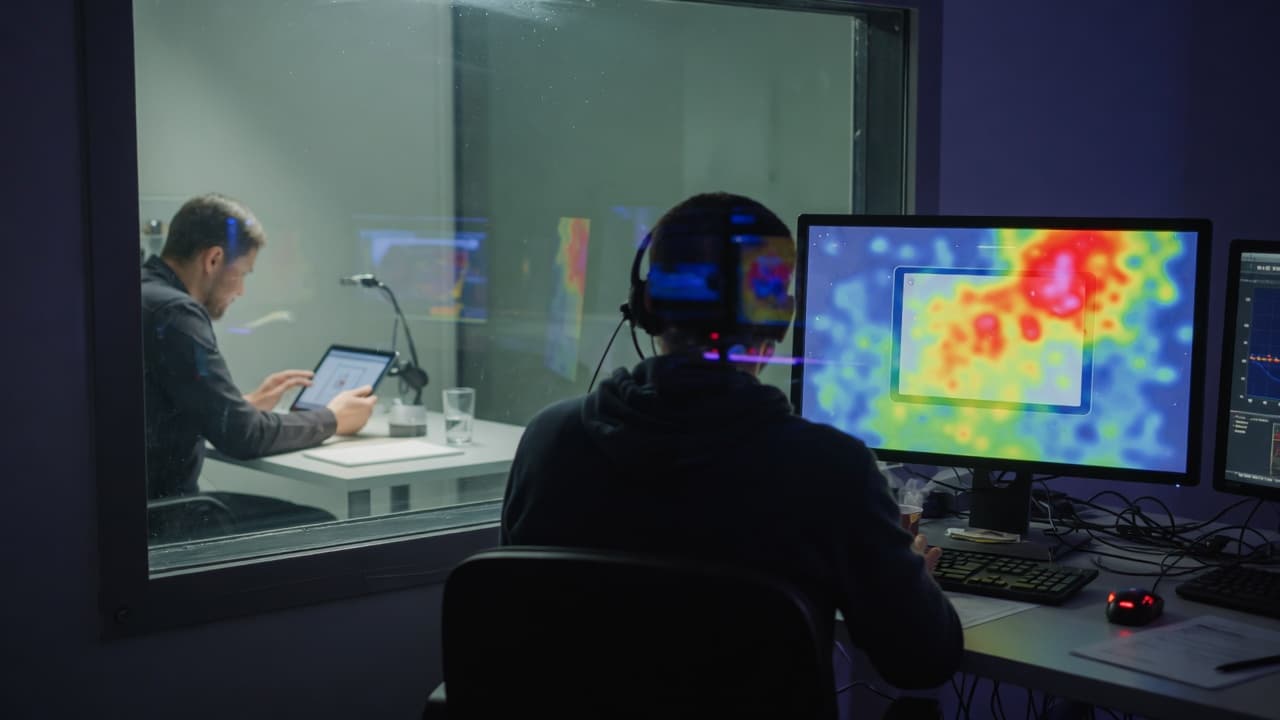
Furthermore, integrating commercial analytics, heatmapping, or session replay services introduces recurring licensing and ingestion fees alongside development costs. Engineering teams must budget development time to integrate software development kits (SDKs), configure custom metadata properties, and verify data ingestion pipelines. Accounting for both API consumption tiers and developer integration time provides a realistic baseline for total Usability Testing development cost.
How Does Vibe Coding Accelerate Test Harness Scaffolding?
Modern engineering workflows leverage Usability Testing vibe coding techniques to compress the timeline between test protocol design and deployable scaffolding. By combining generative AI models with developer orchestration tools, teams rapidly assemble interactive testing prototypes without writing standard boilerplate by hand.
Rapid Scenario Prototyping with Antigravity and AI Code Generation
AI coding agents directed by a skilled Usability Testing developer drastically accelerate the creation of sandbox interfaces, mock forms, and interactive task prompts. Inside specialized development harnesses such as Google Antigravity, engineers prompt agents to generate multi-variant user interfaces and synthetic task flows within minutes. This rapid iteration allows product teams to test competing interaction patterns before committing substantial capital to production-grade engineering.
Rather than replacing structural discipline, AI acceleration shortens feedback loops during early user testing iterations. Designers and developers quickly generate dynamic state transitions, responsive component variants, and interactive feedback widgets, allowing immediate evaluation with real users.
Automating Reusable Test Session Fixtures and Event Telemetry
Automated code generation simplifies the configuration of deterministic test environments. Establishing isolated browser contexts and reusable test fixtures—a core pattern in modern end-to-end frameworks like Playwright—guarantees that each evaluation session starts from a pristine state without cross-session data contamination. AI tooling can draft boilerplate setup scripts, session teardown hooks, and synthetic database state loaders across multiple test runners in minutes.
Similarly, AI models generate standard telemetry wrappers that dispatch custom interaction events on clicks, scroll depth, and input modifications. Automating these telemetry hooks frees technical teams to focus on study objectives rather than manual tracking instrumentation.
Where AI Coding Fails: Logic Gaps and Edge-Case Hallucinations
Despite its efficiency, organizations looking to hire a vibe coder for Usability Testing must recognize the distinct technical limitations of pure AI generation. AI code generators frequently hallucinate API schemas, omit critical error boundaries, and produce brittle event listeners that fail during unexpected user navigation. In complex multi-step forms, generated code often mishandles asynchronous state synchronization, creating false usability blockers that corrupt research findings.
Without rigorous human oversight, AI-generated harnesses risk capturing corrupted telemetry or crashing midway through participant sessions. Expert architectural governance ensures that accelerated code generation delivers genuine speed rather than hidden technical debt.
What Must Human Engineers Validate Before Release Decisions?
While artificial intelligence accelerates initial scaffolding, release decisions require experienced technical leadership. A dedicated Usability Testing developer validates architectural integrity, data governance, and execution reliability before exposing test builds to external participants.
Architecture Ownership and Telemetry Security Governance
Human engineers must own system architecture to ensure that test harnesses do not compromise core application infrastructure or expose sensitive backend endpoints. Embedding telemetry libraries requires disciplined network sandboxing to prevent performance degradation or unintended data exfiltration. Experienced engineers verify that analytics endpoints maintain strict rate limiting and run isolated from production database connections.
Furthermore, engineers structure session capture scripts so that failures in observability tooling never disrupt the underlying user experience. Maintaining clean separation between application state and tracking services prevents logging outages from invalidating study runs.
Participant Data Privacy, Session Masking, and Compliance
Participant testing introduces significant compliance obligations, particularly under GDPR, CCPA, and industry data standards. Engineering teams must implement rigorous client-side obfuscation before recording user sessions. According to the PostHog session replay privacy controls, privacy masking executes directly in the user browser or mobile client so sensitive data never transmits across the network. Form inputs are masked by default, and developers apply specialized CSS classes such as ph-no-capture to redact proprietary dashboard content or personally identifiable information.
Engineers audit these client-side filters to verify that authentication tokens, financial details, and private identifiers remain completely redacted across all recorded sessions. Automated code generation cannot substitute for legal and technical compliance audits.
Rigorous Code Review and Measurable Acceptance Criteria
Before launching a live User Testing study, human reviewers conduct comprehensive code reviews across all generated components and mock services. Engineers inspect state management routines, error boundaries, and asynchronous listeners to guarantee deterministic behavior. Every testing harness must satisfy clear acceptance criteria, verifying that telemetry events trigger accurately under varied network conditions.
Systematic code audits also confirm that mock backends correctly replicate production response timings, preventing artificial latency from distorting user task performance. This rigorous human governance guarantees valid, uncorrupted research outcomes.
What Can You Reuse or Defer Without Weakening Acceptance Criteria?
Prudent budget management balances technical thoroughness against commercial delivery constraints. Engineering leads can significantly optimize Usability Testing development cost by standardizing reusable harness assets and deferring peripheral scenarios without compromising study integrity.
Prioritizing Critical User Journeys over Edge-Case Matrices
A frequent budget pitfall is attempting to build full test harness coverage for every conceivable user edge case. In early usability studies, testing rare validation failures, esoteric browser quirks, or complex administrative edge cases yields minimal insight relative to development expense. Teams should focus initial engineering efforts on high-priority conversion funnels, signup flows, and core transactional sequences.
Establishing clear user testing workflow acceptance criteria ensures that testing focuses on measurable behavioral indicators. A disciplined acceptance checklist includes:
- Core Funnel Verification: Critical user journeys complete smoothly from entry point to task completion without unexpected blocking states.
- Telemetry Accuracy: Event listeners reliably capture interaction timestamps, drop-off events, and form validation triggers.
- Data Isolation: Session fixtures reset participant environments reliably to prevent state cross-talk.
- Privacy Protection: Sensitive participant inputs are masked prior to network transport.
Deferring secondary administrative dashboards and complex multi-account permissions to later iterative rounds keeps engineering budgets contained while answering vital usability questions.
Leveraging Pre-Built Component Harnesses and Modular Fixtures
Rather than hand-crafting unique test infrastructure for each evaluation cycle, engineering teams should assemble modular, reusable fixtures. Standardized component wrappers, mock API interceptors, and modal survey harnesses can be shared across multiple feature teams. Reusing these foundational elements reduces development hours on subsequent testing cycles.
When evaluating early conceptual designs, lightweight interactive wireframes or standard clickable prototypes often suffice. Investing in full custom test harness development is justified primarily when testing intricate, data-dependent workflows where realistic state changes directly govern user behavior.
How Do You Scope a Usability Testing Engagement with Canvas Developers?
Executing an efficient testing initiative requires a structured delivery framework that combines modern AI scaffolding speed with seasoned engineering oversight. Canvas Developers, an established software engineering company with an office in Dhaka, Bangladesh, builds web platforms, SaaS applications, mobile apps, and custom testing infrastructure for founders, startups, and established enterprises. Rather than simply relying on an unverified developer to hire a vibe coder for Usability Testing, our team pairs AI coding agents with experienced software engineers who direct the work, own the architecture, review every change, and govern release decisions.
We offer two flexible delivery models tailored to your security requirements: Private / Local AI Engineering for clients requiring self-hosted open-weight models in isolated environments, and Claude Code / OpenAI Codex Engineering using cloud-approved configurations. Explore our dedicated User Testing services to see how our engineering teams structure test environments, session recording, and telemetry pipelines.
Every project starts with a scoped assessment to evaluate your current stack, user workflows, compliance constraints, and target outcomes before establishing milestone-based delivery. Connect with an experienced Usability Testing developer by visiting the Canvas Developers contact page or reaching out via WhatsApp on our website to scope your testing roadmap.