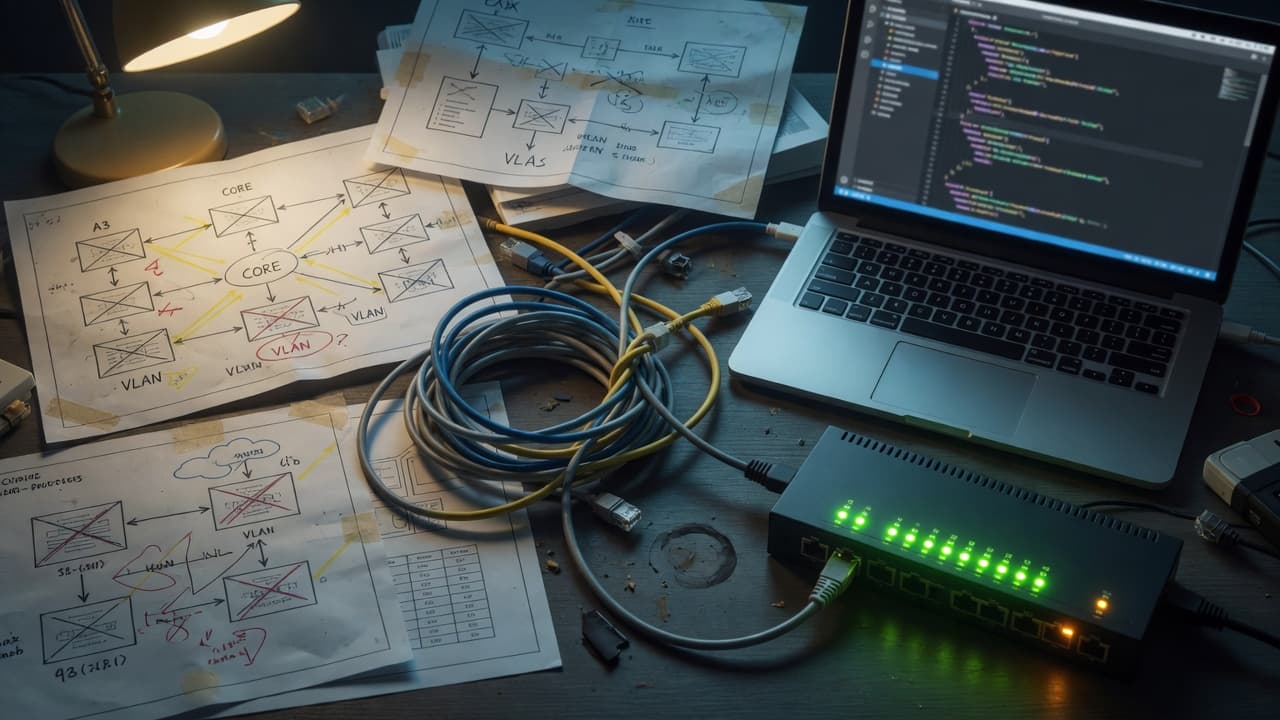
The problem
In automated trading workflows, directly connecting analytical models to broker order endpoints creates severe operational risks, including runaway automated trading, stale market data dispatch, and unauthorized exposure. Production environments also face dropped network packets, exchange latency spikes, and payload corruption that can cause orders to be approved based on obsolete quotes or duplicate webhooks. Additionally, embedding broker order submission logic directly inside client-side charting scripts risks unintended order bursts triggered by script restarts or chart recalculations.
Approach
Canvas Developers designs an Alpaca signal-to-review workspace that decouples algorithmic signal generation from broker execution through strict separation of duties across strategy developers, market-data operators, and authorized reviewers. The architecture routes lightweight webhook signals through an isolated ingestion gateway that enforces deterministic schema validation, quote freshness thresholds, and duplicate-event suppression before entering an explicit review queue. Operating behind an internal firewall with separate paper and live environments, the broker connectivity module presents automated pre-trade risk checks to reviewers and dispatches approved orders to Alpaca using unique client order IDs for idempotency.
Outcome
Automated acceptance test suites ensure that stale, duplicate, or incomplete signals cannot become approved execution instructions under any condition. This controlled review workflow and boundary isolation eliminate accidental script executions and protect trading capital without overburdening operators.
An Alpaca signal-to-review workspace provides a controlled operating environment that decouples algorithmic signal generation from broker execution through strict human oversight and automated guardrails. By introducing an explicit review stage between quantitative model alerts and live order routing, engineering teams mitigate the operational risks of runaway automated trading, stale market data dispatch, and unauthorized exposure. This architecture establishes reliable state tracking, deterministic schema validation, and segregated broker connections to ensure trading decisions remain transparent, verifiable, and secure.
What Operational Problem Does an Alpaca Signal-to-Review Workspace Solve?
Defining Role Boundaries Across Strategy Developers, Data Operators, and Reviewers
In automated trading workflows, directly connecting analytical models to order endpoints creates dangerous operational hazards. Quantitative teams often build scripts that fire orders automatically upon meeting indicator criteria, bypassing trade compliance and data integrity checks. A robust Alpaca signal-to-review workspace solves this vulnerability by enforcing clear separation of duties across three primary operational roles: strategy developers, market-data operators, and authorized reviewers.
Strategy developers focus on drafting and backtesting quantitative models without possessing live execution credentials. Market-data operators supervise feed health, clock synchronization, and ingestion pipelines to ensure upstream price feeds remain reliable. Authorized reviewers alone hold permissioned access to evaluate incoming signals, review market context, and approve orders. This boundary prevents rogue orders, eliminates accidental script executions, and establishes operational auditability.
Structuring Core Records for Feeds, Signal Details, and Approval Screens
Disciplined signal-to-review workspace development relies on three immutable records: the timestamped signal, the market-data event, and the execution record. Every model event is ingested with its strategy identifier, timestamp, symbol, side, notional sizing, and limit price. This record links directly to the market-data event, capturing the bid-ask quote and exchange timestamp at the millisecond of generation.
The interface layer organizes these core records into three specialized operator screens:
- Chart and Signal Feed: A consolidated monitoring view displaying incoming signals alongside real-time market data ticks and indicator states.
- Signal Detail Screen: An inspection panel presenting raw payload attributes, parameter triggers, and data validation logs.
- Review Decision Screen: An authorization modal displaying pre-trade risk checks, slippage tolerance, and explicit approve or reject actions.
Once an authorized reviewer reaches a decision, the state transition appends to the execution record, preparing the system for rigorous boundary and environment validation.
Which Boundary Constraints and Failure Paths Must the Workspace Guard Against?
Enforcing Strict Environment Separation Across Backtests, Paper, and Live Trading
A fundamental risk in algorithmic engineering is credential bleeding between development simulations and capital-bearing broker accounts. Backtesting environments evaluate strategy logic; however, backtest output is not proof of future returns, and historical data cannot replicate live exchange microstructure. To prevent operational mistakes, the workspace maintains architectural isolation across backtesting, paper execution, and live trading endpoints.
As detailed in the Alpaca Paper Trading documentation, Alpaca enforces separate base URLs (https://paper-api.alpaca.markets versus https://api.alpaca.markets) and distinct API key pairs for simulation and production. Our architecture isolates these environment profiles within vault-backed configuration modules. Client charting scripts and backtesting engines possess zero network access to live broker credentials, ensuring simulated logic cannot dispatch orders to live markets.
Mitigating Stale Market Data, Duplicate Events, and Incomplete Signal Traps
Production environments routinely encounter dropped network packets, exchange latency spikes, and payload corruption. Without rigorous trading signal validation, these anomalies create dangerous failure modes where reviewers approve orders based on obsolete prices or duplicate webhooks.
To mitigate these risks, the workspace executes automated market data freshness checks before presenting any signal for review:
- Freshness Thresholds: The ingestion engine compares quote timestamps against synchronized system time. If latency exceeds the configured freshness threshold, the workspace marks the quote stale and blocks approval.
- Duplicate-Event Suppression: Every signal generates a deterministic payload fingerprint derived from strategy identifier, symbol, timestamp, and direction. Duplicate signals matching an existing fingerprint within a session window are quarantined immediately.
- Incomplete Schema Traps: Signals lacking mandatory order parameters—such as valid order type, side, or time-in-force—are rejected at the boundary and excluded from the reviewer queue.
How Is the End-to-End Ingestion and Alpaca Broker Integration Architected?
Decoupling Client Charting Scripts from Broker-Connected Execution Modules
A frequent architectural flaw in algorithmic trading setups is embedding broker order submission logic directly inside client-side charting scripts. When client scripts hold broker keys, browser crashes, chart recalculations, or script restarts can trigger unintended order bursts.
In our system architecture, client charting scripts remain entirely decoupled from broker-connected execution modules. Analytical platforms emit lightweight webhook signals containing pure market observations over authenticated internal message queues. An ingestion gateway validates these payloads, normalizes them against an internal schema, and stores them in an immutable event log. The broker connectivity module resides in an isolated service behind an internal firewall, completely inaccessible to charting front-ends. This boundary guarantees that no charting script can invoke broker endpoints directly. Organizations evaluating secure broker connectivity can review Canvas Developers’ engineering practices for Alpaca integration to observe how isolated gateways protect capital.
Validating Alpaca API Capabilities Against Signal Schema and State Transitions
Disciplined Alpaca development requires aligning internal signal schemas with verified broker API capabilities. Rather than assuming unverified brokerage features, our architecture validates every parameter against official specifications before assigning order actions.
As detailed in the Alpaca Order Placement documentation, the API accepts core fields including symbol, side, qty or notional, type, time_in_force, and a unique client_order_id for client-side tracking and idempotency. Features unsupported by Alpaca remain strictly segregated into custom upstream modules.
The workspace governs each signal through an explicit finite-state machine:
- RECEIVED: Raw payload arrives at the ingestion gateway.
- VALIDATED: Schema integrity and market freshness checks pass.
- PENDING_REVIEW: Signal enters the authorized reviewer queue.
- APPROVED: Reviewer authorizes the signal; an idempotent order payload is assembled.
- DISPATCHED: The order routes to Alpaca with an attached
client_order_id. - ACKNOWLEDGED: Alpaca confirms order acceptance, tracking execution via streaming webhooks.
Signals rejected or timed out transition directly to terminal REJECTED or EXPIRED states, preventing orphan orders.
What Acceptance Criteria and Engineering Tradeoffs Govern the Review Process?
Deterministic Acceptance Tests: Preventing Stale Signals from Becoming Orders
To ensure system reliability, the workspace enforces strict acceptance criteria verified through automated test suites. The primary acceptance rule dictates that a stale, duplicate, or incomplete signal cannot become an approved execution instruction under any condition.
Automated integration suites enforce verifiable operational benchmarks across every build:
- Stale Signal Suppression: Injected signals with quote timestamps older than the configured freshness threshold fail validation automatically, immediately transitioning the state to
EXPIREDand disabling operator approval controls. - Schema Integrity Enforcement: Incomplete payloads missing required attributes—such as side, symbol, or limit price—trigger deterministic schema rejection, preventing unvetted parameters from entering the review queue.
- Zero-Duplicate Guarantee: Submitting identical signal payloads within the deduplication window triggers an immediate drop, ensuring zero duplicate orders reach the execution gateway.
Balancing Human Approval Latency Against Automated Pre-Trade Risk Limits
Incorporating a human in the loop execution review introduces an explicit tradeoff between oversight and latency. Manual review requires seconds or minutes, making this model unsuitable for high-frequency trading. However, for intraday momentum, swing strategies, and portfolio rebalancing, human verification provides vital protection against anomalous market conditions and model anomalies.
To protect capital without overburdening operators, the workspace embeds automated pre-trade risk checks directly into the review screen. The system validates maximum order notional values, asset concentration caps, and account buying power before presenting the signal. If an alert exceeds risk parameters, the interface disables approval and flags the specific limit breach. This design allows authorized reviewers to verify market context within a safe, bounded operational envelope.
How Would Canvas Developers Deliver This System Using AI-Assisted Engineering?
Accelerating Scaffolding with AI Coding Harnesses While Engineers Own Architecture and Review
Our delivery approach accelerates early development by pairing AI coding harnesses with experienced engineering oversight. When teams explore Alpaca vibe coding, AI agents excel at generating boilerplate REST routers, mock data feeds, state store schemas, and reactive dashboard layouts, substantially shortening design feedback loops.
However, raw AI generation often stumbles on complex financial edge cases, WebSocket reconnection race conditions, and strict state persistence. At Canvas Developers, senior software engineers direct the agents, own the system architecture, and rigorously review every line of code. While AI tools accelerate initial scaffolding, human engineers design the security boundaries, audit logging, and deterministic broker idempotency, making all final release decisions.
Selecting Engineering Packages and Scoping Your Workflow at Canvas Developers
To accommodate security and compliance requirements, Canvas Developers provides two flexible delivery models:
- Private / Local AI Engineering: Leverages privately hosted open-weight models within client-controlled or isolated infrastructure environments.
- Claude Code / OpenAI Codex Engineering: Uses leading commercial AI coding tools configured under client-approved cloud privacy settings.
From our engineering office in Dhaka, Bangladesh, we build custom web platforms, enterprise workflow systems, and secure broker integrations. Every engagement begins with technical scoping, advances through transparent milestone reviews, and concludes with comprehensive acceptance testing and code handover. To plan your custom Alpaca development or harden an existing prototype, submit your tech stack, workflow requirements, and operational constraints through our contact form for a scoped assessment.