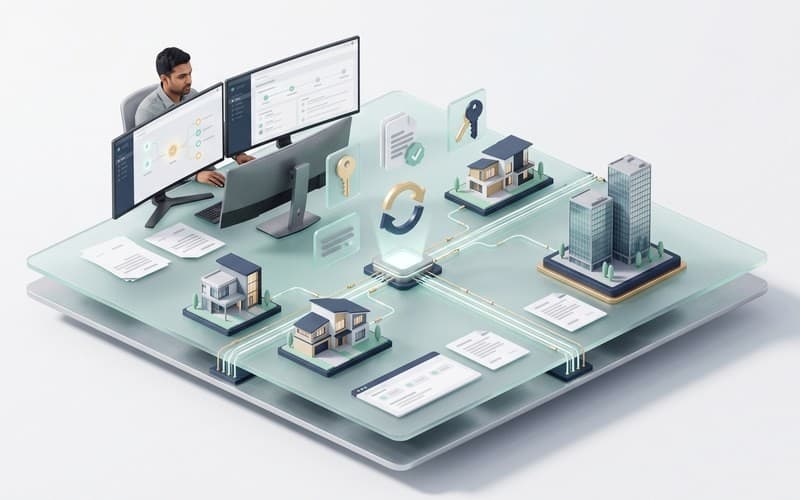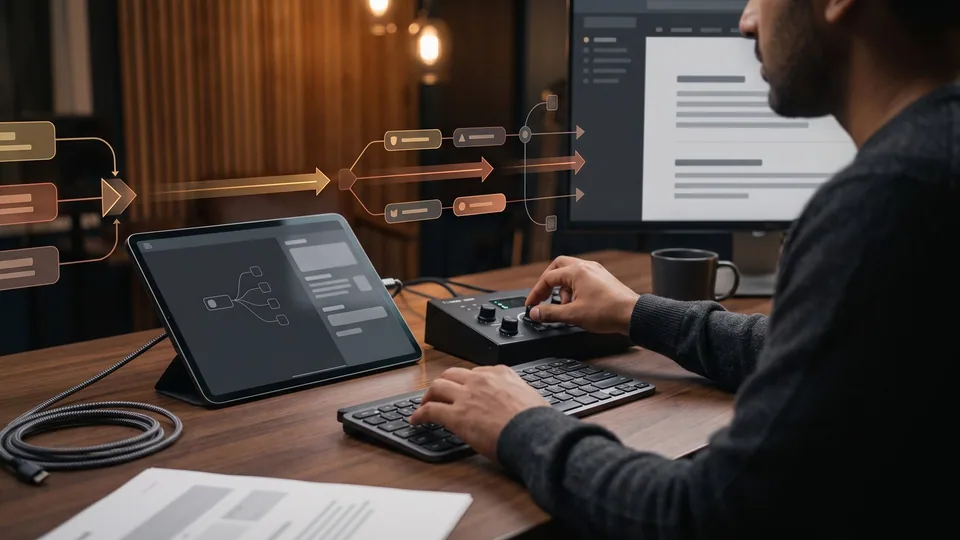
This illustrative example demonstrates an architectural concept designed by Canvas Developers to showcase how fast-growing operations can eliminate costly third-party ticketing platforms. By deploying a custom twilio integration customer support hub, engineering teams can bridge customer SMS and voice interactions directly into Slack while routing email resolutions through transactional messaging. This reference design illustrates how unified communication pipelines handle multi-channel triage smoothly without recurring per-seat software fees.
Project at a Glance: What Are the Core Specifications of This Support Console?
This custom customer support console blueprint addresses operations teams facing ballooning SaaS expenses as frontline headcount scales. Built as an extensible twilio integration customer support hub, the core stack combines Twilio Conversations for omni-channel voice and text ingestion, a custom Node.js orchestration backend hosted on dedicated cloud infrastructure, and Slack Bolt APIs for conversational agent workflows.
Delivery is structured across dedicated disciplines: senior system architects map integration topologies, software engineers implement real-time event webhooks, and QA specialists validate message parity and failover recovery across every communication channel.
The Brief: Why Replace Third-Party Helpdesks with a Custom Twilio-Slack Bridge?
Commercial helpdesk software typically imposes steep per-seat monthly subscription models that penalize growing support organizations. When non-agent specialists across engineering or logistics need to contribute to resolution threads, purchasing enterprise licenses for entire cross-functional departments creates unnecessary overhead. Developing a dedicated twilio slack support console eliminates this licensing friction by allowing distributed teams to collaborate where they already work.
Rather than toggling between disconnected browser dashboards, operations teams gain an omnichannel twilio support integration that routes inbound customer inquiries directly into triage channels. Unifying incoming SMS conversations and voice call records into familiar internal workflows reduces operational fragmentation while keeping communication records centralized.
Engineering Approach: How Do AI Coding Speed and Senior Technical Oversight Work Together?
At Canvas Developers, implementation velocity relies on pairing AI coding agents with seasoned engineering leadership. AI harnesses accelerate boilerplate generation, data schema definitions, and interface scaffolding for the twilio integration customer support hub. However, experienced engineers directly direct the workflow, establish integration boundaries, and make every release decision.
Managing AI engineering requires acknowledging practical trade-offs. Autonomous coding agents generate standard API boilerplate effectively, but they fail to anticipate subtle concurrency pitfalls, distributed session states, and defensive validation edge cases. Senior engineers conduct rigorous manual code reviews to audit webhook signature verification, data sanitization, and throughput limits across all communication routes.
Clients configure development parameters via two flexible packages: 'Private / Local AI Engineering', which operates privately hosted open-weight models within client-controlled infrastructure, or 'Claude Code / OpenAI Codex Engineering', leveraging commercial AI tools under client-approved security standards.
System Architecture: How Does the Multi-Channel Relay Function Under the Hood?
The orchestration engine operates as an asynchronous event broker connecting mobile telephony directly to internal team chat. Inbound customer communications enter through a twilio conversations webhook relay, utilizing Twilio Conversations Webhook Configuration endpoints to capture real-time events like incoming messages and call transcriptions. Automated routing services parse customer identifiers, verify origin signatures, and construct structured incident records.
Each inquiry renders as a structured Block Kit triage card inside a slack twilio two way support workspace, displaying customer phone numbers, urgency tags, and interactive claim buttons. When an agent claims an issue, an isolated Slack thread opens for collaborative two-way dialogue. Responses posted inside that thread trigger outbound webhooks that dynamically serialize agent replies back to the customer's mobile device as SMS.
Upon ticket closure, the platform initiates a twilio sendgrid transactional ticket bridge using the SendGrid Mail Send API. This subsystem compiles resolution summaries into responsive email templates featuring branded headers, chronological transcript logs, agent identifiers, and delivery timestamps, providing verifiable audit trails without manual data entry.
Operational Impact: What Efficiencies Does an Owned Support Hub Deliver?
Deploying a private communication architecture delivers substantial operational clarity for frontline and technical managers. Traditional ticket systems force team members to constantly juggle isolated portal windows, introducing triage delays and missing critical cross-team handoffs. By implementing an omnichannel twilio support integration that routes live conversations directly into existing collaboration software, response lag decreases while technical specialists contribute instantaneously without leaving their core developer environments.
Furthermore, hosting the data broker on company-owned infrastructure ensures full custody of conversational records, customer metadata, and incident audit trails, eliminating compliance ambiguity and third-party vendor lock-in.
Next Steps: How Can Your Team Scope a Custom Integration Build?
Organizations seeking to modernize communication pipelines can deploy a tailored twilio integration customer support hub without incurring recurring seat-licensing fees. Canvas Developers initiates every custom engineering engagement with collaborative scoping, establishing precise technical architecture, milestone schedules, and comprehensive quality assurance protocols before development begins.
To evaluate your operational requirements and explore building a dedicated communication console, initiate a scoped architectural assessment through the Canvas Developers contact form. Senior engineering specialists review your system constraints, integration boundaries, and deployment preferences to outline a phased delivery roadmap.