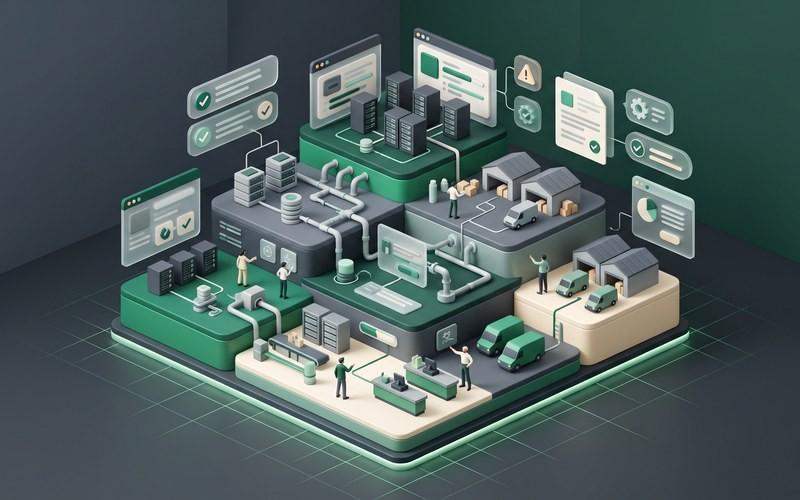
Accurately estimating a custom Shopify development cost requires looking beyond initial developer quotes to evaluate long-term catalog scale, custom functionality, and technical architecture. While standard commercial templates offer rapid launch capabilities, scaling merchants encounter structural constraints when catalog size, multi-currency routing, or enterprise resource planning (ERP) synchronization exceed off-the-shelf capabilities. Investing in custom Shopify architecture replaces mounting plugin dependencies and recurring subscription debt with direct ownership of a performant, maintainable commerce engine built to support sustained transaction growth.
What Drives the Real Custom Shopify Development Cost in 2026?
Evaluating the true cost to build custom Shopify store environments requires commercial leaders to weigh upfront engineering allocations against compounding operational friction. Off-the-shelf themes typically require low initial capital outlay, yet high-growth brands routinely encounter performance degradation as third-party apps accumulate to patch missing functionality. Each supplemental script tag, tracking pixel, and marketplace plugin injects render-blocking JavaScript, increasing page latency, inflating monthly software subscription overhead, and creating fragile dependency chains that break during core platform updates.
When enterprise merchants manage high-volume catalogs containing tens of thousands of SKUs, complex bundle matrices, tiered B2B wholesale pricing, or multi-location inventory synchronization, generic theme templates collapse under structural complexity. Bespoke engineering solves this bottleneck through purposeful Liquid templating, optimized database metafield architectures, and dedicated middleware. By engineering direct integrations with backend enterprise resource planning (ERP) systems and warehouse management platforms, custom architecture eliminates manual reconciliations and transactional errors. Consequently, your primary custom Shopify development cost reflects an investment in long-term operational resilience, site speed stability, and scalable data modeling rather than cosmetic presentation alone.
Investing early in a modular technical foundation also drastically simplifies future feature releases. When internal developers or agency partners work with clean, documented code rather than navigating obfuscated third-party theme assets, ongoing maintenance overhead drops while release cycles accelerate.
How Do Theme Customization, Headless Builds, and Bespoke Liquid Compare in Cost?
Modifying Commercial Themes vs. Ground-Up Custom Theme Development
When evaluating Shopify theme development pricing, merchants typically choose between adapting a commercial theme or investing in bespoke Shopify development built directly on Shopify Liquid and Online Store 2.0 JSON templates. Modifying a pre-built commercial theme offers a fast path to market for standard catalogs, but extensive structural alterations quickly introduce technical debt. Overwriting third-party vendor code leads to stylesheet bloat, redundant JavaScript bundles, and brittle layouts that fail whenever the original theme vendor publishes core updates. Conversely, ground-up custom theme engineering produces clean, modular Liquid templates tailored precisely to your brand's data structures, minimizing asset overhead and granting total control over core web vitals and conversion paths.
Budgeting for Headless Commerce: Hydrogen, Oxygen, and Third-Party Frontends
For enterprise merchants requiring ultra-low latency, omnichannel deployments, or decoupled content distribution across bespoke web applications, headless commerce represents a distinct engineering tier. Building on Shopify Hydrogen and Oxygen pairs React Router storefronts with serverless edge hosting. However, headless architectures significantly increase engineering budgets: teams must build and maintain custom middleware, routing layers, internationalized routing, and checkout redirects. Furthermore, front-end asset loading trade-offs must be actively managed to balance client hydration costs against server-side rendering benefits. For most merchants, clean bespoke Liquid engineering delivers comparable mobile performance and SEO responsiveness at a fraction of the ongoing DevOps complexity, making headless an investment reserved for specialized multi-platform environments.
What Does It Cost to Budget for Custom Shopify Apps, APIs, and Data Migrations?
Building Private Apps for ERP, CRM, and Custom Inventory Workflows
Allocating a realistic custom Shopify app development budget is necessary when off-the-shelf public apps cannot support proprietary business logic, complex fulfillment rules, or bespoke back-office synchronization. Mid-market and enterprise retailers often integrate Shopify with custom ERPs, warehouse management systems (WMS), or specialized CRMs. Building private apps or decoupled microservices ensures complete control over webhook processing, idempotent data pipelines, and API rate-limiting handling across GraphQL and REST endpoints.
For brands operating on Shopify Plus, tailoring the transaction flow now requires working within Shopify Checkout Extensibility. Legacy checkout.liquid modifications and custom scripts have been fully deprecated across the platform. Modern checkout customizations rely on purpose-built Checkout UI extensions, custom validation logic, and server-side Shopify Functions for bespoke discounts, custom delivery rules, and payment gateway controls. Engaging an experienced team to engineer custom checkout extensions forms a major component of Shopify Plus development agency cost, replacing unmaintainable script hacks with upgrade-safe components that preserve transaction velocity and customer data security.
Preserving SEO Equity, Customer Records, and Order History During Re-Platforming
Migrating to Shopify from legacy monoliths like Magento, WooCommerce, or proprietary custom engines involves significant technical data plumbing that directly impacts project budgets. Re-platforming budgets must account for rigorous data normalization, multi-currency customer record reconciliation, historical transaction imports, and encrypted password reset flows. A failure in data staging risks corrupted inventory counts and disjointed reporting across financial systems.
Simultaneously, preserving search engine equity requires exhaustive technical planning. Engineering teams must conduct comprehensive URL inventory audits, construct granular 301 redirect matrices, and map legacy metadata to Shopify’s native URL structure. Without deliberate redirects, canonical tag alignments, and structured schema governance during data migration, stores risk severe organic traffic drop-offs and lost keyword rankings that can take months of post-launch remediation to recover.
How Are Shopify Development Hourly Rates and Project Retainers Structured?
Comparing Fixed-Scope Milestone Contracts Against Hourly Billing Models
Navigating commercial contract models is essential when planning your e-commerce engineering investment. Fixed-scope milestone agreements tie project disbursement to tangible technical deliverables: architectural specifications, component scaffolding, core ERP integrations, end-to-end user acceptance testing, and production deployment. This structure offers budget predictability for greenfield builds with locked specifications, provided that both teams enforce strict change-management protocols.
In contrast, hourly billing models provide flexibility for exploratory builds, complex legacy refactoring, or iterative product roadmaps where functional requirements evolve based on operational feedback. However, evaluating Shopify development hourly rates requires analyzing developer velocity and architectural seniority rather than surface-level rates alone. A junior team charging lower rates often spends disproportionate hours debugging Liquid hierarchy conflicts, API rate limits, or checkout state mismatches. Engaging seasoned engineers who structure clean data pipelines and reusable component systems prevents billing bloat and preserves platform longevity.
Senior Engineering Retainers for Shopify Plus and Scaling Stores
For high-volume merchants and global direct-to-consumer enterprises, launching a custom store is the start of an ongoing engineering cycle rather than a terminal milestone. Factoring an ongoing technical retainer into your total Shopify Plus development agency cost ensures uninterrupted store governance, continuous conversion optimization, and rapid incident response during peak retail sales windows.
Retainers allocate dedicated senior engineering capacity to audit third-party app performance, update deprecated API endpoints, run automated regression suites across multi-currency checkouts, and build incremental merchandising capabilities. Rather than scrambling for ad-hoc development support when flash sales stress serverless checkout extensions or inventory synchronization pipelines, a structured monthly retainer provides predictable technical oversight and guarantees that architectural standards remain intact as catalog complexity expands.
How Does Modern AI Acceleration Reduce Development Costs Without Compromising Quality?
Where AI Coding Harnesses Speed Up Theme Scaffolding and Component Prototyping
In modern bespoke Shopify development, employing AI coding agents within an advanced engineering harness like Antigravity significantly accelerates early architectural phases. Development teams leverage vibe coding workflows and agentic scaffolding to rapidly generate foundational Online Store 2.0 section schemas, boilerplate Liquid layouts, accessible UI micro-components, and unit test suites. This compressed feedback loop allows engineers to prototype custom product detail page (PDP) layouts, interactive variant selectors, and modular promotional blocks in minutes rather than days. By automating mechanical boilerplate generation, teams reduce routine implementation hours, directly lowering the overall custom Shopify development cost without sacrificing code quality or design fidelity.
Why Human Engineers Must Direct Architecture, Payment Security, Data Integrity, and Scale
While AI coding models excel at rapid pattern generation, they lack systemic architectural judgment. Without rigorous engineering governance, automated agents can hallucinate deprecated Shopify API endpoints, introduce concurrency flaws into cart state handlers, mishandle webhook idempotency, or trigger unthrottled GraphQL calls that breach platform rate limits. Automated tools cannot reliably evaluate regulatory checkout compliance, customer data privacy, or payment gateway edge cases.
Maintaining enterprise-grade reliability requires experienced human engineers to command the build. Senior software architects establish the system design, conduct line-by-line peer code reviews, enforce type safety, and oversee release gates. At Canvas Developers, clients control how AI tooling operates within their infrastructure by choosing between two distinct delivery models: Private / Local AI Engineering utilizing self-hosted open-weight models within client-controlled or isolated environments, and Claude Code / OpenAI Codex Engineering using vetted commercial cloud toolchains configured to agreed governance standards. Experienced engineering oversight guarantees that development velocity never compromises transactional integrity, customer security, or long-term maintainability.
Which Hidden Costs Derail Shopify Projects and How Can You Avoid Them?
Ongoing App Subscription Stacks vs. Consolidating into Custom Microservices
Calculating the true cost to build custom Shopify store operations requires auditing recurring software overhead. Stacking multiple third-party SaaS apps for tiered discounts, custom forms, product reviews, and inventory routing can accumulate substantial monthly subscription expenses. Beyond direct licensing fees, disparate public apps introduce render-blocking scripts, style overrides, and conflicting global JavaScript variables that degrade core web vitals. Strategically allocating a custom Shopify app development budget to consolidate these features into lightweight private apps or serverless microservices replaces perpetual monthly SaaS fees with owned, unified code that runs reliably under high traffic.
Mandatory Cross-Device QA, Regression Testing, and DevOps Infrastructure
Unexpected budget inflation frequently arises from neglecting staging environments and systematic quality assurance. Delivering flawless mobile conversions across Safari, Chrome, and varied viewport dimensions demands automated browser testing, cross-device QA, and CI/CD deployment pipelines. Teams can protect project budgets and prevent post-kickoff scope creep by adhering to an architectural scoping checklist before development begins:
- Data Schema & Metafield Mapping: Define structured product attributes, variant hierarchies, and collection filters before authoring templates.
- Integration & Webhook Boundaries: Specify API contracts, idempotency rules, and error-handling queues for ERP, CRM, and 3PL synchronizations.
- Checkout & Policy Validation: Audit custom checkout extensions against platform compliance guidelines and establish automated cart validation tests.
- SEO Equity Governance: Map all legacy URLs to comprehensive 301 redirect tables and confirm structured data schema parity prior to domain propagation.
How Should You Scope Your Next Shopify Build with Canvas Developers?
Scoping an enterprise commerce platform requires transparent engineering governance rather than ambiguous estimates. When budgeting for your custom Shopify development cost, partnering with an experienced engineering team ensures clear delivery milestones, predictable staging verification, and rigorous peer code review protocols. Canvas Developers structures engagements around transparent architectural scoping, establishing defined deliverables from initial schema planning through automated cross-device QA and final production release criteria.
Whether you are architecting a bespoke store, re-platforming from a legacy monolith, or seeking senior engineering oversight to manage your ongoing Shopify Plus development agency cost, our team combines AI-assisted development velocity with seasoned technical direction. We align technical milestones with concrete business objectives, validating every checkout flow and data pipeline prior to production cutover. Explore our specialized Shopify development services, dedicated Shopify platform solutions, and custom web engineering capabilities, or schedule an architecture assessment directly through the Canvas Developers contact portal to align your technical roadmap with your business goals.