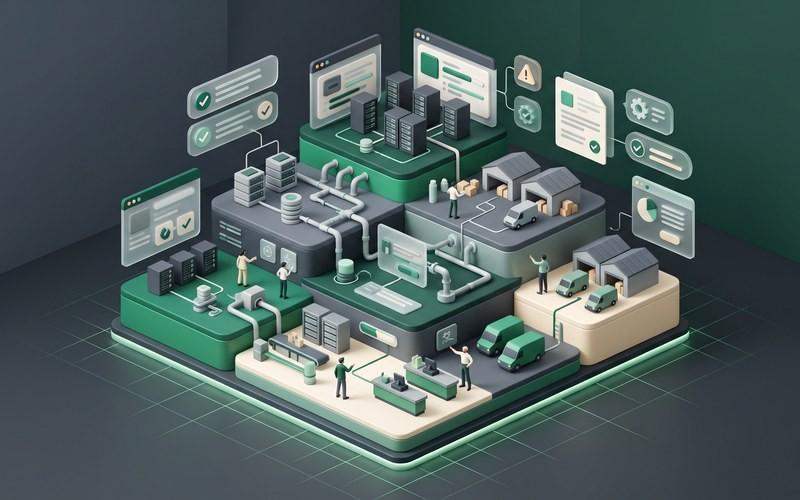
Implementing an enterprise headless woocommerce nextjs integration transforms a standard WordPress e-commerce deployment into a decoupled, high-performance retail storefront. By separating the dynamic React-based presentation layer from the underlying WordPress content and commerce engine, engineering teams can eliminate monolithic PHP rendering bottlenecks, deliver edge-rendered product catalogs, and maintain complete design autonomy.
However, decoupling WooCommerce introduces complex technical challenges across distributed session management, cart synchronization, and on-demand cache invalidation. This architectural guide provides an implementation blueprint for building a resilient Next.js storefront backed by WooCommerce, detailing practical data-fetching strategies, state handshakes, and production deployment guardrails.
Why Migrate from Monolithic WordPress to a Headless Next.js Storefront?
Traditional monolithic WooCommerce ties frontend presentation directly to backend execution within the WordPress PHP runtime. During high-concurrency traffic spikes and flash sales, every incoming visitor request triggers database queries, template rendering, and plugin execution hooks across the WordPress lifecycle. This tight coupling exposes severe bottlenecks in database query contention and thread pool exhaustion, leading to degraded Time to First Byte (TTFB) and checkout failures when server resources saturate.
Beyond server concurrency limits, monolithic storefronts accumulate significant theme and plugin script bloat. Standard WooCommerce setups frequently bundle redundant stylesheet dependencies, render-blocking JavaScript libraries, and unoptimized tracking assets that degrade Core Web Vitals, specifically Largest Contentful Paint (LCP) and Interaction to Next Paint (INP). These performance regressions directly harm organic search rankings and cart conversion rates.
Migrating to a decoupled architecture with a modern headless woocommerce nextjs integration resolves these structural constraints. By offloading catalog presentation to pre-rendered static assets distributed across global edge nodes, the origin WordPress server handles only lightweight, structured API calls. As outlined in this headless woocommerce setup guide, decoupling isolates the commerce database from public traffic surges while restoring strict control over the client-side JavaScript execution bundle.
How Does Decoupled WooCommerce Architecture Work with Next.js?
Data Layer Selection: CoCart REST API vs. WPGraphQL for WooCommerce
Selecting the data orchestration layer determines how efficiently your Next.js storefront communicates with the WordPress commerce core. Engineering teams primarily choose between REST endpoints and GraphQL schemas. According to the CoCart documentation, CoCart operates as a decoupled REST extension that accesses WooCommerce Data Stores directly, providing persistent cart keys without relying on standard browser cookie sessions. When querying the core woocommerce rest api next js developers often encounter over-fetching and multiple sequential network round-trips to assemble products, categories, and variations.
In contrast, WPGraphQL for WooCommerce exposes a unified graph schema, allowing Next.js to fetch complex hierarchical data—such as variation matrices, cross-sells, and tiered pricing—within a single HTTP payload. While GraphQL eliminates payload bloat over mobile networks, it introduces server-side query compilation overhead on WordPress. Production architectures pair WPGraphQL with aggressive Redis object caching to ensure backend response times remain consistent under load.
Next.js App Router Architecture for Dynamic Product Catalogs and Categories
A modern nextjs woocommerce storefront architecture leverages the Next.js App Router to separate static rendering from interactive client state. Category catalog routes (/category/[slug]) and product listing pages execute as React Server Components (RSC). These components fetch upstream catalog data during build or revalidation cycles, generating lightweight HTML on the server and avoiding client-side data fetching waterfalls.
Dynamic product pages stream content progressively. Heavy catalog assets, technical specifications, and structured schema markup render on the server, while interactive elements—such as variation selectors, real-time inventory badges, and add-to-cart controls—are encapsulated within Client Components. As teams building modern e-commerce systems at Canvas Developers structure these systems, this boundary preserves minimal JavaScript bundle sizes on mobile devices while keeping catalog navigation instant.
How Do You Manage Cart State and Session Persistence Across Decoupled Domains?
JWT Authentication and Secure HTTP-Only Cookie Handshakes
Cross-domain authentication between a Next.js frontend (such as store.example.com) and a WordPress origin (such as api.example.com) requires strict credential boundaries. Storing JSON Web Tokens (JWT) or session keys in browser localStorage or client-accessible cookies introduces severe Cross-Site Scripting (XSS) risks. A robust decoupled architecture uses Next.js Route Handlers as a trusted intermediary proxy.
When a customer authenticates, Next.js receives the customer credentials, executes the authentication handshake against the WordPress JWT endpoint, and receives the auth token alongside the session identifier. Rather than returning these tokens directly to the client browser, the Next.js server sets an encrypted, HttpOnly, SameSite=Lax, Secure cookie. Subsequent customer requests pass through Next.js middleware, which extracts the session cookie and injects the required woocommerce-session or bearer header into upstream WordPress API requests.
Synchronizing Client-Side Cart State with WordPress Backend Sessions
Effective decoupled woocommerce cart session management balances instantaneous user feedback with database consistency. Guest sessions initialize when an unauthenticated shopper adds their first item. The client executes an optimistic UI mutation to update the cart drawer while dispatching a background mutation to WordPress. In response, WooCommerce issues a unique session key via the woocommerce-session header, which Next.js persists in the client session cookie.
When an anonymous shopper subsequently logs in, the backend must merge the guest cart with the customer's persisted account cart rather than overwriting it. Implementing a synchronized reconciliation hook ensures that line items, applied promotional coupons, and custom metadata reconcile cleanly across session transitions.
Bridging headless cart state to native WooCommerce checkout represents another critical failure point. If your architecture redirects shoppers to the WordPress domain to complete payment, standard browser cookie partitioning will drop the cart session. To resolve this, the Next.js API generates a signed, one-time session transfer URL with a cryptographic nonce. When the customer navigates to the checkout endpoint, the WordPress session handler consumes the nonce, binds the existing cart state to the active PHP session, and seamlessly displays the customer's items within the payment gateway without dropped transactions.
How Can You Optimize Performance Using Incremental Static Regeneration (ISR)?
On-Demand Incremental Static Regeneration via WordPress Action Hooks
Traditional time-based revalidation (such as setting revalidate: 300) creates an uncomfortable trade-off in e-commerce: visitors either view stale product data or the origin server suffers from continuous regeneration overhead. Implementing on-demand headless woocommerce incremental static regeneration solves this by synchronizing cache invalidation directly with WordPress editorial actions, ensuring edge caches purge only when underlying data changes.
As detailed in the Pantheon WordPress cache revalidation guide, a WordPress must-use (mu) plugin listens to native hooks such as save_post, woocommerce_update_product, and woocommerce_product_set_stock. When merchandising teams update a product or publish a category revision, WordPress fires an authenticated webhook to a Next.js revalidation route (/api/revalidate). The handler validates a shared secret header and invokes revalidateTag() against specific surrogate tags—such as product-${id} or collection-${slug}. This surgically invalidates the affected pages at the edge within milliseconds without triggering a full storefront build or degrading server stability.
Edge Caching Strategy with Dynamic Price and Inventory Validation
Serving fully static Product Detail Pages (PDPs) from Content Delivery Network (CDN) edge nodes guarantees sub-second response times, but live retail requires instant inventory and pricing precision. If a customer views a stale price or attempts to purchase an out-of-stock SKU, transaction abandonment surges and customer trust erodes rapidly.
An enterprise edge strategy uses a hybrid hydration pattern. The Next.js edge cache delivers the complete static HTML shell—including product galleries, technical specifications, related items, and schema markup—ensuring near-zero Largest Contentful Paint (LCP). Upon browser mount, a lightweight Client Component dispatches an asynchronous call to fetch real-time inventory and active promotional pricing from a low-latency endpoint. For engineering teams collaborating with Canvas Developers on CMS development, this hybrid caching pipeline maintains peak edge speed while enforcing strict transaction accuracy across checkout workflows.
What Are the Real Performance Gains and Technical Trade-offs of Decoupling?
Benchmarking TTFB, LCP, and Server Load: Headless Next.js vs. Monolithic WordPress
Evaluating the transition from a monolithic architecture to a decoupled storefront requires examining Core Web Vitals and backend resource utilization under concurrent load. In standard monolithic WordPress setups, dynamic page requests trigger sequential PHP execution, database queries, and plugin filter chains. Under peak traffic spikes, this computational overhead inflates Time to First Byte (TTFB) and exhausts server thread capacity. Shifting catalog delivery to edge-rendered React Server Components drives substantial headless ecommerce performance optimization. Serving pre-rendered HTML shells directly from distributed CDN nodes drops TTFB significantly, while optimized client bundles and modern image formats (AVIF, WebP) accelerate Largest Contentful Paint (LCP). Furthermore, offloading read traffic from the WordPress origin database preserves server compute capacity exclusively for dynamic cart mutations and checkout processing.
Where AI Coding Accelerates Storefront Scaffolding and Where Human Architecture Must Lead
Modern engineering workflows leverage AI coding tools to accelerate decoupled builds. At Canvas Developers, engineers utilize AI coding agents and harness environments to speed up frontend scaffolding, generate strict TypeScript types from commerce schemas, and assemble connector boilerplate for the woocommerce rest api next js. This automated scaffolding shortens iteration cycles, streamlines testing pipelines, and reduces routine manual effort across initial development sprints.
However, while AI tools excel at rapid syntactic code generation, distributed commerce architecture requires strict human governance. AI-generated code frequently overlooks subtle race conditions in distributed state reconciliation, configures overly permissive cookie policies, or fails to verify cryptographic signatures on incoming webhooks. Experienced software engineers must direct the implementation, maintain architectural ownership, and conduct thorough peer reviews. Human specialists must independently verify payment gateway integrations, protect sensitive customer data, audit webhook authentication, and conduct automated load testing before authorizing production releases.
Which Architectural Mistakes Break Headless WooCommerce Stores in Production?
Transitioning to production often exposes subtle flaws in decoupled e-commerce architecture. One prevalent failure mode stems from misconfigured Cross-Origin Resource Sharing (CORS) headers and credential mismanagement. When connecting a Next.js origin to WordPress, developers frequently encounter blocked preflight requests. In response, inexperienced teams sometimes set overly permissive wildcard CORS headers or expose WooCommerce API consumer secrets directly inside client-side bundles. Any competent headless woocommerce setup guide emphasizes that API credentials must strictly reside within server-side environment variables accessed exclusively through Next.js Route Handlers.
A second common issue is extension incompatibility. Monolithic WooCommerce relies heavily on plugins that hook directly into PHP rendering hooks (wp_head and wp_footer) to inject scripts, such as dynamic product add-ons or shipping calculators. Because a decoupled frontend bypasses WordPress template hooks entirely, these plugins fail silently. Engineering teams must audit every extension prior to development, replacing plugin-dependent UI with native React components that interface with custom REST endpoints or dedicated data stores.
Finally, production stability requires robust resilience fallbacks. A pre-launch checklist must verify that upstream caching headers prevent cache stampedes on the WordPress origin during catalog revalidation. Teams must wrap interactive catalog modules and checkout transitions in React Error Boundaries to prevent isolated API timeouts from crashing the entire storefront. Serving stale edge-cached catalog pages when the backend undergoes maintenance guarantees continuous browsing availability even during unexpected origin downtime.
How Should You Scope and Execute Your Headless WooCommerce Roadmap?
Decoupling an enterprise e-commerce platform requires an honest technical evaluation. Before embarking on an in-house rebuild, engineering leadership must determine whether custom frontend flexibility outweighs the operational complexity of maintaining a distributed architecture. If your catalog demands instant edge performance, custom user journeys, or omnichannel delivery, a headless woocommerce nextjs integration delivers clear architectural advantages.
Executing this roadmap successfully hinges on disciplined implementation. At Canvas Developers, our software engineering team pairs AI coding agents with experienced senior engineers who direct the architecture, conduct rigorous code reviews, and guarantee release quality across either private local models or approved cloud environments. We begin every project with a thorough technical scoping phase to audit your current plugins, checkout requirements, and hosting infrastructure. To plan your architecture or request a scoped technical assessment, share your current stack, traffic constraints, and target outcomes through our contact form.