The problem
Downstream logistics, ERP, and 3PL endpoints regularly suffer from latencies, outages, or unhandled webhook drops that stall BigCommerce orders in ambiguous processing states. Race conditions and collisions also emerge when concurrent systems attempt to mutate the core order record during inventory reservations, post-purchase edits, and fulfillment updates. Without transactional boundaries and explicit sequencing, state fragmentation occurs across platforms, risking duplicate shipments or lost transaction histories.
Approach
Our approach isolates the core order record using event-driven middleware equipped with version tokens, conditional state transitions, socket timeouts, retry budgets, and circuit breakers. Capabilities not supported natively by BigCommerce are decoupled into an external event relay service and dedicated replay workers backed by cryptographic idempotency keys. Additionally, a dedicated recovery console provides operators and store administrators with real-time health views, failed-job diagnostics, and controlled retry mechanisms.
Outcome
Simulated fault testing verifies that downstream dependency outages produce an immediate, visible degraded state across operational dashboards without stalling storefront checkout or corrupting completed pick-pack batches. Database uniqueness constraints and distributed locks reliably prevent duplicate warehouse dispatches while preserving end-to-end auditability.
Reliable BigCommerce fulfilment recovery requires decoupling store checkout from third-party logistics (3PL) and enterprise resource planning (ERP) systems through resilient event middleware. When downstream inventory services or warehouse dispatch queues experience intermittent outages, unhandled webhook drops stall orders in ambiguous processing states. At Canvas Developers, our engineering approach isolates the core order record, maintains strict idempotency across fulfillment events, and provides operators with real-time observability to reconcile downstream discrepancies without duplicating shipments or losing transaction history.
Why BigCommerce Fulfilment Stalls During Downstream Dependency Outages
Mapping the Core Order Record Across Shoppers, Fulfilment Operators, and Admins
An e-commerce order is a distributed state machine shared across three primary stakeholder groups. For shoppers, the order record represents a binding transaction and delivery commitment. For store administrators managing BigCommerce development workflows, the record tracks inventory allocations and payment authorizations. For fulfilment operators in warehouse centers, that same record governs pick-pack batches and carrier manifests.
When checkout completes, BigCommerce transitions the order status to Awaiting Fulfillment. However, subsequent movements depend on external systems. If the pipeline between BigCommerce and downstream logistics software lacks transactional boundaries, state fragmentation occurs immediately: customers observe confirmation, admins see unfulfilled inventory, and warehouse teams receive no dispatch job.
Where Native BigCommerce State Management Ends and External Recovery Starts
Native BigCommerce architecture relies on lightweight webhook notifications, such as store/order/statusUpdated, to signal lifecycle events. As detailed in the official BigCommerce webhook documentation, event payloads contain only minimal identifiers, requiring middleware to query the Orders API for full order data.
When a downstream ERP or 3PL encounters latency or service interruption, callback endpoints that fail to return an HTTP 200 trigger platform throttling. BigCommerce evaluates callback reliability across a two-minute window; if success falls below 90%, the destination is temporarily blocklisted for three minutes while retries queue across 48 hours. Implementing resilient BigCommerce fulfilment recovery therefore requires external middleware that buffers events immediately and orchestrates downstream delivery independently.
Managing Failure Paths, Stock Reservation Conflicts, and Mid-Flight Edits
Resolving Collisions Between Inventory Reservations, Post-Purchase Edits, and Fulfilment Updates
Race conditions frequently emerge when multiple systems attempt to mutate the core order record concurrently during an active BigCommerce integration. When a shopper modifies their delivery address or cancels an order line after checkout, warehouse logistics engines may have already reserved inventory or generated a packing slip. Without explicit transactional sequencing, uncoordinated webhook triggers can overwrite dispatch states or release inventory that is already physically packaged.
Our approach attaches an incrementing version token to the intermediate order record and enforces conditional state transitions. If an inbound post-purchase modification arrives while downstream allocation is in progress, the middleware validates current status against the warehouse lock. Should a conflict occur, the service halts automated mutation, marks the order with an administrative hold flag in BigCommerce, and alerts operators rather than allowing divergent state across platforms.
Configuring Timeouts, Retry Budgets, and Circuit Breakers for ERP and 3PL Endpoints
Downstream logistics APIs regularly suffer from degraded response latencies rather than clean socket terminations. In resilient fulfilment recovery development, synchronous calls to ERP or carrier endpoints require conservative socket timeouts—typically bounded to five seconds for connections and ten seconds for data transfers.
When an endpoint times out, dispatch workers draw from an explicit retry budget backed by truncated exponential backoff and jitter. If consecutive request failures breach error thresholds, an automated circuit breaker trips. Tripping the circuit routes subsequent dispatch requests immediately into an asynchronous retry queue, shielding operational workers from cascading thread exhaustion while downstream providers restore service.
Designing the Recovery Console: Health Views, Failed-Job Tracing, and Controlled Retries
Engineering Operator Dashboards for System Health and Failed-Job Diagnostics
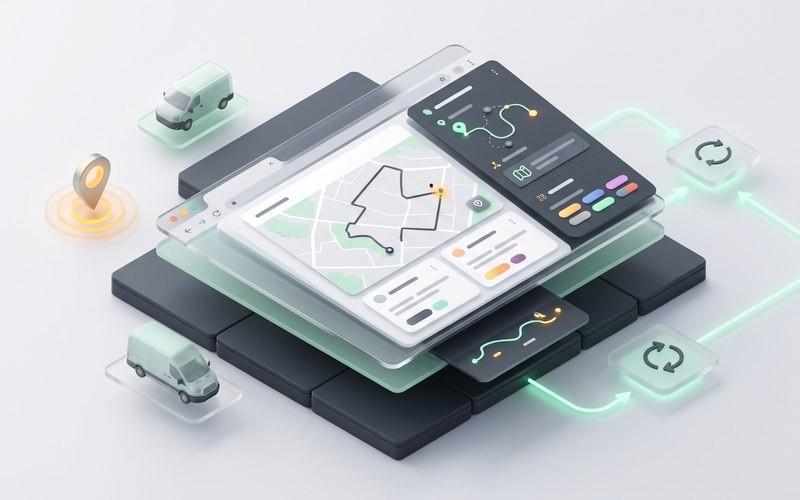
Operational visibility is critical when downstream warehouse queues or enterprise resource planning systems stall during peak fulfillment windows. Within our BigCommerce development architecture, we design a dedicated recovery console that provides store administrators and fulfilment operators with an immediate system health view. This dashboard visualizes real-time integration telemetry, including incoming webhook throughput, queue backlog depths, endpoint response latencies, and circuit-breaker trip states across connected 3PL logistics networks.
When an integration exception interrupts an order's fulfillment path, operators inspect the failed-job detail screen. This interface highlights the affected order record, its upstream BigCommerce state (such as Awaiting Fulfillment), the originating event timestamp, and the underlying failure exception—such as an ERP HTTP 504 gateway timeout, network socket reset, or carrier address schema validation error. Presenting the raw JSON payload alongside active stock reservation tokens enables operators to determine immediately whether an outage requires manual partner escalation, configuration adjustments, or simple queue re-polling.
Decoupling Unsupported Capabilities into Idempotent Relay and Manual Replay Workers
Native BigCommerce architecture excels at publishing event notifications across store/order scopes, but it does not natively provide dead-letter queue routing, distributed saga compensation, or granular message re-transmission. Rather than attempting to force complex state management into storefront webhooks, our engineering pattern isolates these unsupported capabilities into an external event relay service and dedicated worker pool.
When third-party logistics dependencies recover from an outage, operators initiate a controlled retry action directly from the console interface. Independent replay workers first query the BigCommerce Orders API to verify that the shopper has not requested a refund, cancellation, or line-item edit during the downtime. Once verified, the worker delivers the fulfillment payload using cryptographic idempotency keys. This architectural decoupling ensures dependable BigCommerce fulfilment recovery across every BigCommerce integration, preventing duplicate dispatch tickets while maintaining end-to-end auditability.
Verifying System Acceptance Under Fault Conditions and Evaluating Trade-Offs
Simulating Outages to Prove Degraded Visibility Without Duplicate Shipments or Lost Records
Verifying integration resilience under simulated failure conditions is an essential stage of fulfilment recovery development. To validate acceptance criteria before production deployment, engineering teams inject synthetic faults into the pipeline, including third-party logistics timeout latencies, HTTP 503 gateway drops, and simulated network partitions. The primary acceptance requirement mandates that any downstream dependency outage produces an immediate, visible degraded state across operational dashboards without stalling storefront checkout or corrupting completed pick-pack batches.
Test harnesses replay historical webhook events against active staging environments to evaluate idempotency controls under stress. By simulating duplicate delivery of identical order payloads during mid-flight dependency restarts, engineers verify that database uniqueness constraints and distributed locks prevent duplicate warehouse dispatches, ensuring that completed fulfilment milestones remain untouched.
Weighing Architectural Complexity: Lightweight Webhook Polling vs. Event-Driven Middleware
Architecting an integration layer requires balancing operational complexity against store throughput demands during BigCommerce development. For retail merchants processing predictable, low-to-medium order volumes, a lightweight architecture combining direct webhook ingestion with scheduled REST API reconciliation jobs offers a cost-effective, low-maintenance approach. This pattern eliminates external queue management while reliably recovering unacknowledged order updates during routine overnight batches.
Conversely, high-volume merchants with distributed multi-warehouse fulfillment require dedicated event-driven middleware. Utilizing managed message brokers such as Google Cloud Pub/Sub or Amazon SQS decouples sudden traffic spikes from third-party API rate limits. While distributed message queues introduce operational overhead and require dead-letter queue monitoring, they provide the durable buffer capacity necessary to prevent order loss during extended enterprise logistics outages.
Delivering BigCommerce Resilience: AI Scaffolding, Senior Engineering Review, and Scoping
Balancing AI-Assisted Scaffolding with Human Code Audits for Payment and Data Integrity
Modern engineering workflows leverage AI agents to accelerate delivery across the integration lifecycle. During BigCommerce vibe coding workflows, AI scaffolding rapidly generates boilerplate API connectors, data validation schemas, UI components, and unit tests, substantially shortening early development cycles. This automation allows development teams to prototype integration bridges and establish BigCommerce webhook recovery pipelines in days rather than weeks.
However, automated code generation cannot replace deep systems engineering. While AI tools excel at assembling structured code templates, they frequently overlook distributed race conditions, multi-region concurrency locks, and nuanced payment capture states. Achieving durable BigCommerce order record resilience requires experienced senior engineers who direct the harness, conduct rigorous manual code reviews, verify cryptographic webhook signatures, and ensure database transactions maintain strict integrity under high concurrent loads.
Scoping Your BigCommerce Fulfilment Architecture via Canvas Developers
At Canvas Developers, our software engineering company (with an office in Dhaka) builds scalable web applications, business systems, and e-commerce platforms by pairing autonomous AI coding agents with veteran engineering oversight. We offer two clear delivery models: Private / Local AI Engineering using privately hosted open-weight models within client-controlled infrastructure, and commercial AI engineering using tools like Claude Code and OpenAI Codex under approved security configurations.
Every BigCommerce development engagement begins with systematic scoping to assess your current stack, warehouse workflows, and throughput requirements. Our engineers establish agreed milestones, execute comprehensive release assurance testing, and deliver production-ready code with complete documentation and handover. To evaluate your fulfillment architecture and build a resilient integration, contact our team through our contact form to schedule a scoped assessment.