The problem
Operational lead qualification breaks down when routing logic is tightly coupled to user interfaces or when asynchronous handoffs drop critical consent context. Loose coupling between front-end marketing forms and back-office triage consoles frequently risks stripping attribution tokens or misinterpreting privacy scopes. Additionally, high-volume queue listings introduce cognitive fatigue and accessibility barriers if keyboard navigation and operational error states are not properly managed.
Approach
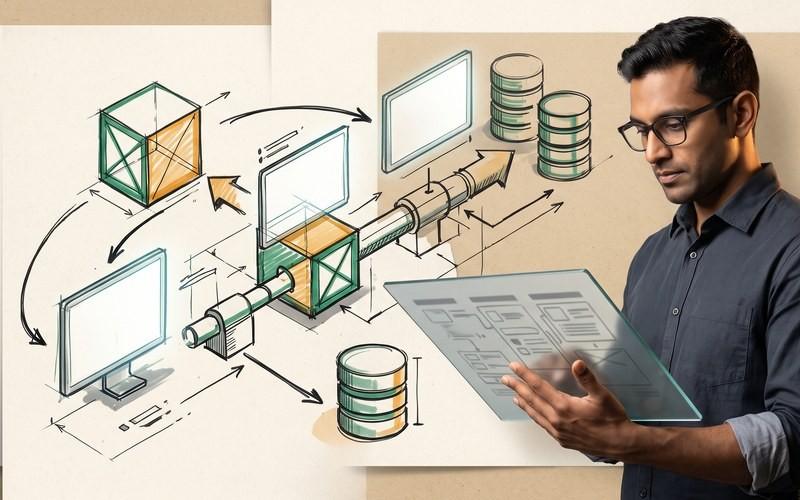
Canvas Developers designs a decoupled front-end interaction layer featuring an operator work queue, assignment detail pane, and chronological activity timeline. The workspace acts as an event-driven client to an asynchronous state machine, using optimistic local transitions and idempotency keys to guarantee that retried operations mutate business state exactly once while isolating distributed locking. Attribution parameters and consent flags are cryptographically encapsulated into an immutable provenance payload upon ingestion to ensure regulatory compliance and source attribution survive downstream handoffs.
Outcome
The decoupled architecture ensures that high-velocity sales pipelines remain resilient, auditable, and fully accessible without entangling presentation layers with distributed consistency algorithms. Automated scaffolding and human engineering governance compress early design exploration and shorten feedback loops while preserving system consistency.
Operational lead qualification breaks down when routing logic is tightly coupled to user interfaces or when asynchronous handoffs drop critical consent context. Engineering a robust Interaction Design lead routing workspace requires a decoupled architecture that provides sales operators and administrators with deterministic queue visibility while preserving data integrity. At Canvas Developers, our engineering team designs front-end interaction layers that isolate UI state transitions from distributed transaction engines, ensuring that high-velocity sales pipelines remain resilient, auditable, and fully accessible.
How Does Interaction Design Structure an Operations Lead Routing Workspace?
Structuring Work Queues, Assignment Details, and Timelines for Three Core Roles
An enterprise lead routing interface must reconcile the competing workflows of three distinct personas: prospects, sales operators, and content administrators. Prospects require frictionless, accessible ingestion touchpoints that reliably capture intent and privacy selections. In contrast, sales operators require high-density triage tools that minimize latency during peak qualification cycles. Content administrators require administrative oversight to adjust routing taxonomy, review form mappings, and inspect operational throughput across inbound channels.
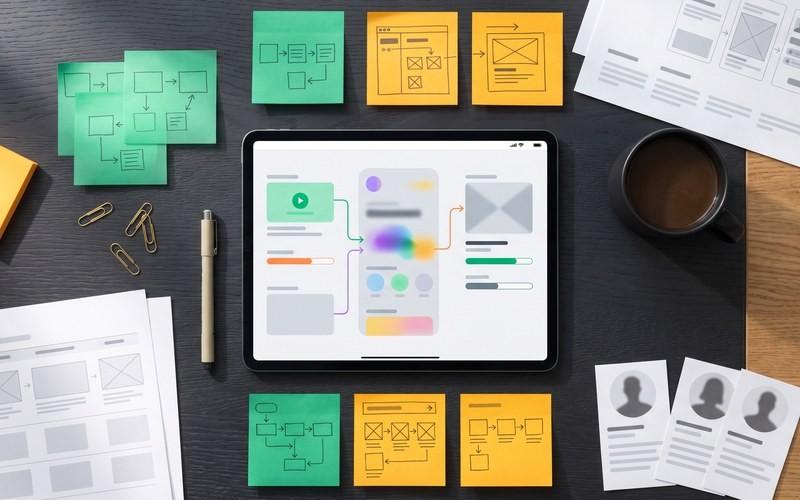
In our lead routing workspace development practice, we separate operational concerns across three specialized interface surfaces:
- Work Queue: An operator-facing console optimized for rapid sorting, multi-attribute filtering, and batch claims across pending qualification tiers.
- Assignment Detail: A contextual workspace pane presenting validated prospect metadata, attribution parameters, and rule-matching rationale alongside manual override triggers.
- Activity Timeline: A chronological event ledger displaying immutable audit entries, state mutations, and operator interventions for administrative accountability.
Tracing the Qualified Enquiry State from Ingestion to Resolved Assignment
The lifecycle of a qualified enquiry represents the central data flow through the Interaction Design lead routing workspace. Ingestion initiates when a prospect submits an accessible intake form, dispatching an event carrying attribution telemetry and explicit consent flags. The asynchronous backend assigns a unique correlation identifier, placing the enquiry into a queued state.
The front-end queue interface reflects this arrival in real time. When a sales operator claims the record or rule-based assignment triggers, the workspace issues an assignment command, shifting the entity state to in_processing. This state transition secures a temporary UI mutex to prevent duplicate operator review. Once the operator completes triage and dispatches the enquiry to downstream sales pipelines, the system acknowledges the mutation and transitions the record to a visible completed status, rendering a timestamped completion receipt in the activity timeline.
What Constraints Govern Handoffs, Consent, and Retried Routing Events?
Maintaining Attribution and Consent Signals Across Form and Operator Handoffs
Marketing attribution and privacy consent tokens represent delicate data contracts that must survive cross-boundary system handoffs. During lead routing workspace development, loose coupling between front-end marketing forms and back-office triage consoles frequently risks stripping attribution tokens or misinterpreting privacy scopes. In our engineering approach, we encapsulate consent flags and campaign attribution into an immutable provenance payload bound cryptographically to the enquiry record upon ingestion.
When sales operators review records in the assignment detail screen, the interface renders explicit, non-editable verification badges indicating processing permissions and attribution origin. While operators can reclassify lead priorities or add qualifying discovery notes, the interaction architecture strictly forbids mutating the original consent scope. This ensures regulatory compliance and source attribution remain verifiable across CRM exports and downstream integrations.
Exposing Actionable Error States and Guaranteeing Single-State Mutation on Retries
Network partitions, expired locks, and concurrent dispatches inevitably introduce operational exceptions. A resilient lead triage interaction architecture must isolate these failure boundaries to guarantee that retrying an operation mutates business state exactly once while providing actionable recovery paths. To ensure deterministic execution across transient transport errors, our systems attach a unique transaction key to each operator command in accordance with the IETF Idempotency-Key specification. When an operator triggers a retry after a timeout, the backend recognizes the idempotency key, suppresses duplicate mutations, and returns the original transaction outcome.
Simultaneously, the front-end interface communicates operational failures through clear, contextual messaging. Implementing the W3C ARIA19 error handling technique, the workspace injects descriptive error text into persistent live region containers, allowing assistive technologies and visual users alike to distinguish between temporary routing delays and permanent payload rejections without losing unsaved operator inputs.
How Should Interaction Design Interfaces Integrate with Asynchronous Routing Engines?
Decoupling Interaction Layer Responsibilities from Backend State Machines
A frequent architectural misstep in operations tooling is entangling the presentation layer with distributed consistency algorithms. Interaction design excels at structuring mental models, orchestrating ergonomic input workflows, and rendering real-time operational feedback. However, high-throughput queue partitioning, distributed locking, and event sequencing must remain strictly encapsulated within dedicated backend services.
In our Interaction Design integration methodology, the front-end workspace acts as an event-driven client to an asynchronous state machine. When an operator initiates an assignment or manual override, the interface executes an optimistic local transition while dispatching a command to backend routing workers. The backend manages distributed locking and state validation independently. If a background worker detects a lock conflict or expired session, the decoupled client receives a structured rejection payload, smoothly rolling back the optimistic interface state and displaying corrective actions without locking the browser thread.
Standardizing Accessible Interaction Patterns for High-Volume Queue Processing
High-volume operations workspace UI design requires rigorous ergonomic and accessibility standards to prevent operator cognitive fatigue and support assistive technology users during rapid triage cycles. Tabular triage queues quickly become unusable if keyboard operators must traverse dozens of interactive elements per record row.
To deliver frictionless keyboard navigation across dense queue listings, we adhere to the roving tabindex pattern specified in the W3C WAI-ARIA Authoring Practices 1.2. By assigning tabindex="0" to the currently focused row and tabindex="-1" to inactive rows, operators move rapidly through queue records using arrow keys while preserving a single tab stop for the composite widget. Furthermore, background queue updates and reassignment notifications stream through persistent ARIA live regions with role="status" and polite politeness settings, announcing queue fluctuations without interrupting the operator's active keyboard navigation.
What Acceptance Tests and Tradeoffs Verify Routing Workspace Reliability?
Defining Verifiable Acceptance Criteria for Idempotent Retries and Edge Cases
In our Interaction Design development workflow, quality assurance hinges on deterministic acceptance criteria validated through automated integration suites. Rather than relying on manual happy-path testing, engineering teams must verify edge cases where network degradation, race conditions, or dropped sockets challenge system consistency.
Our core acceptance checklist enforces three non-negotiable behaviors:
- Idempotent Dispatch Verification: Simulating consecutive retries with identical idempotency tokens confirms that business state mutates exactly once, returning the original assignment receipt without duplicate ledger entries.
- Concurrent Claim Resolution: When two operators claim the same enquiry simultaneously, the system rejects the slower transaction with an actionable lock-conflict notification, preserving ownership integrity.
- Consent Preservation Validation: Payloads missing mandatory consent flags are trapped at ingestion, ensuring unverified records never reach active triage queues.
Evaluating the Tradeoffs Between Component Complexity and Operational Maintainability
Every architectural decision in operations workspace UI design introduces trade-offs between interface responsiveness and ongoing maintenance overhead. Advanced interactive patterns—such as virtualized data grids, optimistic local rollbacks, and full-duplex WebSocket connections—maximize operator throughput during high-velocity qualification surges. However, they demand sophisticated client-side state management, rigorous memory profiling, and extensive automated test coverage.
When inbound lead volumes are moderate, simpler alternatives—such as semantic HTML tables paired with lightweight HTTP polling—often represent the superior architectural choice. This reduces component complexity, simplifies onboarding, and eliminates synchronization edge cases. Engineering teams should adopt distributed state machines and complex interaction layers only when operator density and throughput demands justify the investment in specialized testing and maintenance infrastructure.
How Can Engineering Teams Deliver Interaction Design Workspaces Using AI Scaffolding?
Accelerating Workspace Scaffolding with AI Coding Agents Under Senior Engineer Review
Modern engineering teams increasingly utilize AI coding tools to accelerate front-end component delivery. During Interaction Design vibe coding iterations, AI coding agents running on leading harnesses like Antigravity rapidly draft UI view structures, assemble TypeScript data models, and generate initial test suites. This automated scaffolding dramatically compresses early design exploration, shortening feedback loops between operational stakeholders and developers.
However, AI-generated code has critical technical boundaries. While automated tools excel at routine view templating, they frequently miss subtle concurrency flaws, fail to enforce distributed idempotency keys, and misconfigure complex keyboard focus management. At Canvas Developers, based in Dhaka, our delivery model pairs AI velocity with deep human governance. Through our Private / Local AI Engineering or Claude Code / OpenAI Codex Engineering delivery packages, experienced engineers direct the architecture, audit security boundaries, perform line-by-line code reviews, and decide every production release.
Scoping Workspace Architecture and Planning Implementation Milestones
Successful Interaction Design development requires structured delivery milestones that transition cleanly from initial scoping to automated testing and production handover. During scoping, senior architects map event flows, formalize consent contracts, and determine whether high-throughput queue demands require asynchronous workers or simpler polling models.
Automated scaffolding and component reuse can meaningfully reduce routine engineering effort, but critical non-functional requirements require dedicated human expertise: securing role-based permissions, verifying assistive technology compliance, and stress-testing distributed state machines. Teams seeking to modernize their qualification workflows can initiate a structured scoping assessment with Canvas Developers. Share your current technology stack, operational routing constraints, and performance targets through our contact form at https://www.canvasdevelopers.com/contact to plan an actionable implementation roadmap.