AI Engineering
Anthropic Claude API Integration
Production prompt caching, tool use, and autonomous agents powered by Claude 3.5 Sonnet, engineered with strict data security, peer code review, and human release controls.
Production Claude AI systems engineered and run by one team
Integrating Anthropic's Claude 3.5 Sonnet into business workflows unlocks deep document analysis, complex reasoning, and autonomous tool use. However, moving from quick prototypes to production exposes challenges: rate limits, token expenses, hallucinations, and security vulnerabilities around data access. At Canvas Developers, you hire an Anthropic Claude developer team that combines AI coding acceleration with seasoned human oversight. Our senior engineers direct system architecture, implement claude artifacts prompt caching integration to lower latency and costs, and build reliable claude tool use api integration pipelines. While AI tools speed up our development and test generation, experienced engineers rigorously review every line of code, enforce strict permission boundaries, and safeguard sensitive business data. We deliver robust enterprise Claude AI integration solutions that your team can confidently monitor and scale.
AI-assisted, expert-led Claude API engineering
How AI assists
- Generates boilerplate client wrappers, JSON schema definitions for tool use, and Anthropic SDK integration harnesses
- Drafts unit and integration tests covering rate limits, streaming timeouts, and malformed model responses
- Analyzes prompt variations and token consumption patterns to propose cache breakpoint placements
- Scans execution logs to identify prompt drift, parsing failures, and tool calling error frequencies
What our experts own
- Engineers design system architecture, stateful memory persistence, and failover fallbacks between models
- Security specialists enforce API credential protection, data redaction, and strict sandboxes for tool execution
- Engineers validate prompt caching structures, verify token economics, and audit tool permission scopes
- We review every pull request, conduct release regression testing, and monitor production latency and spend
How a user request executes through Claude tool use
Illustrative agentic flow; your backend security boundaries and data sources determine the real implementation.
Request received
An application user or background worker triggers an action requiring Claude reasoning or data retrieval.
Cached prompt assembly
The backend formats the request with cached system prompts, tool schemas, and recent conversation history.
Checkpoint: Cache breakpoints verified before API dispatch
Claude API call and tool proposal
Claude 3.5 Sonnet processes the prompt and returns a structured tool call with typed parameters instead of raw text.
Sandboxed tool execution
The backend validates parameter types against schemas and executes the query against approved database or API endpoints.
Final synthesis and response
Tool results return to Claude to generate the final verified answer or update the client interface.
Checkpoint: Human confirmation required for destructive actions
When something fails: If the API rate-limits or schema validation fails, the worker retries with backoff or safely falls back with an alert to operators.
Capabilities
What your Claude API integration can include
Claude 3.5 Sonnet agent engineering
Autonomous reasoning agents built with a dedicated Claude 3.5 Sonnet API developer team, featuring state machines, long-context handling, and human-in-the-loop approvals.
Prompt caching and context optimization
Structured Claude artifacts prompt caching integration that caches documentation and large system instructions, reducing latency and recurring API token costs.
Custom tool use and function calling
Robust Claude tool use API integration connecting Claude to your databases, REST APIs, and third-party systems using strict JSON schema validation.
Enterprise security and private AI delivery
Enterprise Claude AI integration with PII redaction, role-based access, and client-controlled cloud environments or private open-weight fallback options.
Streaming interfaces and artifact rendering
Real-time SSE token streaming paired with custom web frontends to render dynamic code previews, generated reports, and Claude artifacts cleanly.
Rate limit management and operational resilience
Resilient queueing architectures with exponential backoff, circuit breakers, fallback model routing, and centralized cost and error monitoring.
Prepare a Claude integration that your team can operate
Access and inputs
Provide your Anthropic API credentials in an isolated environment, target database or API schemas, and sample prompts or documents. Bring examples of expected inputs and edge cases your team needs handled.
A realistic first scope
Start with a scoped agent workflow, prompt caching implementation, or document analysis pipeline first. High-volume autonomous execution and multi-agent coordination are phased in after validation.
Handover and maintenance
We deliver tested source code, architecture schemas, token cost telemetry, and error recovery playbooks. Ongoing model upgrades, prompt drift monitoring, and support can be maintained under an agreed support plan; Anthropic API charges remain separate.
How we deliver your Claude integration
- 01
Discovery and architecture scoping
We audit your data flows, evaluate token volume requirements, choose appropriate model tiers, and agree on data isolation and tool boundaries.
- 02
Prompt design and tool contracts
Engineers define strict JSON schemas for tool use, structure cacheable system prompts, and prototype integration flows before production development.
- 03
Implementation and rigorous testing
AI-accelerated coding paired with senior engineer review, contract testing against Anthropic API endpoints, and validation against edge cases and latency limits.
- 04
Staged rollout and monitoring
Canary deployment with telemetry for token spend, latency, and error rates, followed by ongoing optimization and model version upgrades.
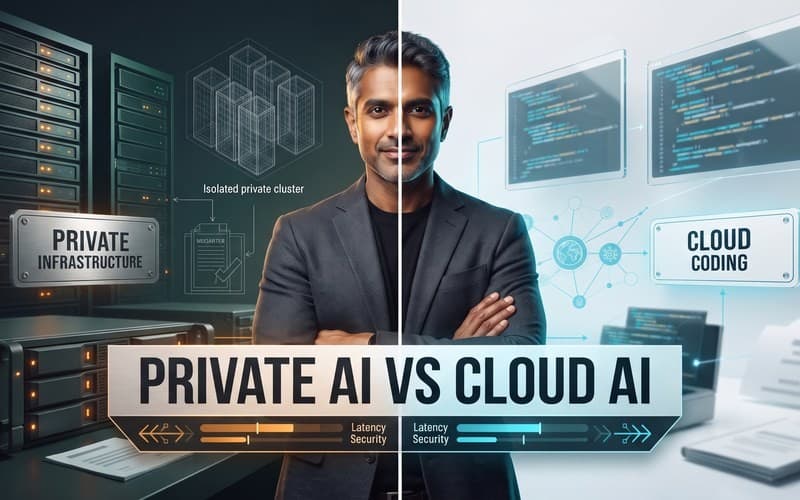
Two ways to work with AI tools
AI helps draft integration code and contract tests. Choose where it may process your code and API data.
- Private / Local AI Engineering
Privately hosted models inside infrastructure you control or an agreed isolated environment.
Discuss with this package - Claude Code / OpenAI Codex Engineering
Claude Code and/or OpenAI Codex with cloud settings your organization approves.
Discuss with this package
Not sure? We'll recommend one during scoping. Compare AI delivery options
FAQ
Frequently Asked Questions
How does Claude prompt caching reduce integration costs?
Anthropic prompt caching allows frequently used context, such as long system instructions, reference documents, or tool definitions, to be cached server-side. For repeated API requests with cache hits, input token pricing is discounted and time-to-first-token is reduced. We design your prompt architecture with explicit cache breakpoints so your workloads reliably hit the cache without re-transmitting static data.
How do you ensure Claude tool use does not perform unauthorized actions?
We implement deterministic guardrails and schema validation between Claude and your back-office services. Claude generates structured arguments according to strict JSON schemas, but execution happens within sandboxed worker layers that enforce authentication, authorization scopes, and validation rules. For sensitive operations like financial updates or external communications, we incorporate human-in-the-loop confirmation gates.
What happens when Anthropic Claude encounters API rate limits or downtime?
We build resilient middleware with token bucket rate limiters, request queues, and exponential backoff retry policies to prevent dropped requests during traffic spikes. For mission-critical workflows, our architecture can automatically fail over to alternative model configurations or cached fallbacks while logging the incident and alerting your operations team.
Related case studies


Related projects


Related articles

Related Services

Vibe Coding Consulting & Governance
Architectural guardrails, automated testing enforcement, and code audits for AI-generated codebases....
Learn more
AI Chatbots
Chatbots for your website, WhatsApp and other channels that answer from your own content, hand off t...
Learn more
LLM Integration
Add large language models to your product with retrieval over your own data, evaluation on real ques...
Learn more
Automation Agents
Business workflow automation across your CRM, documents and operational systems, with defined trigge...
Learn more
Related Platforms
Plan your Anthropic Claude integration with us
Reach out through https://www.canvasdevelopers.com/contact or WhatsApp with your workflow and data sources. We will reply with an architectural assessment, risks, and a scoped first step.