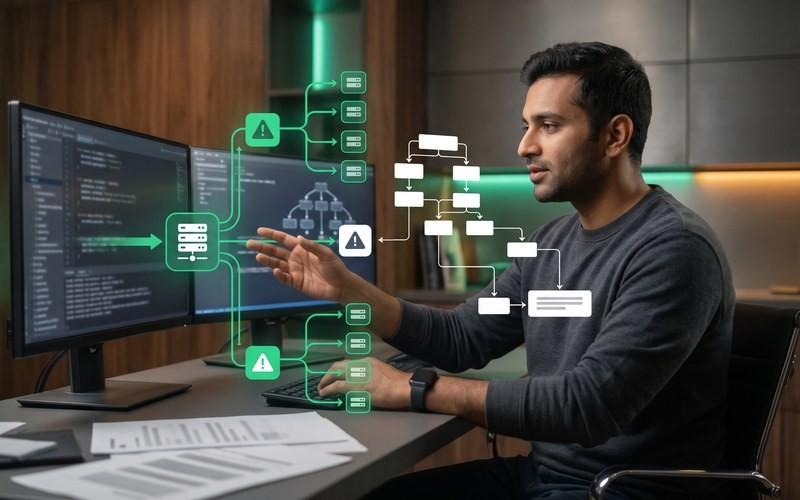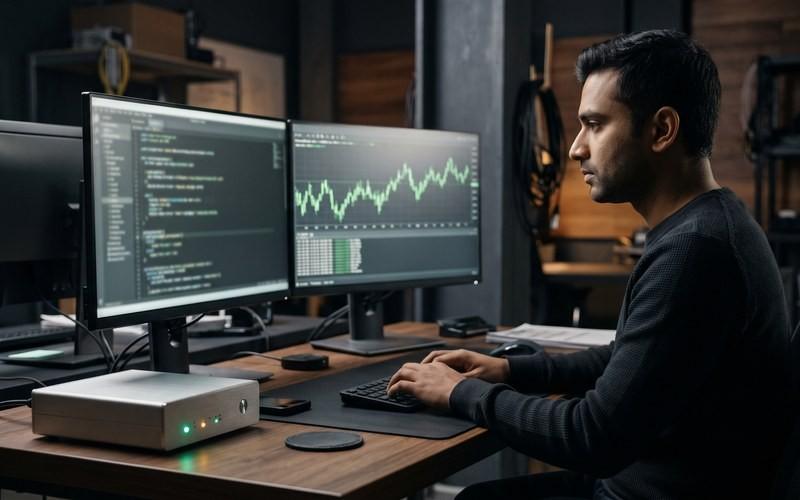
A robust NinjaTrader Integration rejected signal and order review workflow protects quantitative desks and automated trading teams from unhandled broker exceptions, accidental position exposure, and silent signal failures. When algorithmic strategies dispatch orders that violate account margin rules, exchange parameters, or pre-trade limits, trading teams require immediate, structured visibility rather than buried log entries. Canvas Developers designs and builds dedicated operational review consoles that capture order lifecycle events from NinjaTrader, isolate root causes, and enforce multi-role governance before any trade modification or retry is dispatched.
What Does a NinjaTrader Rejected Signal and Order Review System Do?
A specialized NinjaTrader Integration rejected signal and order review system provides operational governance between automated trading strategies and broker connectivity layers. Under standard execution configurations, unhandled order rejections introduce severe operational and financial risks. According to the NinjaTrader RealtimeErrorHandling Documentation, the platform's default response upon receiving a broker rejection is RealtimeErrorHandling.StopCancelClose, which terminates strategy execution, cancels all active orders, and forces the liquidation of open positions unless dedicated error handling is implemented within the OnOrderUpdate lifecycle method. While this fail-safe stops cascading algorithmic failures, it halts trading without providing structured triage tools for operational teams.
Custom rejected signal and order review development replaces abrupt shutdowns with auditable human-in-the-loop oversight. The platform establishes a unified core record that links each timestamped signal, market-data event, and broker execution record into a traceable sequence. Three primary roles govern this pipeline: market-data operators monitor feed integrity, strategy developers inspect algorithmic triggers, and authorized reviewers approve manual overrides. When orders fail due to exchange margin requirements, price banding, or session closures, the system transforms raw broker error codes into structured diagnostic items for immediate investigation.
How Do Teams Review Rejections Across the Inbox, Detail, and History Screens?
Rejected-Event Inbox and Role-Based Workflow States
The operational console organizes execution failures through a centralized rejected-event inbox. As algorithmic strategies encounter order rejections, events stream into the inbox categorized by strategy identifier, account, symbol, and severity. Role-based views ensure operational clarity: market-data operators inspect feed anomalies, strategy developers isolate calculation errors, and authorized reviewers evaluate exposure. Incidents advance through explicit workflow states: Unassigned, Under Review, Pending Authorization, Retried, and Dismissed.
To support high-stress trading environments, the inbox implements explicit visual states. Skeleton loaders indicate active data synchronization, clean empty states confirm healthy execution queues, and alert banners warn operators if WebSocket telemetry drops. This structured NinjaTrader rejected signal and order review inbox prevents uncoordinated manual orders during volatile market sessions.
Broker Validation Detail, Risk Limits, and Resolution History
Selecting an incident opens the broker validation detail screen, translating raw broker error payloads into clear operational diagnostics. The panel contrasts the original timestamped signal against the broker response, highlighting specific causes such as tick-size rounding errors, margin threshold breaches, or invalid session order types. Integrated risk engines evaluate the proposed remediation against strict account limits, ensuring that position caps and loss thresholds are preserved.
Structured NinjaTrader order exception handling concludes in the resolution history screen. This view maintains an immutable audit trail of reviewer notes, parameter adjustments, and retry outcomes. The workflow enforces strict acceptance constraints: an authorized retry cannot bypass the underlying rejection cause, violate account risk limits, or duplicate an already accepted broker order. If market conditions have shifted past allowable slippage, the reviewer dismisses the event with logged justification.
How Does the Data Flow Separate Chart Signals from Broker-Connected Execution?
Decoupling Indicator Scripts from Direct Broker Order Dispatch
A dependable system architecture decouples analytical chart indicator scripts from broker-connected execution adapters. In desktop trading platforms, executing trades directly within chart indicator rendering loops creates severe thread contention, memory overhead, and user interface latency. In our engineering approach to NinjaTrader Integration development, chart indicators calculate technical parameters and stream candidate signals over an internal messaging interface without handling broker communication. As documented in the official NinjaTrader OrderUpdate developer documentation, dedicated background Add-On components subscribe directly to account.OrderUpdate events, isolating execution state management from visual chart lifecycles.
Isolating Paper and Live Pipelines with Idempotency Controls
Execution pipelines must maintain strict environmental boundaries between historical backtesting, paper simulation, and live broker accounts. Backtest outputs illustrate historical modeling behavior rather than proof of future performance, and analytical routines should never share execution paths with capital-routing gateways. Our approach isolates paper and live execution into distinct runtime services with independent broker credentials and separate communication channels, preventing simulated orders from inadvertently crossing into live market accounts.
To eliminate duplicate order submissions during network retries or message retransmissions, the gateway applies deterministic idempotency controls and NinjaTrader automated trading risk limits. Every signal generates a unique hash composed of the strategy identifier, bar timestamp, instrument, and sequence number. The ingestion gateway rejects duplicate hashes, while pre-routing filters enforce hard order quantity ceilings, maximum position limits, and daily loss triggers before orders reach broker endpoints.
How Would Canvas Developers Build, Test, and Verify This Integration?
Canvas Developers delivers trading operations infrastructure by pairing AI-assisted scaffolding with rigorous senior engineering governance. During early architectural phases, our team utilizes NinjaTrader Integration vibe coding techniques inside advanced agentic environments like Antigravity to rapidly generate UI screen layouts, state machine definitions, and broker payload schemas. AI coding tools accelerate boilerplate generation and shorten design feedback loops. However, automated generators cannot reliably evaluate thread synchronization, socket reconnection lifecycles, or stateful financial accounting without human oversight.
To deliver an enterprise-grade NinjaTrader integration, experienced software engineers own the system architecture, review every code change, and govern deployment readiness. We implement comprehensive automated test suites covering payload deduplication, broker error simulation, and latency resilience under high-volume market conditions. Human engineers verify that state machines properly handle partial fills, connection drops, and pre-trade risk boundaries. Our acceptance tests guarantee that retry mechanisms cannot bypass the original rejection cause, transforming rapid scaffolding into resilient, production-grade trading infrastructure.
How to Scope a NinjaTrader Exception Review Tool with Canvas Developers
Designing a dedicated trading exception console begins with evaluating your desk's operational requirements. When planning NinjaTrader Integration development, teams should audit their active strategy triggers, broker routing protocols, and required risk limits. While single-instrument discretionary traders often manage with native platform alerts, multi-strategy automated operations require specialized rejected signal and order review development to prevent unmonitored execution failures and manage account exposure.
Canvas Developers offers two structured delivery packages: Private / Local AI Engineering using client-hosted models, or Claude Code / OpenAI Codex Engineering with client-approved cloud parameters. Every engagement begins with milestone scoping, architectural review, automated testing, and formal handover. To discuss your trading stack, constraints, and operational goals, request a scoped technical assessment through our contact form.