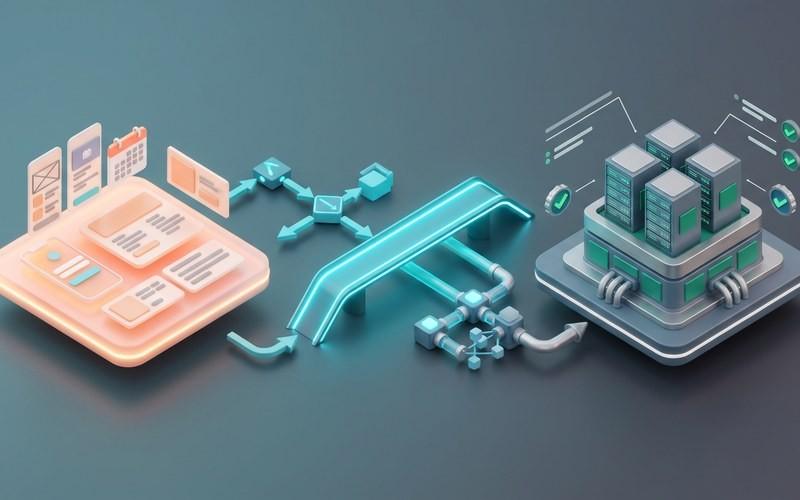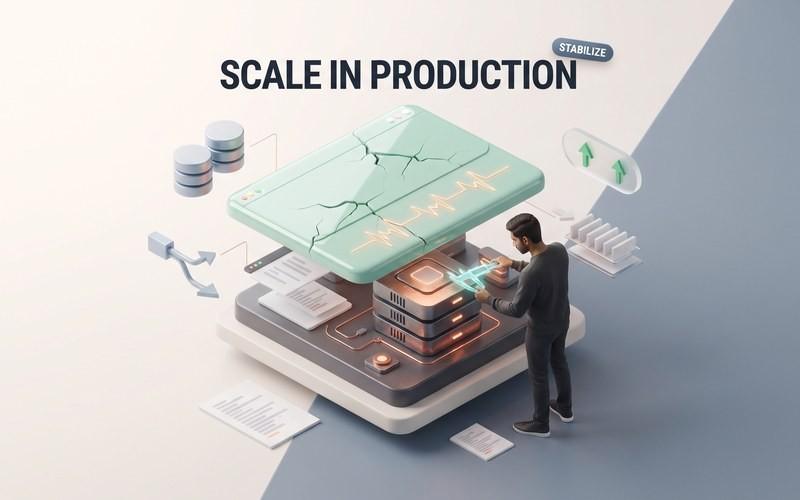
Your Bolt & Lovable to Production development cost is determined by backend architecture, data integrity, third-party integrations, and security hardening rather than frontend code generation. While browser-based AI builders assemble responsive user interfaces in hours, converting an exported prototype into a commercially viable product requires production-grade databases, authenticated API routes, and predictable cloud infrastructure.
Founders and engineering leaders who evaluate these technical drivers early can separate reusable interface components from critical engineering requirements. This guide breaks down how scope, architectural tradeoffs, and professional hardening shape your overall investment when moving from prototype to launch.
What Factors Determine Your Bolt and Lovable Production Cost?
Estimating your Bolt & Lovable to Production development cost requires evaluating the clear distinction between interactive frontend scaffolding and production infrastructure. Browser-based AI builders generate functional presentation layers rapidly, but moving beyond a prototype shifts the core development effort toward backend stability, database persistence, and external service contracts.
Frontend UI Code Export vs Backend Architecture and Data Modeling
Exporting an application from Bolt or Lovable delivers clean client-side presentation code, usually structured with React components, Tailwind CSS styling, and standard TypeScript interfaces. However, browser runtime environments simulate data persistence through client state or basic tables that cannot sustain concurrent multi-user traffic.
As documented in technical analyses of migrating off Bolt.new, an exported repository transfers client files but leaves managed databases, active sessions, and backend secrets behind. Professional developers must establish a normalized relational schema, configure strict Row Level Security (RLS) rules, and ensure transactional consistency across PostgreSQL or MySQL instances. Structuring a scalable database and writing secure server endpoints accounts for a substantial share of initial engineering work.
Third-Party Integration Fees and Managed Service Subscriptions
Beyond engineering hours, moving an app from bolt.new to production introduces recurring infrastructure commitments. AI prototyping platforms bundle compute, authentication, and database tiers into a single subscription, whereas production environments require independent services that scale with active usage.
A production environment typically depends on dedicated database clusters, transactional email delivery, identity management, and payment processors like Stripe. In addition, hosting containerized applications on cloud infrastructure or self-hosted PaaS runners requires dedicated compute resources, automated reverse proxies, and SSL certificate provisioning. Factoring in these monthly operational subscriptions alongside development services ensures a realistic view of ongoing launch expenses.
Where Does Vibe Coding End and Engineering Hardening Begin?
Prompt-driven creation has accelerated initial development, but understanding where rapid AI generation ends and disciplined software engineering begins is vital for protecting both capital and operational reliability.
Where AI Coding Scaffolding Accelerates Initial Development
During the discovery and early build phases, Bolt & Lovable to Production vibe coding offers remarkable speed for UI scaffolding, component styling, and screen layouts. AI builders allow product teams and founders to visualize complex user journeys, test alternative interface designs, and validate product designs in days instead of months.
At Canvas Developers, engineering teams use leading AI harnesses and agentic workflows to accelerate routine boilerplate, generate component templates, and construct initial unit tests. Depending on client security policies and proprietary data requirements, this work takes place either through Private / Local AI Engineering using isolated open-weight models or through commercial AI platforms like Claude Code and OpenAI Codex. This automated scaffolding tightens product feedback loops, allowing stakeholders to refine workflows before committing significant engineering resources to backend architecture.
Critical Human Engineering Checks: Auth, Data Privacy, and Payment Security
Despite rapid interface assembly, raw AI-generated code frequently lacks the defensive architecture essential for commercial deployment. Typical vulnerabilities in unhardened exports include client-side authentication checks, exposed administrative database keys, and missing row-level access controls that risk cross-tenant data exposure.
When businesses plan to hire a vibe coder for Bolt & Lovable to Production or engage a dedicated software team, human technical leadership is essential to prevent costly operational breaches. Experienced software engineers must verify session lifecycles, configure least-privilege database roles, and isolate sensitive business rules on secured servers. Critical components such as payment gateway integrations, webhook signature verification, idempotent retry handling, and regulatory data privacy compliance demand meticulous manual code review, dedicated test suites, and strict human release decisions rather than unverified AI outputs.
How Do Engineers Turn Exported AI Prototypes into Production Software?
Transitioning an exported prototype into resilient, production-ready software requires a systematic engineering sequence. Professional development teams follow a structured three-step hardening process to ensure security, maintainability, and architectural longevity.
Step 1: Code Quality Audit, Dependency Pruning, and Secret Isolation
When organizations export lovable app to production or clone a Bolt codebase, the first imperative is a thorough repository audit. AI builders often introduce redundant dependencies, outdated libraries, and tightly coupled monolithic components that mix display logic with network requests. Engineers refactor components into clean modular structures, enforce strict TypeScript typing, and remove unused packages to reduce bundle size.
Simultaneously, developers isolate credentials. AI prototypes frequently store sensitive API keys or database tokens directly in client-side bundles. Engineers extract these keys into secure server environment variables, configure secret management tooling, and establish strict ignore rules to prevent accidental credential leakage in version control.
Step 2: Database Schema Normalization and API Error Handling
Next, a dedicated Bolt & Lovable to Production developer addresses data persistence. Prototype databases typically rely on flat tables, unindexed queries, and missing foreign key constraints that break under concurrent transactions. Engineers restructure the data layer into normalized relational schemas in PostgreSQL, write automated database migrations, and configure Row Level Security policies to enforce tenant isolation.
In parallel, API endpoints require defensive error handling. Rather than allowing unhandled promise rejections or raw database error dumps to reach the user, engineers implement standardized HTTP status codes, structured logging, request payload validation, and rate-limiting middleware to guard against abuse.
Step 3: Automated QA Testing, CI/CD Pipelines, and Production Hosting
The final hardening phase focuses on automated quality assurance and deployment stability. Developers author unit tests for core business calculations and end-to-end integration tests using tools like Playwright to validate checkout flows, user onboarding, and authentication routes.
Automated CI/CD pipelines in GitHub Actions run linting, security audits, and automated test suites on every pull request. The application is then containerized with Docker and deployed to production infrastructure such as AWS, Vultr, or managed cloud runners. Through specialized production hardening services, Canvas Developers establishes observable, reproducible environments complete with automated database backups and server health monitoring.
What Can You Reuse or Defer to Control Your Launch Budget?
Controlling your overall Bolt & Lovable to Production development cost depends on practical scoping: preserving working client-side assets while focusing engineering budgets on security-critical backend logic.
Low-Risk UI Components and Static Workflows to Preserve
Founders can preserve considerable capital by retaining the visual components that AI builders generate reliably. Marketing pages, informational screens, onboarding forms, navigation bars, and responsive styling rarely present security vulnerabilities. These presentation elements can transition directly into production with targeted refinements for responsive design, typography scales, form validation feedback, and web accessibility standards.
Similarly, dashboard card layouts, modal dialogs, and reporting templates can serve as functional presentation shells. Instead of rebuilding interfaces from scratch, developers wire existing UI components to authenticated, strongly typed API endpoints, protecting the design and product iteration already completed during prototyping.
High-Risk Modules Requiring Custom Engineering Refactoring
Conversely, components that process personal data, user permissions, or financial transactions cannot be deployed in their generated state. Engaging an experienced lovable dev agency or engineering firm ensures that technical resources are directed where unhandled edge cases cause data corruption, security compromises, or financial discrepancies. A professional review distinguishes between aesthetic code that functions smoothly and structural backend logic requiring full refactoring.
| Module Type | Recommended Action | Technical Rationale |
|---|---|---|
| Static Views & Layouts | Preserve & Reuse | Low security risk; maintains validated design and styling investments. |
| User Authentication | Refactor & Secure | Prototypes often expose admin tokens or lack server-side session checks. |
| Payments & Billing | Rebuild on Backend | Requires webhook verification, idempotent retries, and strict PCI compliance. |
| Database Transactions | Normalize & Isolate | Demands relational integrity, foreign key constraints, and row-level security. |
Teams should also defer non-essential complexity—such as multi-provider enterprise SSO, automated PDF invoice generation, and complex analytics dashboards—to post-launch development phases. Concentrating resources on the primary transactional workflow protects the launch budget while ensuring that every user-facing checkout and data entry meets baseline commercial reliability.
What Acceptance Criteria Must Your App Meet Before Going Live?
Before launching an AI-scaffolded application to paying customers, technical leaders must establish clear, measurable acceptance criteria across system security, operational resilience, and deployment ownership. A prototype that looks finished during local testing requires formal operational verification before handling real financial transactions and user records.
Security, Role-Based Access, and Webhook Reliability Criteria
When assessing a prospective bolt new developer hire or engineering agency, your release acceptance checklist must confirm that authorization cannot be circumvented at the API layer. Specific validation criteria include:
- Tenant Isolation: Strict database rules (such as Supabase RLS policies) where any cross-tenant data query explicitly returns an HTTP 403 Forbidden status code.
- Webhook Idempotency: Payment handlers for Stripe or Lemon Squeezy verify HMAC signatures and process duplicate incoming webhooks without duplicate transaction records.
- Authentication Hygiene: Session tokens reside in secure, HttpOnly cookies with server-side validation and automated refresh token rotation.
Data Backup, Performance Benchmarks, and Infrastructure Ownership
When you complete the process to export lovable app to production, your business must retain complete control over its hosting environment. Key operational criteria include:
- Automated Disaster Recovery: Scheduled daily database snapshots with a documented, tested recovery procedure in cloud infrastructure you control.
- Performance Benchmarks: Sub-second API response times under simulated concurrent traffic and bundle code-splitting to maintain fast Largest Contentful Paint (LCP).
- Independent Account Ownership: Direct administrative ownership of code repositories, domain DNS records, container registries, and third-party API accounts without vendor lock-in.
How Should You Prepare Your Scope and Stack Before Requesting a Quote?
To receive an accurate evaluation of your Bolt & Lovable to Production development cost, prepare your project documentation before reaching out to engineering partners. Defining explicit technical boundaries and user workflows prevents unexpected scope expansion and allows developers to assess reusable frontend assets accurately.
When preparing to engage a Bolt & Lovable to Production developer, compile the following technical assets:
- Clean Repository Access: Share your exported GitHub repository alongside an inventory of third-party dependencies and recorded screen walk-throughs demonstrating intended workflows.
- Workflow and Data Architecture: Detail core user journeys, estimated concurrent user volumes, and the primary business entities requiring persistent database storage.
- Integration and Regulatory Requirements: List all necessary third-party services—including payment gateways, transactional email providers, SMS notifications, and relevant data compliance standards.
- Hosting and Infrastructure Preferences: Specify whether your deployment requires dedicated cloud hosting on AWS or Google Cloud, serverless runtimes, or self-hosted container environments.
At Canvas Developers, client engagements begin with structured technical scoping, followed by milestone-driven delivery, comprehensive QA testing, and formal handover. Our engineering team directs advanced AI agents to accelerate boilerplate creation while senior engineers maintain complete ownership of architecture, security audits, and deployment decisions. If you have an exported prototype ready for commercial release, request a technical scoping review through our contact form or explore our production hardening services.
Step by step
Audit Code Quality and Isolate Secrets
Inspect the exported repository to prune redundant dependencies, refactor monolithic frontend components, and extract all sensitive API keys and database credentials into secure server environment variables.
Normalize Database and Handle API Errors
Migrate flat prototype tables into structured relational schemas with primary and foreign keys, configure Row Level Security policies, and implement standardized HTTP error handling.
Implement Automated Testing and CI/CD
Write end-to-end integration and unit tests for critical business workflows, build automated CI/CD pipelines in GitHub Actions, and containerize the application for reliable production hosting.
Verify Security and Acceptance Criteria
Execute cross-tenant permission audits, test payment webhook idempotency, verify automated database backups, and ensure full infrastructure account ownership before launch.