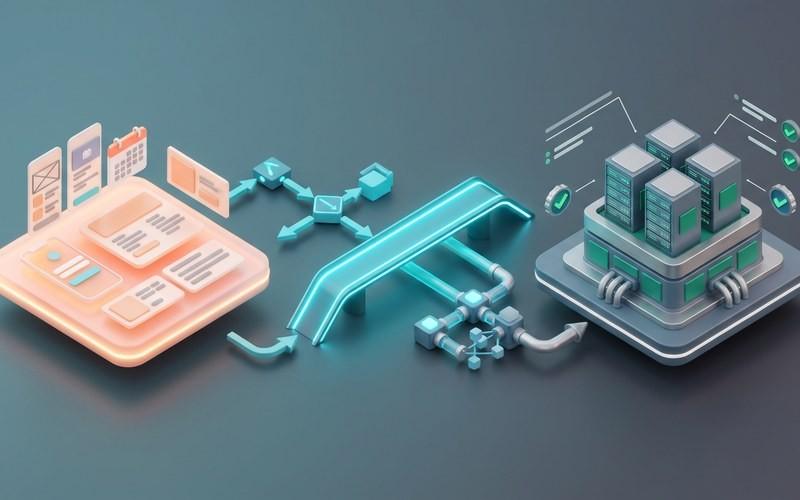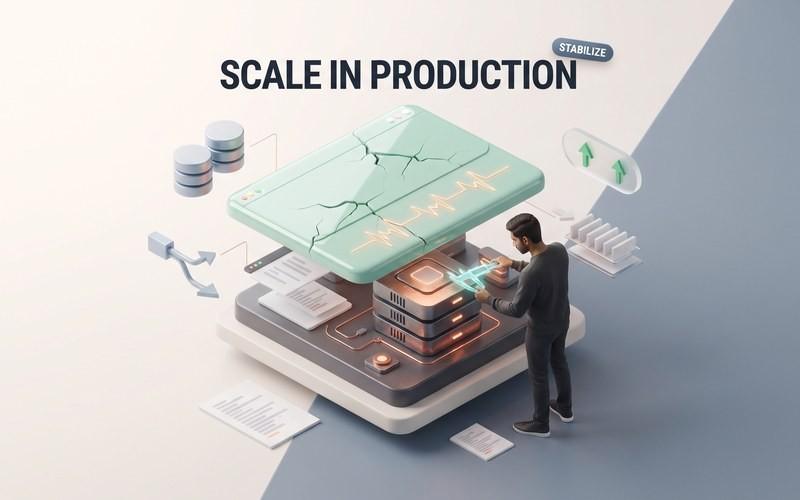
Defining clear Bolt & Lovable to Production development requirements is the difference between deploying a dependable software application and inheriting an unmaintainable prototype. Browser-based generation tools produce impressive interactive interfaces, but production readiness demands explicit boundaries around state management, relational database integrity, authentication, and external integration points. Transitioning these generated codebases into durable products requires teams to identify core user workflows, isolate technical risks, and establish verifiable acceptance criteria before contracting engineering support.
What Are the Core Bolt & Lovable to Production Development Requirements?
Establishing concrete Bolt & Lovable to Production development requirements begins with acknowledging the architectural difference between browser execution and enterprise deployment. Tools like Bolt.new run inside client-side development environments powered by browser WebContainers. While this architecture allows rapid visual iteration, moving bolt.new to production requires transitioning from an isolated client sandbox into a hardened hosting environment backed by dedicated servers, reverse proxies, and automated container orchestration.
A complete scoping document must classify requirements into four foundational pillars:
- Runtime and Infrastructure Isolation: Decoupling client-side presentation from backend logic, moving away from temporary browser storage, and establishing containerized deployment pipelines with proper HTTPS provisioning, as outlined in the Vultr guide on deploying Bolt.new projects using Coolify.
- Data Layer Durability: Replacing mock storage and client-side memory states with relational database schemas that enforce foreign keys, unique constraints, and transaction boundaries.
- Identity and Access Governance: Enforcing server-validated session lifecycles, structured authorization tokens, and strict access control rules at the data layer.
- Operational Resilience: Implementing health monitoring, error tracking, structured logging, and automated build verification so failures can be detected and diagnosed immediately.
Documenting these technical boundaries prevents engineering teams from mistaking a visual proof of concept for a complete, scalable backend architecture.
Why Prototype Exports Break in Production and What Needs Rebuilding
State Management, API Routing, and Database Schema Limits
When engineering teams export lovable app to production, they frequently discover that the underlying application state relies on transient client memory rather than predictable data flows. AI generators typically scaffold user interfaces by co-locating business logic, state mutations, and API requests directly within front-end React components. As features multiply, this architecture creates race conditions, uncoordinated cache invalidations, and UI desynchronization under modest concurrent usage.
Furthermore, prototype codebases rarely implement structured backend routing or robust relational schemas. Database tables generated on the fly often lack normalization, composite indexes, foreign key cascading rules, and check constraints. Transitioning to production requires refactoring these fragile components into clean service layers, centralizing global state through predictable stores, and establishing explicit API boundaries that validate payloads before they reach the persistence tier. Separating read and write concerns prevents cascading failures when database queries experience unexpected spikes in latency.
Security Pitfalls: Hardcoded Keys, Missing RLS, and Auth Vulnerabilities
A critical liability during rapid Bolt & Lovable to Production vibe coding is the unintentional exposure of administrative credentials. Browser-based builders frequently embed sensitive third-party API tokens into client bundles via build-time environment variables. Because frontend JavaScript bundles are completely public, any token bundled into the client can be extracted by any visitor inspecting browser network traffic or source maps.
Similarly, backend configurations frequently leave database tables completely open to anonymous writes. In prototype databases, enabling Row-Level Security (RLS) across all public tables and auditing policy definitions is mandatory before opening access to external traffic. Production hardening requires establishing an intermediary backend service to broker privileged operations, rotating all development tokens, enforcing role-based permissions, and guaranteeing that the client browser interacts exclusively through authenticated, restricted endpoints with strict CORS policies. Auditing authorization checks on both the API gateway and the database engine ensures comprehensive defense in depth against unauthorized tenant data access.
How to Define User Workflows and Acceptance Criteria Before Hiring
Separating the Minimum Useful Release From Future Enhancements
Before you decide to hire a vibe coder for Bolt & Lovable to Production, you must ruthlessly isolate the minimum useful release from secondary feature requests. Prototype tools make it easy to generate dozens of secondary pages, settings screens, and administrative dashboards that dilute core project focus. An effective scoping document strips away non-essential UI artifacts and focuses developer hours exclusively on the primary transactional loop that delivers actual business value.
By categorizing features into mandatory release criteria versus post-launch enhancements, stakeholders avoid paying developers to harden screens that may be redesigned after user feedback. This disciplined triage establishes a tight scope, minimizes architectural complexity, and guarantees that core application flows receive comprehensive engineering scrutiny.
Documenting Exact Inputs, Outputs, and Third-Party Dependencies
A production specification must replace vague visual demonstrations with exhaustive interface contracts. For every user interaction, document the precise inputs accepted, client-side validation rules, backend data transformations, and resulting database mutations. Specify exact schema definitions for every request payload and expected API response format.
Equally critical is cataloging every external service dependency, including identity providers, transactional email relays, cloud object storage, and specialized third-party APIs. Documenting rate limits, payload formats, and required environment secrets ensures the incoming engineer understands the operational ecosystem and can design resilient error boundaries for upstream outages.
Defining Verifiable Acceptance Criteria and Edge-Case Tests
To evaluate delivery objectively, engage a professional Bolt & Lovable to Production developer against measurable, verifiable acceptance criteria rather than subjective visual reviews. Frame requirements using structured conditions that specify expected behavior under both optimal conditions and system anomalies.
Each user journey must include explicit tests for edge cases: network disconnections during multi-step forms, invalid payload submissions, duplicate button clicks triggering concurrent requests, and expired session refreshes. Defining unambiguous pass/fail criteria prevents delivery disputes and guarantees that every delivered feature operates reliably under unpredictable real-world operating conditions.
Production Hardening: Security, Database Rigor, and Payments
Implementing Production Authentication and Row-Level Security
A primary objective for any bolt new developer hire is replacing permissive prototype authentication with an enterprise-grade identity architecture. In prototype configurations, developers often rely on default shared authentication services that lack operational resilience. Moving to production requires configuring dedicated transactional email relays via custom SMTP providers, establishing custom redirect domains, and managing authentication rate limits for password resets and verification requests.
At the database tier, hardening requires applying comprehensive Row-Level Security (RLS) policies across every table in the PostgreSQL schema. Rather than permitting universal client queries, policies must explicitly validate the authenticated user context using functions such as auth.uid(). Enforcing tenant isolation at the database engine guarantees that multi-tenant data cannot be queried or updated by unauthorized actors, even if client-side validation logic is compromised. Furthermore, production readiness mandates implementing multi-factor authentication policies and session revocation mechanisms for sensitive administrative roles.
Idempotent Payment Handling and Webhook Reliability
When selecting a qualified lovable dev agency, evaluate their ability to engineer resilient billing and subscription pipelines. Prototypes frequently commit the critical mistake of updating user entitlements directly from client-side success callbacks following a payment modal. Client-side triggers can be spoofed, bypassed, or interrupted by network drops, creating revenue leakage and inaccurate account statuses.
Production billing requires an entirely server-managed workflow centered on cryptographic webhook verification and idempotent transaction processing. Developers must configure secured webhook endpoints that verify provider signatures, record incoming transaction identifiers in dedicated event tables, and apply database-level uniqueness constraints to prevent duplicate processing during automatic retries. Isolating payment fulfillment within transactional database blocks ensures that customer entitlements update accurately without race conditions. Implementing structured dead-letter queues also allows operations teams to inspect and replay failed webhook deliveries without manual database patching.
The Canvas Developers Engineering Approach: AI Speed With Senior Oversight
AI Scaffolding Directed by Senior Architecture and Code Reviews
At Canvas Developers, an engineering company with an office in Dhaka, Bangladesh, software teams combine modern AI acceleration with rigorous human engineering discipline. Rapid Bolt & Lovable to Production vibe coding offers remarkable speed for initial scaffolding, UI prototyping, and boilerplate generation. However, automated generators cannot assume accountability for architectural soundness, concurrency limits, or security vulnerabilities.
To bridge this gap, every project is led by experienced engineers, systems architects, and QA specialists who direct AI coding agents through structured development harnesses. Our senior engineers own system architecture, review every single line of code, enforce strict type safety, and execute comprehensive integration tests before approving production releases. By pairing AI velocity with senior engineering oversight through our dedicated Bolt & Lovable production engineering services, businesses achieve faster iteration loops while guaranteeing enterprise-grade stability.
Choosing Between Private Local AI and Cloud LLM Delivery Stacks
Organizations transitioning prototypes to production operate under varying regulatory, data privacy, and intellectual property constraints. When you engage a Bolt & Lovable to Production developer from Canvas Developers, you can choose between two transparent delivery packages tailored to your security requirements:
- Private / Local AI Engineering: Designed for enterprises handling proprietary data, strict compliance mandates, or sensitive intellectual property. Development is accelerated using privately hosted open-weight models running inside client-controlled infrastructure or an agreed isolated environment, ensuring that zero proprietary source code or data leaves your boundary.
- Claude Code / OpenAI Codex Engineering: Optimized for startups and commercial product teams seeking maximum acceleration using state-of-the-art commercial AI coding agents, operating under strict, client-approved cloud privacy settings.
Both models ensure full intellectual property protection, comprehensive automated test suites, and transparent version control handoffs.
Developer Handoff Checklist: What to Prepare for a Fixed Estimate
The Essential Repository, Schema, and Architecture Handoff Artifacts
Preparing comprehensive Bolt & Lovable to Production development requirements ensures you receive an accurate, milestone-based estimate rather than open-ended time-and-materials proposals. Prototype builders create rapid visual momentum, but professional developers require concrete architectural artifacts to evaluate system complexity. Before engaging an engineering partner, assemble a structured handoff dossier containing these core technical deliverables:
- Exported Git Repository: A connected Git repository exported directly through GitHub version control rather than an unbundled ZIP archive, containing working build configurations, Dockerfiles, and complete package dependency manifests.
- Database Schemas and Migrations: Complete PostgreSQL DDL scripts, table schemas, existing foreign key constraints, composite indexes, and seed data definitions exported from Supabase or your prototype database.
- Sanitized Environment Inventory: A documented manifest of all required environment variables, third-party service endpoints, and webhook URLs, strictly sanitized of live production credentials.
- Third-Party Integration Contracts: API specifications and documentation for external providers, including payment gateways, transactional email relays, and OAuth identity providers.
- Detailed Workflow Documentation: Step-by-step user journeys detailing inputs, expected outputs, state transitions, and edge-case exceptions for each core transaction.
Next Steps: Submitting Your Workflow for a Scoped Assessment
Attempting to launch an unverified prototype directly into production exposes your business to data corruption, security vulnerabilities, and unpredictable downtime. Rather than taking on technical debt or rushing to hire a vibe coder for Bolt & Lovable to Production without architectural oversight, partner with an engineering team that specializes in hardening AI-assisted applications. A thorough assessment distinguishes between components that can be safely retained and modules that require complete re-engineering before handling customer traffic.
Canvas Developers provides structured technical assessments that evaluate your existing codebase, audit data schemas, identify security risks, and deliver a transparent milestone plan for production deployment. Our senior engineers review your architecture, identify refactoring priorities, and establish automated test suites to ensure long-term maintainability. Share your current tech stack, workflow documentation, and target release outcomes through our contact form or reach out directly via WhatsApp on our website to schedule your technical scoping consultation.