The problem
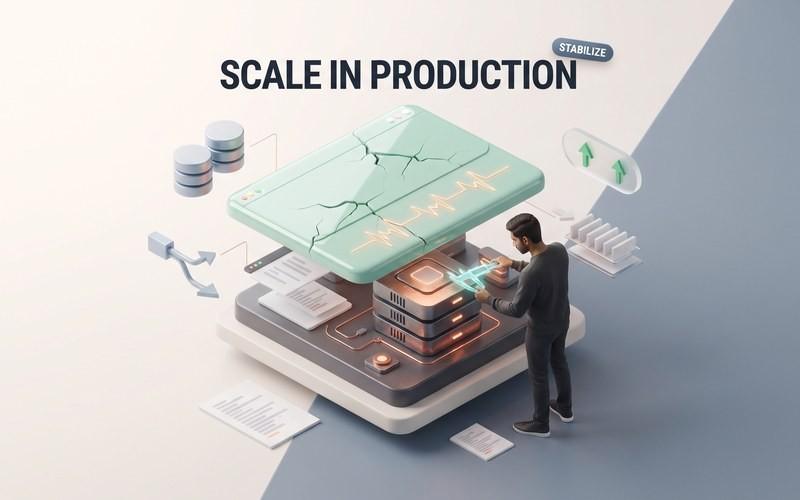
Visual prototyping platforms like Bolt and Lovable enable rapid frontend generation, but basic client-side prototypes fail when exposed to transient network errors, browser refreshes, or user interruptions. In basic form submissions, unmanaged HTTP POST requests create duplicate records during retries and risk losing captured customer input. Furthermore, sandboxed prototypes lack data-locking strategies, allowing concurrent edits across customer, operator, and administrator roles to silently overwrite critical state flags.
Approach
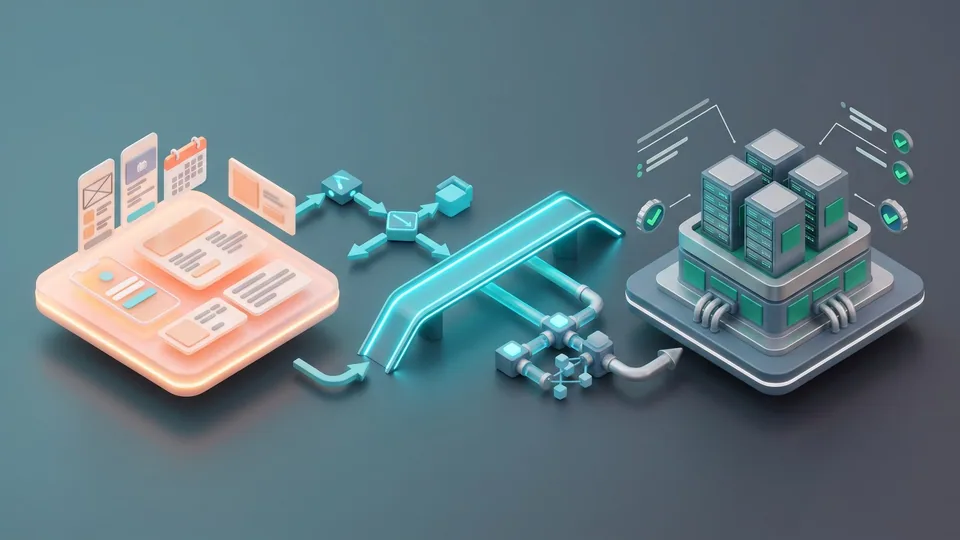
Canvas Developers hardens rapid UI prototypes into production-grade systems by decoupling presentation scaffolding from core business logic and enforcing a centralized state machine across all roles. The architecture introduces deterministic session recovery using client-generated idempotency keys (UUIDv4) and local validation with Zod schemas to ensure resilient request resumption without duplicate records. Database-level optimistic concurrency control and Row Level Security policies protect record ownership and state transitions, backed by automated acceptance test suites that verify idempotency and audit trail integrity.
Outcome
The engineering approach shortens feedback loops between product stakeholders and technical teams while significantly reducing the initial effort needed to validate appointment booking concepts. By establishing rigorous validation boundaries, session recovery, and concurrency controls, rapid visual prototypes transition into resilient, audit-compliant production systems.
Transitioning a rapid prototype into a production-grade enterprise system requires bridging the gap between visual velocity and structural resilience. In a modern Bolt & Lovable to Production appointment booking journey, browser-generated UI components provide an immediate, interactive baseline for customer interactions. However, enterprise workflows demand deterministic state machines, reliable concurrency controls, and fault-tolerant persistence.
When deploying critical booking systems, engineering teams must isolate client-side prototypes from transactional data integrity. By decoupling rapid frontends from robust backend services, organizations preserve development agility while ensuring that every service request satisfies rigorous audit, ownership, and recovery criteria across customer, operator, and administrator roles.
How Does an Appointment Booking Workflow Transition from Prototype to Core System?
Mapping the Service Request Lifecycle Across Customers, Operators, and Admins
In structured appointment booking journey development, the core entity is the service request record. Visual prototyping platforms like Bolt and Lovable allow teams to rapidly mock user interfaces, but production systems require explicit state transitions governed by clear business rules across distinct organizational roles.
The lifecycle begins when a customer drafts an initial appointment request. Service operators require triage views to verify staff availability, assign technicians, or request rescheduling while tracking service-level agreements. Organization administrators oversee capacity thresholds, dispute management, staff scheduling permissions, and audit integrity across all active service requests. Each role transition must update a centralized state machine—moving records from draft to submitted, assigned, and confirmed—rather than relying on arbitrary client-side state flags.
Translating Scaffolding into Production Entry, Detail, and Confirmation Screens
Rapid scaffolding generated during a Bolt & Lovable to Production appointment booking journey yields three fundamental interfaces: an entry screen for input collection, a task detail screen for operator triage, and a confirmation screen for final customer acknowledgement.
Our approach preserves the rapid layout generation of frontend prototypes while refactoring component bindings to interact with strict API contracts. The entry screen captures scheduling constraints, service categories, and customer metadata into a resumable draft schema. The task detail view supplies operators with contextual history, service-level deadlines, internal communication notes, and action triggers. Finally, the confirmation screen renders immutable reservation tokens and persistent status links, ensuring users receive verified transaction receipts instead of ephemeral UI states. By establishing this separation between UI presentation and core domain logic early, engineering teams prevent client-side assumptions from leaking into database schemas.
Where Do AI-Generated Booking Flows Break Under Concurrency and Interruptions?
Preventing Duplicate Records and State Loss in Interrupted Bookings
AI-generated booking prototypes frequently fail when handling transient network errors, browser refreshes, or user interruptions. In basic scaffolding, form submissions trigger unconstrained HTTP POST requests that create redundant records on every retry. During structured Bolt & Lovable to Production development, our approach replaces unmanaged writes with deterministic session recovery.
To prevent duplicate records, the entry interface generates a unique client-side idempotency key (such as a UUIDv4) upon session initiation. The backend checks this token against active database records before executing inserts. When an interrupted submission is resumed, the client queries the existing draft by token, repopulating captured fields without creating secondary entities or dropping customer inputs. This ensures session recovery remains fully idempotent across dropped connections.
Enforcing Record Ownership and Locking During Concurrent Edits
Concurrency bottlenecks quickly emerge when multiple operators triage appointments or an administrator adjusts organizational capacity concurrently. Prototypes built in browser sandboxes often omit data-locking strategies, allowing conflicting writes to overwrite status flags silently.
Production appointment workflows enforce explicit service request state transitions through database-level controls. Our architecture applies optimistic concurrency control by validating an entity version tag on every write. If an operator attempts to assign a technician while an admin marks the schedule closed, the system detects the stale version, rejects the colliding update, and returns the current record state. Furthermore, strict Row Level Security (RLS) policies—configured directly in the database rather than client components—guarantee that only verified operators and organization administrators can alter assignment records and state flags.
Which Architecture Decouples Lovable and Bolt Frontends from Backend Data Integrity?
Tracing Request Data Flow from Client Validation to Persisted State
A resilient appointment booking architecture traces each service request through rigorous validation boundaries before writing to storage. In our architecture, the customer begins by submitting booking criteria—including requested time windows, service categories, and contact information—through the entry screen.
The client performs immediate structural validation using schemas like Zod to provide real-time UI feedback. Once verified locally, the client dispatches an authenticated payload containing the submission parameters and an idempotency token to an API endpoint. A server-side validation layer intercepts the request, verifying tenant permissions, checking slot availability against active operator calendars, and enforcing business rules. Upon successful validation, the service request is committed to the database in a transactional write that sets the state to submitted. The backend immediately returns an immutable acknowledgement payload containing the persistent reference ID, enabling the confirmation screen to render a verified receipt.
Isolating AI UI Prototypes from Sensitive Business Logic and Payments
Rapid AI scaffolding platforms like Bolt and Lovable excel at generating responsive frontend interfaces, but enterprise systems require strict isolation between UI presentation and core domain logic. As detailed in official Lovable hosting documentation, frontend code exports deploy separately from backend data layers, requiring dedicated server environments for full-stack workloads.
During a Bolt & Lovable to Production integration, our engineering approach treats AI-generated React or Vite components as presentation scaffolding while delegating sensitive operations to hardened backend components. Direct payment gateway handshakes, webhook listeners, third-party notification triggers, and private API secrets are completely isolated from client bundles. By decoupling the interface from transaction processing, teams can safely iterate on user experiences through our Bolt & Lovable to Production services without exposing database credentials or compromising financial workflows.
How Can Engineering Teams Systematically Verify State Transitions and Resumption?
Automating Acceptance Tests for Idempotency and Session Recovery
Verifying transactional safety requires deterministic testing suites rather than manual spot-checks. In our delivery workflow, engineering teams write automated Bolt & Lovable to Production acceptance tests that validate system resilience under adverse operating conditions.
Acceptance suites simulate network timeouts and client drop-offs midway through form submission. Automated end-to-end scenarios assert that when a customer drops connection after filling the entry screen, reopening the session restores uncommitted data from local storage or cached draft records. On the backend, integration tests dispatch duplicate payloads sharing the same idempotency token concurrently; the suite confirms that the database commits exactly one service request and returns the identical persisted ID across all calls.
Validating Role-Based Permissions and Audit Trails on Service Requests
Rigorous service request validation mandates that state transitions adhere to strict access controls across customers, service operators, and organization administrators. Automated policy tests verify that customers cannot view requests belonging to other accounts, operators can only transition tickets within their assigned queues, and administrative overrides require elevated credentials.
| Validation Check | Failure Scenario | Acceptance Standard |
|---|---|---|
| Idempotent Retry | Network disconnect during submission | Exact single record created; duplicate attempts return original confirmation |
| State Transition Gate | Operator attempts to confirm unassigned task | Rejected with HTTP 409; state remains in previous valid phase |
| Audit Trail Logging | Unauthorized status update attempt | Logged with actor ID, timestamp, and state delta in immutable audit table |
Every valid state change writes an immutable audit record capturing the timestamp, prior state, updated status, and actor identifier. This ensures compliance visibility while protecting booking workflows against unauthorized modifications.
How Does Canvas Developers Harden Vibe-Coded Scaffolding for Reliable Production?
In Bolt & Lovable to Production vibe coding workflows, AI coding agents and automated harnesses accelerate early design phases, interface composition, and rapid prototyping. By translating natural-language requirements into functional screen layouts, these tools shorten feedback loops between product stakeholders and technical teams, significantly reducing the initial effort needed to validate appointment booking concepts. However, speed at the UI layer does not eliminate core engineering complexities: visual scaffolding cannot resolve atomic transaction locking, distributed session recovery, payment gateway webhooks, or compliance-driven audit trails.
The crucial turning point in our delivery methodology occurs when transitioning from exploratory generation to release assurance. Every project undergoes a thorough Canvas Developers engineering review where experienced software engineers, QA specialists, and DevOps architects direct the work, own the system architecture, inspect data boundaries, and determine release readiness. Operating from our software engineering office in Dhaka, Bangladesh, our teams direct the development process to verify deterministic session recovery, eliminate duplicate record creation during network dropouts, and guarantee multi-role audit integrity. Depending on client governance, organizations can select either 'Private / Local AI Engineering' hosted within client-controlled infrastructure or 'Claude Code / OpenAI Codex Engineering' utilizing approved commercial AI coding tools.
While low-complexity scheduling or simple intake forms can rely on standard off-the-shelf calendar widgets without custom engineering, multi-role booking workflows with strict concurrency constraints demand purpose-built architecture. Canvas Developers guides teams from initial scoping through agreed milestones, comprehensive acceptance testing, and production handover. To evaluate your existing prototype, constraints, and target outcomes, request a scoped technical assessment through our contact form.