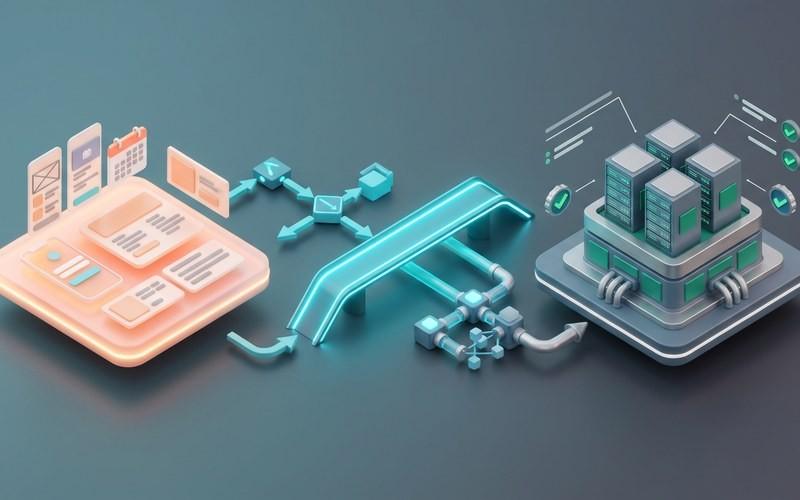
Learning how to export lovable app to production environments is the critical step when transitioning a vibe-coded prototype into a dependable commercial product. Lovable excels at rapid interface scaffolding, but releasing an application to real customers requires decoupling sandbox configurations, establishing persistent data layers, and automating deployment pipelines.
This technical guide provides the architectural roadmap required to safely extract your codebase, migrate to production-grade Supabase infrastructure, configure Vercel or AWS hosting, and apply rigorous engineering checks before public release.
What Happens When You Export a Lovable App to Production?
When you initiate a repository sync to export lovable app to production, the system generates a functional React and Vite codebase that mirrors the visual layout built in the editor. However, an operational gap exists between an interactive browser prototype and hardened production software. In a prototyping sandbox, browser sessions tolerate ephemeral client state, unhandled runtime exceptions, and open security boundaries. In contrast, live commercial applications demand strict session management, stateless scaling, deterministic build artifacts, and isolated environments for staging and production.
A comprehensive lovable code export guide must address common export traps that emerge immediately after cloning the repository. Lovable prototypes frequently bundle ephemeral sandbox keys directly into client bundles, rely on hardcoded redirect URLs tailored to temporary preview domains, and execute unvalidated client-side state mutations. Furthermore, third-party API tokens and database keys that were acceptable during rapid prototyping can leak if left unextracted into environment variables. Navigating these pitfalls requires stripping platform-specific wrappers, identifying hidden mock services, and converting implicit sandbox dependencies into explicit, auditable configurations before any public traffic reaches your infrastructure.
Why Lovable Prototypes Require Architectural Hardening Before Release
Modern vibe coding platforms have dramatically transformed how software teams conceptualize and build software products. When engineering teams prepare to export lovable app to production environments, understanding the precise boundary between rapid automated scaffolding and robust enterprise engineering is essential for sustained system stability.
What AI Code Generation Does Well: Rapid UI Assembly and Scaffolding
Generative AI tools excel at translating functional design requirements and natural language prompts into responsive front-end layouts. In Lovable, developers can swiftly generate React component trees, apply structured Tailwind CSS utility classes, configure basic client-side routing, and bind state to form elements. This automated scaffolding compresses the initial discovery phase, allowing product managers and startup founders to visualize workflows, validate product mechanics, and gather preliminary stakeholder feedback in hours rather than weeks.
Where AI Tools Struggle: Security Boundaries, Complex Data, and Scale
Despite impressive interface velocity, automated code generators struggle with low-level systems architecture, persistent transactional integrity, and hardened security perimeters. Prototypes generated through conversational prompts often introduce client-side security anti-patterns, such as performing authorization checks in the browser, omitting necessary database indexes, and executing multi-step updates without database transaction rollbacks. When user concurrency climbs, these architectural oversights manifest as race conditions, memory leaks, and cascading API rate-limit errors.
To successfully harden ai-built apps, technical organizations must introduce disciplined engineering oversight. At Canvas Developers, AI coding workflows and autonomous scaffolding accelerate routine implementation, but experienced software engineers own system architecture, conduct manual pull request reviews, and establish rigorous release controls. As outlined in our production engineering services, this dual approach preserves development speed while preventing critical security oversights from reaching real customers.
How to Safely Export and Decouple Your Lovable Codebase
Decoupling an AI-generated interface from its hosted development environment is the foundation of any reliable production release. Following a structured procedure prevents configuration drift and ensures your engineering team retains total sovereignty over source code.
Syncing Lovable with GitHub and Extracting Clean Repository Code
According to the Lovable GitHub integration documentation, connecting a workspace establishes a two-way synchronization model that automatically creates a dedicated private repository. While this sync provides continuous commits authored by the platform bot, preparing an application for production requires establishing clear version control boundaries. Engineering teams should establish an independent downstream release branch or disconnect two-way syncing to prevent automated platform edits from overwriting manual hotfixes or production branches. Cloning the repository locally enables engineers to run dependency vulnerability scans, audit package.json specifications, and enforce protected branch rules.
Removing Sandbox Wrappers and Replacing Mock Services with Real Clients
In prototype mode, Lovable often wraps network requests and external software development kits in high-level abstractions or mock adapters designed to keep the browser preview responsive. When executing a proper lovable code export guide strategy to export lovable app to production, engineers must audit every data-fetching hook. Ephemeral state variables and in-memory mock handlers must be systematically replaced with typed, resilient API clients. This involves configuring centralized HTTP clients with explicit timeout thresholds, implementing exponential backoff retry mechanisms, and ensuring authentication headers are dynamically injected from secure browser storage rather than hardcoded dummy variables.
AI engines frequently construct sprawling, single-file monolithic React components where business logic, data transformation, and presentation are tightly coupled. During the decoupling phase, software engineers must decompose these oversized views into atomic presentation components, reusable UI primitives, and dedicated custom React hooks. Extracting state management into dedicated stores or server-state caches eliminates prop drilling and prevents unnecessary re-renders. If technical debt or architectural confusion persists from rapid prompt iterations, our team provides specialized assistance through AI app rescue services to refactor convoluted layouts into modular, maintainable architectures.
How to Configure Production Supabase for Your Lovable Application
Connecting a production-grade database is often the most critical architectural transition when you export lovable app to production. While prototyping inside an integrated environment provides rapid initial momentum, scaling an application requires a decoupled, enterprise-ready database tier.
Migrating Away from Prototype Sandboxes to Dedicated Supabase Infrastructure
According to the official Lovable Supabase documentation, Lovable allows teams to link an external Supabase organization directly to a project. However, the platform does not provide automated one-step data migrations between its built-in sandbox backend and standalone Supabase projects. Transitioning off prototype sandboxes requires extracting the complete PostgreSQL schema, exporting table data, and generating structured migration scripts using the Supabase CLI.
Running supabase db dump allows developers to export existing table schemas, role definitions, and PostgreSQL constraints into version-controlled migration files. Establishing a local development environment with the Supabase CLI enables engineers to test migrations against seed data before deploying to staging and production databases. This structured migration workflow prevents configuration drift between development environments and eliminates unexpected schema incompatibilities during public releases.
Writing Strict Row-Level Security (RLS) Policies and Schema Migrations
During initial scaffolding, AI generators frequently generate permissive or incomplete database security rules to keep client-side features functional. A robust lovable supabase configuration demands implementing strict, least-privilege PostgreSQL Row-Level Security (RLS) policies on every table. Every SELECT, INSERT, UPDATE, and DELETE operation must be explicitly scoped using auth.uid() or verified tenant identifiers to ensure complete data isolation across organizations.
Furthermore, backend engineering must secure sensitive credentials. While public anonymous keys can be safely exposed to the browser client, the privileged Supabase service_role key must remain strictly confined to secure serverless runtimes and Edge Functions. Engineers must also audit Supabase Auth settings, configuring custom SMTP mail providers and registering explicit production redirect URLs to prevent token redirection vulnerabilities.
Lovable routes server-side logic and external API integrations through Supabase Edge Functions. Production deployments require managing environment secrets through the Supabase CLI or management dashboard rather than committing configuration values to client-side code. Securing these serverless functions with explicit authentication headers and implementing connection pooling via Supavisor ensures your backend handles high concurrency without exhausting database connection limits. For complex multi-tenant platforms, our engineering team assists teams through dedicated Supabase backend development services to guarantee schema integrity and resilient data modeling before public deployment.
Where Should You Deploy: Lovable to Vercel or AWS?
Selecting the optimal hosting environment depends on your team's compliance requirements, infrastructure complexity, and operational maturity. When you prepare to deploy an extracted codebase, you must evaluate whether to export lovable to vercel for rapid edge delivery or deploy lovable prototype to aws for enterprise control.
Deploying to Vercel: Edge Optimization, Automatic CI/CD, and Next.js Best Practices
For high-growth software products and agile product teams, Vercel provides a streamlined hosting ecosystem with integrated continuous delivery. Connecting your exported GitHub repository automatically enables preview deployments for every pull request, edge asset caching, and automated SSL certificate management. If your team decides to migrate the client from a standard Vite single-page application into Next.js for server-side rendering and search engine optimization, Vercel delivers native routing optimizations, image optimization pipelines, and global edge middleware without manual server maintenance.
Deploying to AWS: Enterprise VPCs, Containerized Runtimes, and Granular Access
Enterprises subject to strict data governance, SOC2 compliance, or bespoke security policies typically require AWS infrastructure. Containerizing the exported application with Docker allows deployment across AWS App Runner, Elastic Container Service (ECS), or AWS Amplify. Hosting within an isolated Amazon Virtual Private Cloud (VPC) provides granular network security groups, private database subnets, and fine-grained IAM role management. Furthermore, engineers can leverage AWS Secrets Manager and Systems Manager Parameter Store to manage environment configurations securely across staging and production pipelines, ensuring sensitive credentials are never stored in plain text.
What Belongs on Your Lovable Production Deployment Checklist?
Deploying software requires validating both functional execution and defensive operational engineering. Establishing a disciplined lovable production checklist ensures engineering teams systematically audit mission-critical paths before you export lovable app to production.
Mandatory Human Audits: Authentication Handshakes, Payments, and Data Isolation
Automated tests cannot replace experienced human code reviews on sensitive financial and authentication logic. Senior engineers must inspect OAuth token handshakes, session expiration, and password recovery workflows to prevent impersonation vulnerabilities. When integrating payment gateways like Stripe, engineers must ensure that order fulfillment, billing state transitions, and subscription provisioning occur strictly through cryptographically verified server-side webhooks rather than vulnerable client triggers. Multi-tenant data structures require rigorous data isolation audits, validating that tenant identifiers are programmatically enforced at the database layer to eliminate cross-tenant data leaks.
Operational Stability: Rate Limiting, Structured Logging, and Error Capture
Prototype applications often neglect defensive runtime telemetry, exposing production infrastructure to outages from unexpected traffic spikes or runtime crashes. Production readiness requires configuring edge rate limiting through cloud firewalls or API gateways to shield database connections from abusive scrapers and denial-of-service attempts. Furthermore, integrating tools like Sentry or Datadog provides structured logging, real-time error tracking, and performance tracing across client sessions. Establishing automated end-to-end regression tests alongside protected GitHub branch rules ensures that untested code cannot bypass quality assurance gates into production releases.
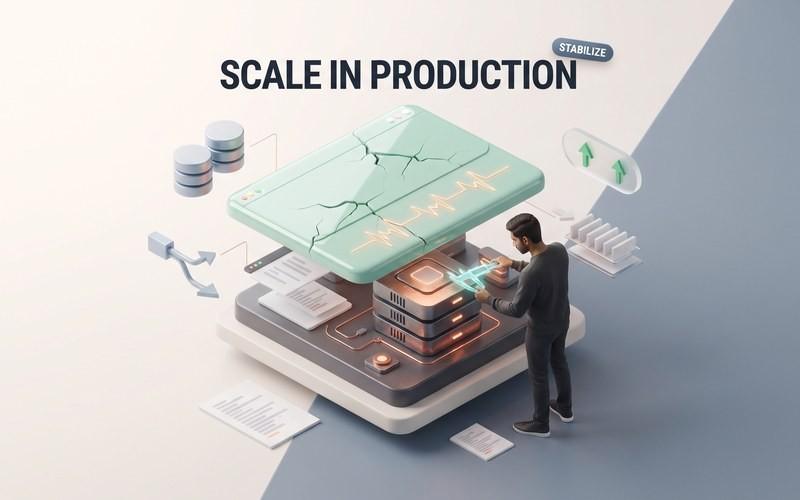
How to Stabilise and Launch Your Lovable Prototype
Transitioning an AI-generated prototype into resilient commercial software requires an honest assessment of internal engineering resources. While vibe coding tools accelerate early scaffolding, hardening security boundaries, configuring cloud infrastructure, and conducting deep code reviews require experienced software engineers.
Canvas Developers helps founders, agencies, and enterprise leaders stabilize, harden, and scale vibe-coded applications. Whether leveraging our Private / Local AI Engineering delivery or commercial coding agents, our senior engineers own architecture, security reviews, and release decisions. Contact our team through our contact form or visit Canvas Developers to request a scoped code and architecture assessment as you export lovable app to production.
Step by step
Sync and Decouple GitHub Repository
Connect Lovable to GitHub to extract a clean repository, then branch downstream or disconnect two-way sync to prevent automated overwrites.
Replace Sandbox Services with Production Clients
Audit the codebase to remove mock adapters and ephemeral sandbox credentials, replacing them with resilient, typed API clients.
Configure Dedicated Production Supabase
Export your database schema, apply migrations to a standalone Supabase project, and implement strict Row-Level Security policies.
Deploy to Vercel or AWS
Configure environment variables across staging and production environments, setting up automated CI/CD on Vercel or containerized runtimes on AWS.
Execute Pre-Launch Security and QA Audit
Run automated regression tests, verify server-side payment webhooks, establish edge rate limiting, and configure error telemetry.