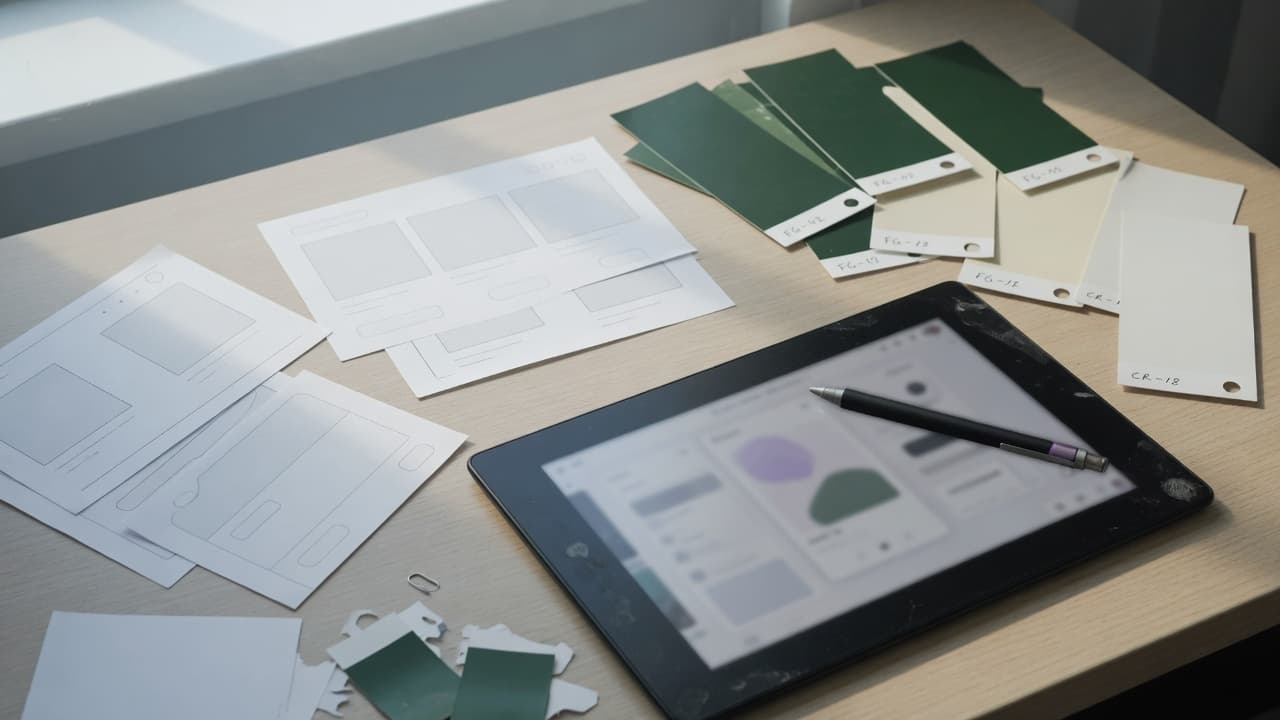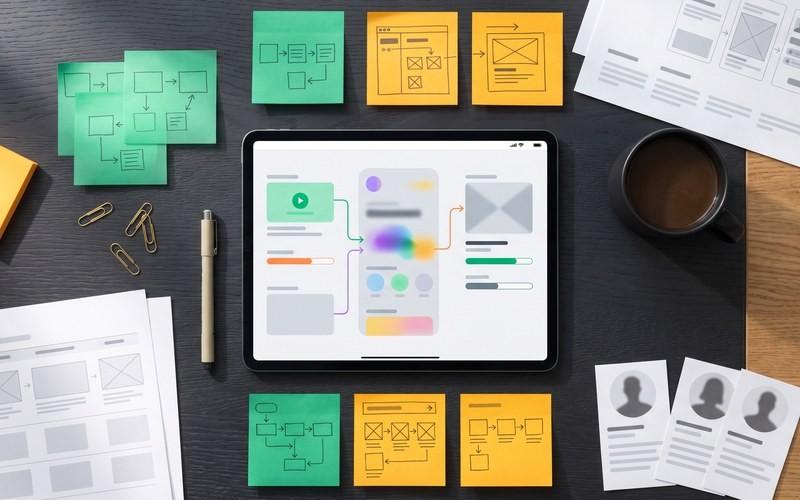
Evaluating your Wireframing & Prototyping development cost requires dissecting the scope before committing engineering hours or design budgets. Product leaders and founders often assume visual fidelity alone dictates expenditure, but interactive state complexity, data preparation, and validation goals represent the true financial drivers. Understanding these variables allows teams to isolate high-risk user journeys, determine appropriate fidelity, and establish measurable acceptance criteria before requesting commercial estimates.
What Really Shapes Your Wireframing & Prototyping Development Cost?
Estimating an accurate Wireframing & Prototyping development cost begins by recognizing that prototyping is not a monolithic deliverable. A series of rough interface schematics incurs a vastly different resource footprint than an interactive, data-driven build designed to test transactional user flows. Teams that treat prototyping as a generic line item routinely encounter scope creep, budget miscalculations, and misalignment between stakeholder expectations and empirical validation outcomes.
The total investment for Wireframing & Prototyping is governed by three underlying variables: the depth of the user workflow, the degree of behavioral simulation required, and the downstream intent of the deliverable. When a prototype is built solely to demonstrate layout and information hierarchy to internal executives, static screens with basic hotspot navigation suffice. Conversely, when product managers need to measure task completion rates among real prospective users, the build demands realistic input handling, conditional branching, and responsive views across viewports.
Resource allocation shifts further when technical feasibility is on trial. Validating whether an asynchronous background job can deliver clean feedback to a front-end interface requires code-level interaction rather than static canvas artboards. By auditing functional requirements early, teams determine where lightweight wireframes answer the essential questions and where deeper interactive simulation is necessary to prevent costly architectural revisions later.
Which Scope Factors Drive Prototyping Budgets Up or Down?
When analyzing primary interactive prototype cost drivers, budgets expand not because of total screen count, but because of the behavioral logic embedded within each view. A ten-screen sequence with basic linear transitions requires minimal effort, whereas a three-screen workflow featuring dynamic filtering, state persistence, and input validation demands substantial engineering. Identifying these functional variables early protects your baseline Wireframing & Prototyping development cost from unchecked expansion.
Feature Complexity and Interactive State Management
Interactive state complexity marks the technical divide between a visual slideshow and a functional prototype. A comprehensive prototype must demonstrate how an interface behaves across every operational state: initial loading, populated views, empty dashboards, validation errors, and partial system disconnects. When a workflow incorporates multi-step wizard logic, progressive disclosure forms, or interdependent data calculations, designers and engineers must account for each discrete branch. Cataloging and rendering these permutations directly influences the hours needed to prepare a prototype for meaningful user feedback.
Data Preparation and Mock Backend Requirements
Testing realistic user workflows requires contextually accurate information. Generic placeholder copy and repeated dummy rows fail to expose interface layout breaks, text truncation, or cognitive friction during validation sessions. Integrating mock backends or stateful API stubs—such as those configured using WireMock state machines and scenario stubs—allows client applications to simulate data persistence, trigger realistic updates, and emulate network latency without provisioning live cloud databases. Curating domain-specific data fixtures, defining structured JSON payloads, and wiring stateful mocks represent distinct engineering activities that must be scoped deliberately.
Third-Party Service Stubs and Payment Flow Emulation
Workflows that involve external platform dependencies—such as payment gateways, single sign-on providers, or automated address lookups—introduce critical scoping choices. Hooking up live third-party sandbox accounts to an early prototype creates unnecessary security overhead, API configuration time, and maintenance friction. Instead, development teams construct lightweight service stubs that replicate authorization tokens, webhook payloads, and payment decline scenarios. Building these simulation layers ensures stakeholders and test participants experience authentic transactional friction without the expense of enterprise integration.
How Does Fidelity Level Change the Prototyping Workflow and Deliverables?
Selecting an appropriate fidelity tier is the most critical strategic decision within the wireframe to prototype workflow. Mismatching fidelity to your immediate validation goal either wastes capital on premature aesthetic detailing or produces shallow user feedback that fails to de-risk engineering investments. Each fidelity tier produces distinct deliverables tailored to specific product milestones and technical hurdles.
Static Low-Fidelity Wireframes for Information Architecture
Low-fidelity wireframes serve as the structural blueprints of a digital application. Composed of grayscale shapes, clear typographic hierarchies, and standardized layout grids, these artifacts deliberately omit color palettes, custom branding, and micro-animations. The primary objective is establishing information architecture, content density, and user journey paths across key screens. Because low-fidelity wireframes require minimal production hours, product teams can iterate rapidly through competing layout concepts and discard unworkable ideas without significant sunk cost. Stakeholders evaluate structural hierarchy without becoming distracted by aesthetic preferences.
High-Fidelity Clickable Prototypes for User Testing
When the product objective shifts toward measuring usability, brand resonance, and stakeholder buy-in, clickable prototype development in platforms like Figma becomes the standard deliverable. High-fidelity clickable prototypes incorporate polished visual design systems, brand assets, interactive input elements, and realistic navigation transitions between artboards. Usability researchers leverage these interactive click-throughs to observe user hesitation, navigation confusion, and task success metrics. While this fidelity tier requires higher design labor, it uncovers behavioral friction long before engineering teams write production code.
Code-Based Prototypes for Validating Technical Feasibility
Visual canvas software reaches its limits when product viability hinges on novel algorithms, complex state synchronizations, or demanding responsiveness across mobile and desktop viewports. Code-based prototypes—frequently scaffolded in modern web frameworks with lightweight styling systems—validate whether an interface concept can function under real technical constraints. These deliverables allow engineers to benchmark client-side rendering speeds, test keyboard accessibility patterns, and inspect responsive reflows across diverse hardware. By proving feasibility in code before finalizing production specifications, teams avoid committing to visual layouts that prove unfeasible or excessively costly to build.
Can You Hire a Vibe Coder for Wireframing & Prototyping Without Sacrificing Architecture?
The emergence of AI code generation has prompted many product leaders to ask whether they should hire a vibe coder for Wireframing & Prototyping. Natural language prompts and automated code generators can produce functional-looking user interfaces in hours. However, deploying prompt-driven code without architectural oversight introduces severe technical debt. Balancing rapid interactive prototyping with long-term product viability requires an honest evaluation of where AI acceleration thrives and where human engineering remains indispensable.
Where AI Coding Scaffolding Accelerates Rapid Iteration
In early product phases, Wireframing & Prototyping vibe coding provides significant leverage for rapid scaffolding. AI coding tools excel at generating repetitive frontend boilerplate, configuring CSS utility classes, and assembling interactive form layouts from component libraries. When directed by a proficient Wireframing & Prototyping developer, AI coding agents—including modern harnesses such as Antigravity—drastically shorten the feedback loop between conceptual wireframes and testable user interfaces. Product teams can explore multiple user flow variations, adjust layouts on the fly, and test micro-interactions without weeks of manual coding.
What AI Code Misses: Security, Data Schemas, and State Scalability
Despite its visual speed, unguided AI code generation routinely fails at system architecture. Automated code generators optimize for immediate syntax completion rather than structural longevity. Vibe-coded prototypes frequently suffer from monolithic, unmaintainable component files where data fetching, state mutation, and UI presentation are tightly coupled. Furthermore, AI code often introduces security vulnerabilities, unvalidated input surfaces, hardcoded tokens, unvetted external dependencies, and naive state management patterns that break under concurrent data updates. When prototypes omit authentication guards or treat client storage as a secure database, exposing the prototype to external testers risks sensitive credentials. Addressing these edge cases requires deliberate architectural boundaries rather than iterative prompt tweaking.
Why Experienced Engineers Must Own Code Reviews and Architecture
To capture the velocity of AI without sacrificing structural rigor, experienced software engineers must direct the tools and own the architecture. At Canvas Developers, AI coding agents accelerate implementation, but senior engineers conduct systematic code reviews, establish clean API contracts, and decide release readiness. Whether clients select Private / Local AI Engineering or Claude Code / OpenAI Codex Engineering workflows, human engineers enforce security standards, design normalized data schemas, and ensure prototype components can be hardened systematically into production applications rather than rewritten from scratch. This structured oversight transforms experimental interface concepts into predictable engineering assets, ensuring prototype investments directly support eventual commercial delivery.
What Can You Reuse or Defer to Keep Prototyping Costs Manageable?
Managing your overall Wireframing & Prototyping development cost does not require compromising testing fidelity; it requires knowing what to reuse and what to defer. A prototype is an empirical experiment designed to validate specific business hypotheses, not an exercise in building custom infrastructure. Teams that isolate core user assumptions can significantly compress timelines while maintaining rigorous validation standards.
Leveraging Component Libraries and Prebuilt Design Systems
Crafting bespoke UI elements, custom grid systems, and novel typography rules during early prototyping consumes budget without generating proportional validation insights. An experienced Wireframing & Prototyping developer relies on established open-source component systems and comprehensive UI kits—such as Tailwind UI, Radix primitives, or standardized Figma design libraries. Utilizing mature, pre-built components for navigation bars, form inputs, modal dialogs, and data tables reduces layout scaffolding effort. This strategy redirects valuable engineering hours away from generic interface plumbing and toward your product's unique value proposition and domain-specific workflows.
Drafting Measurable Acceptance Criteria Without Over-Engineering
Prototyping projects frequently inflate in cost because stakeholders fail to define explicit acceptance boundaries. Over-engineering occurs when teams attempt to prototype secondary features that do not impact the primary validation question. Establishing measurable acceptance criteria clarifies exactly what the prototype must demonstrate. For example, a criterion might state: "A test user must successfully configure a multi-item invoice and view the calculated totals without operator assistance." Ancillary features—such as password reset logic, automated transactional emails, role-based tenant settings, and multi-currency formatting—should be explicitly deferred to the MVP build phase. Clear acceptance checklists keep the entire team aligned on empirical outcomes while preventing scope inflation.
How Should You Scope Your Prototype Before Requesting a Quote?
Before you engage an engineering partner or decide to hire a vibe coder for Wireframing & Prototyping, preparing a structured scoping document ensures accurate pricing and prevents misaligned expectations. An actionable scoping package should define:
- Core User Workflow: A clear, step-by-step description of the single most critical journey the prototype must validate (such as customer onboarding, complex data filtering, or checkout).
- Target Deliverable Fidelity: Explicit definition of whether the project requires static structural wireframes, an interactive Figma prototype, or a code-based functional shell.
- Data and Mock Boundaries: Clear boundaries specifying whether static sample records suffice or whether stateful API stubs are required for user testing.
- Measurable Acceptance Criteria: Objective validation milestones defining what constitutes testing success before code handoff.
If your immediate objective is aligning internal teammates on navigation layout, static wireframes remain the most cost-effective path. When testing high-stakes transactional workflows or complex state logic, engineering-led interactive prototyping is essential. To evaluate your project's specific Wireframing & Prototyping development cost, explore specialized wireframing and prototyping services or request a scoped technical assessment via the Canvas Developers contact form. Share your current stack, target workflow, operational constraints, and validation goals to receive a clear, milestone-driven development roadmap.