Building a reliable custom photo pillow shopify store requires aligning complex front-end personalization workflows with dependable fulfillment data pipelines. For personalized print-on-demand brands, off-the-shelf templates frequently fall short when handling user file uploads, client-side interface gating, and localized browsing experiences.
Canvas Developers engineered a dedicated Shopify solution featuring an integrated on-site pillow designer and complete right-to-left localization in Hebrew. This case study examines how systematic architecture and structured quality assurance resolved manufacturing data disconnects and established a dependable purchasing process.
Project Overview: How Was the Hugg Pillows Hebrew Shopify Store Built?
Executive Summary and Store Scope (Client Name Changed Under NDA)
To establish a direct-to-consumer channel for personalized gifts, Israeli brand Hugg Pillows (client name changed under NDA) engaged Canvas Developers to build a dedicated custom photo pillow shopify store. The brand turns customer photographs into custom-printed pillows under the concept of memories you can hug. Operating from Dhaka, our engineering team structured a dependable architecture combining Shopify with a custom on-site personalizer.
Core Storefront Components: Right-to-Left Hebrew Layout and ILS Pricing
The storefront was built for Israeli shoppers, featuring prices in ILS and a complete hebrew rtl shopify store layout. Localized navigation includes Home, Create the pillow, Pillow ideas from customers, Order tracking, and Contact. The homepage presents 72 product cards, active search, customer stories, best sellers, a three-step guide, and 10% off for newsletter sign-ups.
The Client and Challenge: Why Is Custom Photo-Gift E-Commerce Hard to Build?
Selling Custom Print-on-Demand Pillows in the Israeli Market
Operating a custom print on demand store for photo gifts introduces operational challenges that standard e-commerce templates cannot accommodate. Hugg Pillows needed a direct sales channel tailored to Israeli consumers, requiring native Hebrew copy, ILS currency formatting, and an intuitive photo-upload workflow that translates digital images into physical manufacturing outputs without manual intervention.
Maintaining Strict Right-to-Left (RTL) Layout Integrity Across Devices
Implementing a seamless hebrew rtl shopify store requires more than mirroring text alignment. Form fields, navigation drawers, image sliders, and interactive controls must follow natural right-to-left visual hierarchies. On mobile screens, incorrect directional CSS often produces horizontal overflow, displaced upload buttons, and misaligned modal dialogs that compromise customer trust.
Gating Product Personalization to Prevent Empty Photo Submissions
A core failure mode in custom merchandise is allowing shoppers to add blank products to their carts. To protect fulfillment operations, the interface must enforce strict client-side validation. Personalization options and add-to-cart controls must remain locked until the user uploads a valid image, preventing unfulfillable orders from reaching the production queue.
What Was at Stake: What Happens When Photo-Upload Stores Fail in Production?
The Operational Cost of Disconnected Photo Uploads in Manufacturing
When high-volume custom manufacturing handles personalized orders, disconnected image files create immediate operational bottlenecks. If a photo upload shopify mechanism fails to bind the graphic directly to the purchasing record, fulfillment technicians must manually track down matching assets via email threads or external storage drives. This breakdown halts production schedules, risks printing mismatched images onto custom pillows, and causes avoidable fulfillment delays.
Checkout Friction from Broken Mobile UIs and Failed File Attachments
Mobile shoppers face distinct usability hurdles when interacting with an unoptimized shopify product personalizer. Heavy image files from smartphones can silently drop out of memory during cart handoffs or network interruptions. Without robust client-side validation, customers may complete checkout only for the merchant to discover an empty payload. Resolving these disconnects after payment damages customer trust and strains customer support teams.
The Technical Solution: How Did Canvas Developers Engineer the Custom Designer?
Drag-and-Drop Photo Uploader with Dynamic Option Unlocking
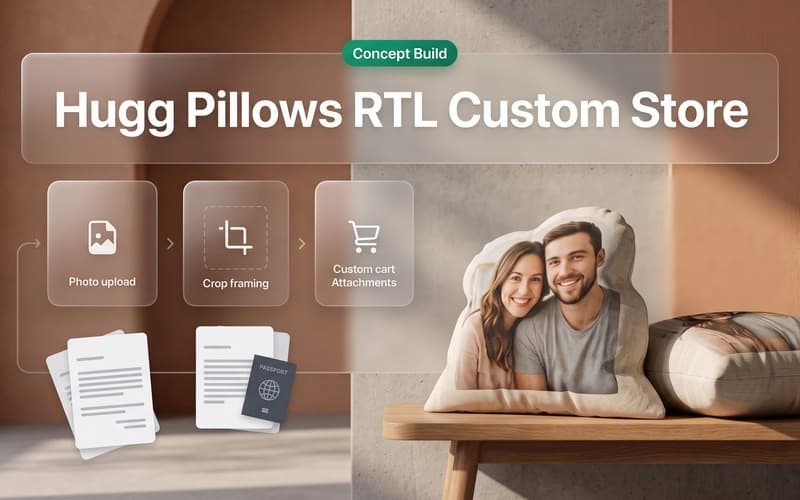
Product pages lead straight into the designer through a dedicated "create your pillow" interface. Canvas Developers built a custom on-site designer where customers upload their photo using drag-and-drop or a device file picker. To streamline user interaction, this shopify product personalizer dynamically unlocks customization options only after a valid photo is uploaded. This interface gating keeps the workflow intuitive while ensuring incomplete designs cannot proceed.
Attaching Production Images Seamlessly via Line-Item Properties
To bridge the gap between storefront checkout and physical printing, the system automatically binds the uploaded graphic to the order item. By utilizing shopify line item properties labeled as "Upload Image", the file attachment travels securely through cart and checkout into the merchant dashboard. Production technicians receive the exact image link directly on the order record, removing manual coordination and guaranteeing the right print.
How AI-Accelerated Coding Complements Senior Engineering Oversight
Throughout this custom ecommerce development initiative, Canvas Developers used AI coding agents within an engineering harness to accelerate interface scaffolding and UI components. Experienced engineers directed the system architecture, reviewed every code change, and made final release decisions. While AI accelerates routine implementation, human engineers ensure data integrity, checkout reliability, and edge-case handling across complex e-commerce environments.
Implementation Realities: What Trade-offs and Edge Cases Require Human Oversight?
Managing Heavy iPhone Photos, Memory Limits, and Mobile Uploads
Modern smartphone cameras capture high-resolution images that place severe demands on browser-based tools. Heavy iPhone photo files frequently strain client memory limits during browser uploads, causing silent timeouts or failed file transfers. A resilient photo upload shopify implementation requires defensive front-end handling to verify upload completion before permitting cart additions, particularly when shoppers browse over mobile networks.
Where AI Coding Assistance Accelerates Build Times vs. Where Manual QA Is Essential
During complex custom ecommerce development, AI coding tools accelerate layout scaffolding, repetitive markup, and responsive styles. However, AI systems fail to anticipate subtle production failures. Senior engineers must direct architecture, inspect memory management, ensure checkout data integrity, and conduct hands-on code reviews to guarantee that customer images pass reliably into fulfillment queues.
Planned Optimizations: Image Compression and Native Hebrew Error Feedback
Comprehensive storefront audits performed via ShopSentry highlighted valuable optimizations for subsequent development iterations. The primary recommendations focus on making the designer smoother on mobile phones through improved upload and crop controls, compressing oversized photos to boost upload speeds, and presenting clear error guidance in Hebrew whenever an uploaded file exceeds size limits or uses an unsupported format.
Storefront Verification: What Did Comprehensive QA Testing Reveal?
Cross-Device Verification Across 8 Form Factors Without Layout Shifts
To confirm interface stability across diverse screen sizes, Canvas Developers conducted rigorous device testing across 8 distinct physical form factors. The storefront showed zero sideways scrolling, with responsive navigation menus, drawer toggles, and device rotation functioning reliably without broken images or dead links. In a dedicated hebrew rtl shopify store, this QA pass confirmed that all 72 product cards, working site search, and category grids maintained correct right-to-left layout alignment across viewports.
Validating Cart Calculations in ILS, Promo Codes, and Guest Checkout
End-to-end transaction audits validated pricing and checkout flows in Israeli New Shekels. QA verified that cart calculations computed accurately, noting verified totals such as two items equaling 338.00 ILS, while supporting seasonal promo codes. Shoppers reach the Shopify checkout directly from their cart using a guest email field without encountering a mandatory login wall. This streamlined purchasing flow ensures that customers on this custom photo pillow shopify store experience transparent, frictionless ordering.
Technical Lessons: How Can You Build a Reliable Custom Personalizer on Shopify?
Architectural Checklist for Custom Print-on-Demand Stores
Engineering a dependable custom print on demand store requires pairing responsive design with strict data persistence. Teams building custom personalizers should implement three architectural guardrails:
- Client-Side Gating: Keep product options and checkout controls disabled until the customer uploads and validates their graphic.
- Order Metadata Binding: Attach high-resolution files directly to line-item properties so fulfillment teams receive verified assets.
- Localized Interface Verification: Validate right-to-left layout flows, mobile upload stability, and currency calculations across physical viewports.
Next Steps: Book a Scoped Assessment with Canvas Developers via https://www.canvasdevelopers.com/contact
Building a successful custom photo pillow shopify store requires experienced technical direction. Canvas Developers builds any kind of software, including MVPs, SaaS platforms, mobile apps, and custom e-commerce stores. We leverage AI coding agents directed by senior engineers who own system architecture and code review. To evaluate your custom personalizer or e-commerce build, book a scoped assessment through the contact form at https://www.canvasdevelopers.com/contact.