The problem
Enterprise AI deployments often falter when human operators cannot verify how automated models arrive at specific conclusions, creating operational risks when downstream systems execute commands based on opaque inferences. A reliable reviewable AI task audit trail requires that source access history, calibrated uncertainty metrics, and human sign-offs remain fully inspectable before consequential operations execute. Furthermore, distributed architectures must ingest delayed or out-of-order task records without corrupting historical aggregate metrics or obscuring discrepancy queues.
Approach
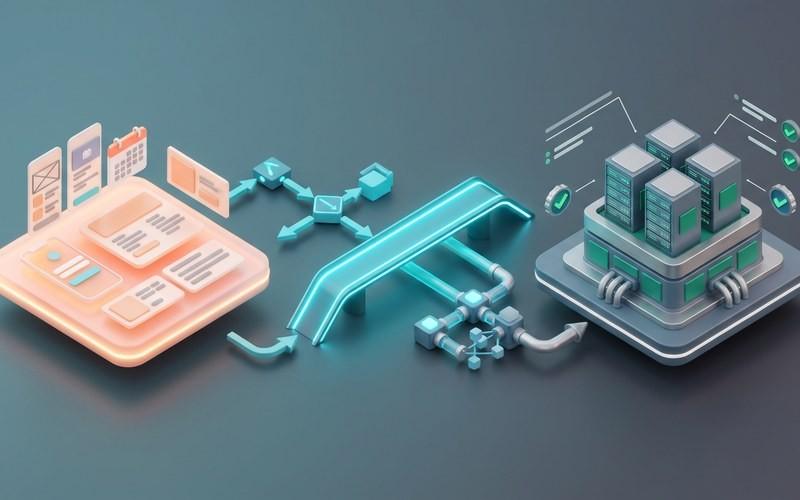
Canvas Developers structures the answer quality dashboard around reviewable AI tasks connected across summary cards, record drilldowns, and discrepancy queues to provide bidirectional data flow. Dedicated MCP servers handle enterprise context retrieval and sandboxed tool execution over JSON-RPC transports, keeping analytical state storage decoupled in dedicated time-series databases or OLAP engines. To guarantee audit integrity, an event-driven synchronization boundary and append-only ledger semantics ensure that retroactive or late-arriving records refresh summary metrics without obscuring intermediate reconciliation trails.
Outcome
This architectural balance preserves pure protocol standardization for real-time agent execution while serving complex dashboard queries with sub-second response times. Pairing AI-assisted engineering with senior code review maintains strict architectural discipline across frontend components and backend protocol adapters.
Operating enterprise AI workflows requires continuous verification of model outputs against factual source data. When engineering an MCP Server Development answer quality dashboard, technical teams establish real-time visibility into agent decisions, grounding sources, and confidence thresholds across mission-critical business systems.
By decoupling standardized protocol context retrieval from analytical event aggregation, this architecture provides knowledge workers, domain reviewers, and workspace administrators with traceable task histories, automated discrepancy detection, and deterministic audit trails.
What Workflow Challenges Does an Answer Quality Dashboard Solve for Knowledge Teams?
Structuring Reviewable AI Tasks Across Knowledge Workers, Reviewers, and Workspace Admins
Enterprise AI deployments often falter when human operators cannot verify how automated models arrive at specific conclusions. In a robust MCP Server Development answer quality dashboard, the fundamental unit of accounting is the reviewable AI task. This core record captures the model prompt, input parameters, retrieved context payloads, and generated outputs alongside timestamped execution logs. By formalizing this record structure, engineering teams create clear operational boundaries tailored to distinct organizational roles.
Knowledge workers initiate queries and review inline AI recommendations within their everyday business workflows. When an output exhibits low grounding confidence or requires domain validation, the system routes the task to specialized reviewers equipped with evaluation rubrics and source citation diffs. Workspace administrators oversee system-wide policies, setting confidence score thresholds, auditing resource consumption, and managing role-based access control across teams.
Connecting High-Level Summary Cards to Record Drilldowns and Discrepancy Queues
Effective answer quality dashboard development bridges executive reporting and tactical engineering inspection across three interconnected interfaces: summary cards, record drilldowns, and discrepancy queues. Summary cards aggregate operational metrics, including accuracy pass rates, average latency, and verification throughput across rolling evaluation windows.
When an aggregate metric deviates from established service-level agreements, engineers drill down directly from summary cards into individual task records to inspect token traces and underlying model arguments. Meanwhile, an automated discrepancy queue isolates anomalous outputs, flagging instances where semantic similarity checks fail or retrieved citations contradict the synthesized answer. This bidirectional data flow allows reviewers to trace macro-level health metrics back to individual supporting events without losing execution context.
Which Constraints and Edge Cases Threaten AI Task Reconciliation?
Enforcing Visibility on Source Access, Uncertainty, and Human Approvals
Automated business actions carry significant risk when downstream systems execute commands based on opaque model inferences. A reliable reviewable AI task audit trail mandates that source access history, calibrated uncertainty metrics, and human sign-offs remain fully inspectable before consequential operations execute. If an autonomous agent suggests updating a core enterprise database, the system halts execution until an authorized reviewer examines the retrieved knowledge sources, model perplexity ratings, and extraction confidence scores.
Our approach enforces gating where model uncertainty above defined thresholds converts autonomous actions into pending approval requests. By rendering explicit source citations and attribution links in the review interface, operators confirm whether the agent accessed fresh external documents or relied on cached entries. This visibility prevents silent failures and establishes non-repudiation across critical decision flows.
Isolating Failure Paths When Processing Delayed or Out-of-Order Task Records
Distributed architectures regularly contend with network partitions, transient webhook failures, and asynchronous queue reordering. An effective AI task reconciliation dashboard must ingest out-of-order state transitions and late-arriving event payloads without corrupting historical aggregate metrics or obscuring discrepancy queues.
When an asynchronous task record arrives late or a manual review overturns an automated categorization, the pipeline applies append-only ledger semantics. Instead of overwriting previous aggregates destructively, the ingestion worker writes compensating version entries linked by immutable task identifiers. Retroactive updates immediately refresh summary analytics while preserving the full timeline of intermediate states. Auditors can trace when a discrepancy was identified, who reviewed the anomaly, and how the revised state reconciled against the operational baseline.
How Should MCP Server Architecture Integrate with Core Dashboard Systems?
Assigning Context Retrieval and Tool Execution to the MCP Server Layer
Modern enterprise agent workflows gain modularity and safety when integrating specialized services via MCP Server Development. According to the official Model Context Protocol specification, servers expose three standardized primitives: Resources for read-only contextual data, Tools for executable functions invoked by client agents, and Prompts for structured user templates. In an answer quality ecosystem, assigning distinct capabilities to these primitives maintains architectural rigor.
We deploy dedicated MCP servers to handle enterprise knowledge retrieval through URI-addressable resources, such as internal documentation indexes, historical policy records, and database schema definitions. When an agent requires verification actions—such as calculating semantic diffs, querying external validation APIs, or generating verification tokens—it invokes declared MCP tools over JSON-RPC transports. Restricting the MCP server layer strictly to context provisioning and sandboxed tool execution guarantees that intelligent agents interface with external systems through standardized capability negotiations without exposing raw internal database connections.
Decoupling Dashboard Analytics, Aggregation, and State Storage from MCP Boundaries
A sound Model Context Protocol architecture respects protocol boundaries by refusing to overload lightweight protocol servers with analytical state management. The MCP specification explicitly designs servers as focused interfaces for context and execution rather than heavy aggregation backends or long-term analytical databases. Forcing an MCP server to maintain rolling metrics, calculate discrepancy percentiles, or execute complex multi-tenant window queries introduces excessive latency and degrades tool responsiveness.
In our MCP Server Development integration architecture, analytical workloads and state storage remain cleanly decoupled in dedicated data layers. Ingestion pipelines stream execution logs from host applications into relational time-series databases or OLAP engines optimized for multi-dimensional aggregation. The dashboard interface queries this dedicated analytics store to render summary cards, calculate rolling error rates, and drive discrepancy queues, keeping the protocol runtime lean, stateless, and resilient.
What Acceptance Criteria and Engineering Tradeoffs Verify Audit Integrity?
Verifying Event Aggregation and Audit Trails Under Mutated Source Records
Rigorous acceptance testing ensures that an audit trail remains immutable even when underlying source records undergo retroactive mutations. During systematic answer quality dashboard development, our engineering verification suites execute test suites where historical task records are intentionally modified or supplemented with late-arriving human reviews. The acceptance criterion requires that any recomputed summary metric updates without obscuring the historic reconciliation log.
To pass acceptance verification, our pipeline executes automated double-entry verification checks: every aggregate metric must reconcile downward into distinct event IDs, and every mutated record must produce an audit entry detailing the previous value, new value, authorizing actor, and exact mutation timestamp. If an automated reconciliation run detects an orphaned aggregate calculation that cannot be traced back to verified source records, the build pipeline fails automatically.
Balancing Protocol Standardisation Against Analytical Dashboard Query Overhead
Engineers directing MCP Server Development development must manage the fundamental tradeoff between strict protocol compliance and query execution performance. Standardizing tool invocations and resource access through JSON-RPC payloads establishes interoperability across heterogeneous model harnesses. However, querying high-cardinality audit logs directly through conversational protocol endpoints introduces unacceptable network serialization latency.
We resolve this tension by establishing an event-driven synchronization boundary. The MCP layer emits lightweight structured telemetry events upon every resource read or tool execution, while background workers batch and materialize these events into indexed analytical views. This architectural balance preserves pure protocol standardization for real-time agent execution while serving complex dashboard queries with sub-second response times.
How Does Canvas Developers Deliver and Harden MCP Dashboards Using AI-Assisted Engineering?
Scaffolding Rapid Implementations with AI Harnesses Under Senior Engineer Code Review
Accelerating delivery timelines requires pragmatic engineering methods that blend automated generation with strict human oversight. When approaching MCP Server Development vibe coding, our teams utilize advanced coding agents and leading AI harnesses to scaffold initial interface layouts, generate boilerplate JSON-RPC schema handlers, and mock API endpoints. This rapid generation substantially shortens feedback loops and reduces repetitive implementation overhead.
However, automated code generation routinely introduces edge-case vulnerabilities, including subtle state concurrency defects, unvalidated input payloads, and naive error handling. At Canvas Developers, experienced software engineers own the system architecture, conduct comprehensive code reviews on every pull request, and verify all core logic before approval. By pairing AI acceleration with senior engineering direction, we maintain strict architectural discipline across frontend components and backend protocol adapters.
Hardening Security, Aligning Scoped Milestones, and Transitioning to Production Handover
Production readiness demands systematic hardening beyond rapid scaffolding. During the final phases of an MCP Server Development integration, our engineers conduct rigorous security audits, enforce role-based access control, sanitize telemetry streams, and implement database connection pooling. We provide two structured deployment packages: 'Private / Local AI Engineering' for organizations requiring self-hosted open-weight models in client-controlled infrastructure, and 'Claude Code / OpenAI Codex Engineering' utilizing enterprise cloud settings.
Every engagement follows clearly scoped milestones, moving methodically from requirements scoping to integration testing and comprehensive production handover. To evaluate your organization's AI architecture, discuss current workflows, and establish an audit-ready monitoring environment, submit an enquiry through our contact form to schedule a scoped technical consultation.