The problem
Modernizing mission-critical enterprise systems requires decoupling fragile database procedures without risking concurrent record updates or service disruptions. Legacy source schemas store fragmented relational tables with untyped JSON blobs, non-standard timestamps, and orphaned foreign keys. Additionally, uncoordinated user edits during synchronization risk race conditions and data corruption across operational roles.
Approach
The architecture pairs targeted AI scaffolding with deterministic data cutover boundaries across source, staging, and target schemas for service requests. Explicit ownership attributes, optimistic edit locks, and formal state transitions are enforced to eliminate concurrency collisions. Furthermore, AI code generation via Cursor and Claude Code is isolated strictly to stateless data parsing utilities, schema mapping adapters, and automated test fixtures while senior engineers govern core business logic.
Outcome
Automated integrity assertions trigger validation blockers that halt cutovers and preserve recoverable source records untouched in their baseline repository. Database transactions roll back using snapshot isolation to safeguard records and minimize operational disruption.
Modernizing mission-critical enterprise systems requires an engineered bridge between aging relational tables and modern event-driven architectures. For teams undertaking a Cursor & Claude Code Consulting legacy workflow migration, the primary technical objective is decoupling fragile database procedures without risking concurrent record updates or service disruptions. Engineering teams achieve this by combining rigorous schema translation, automated validation gates, and human-supervised code generation.
At Canvas Developers, our engineering approach pairs targeted AI scaffolding with deterministic data cutover boundaries. This case study details the system architecture, schema lifecycle, and acceptance testing framework required to execute zero-loss service request migrations across operational roles.
How Does a Legacy Workflow Migration Workspace Handle Service Requests Across Complex Roles?
Mapping Responsibilities for Customers, Service Operators, and Administrators
Enterprise migration workspaces must isolate operational responsibilities before initiating data transformation. In our engineering architecture for Cursor & Claude Code Consulting legacy workflow migration, access controls partition capabilities across three distinct participant roles: customers, service operators, and organization administrators.
Customers initiate intake tickets, verify status updates, and append documentation through a restricted portal interface, preventing direct exposure to internal processing queues. Service operators review triage queues, resolve mapping discrepancies, and supervise manual intervention tasks when automated parsing halts. Organization administrators maintain global schema policies, audit tenancy boundaries, and authorize batch execution steps. Isolating these responsibilities prevents unintended privilege escalation and establishes clear operational accountability across all user interactions.
Structuring the Service Request Record Across Source, Staging, and Target Schemas
At the center of this pipeline is the service request entity. During legacy workflow migration development, service request records transition through three discrete architectural tiers: source, staging, and target schemas.
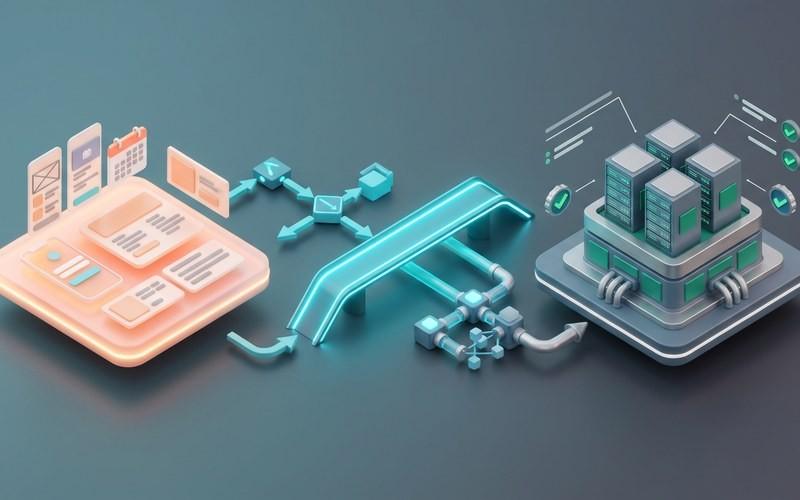
The legacy source schema typically stores fragmented relational tables with untyped JSON blobs, non-standard timestamps, and orphaned foreign keys. Our pipeline extracts these entities into an isolated staging schema where intermediate transformations normalize data formats, assign immutable tracking identifiers, and document schema divergences. This staging buffer allows engineers to inspect transformations before ingestion. Finally, the target schema enforces strict relational boundaries, cryptographic identifiers, and referential integrity checks before persisting sanitized records to production datastores.
What Constraints Prevent Data Corruption, Concurrency Collisions, and Cutover Failures?
Enforcing Explicit Ownership, Concurrent Edit Locks, and State Transitions
A major failure mode in enterprise legacy workflow migration development stems from race conditions and data corruption caused by uncoordinated user edits during synchronization. To eliminate concurrency collisions, our migration architecture requires that every service request enforces explicit ownership, optimistic edit locks, and deterministic state transitions.
Under this design, each service request carries an explicit ownership attribute identifying whether a customer, a service operator, or an automated migration worker holds write authority. When an operator inspects or updates a record in the migration console, the workspace checks an incremental version token against the source store. If a concurrent edit occurs before changes commit, the engine rejects the update and prompts the operator to reconcile conflicts. Furthermore, state transitions follow a formal lifecycle—moving strictly from intake through mapping, validation, staging, and final cutover. Any out-of-order transition triggers an immediate rejection, guaranteeing that no request bypasses mandatory workflow checkpoints.
Preserving Recoverable Source Records Through Validation Run Failures
Data cutover procedures must guarantee transactional safety without destructive in-place alterations. When executing a service request data cutover, our approach enforces non-destructive data extraction by treating legacy source rows as immutable read-only records throughout the migration lifecycle.
During a validation run, automated integrity suites evaluate schema compliance, foreign key associations, and tenant isolation rules against the staged service request. If an integrity assertion fails—such as an unmapped status or missing customer reference—the system immediately blocks cutover for that batch. The engine logs failure diagnostics directly to the validation report while preserving the source record untouched in its baseline repository. Because the original data remains pristine, engineering teams can inspect discrepancies, refine transformation adapters, and safely re-run validation passes.
How Should the Migration Workspace Architecture Separate AI Tooling from Core Business Logic?
Implementing the Mapping Editor, Validation Report, and Cutover Checklist Screens
The front-end tier of our migration workspace architecture provides operational visibility through three purpose-built interface views: the mapping editor, the validation report, and the cutover checklist.
The mapping editor enables engineers and service operators to visually align legacy data attributes with target domain entities, defining declarative transformation rules without modifying backend engine code. Once transformations execute against sample batches, the validation report displays automated integrity diagnostics, surfacing schema discrepancies, type mismatches, and data truncation warnings in real time. Finally, the cutover checklist enforces operational governance, requiring formal verification of record counts, schema validation passes, and rollback snapshot readiness before unlocking the final production cutover trigger. This multi-screen architecture isolates review workflows from execution triggers, ensuring that operators can inspect anomaly details without risking live system state.
Isolating Cursor and Claude Code Generation to Verified Adapter Boundaries
When planning a Cursor & Claude Code Consulting integration, technical leaders must establish strict boundaries between AI code generation and core transactional logic. According to official Cursor Rules documentation, AI agents operate under repository rules specified in .cursor/rules/*.mdc files, allowing teams to enforce modular coding standards and context-specific scaffolding.
Through our specialized Cursor & Claude Code Consulting practice at Canvas Developers, our approach isolates AI code generation exclusively to stateless data parsing utilities, schema mapping adapters, and automated test fixtures. Core business logic, distributed locks, database transactions, and tenant security boundaries remain authored and reviewed deterministically by senior software engineers. Every generated adapter must satisfy strict type definitions and pass automated regression suites before integration, ensuring that AI-assisted productivity never compromises runtime stability or data integrity.
How Are Acceptance Tests, Data Integrity Gates, and Automated Rollbacks Validated?
Verifying Validation Blockers to Guarantee Zero-Loss Rollback Paths
In enterprise legacy workflow migration development, validation failure acts as an intentional operational barrier rather than an informational warning. Although system architectures pursue zero-loss rollback paths as a target outcome, robust engineering treats data preservation as a disciplined operational objective requiring continuous verification. Our pipeline traces each service request through an explicit four-stage lifecycle: source mapping, batch validation runs, transactional cutover, and automated rollback execution.
When records enter the validation stage, automated integrity checks evaluate required attributes, foreign key references, and schema compliance. If an entity exhibits a schema violation—such as a missing customer identifier, an unmapped state code, or an invalid currency value—the pipeline instantly triggers a validation blocker. This blocker halts the batch promotion, logging detailed discrepancy telemetry to the validation report while preserving the recoverable source record untouched in its baseline repository. Should an unexpected fault emerge during live cutover, database transactions roll back using snapshot isolation, designed to safeguard recoverable records and minimize operational disruption.
Balancing Rapid AI-Assisted Transformation Against Strict Schema Verification
Integrating AI assistance into enterprise migrations through Cursor & Claude Code Consulting development provides meaningful engineering leverage, but it introduces distinct architectural trade-offs that teams must carefully govern.
AI coding assistants excel at drafting repetitive data transformation adapters, generating boilerplate schema definitions, and authoring unit test fixtures. However, automated assistants lack contextual awareness regarding domain-specific edge cases, legacy data anomalies, and strict multi-tenant isolation rules. If adopted without rigorous boundaries, AI-generated transformations can introduce subtle truncation errors or unhandled data types. Our approach balances rapid AI-assisted scaffolding by coupling every generated adapter with deterministic schema verification suites, comprehensive regression checks, and mandatory peer review by senior engineers before deployment.
How Does Canvas Developers Combine AI Scaffolding with Human Engineering Assurance?
Accelerating Scaffolding and Test Coverage While Engineers Own Architecture and Review
Adopting Cursor & Claude Code Consulting vibe coding workflows allows development teams to rapidly prototype migration interfaces, scaffold data transformation adapters, and generate synthetic test coverage. At Canvas Developers, an engineering company with an office in Dhaka, Bangladesh, we harness AI coding tools to accelerate technical discovery and repetitive scaffolding. However, experienced software engineers direct every engagement, own the overarching system architecture, conduct comprehensive code reviews, and retain sole authority over production release decisions.
While automated scaffolding speeds up initial authoring, core technical challenges—such as multi-tenant isolation, row-level security, optimistic locking, and disaster recovery—require disciplined human engineering. For basic database migrations lacking state transitions, native replication tools or simple ETL scripts often suffice. In contrast, migrating multi-role service requests demands dedicated workspace architecture with verified adapter boundaries.
Initiating a Scoped Migration Assessment and Workflow Feasibility Review
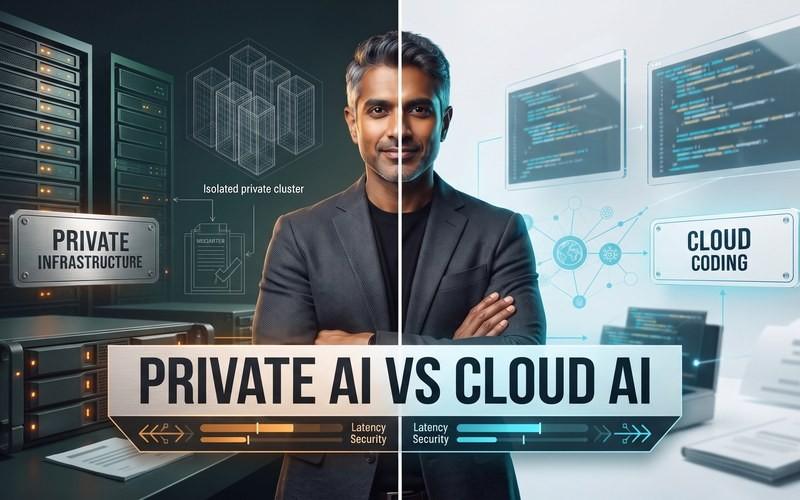
Organizations pursuing a Cursor & Claude Code Consulting development engagement can select between two delivery models: Private / Local AI Engineering (deploying open-weight tools within client-managed infrastructure) or Claude Code / OpenAI Codex Engineering (leveraging commercial AI coding platforms under agreed cloud configurations).
Each migration engagement begins with a rigorous technical scoping assessment, followed by structured delivery milestones, automated integration testing, and formal handover. To evaluate your organization's legacy service request workflows and architectural constraints, reach out through the Canvas Developers contact form to schedule an initial migration assessment.