Software & App Development
Cursor IDE Consulting & AI Workflow Setup
Configure custom .cursorrules, autonomous agent loops, and automated CI test pipelines for your engineering team. AI-assisted developer enablement directed by experienced engineers.

Who seeks AI coding workflow consulting
Engineering teams want to adopt Cursor and Claude Code to accelerate feature delivery, but lack the standardized rules, automated test harnesses, and review safeguards needed to prevent technical debt and security regressions.
- CTOs and engineering leaders standardizing AI coding tools across distributed developer teams without compromising code quality
- Startup founders aiming to multiply engineering output while maintaining rigorous test coverage and architectural integrity
- Enterprise software teams requiring private, compliant Claude Code setups with strict cloud permission boundaries and zero data leaks
Production-ready AI workflows for engineering teams
We provide Cursor IDE consulting and Claude Code enterprise setup for engineering teams looking to accelerate software delivery without sacrificing code quality or security. AI coding workflow consulting bridges the gap between raw model outputs and maintainable software. Our engineers help you design custom .cursorrules development standards, implement autonomous agent loops, and establish multi-stage CI test pipelines to catch hallucinations before merge. When companies hire Claude Code experts from Canvas Developers, our Dhaka-based engineering team audits existing repositories, configures repository-specific contexts, and embeds rigorous human code review into developer routines. Whether you deploy isolated local models or cloud-connected agents, we ensure your team builds faster while senior engineers maintain strict architectural control, comprehensive test coverage, and release governance.
AI-assisted, expert-led tooling configuration
How AI assists
- Generating contextual prompt templates, rule skeletons, and initial .cursorrules configurations from codebase docs
- Drafting repeatable test suites, edge case scenarios, and mock data to validate automated code edits
- Executing automated multi-file refactors and boilerplate generation inside tightly bounded terminal loops
- Summarizing diffs, scanning proposed changes against style guidelines, and identifying syntax deviations
What our experts own
- Engineers choose system architecture, context limits, and token budgets to prevent degraded model reasoning
- Security and DevOps specialists configure cloud data boundaries, secret redaction, and local execution environments
- QA leads design deterministic CI pipelines, integration tests, and human verification checkpoints for every pull request
- Engineering leads define team review standards, release governance, and approval thresholds for production code
What you receive
What we deliver for your AI coding workflow
Custom .cursorrules development
Modular, repository-specific rules that instruct Cursor on architecture, typing standards, library patterns, and style conventions to prevent code drift.
Claude Code enterprise setup
End-to-end configuration of Anthropic's Claude Code CLI across development teams, including permission boundaries, tool hooks, and enterprise cloud access.
Autonomous agent harness & loops
Structured prompt chains and multi-step execution loops that guide coding agents through planning, editing, testing, and self-correction cycles safely.
Automated CI verification pipelines
Pre-commit hooks and CI test suites optimized to catch AI hallucinations, type errors, security vulnerabilities, and regression issues before code review.
Context & documentation indexing
Curated architectural decision records (ADRs), system schemas, and indexing guidelines to keep models grounded in your actual production stack.
Security & data protection controls
Zero-data-retention configs, secret scrubbing, and private local model options to protect proprietary codebases, customer data, and compliance posture.
Scope, preparation and support
Start with a defined scope
Scope your AI coding enablement around specific repositories, team sizes, and pipeline automation goals. Rule authoring, CLI integration, and CI guardrails fit here; broader application modernization has its own dedicated service page.
What you provide
Provide access to representative codebases, current developer setup documentation, architectural guidelines, and data compliance policies. We audit these requirements during discovery to design targeted configuration standards.
Support after delivery
Receive fully configured rule sets, CI pipeline scripts, setup documentation, and team training walkthroughs. Ongoing workflow updates, rule maintenance, and model evaluation can continue under an agreed support plan.
Where each layer of the AI coding workflow operates
Illustrative breakdown of an enterprise AI coding setup; actual boundaries follow your infrastructure and compliance needs.
On the developer's local workstation
- Cursor IDE editor configuration, keybindings, and real-time completions
- Claude Code CLI execution inside sandboxed local project directories
- Pre-commit linting, formatting hooks, and local unit test runners
- Local workspace context indexing and ignore files (.cursorignore)
In the automated CI and review pipeline
- Deterministic build validation and automated integration test suites
- Static security scanning, secret detection, and dependency audits
- Automated PR diff analysis and compliance checks against repo standards
- Sandboxed execution containers for multi-turn autonomous agent loops
- Code review gating requiring human senior engineer approval before merge
Your cloud and AI provider infrastructure
- Commercial Claude or OpenAI APIs configured under enterprise zero-retention terms
- Optional self-hosted open-weight LLMs in your isolated cloud for private AI
- Central code repositories and pull request management on GitHub or GitLab
- Organizational identity management and developer access control policies
Typical AI tooling engagements
Typical scenarios we scope, not client case studies.
Standardizing .cursorrules across a TypeScript monorepo
A 15-person engineering team saw inconsistent AI code suggestions that broke internal type schemas. We would audit the repository, construct modular .cursorrules files for frontend and backend packages, and configure automated type-checking pre-commit hooks.
Enterprise Claude Code CLI rollout
An established software firm wanted developers using Claude Code terminal agents while restricting access to production credentials. We would set up safe CLI tool configurations, establish cloud zero-retention policies, and train developers on review protocols.
Autonomous agent loop with CI test guardrails
A fast-moving SaaS team wanted agents to autonomously resolve bug backlog tickets. We would configure an agent harness that writes code, runs Dockerized test suites, and only submits pull requests when all integration and security tests pass.
How an AI coding consultation runs
- 01
Workflow & codebase audit
We review your repository structure, current developer tooling, pain points, security policies, and AI delivery package preferences.
- 02
Rules & prompt engineering
Engineers craft custom .cursorrules, project context files, and Claude Code operational prompts tailored to your tech stack and libraries.
- 03
CI harness & agent loop testing
We wire automated test suites, linting gates, and agent self-correction scripts into your pipelines and pilot them across representative tasks.
- 04
Team onboarding & governance handover
We deliver documented workflows, team configuration guides, and code review checklists, ensuring sustainable productivity and full client control.
Two ways to work with AI tools
Choose where AI coding agents may process your code while we build. The engineering standard is the same either way.
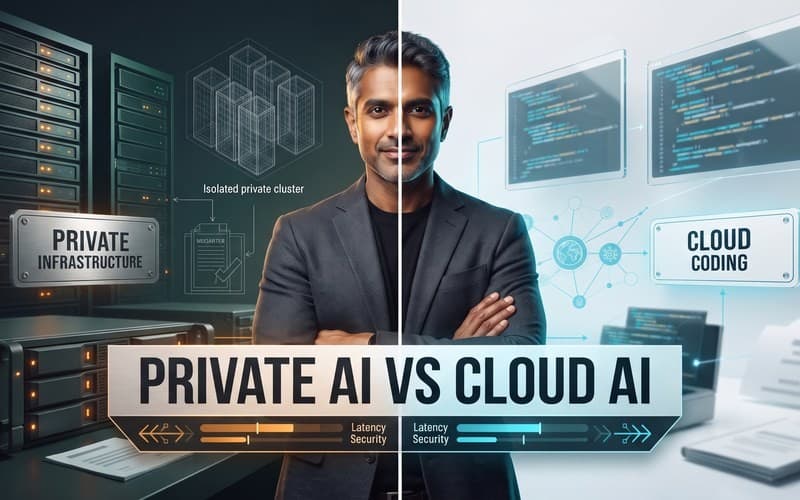
- Private / Local AI Engineering
Privately hosted models inside infrastructure you control or an agreed isolated environment.
Discuss with this package - Claude Code / OpenAI Codex Engineering
Claude Code and/or OpenAI Codex with cloud settings your organization approves.
Discuss with this package
Not sure? We'll recommend one during scoping. Compare AI delivery options
How architecture, QA and developer workflow connect
Architect-led context engineering
Senior engineers define what context models receive, preventing polluted agent memory and ensuring suggestions strictly adhere to established software architecture.
QA guardrails on generative output
Automated regression tests and deterministic test runners validate every AI-generated diff against core business logic, permissions, and security boundaries.
Controlled developer adoption
Roll out AI coding workflows progressively with measurable guidelines, paired training sessions, and clear rules on what AI can draft versus what humans must approve.
Continuous workflow refinement
As frontier models update and codebases expand, we periodically review prompt performance, rule drift, and CI metrics to keep developer velocity high.
Not part of this consulting service
- Building user-facing AI capabilities into your application, such as customer support bots or RAG pipelines, belongs under AI Features & Agents.
- Rescuing and stabilizing a broken or unmaintainable vibe-coded application starts with our Application Modernization & Stabilization assessment.
- Complete product engineering from scratch is delivered under SaaS & MVP Development or Custom Software Development.
- Purchasing commercial software licenses for Cursor or Anthropic Claude API credits; client accounts pay vendor fees directly.
FAQ
Frequently asked questions
Why do engineering teams need Cursor IDE consulting?
While individual developers can easily install Cursor, scaling it across an engineering organization requires unified architecture rules, deterministic linting, and prompt consistency. Without custom .cursorrules development, AI agents frequently introduce subtle hallucinations, outdated library syntax, and security flaws. Our consulting aligns the IDE with your established conventions, automated test suites, and pull request standards.
How does Claude Code enterprise setup protect proprietary code?
We configure Claude Code to comply with your corporate data policies and cloud permissions. Under our Claude Code / OpenAI Codex Engineering package, we implement zero-data-retention commercial settings, strict terminal permission boundaries, and environment secret filters. For organizations requiring air-gapped security, we also offer Private / Local AI Engineering using open-weight models on infrastructure you control.
Can we hire Claude Code experts to train our internal developers?
Yes. When you hire Claude Code experts from Canvas Developers, our engineers work alongside your staff to establish practical prompting habits, autonomous agent boundaries, and effective human review techniques. We show your engineers where AI coding succeeds, where it fails, and how to verify critical security, payment, and database logic before merging.
What is required before we start an AI coding workflow engagement?
We begin with a scoped technical assessment of your primary repositories, tech stacks, and development infrastructure. You provide access to relevant staging environments or repository samples and outline your internal compliance requirements. Following discovery, we agree on clear milestones, deliverables, and security boundaries through the contact form at https://www.canvasdevelopers.com/contact.
Related case studies

Related projects


Related articles

Related Services

Vibe Coding Consulting & Governance
Architectural guardrails, automated testing enforcement, and code audits for AI-generated codebases....
Learn more
Build a SaaS product people can use
Turn a defined customer problem into a first release with the core workflows, accounts and business ...
Learn more
Finish and launch your AI-built app
A promising prototype can still have broken sign-in, incomplete billing or a risky deployment. Start...
Learn more
A development partner for your agency
Bring a defined client project or an overflow development need. We agree the scope, communication an...
Learn more
Ready to upgrade your team's AI coding workflow?
Tell us about your tech stack and developer workflow. We'll recommend a setup package, audit your requirements, and send a proposal with scope and agreed milestones.